
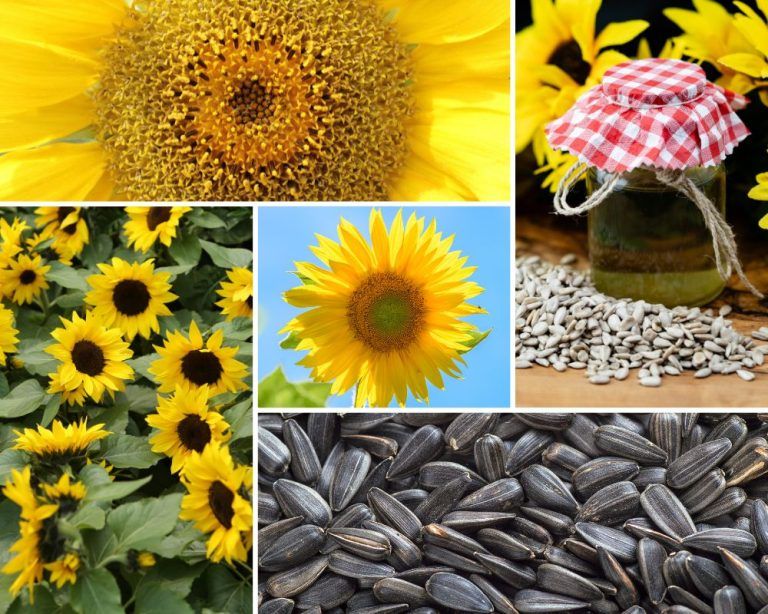
A sunflower looks like one bright flower. In reality, it is a living community—and the genus behind it is even more remarkable.
A sunflower seems simple from a distance: a large golden flower, a tall stem and a crowd of bees moving through the light. Look more closely, and the picture becomes far richer.
What appears to be one flower is actually a tightly organised community of many small flowers. Below ground, some sunflowers store food in edible tubers. Above ground, others produce oil-rich seeds, fibres, dyes, fuel, forage and late-season food for wildlife. Wild species also carry genetic traits that can help plant breeders protect cultivated sunflower crops from drought, disease and other pressures.
The genus Helianthus tells several stories at once. It is a story of Indigenous agriculture, global trade, prairie ecology, overlooked perennial foods and the search for crops that can thrive in a less predictable climate.
Key takeaways
- Helianthus belongs to the Asteraceae, or sunflower family, and is native to North America.
- Kew’s Plants of the World Online currently recognises 56 accepted species.
- Common sunflower, Helianthus annuus, is the strongest all-round species in the PFAF dataset, with edible and other-use ratings of 5 out of 5.
- Jerusalem artichoke, Helianthus tuberosus, is a productive perennial grown for its edible tubers.
- Several wild sunflowers offer edible seeds or tubers, although harvesting them is often labour-intensive.
- Wild species have supplied valuable traits for commercial sunflower breeding, including resistance to diseases and environmental stress.
- Sunflowers support bees, other insects, birds and wider food webs.
- PFAF is adding or updating relevant Southwestern Helianthus profiles as part of its 946-entry Southwest expansion.
A brief introduction to the Asteraceae family
Helianthus belongs to the Asteraceae, also called the daisy, aster, composite or sunflower family. It is one of the largest families of flowering plants and includes food crops, medicinal herbs, ornamentals and familiar wildflowers.
Several economically and culturally important genera belong to this family:
- Helianthus — sunflowers and Jerusalem artichoke
- Lactuca — lettuce
- Cichorium — chicory, radicchio and endive
- Cynara — globe artichoke and cardoon
- Carthamus — safflower
- Smallanthus — yacón
- Artemisia — tarragon, mugworts, wormwoods and sagebrushes
The family also includes important medicinal and ornamental genera such as Echinacea, Calendula, Achillea, Matricaria, Dahlia, Zinnia, Chrysanthemum, Aster, Solidago and Tagetes.
What is Helianthus?
The name Helianthus comes from Greek words for “sun” and “flower.” According to Kew’s Plants of the World Online, the genus is native to North America and currently contains 56 accepted species. Botanical totals can change as taxonomists revise plant names and relationships, so older references may give different figures.
Members range from relatively small plants to towering herbs more than three metres high. Some are annuals that complete their lives in one season. Others are perennials that return from persistent roots, rhizomes or tubers.
Wild sunflowers occupy prairies, sandy plains, dry slopes, open woodland, wetlands and desert margins. Some tolerate drought and nutrient-poor soils. Others favour moist thickets or marshy ground. The familiar giant yellow head is only one form: many wild species produce numerous smaller heads across a branching plant.
A sunflower is a flower made of flowers
The defining feature of the Asteraceae is its flower head, or capitulum. What looks like one sunflower is a platform holding many individual flowers called florets.
The petal-like structures around the edge are ray florets. The smaller flowers packed into the centre are disc florets. Each fertile disc floret can produce a dry fruit containing a seed.
The “seed” is technically a fruit
What we usually call a sunflower seed is a dry, one-seeded fruit known as a cypsela. The edible kernel is the true seed inside its hull.
This floral arrangement is highly efficient. A large, visible head attracts pollinators from a distance. Once a bee or fly lands, it can visit many flowers without flying to another plant.
A crop born in North America—and transformed around the world
Cultivated sunflower is one of the relatively small number of major crops domesticated in what is now the United States. A USDA review places evidence of domestication about 4,625 years before the present in the eastern United States, near the Mississippi Valley.
Indigenous peoples developed sunflower as far more than a decorative plant. Seeds were eaten whole or processed into meal, and oil had food and body-care uses. Plant materials also supplied dyes and medicines. These achievements belong at the beginning—not the margins—of the sunflower story.
Europeans carried sunflower to Spain in the early 1500s. It spread across Europe and became an important oil crop in Russia during the nineteenth century. Russian-developed forms later returned to North America with immigrants, including Mennonite farming communities.
The modern sunflower is therefore the product of an unusual round trip: domesticated in North America, transformed through selection overseas and then reintroduced in improved agricultural forms.
What parts of Helianthus are edible?
The answer depends on the species. It is unsafe to assume that a part is edible simply because a related sunflower has a recorded use.
Seeds and oil
Common sunflower provides the genus’s most important food. Its kernels are eaten raw or roasted, ground into meal, made into sunflower butter and pressed for oil. Wild species also produce edible seeds, but their smaller size, rapid shattering and difficult shell removal can make gathering impractical.
Tubers and roots
Jerusalem artichoke produces crisp, energy-storing tubers. Other perennial sunflowers, including giant and Maximilian sunflower, have records of edible underground parts but generally yield less.
Flower buds and other parts
PFAF records young common-sunflower buds as a cooked vegetable, rather like small globe artichokes. Sprouted seeds are also edible. These uses are secondary to mature kernels and oil, and should not be extended casually to other species.
Useful plants beyond the dinner plate
Common sunflower oil has been used in soap, paint, varnish, candles and lighting. Its stems can supply fibre and paper material. Dried stems and empty heads can serve as kindling, while flowers and dark seeds have supplied dyes.
Ecological functions may be even more important. Sunflower heads provide pollen and nectar, mature seeds feed birds and other animals, and tall stems add shelter and structure. Different species flower at different times, helping to extend the feeding season for insects.
Wild species are also living libraries of genetic variation. A plant that offers only a small human food harvest may still carry a trait capable of protecting millions of hectares of crops.
What the PFAF ratings reveal
The PFAF dataset contains 13 Helianthus entries. Ratings run from zero to five in three categories. A higher score indicates greater practical importance within that category; it is not a guarantee of safety or suitability for every garden.
Common sunflower clearly dominates, receiving 5/5 for both edibility and other uses. Perennial foods form the second strong group: Jerusalem artichoke, perennial hybrids and stiff sunflower each receive an edible rating of 4/5. Medicinal ratings are generally low, showing that this genus is best understood mainly through food, ecology, crop genetics and practical materials.
| Species | Common name | Habit | Edible | Medicinal | Other | Main interest |
|---|---|---|---|---|---|---|
| H. annuus | Common sunflower | Annual | 5 | 2 | 5 | Seeds, oil and many materials |
| H. cusickii | Cusick’s sunflower | Perennial | 3 | 1 | 0 | Roots, seeds and dryland genetics |
| H. decapetalus | Thinleaf sunflower | Perennial | 0 | 0 | 2 | Ornamental and wildlife plant |
| H. doronicoides | Sunflower | Perennial | 2 | 0 | 0 | Minor edible potential |
| H. giganteus | Giant sunflower | Perennial | 3 | 0 | 0 | Tubers and seeds |
| Helianthus hybrids | Perennial sunflower | Perennial | 4 | 2 | 2 | Perennial oilseed development |
| H. laetiflorus | Showy sunflower | Perennial | 2 | 0 | 0 | Ornamental interest |
| H. lenticularis | Wild sunflower | Annual | 5 | 0 | 0 | Edible seed |
| H. maximilianii | Maximilian sunflower | Perennial | 3 | 0 | 0 | Tubers and perennial breeding |
| H. nuttallii | Nuttall’s sunflower | Perennial | 3 | 2 | 2 | Seeds, habitat and traditional uses |
| H. pauciflorus | Stiff sunflower | Perennial | 4 | 0 | 1 | Perennial protein and oilseed |
| H. petiolaris | Prairie sunflower | Annual | 3 | 1 | 2 | Wild seed and crop breeding |
| H. tuberosus | Jerusalem artichoke | Perennial | 4 | 1 | 3 | Productive edible tubers |
Important Helianthus plants in the PFAF database
Helianthus annuus — common sunflower
This is the agricultural giant of the genus. Mature kernels are eaten raw or roasted, ground into meal, made into sunflower butter and pressed for cooking oil. PFAF also records sprouted seeds and cooked young flower buds.
Its usefulness continues after harvest. Oil has industrial uses, stems can supply fibre and paper material, dried plants make kindling, and flowers or dark seeds can provide dyes. The flowers support insects and the seeds feed birds.
Interesting fact: Sunflower was domesticated in North America, carried to Europe and Russia, then returned in newly selected crop forms.
Helianthus cusickii — Cusick’s sunflower
Cusick’s sunflower is a relatively small western perennial of dry grassy slopes, foothills and open woodland. PFAF records peeled roots as edible raw, as well as edible seeds and oil potential.
Why it is important: Its tolerance of dry conditions and poor soils makes it interesting to researchers considering resilient perennial oilseed systems. Recorded Indigenous medicinal uses are ethnobotanical history, not proof of modern clinical effectiveness.
Helianthus giganteus — giant sunflower
Giant sunflower can reach about 3.6 metres and favours damp thickets, swampy woodland and moist clearings. PFAF records cooked tubers with a flavour resembling Jerusalem artichoke, although at a lower yield. Its small seeds can also be eaten or ground into meal.
Why it is important: It demonstrates the difference between edibility and practicality. The food is real, but small seeds and modest tuber yields limit its value as a conventional crop.
Helianthus hybrids — perennial sunflowers
This entry covers useful perennial hybrids rather than one clearly defined wild species. Perennial sunflowers could combine protein- and oil-rich seeds with roots that survive for several years.
Why they are important: Perennial crops can maintain living roots and soil cover for longer periods. Breeders still need to improve yield, uniform ripening, seed retention and harvestability.
Helianthus maximilianii — Maximilian sunflower
Maximilian sunflower is a tall prairie perennial that can form striking colonies. PFAF records its tubers as edible raw or cooked, with a flavour resembling Jerusalem artichoke but a lower yield. Seeds and seed oil are also edible.
Why it is important: It is both a direct wild food and a candidate for future perennial oilseed breeding. Its late flowers and dense growth also provide food and structure for wildlife.
Helianthus nuttallii — Nuttall’s sunflower
Nuttall’s sunflower is a tall, rhizomatous perennial associated with moist meadows, stream margins and other damp habitats in western and central North America. Its seeds can be eaten and used as an oil source, although their small size limits convenience.
Why it is important: The species combines food potential, traditional-use records and habitat value. Because taxonomic and food records can vary, consult the complete profile and its references before experimenting.
Helianthus pauciflorus — stiff sunflower
Stiff sunflower is a hardy, colony-forming perennial of prairies and open country. Its strongest promise lies in protein- and oil-rich seed and its potential role in perennial crop development.
Why it is important: It is already adapted to perennial life on the prairie. Plant breeding aims to add larger harvests, improved seed retention and uniform maturity without losing that resilience.
Helianthus petiolaris — prairie sunflower
Prairie sunflower is an annual of sandy soils and dry, disturbed ground. Its mature seeds are the only well-documented food part. Kernels are nutty and oily but much smaller and harder to process than cultivated sunflower seeds.
Interesting fact: Wild prairie sunflower supplied PET1 cytoplasm, which became central to producing many commercial sunflower hybrids. A plant easily dismissed as a roadside wildflower helped transform a global crop.
Helianthus tuberosus — Jerusalem artichoke
Jerusalem artichoke is neither from Jerusalem nor an artichoke. It is a North American sunflower grown for crisp underground tubers. They can be eaten raw, roasted, boiled, mashed, fried or added to soups.
The tubers store inulin rather than starch. Gut microorganisms ferment inulin, which can cause significant wind and discomfort. New eaters should begin with a small portion.
Interesting fact: “Jerusalem” probably arose from the Italian word girasole, meaning sunflower. The plant is productive but persistent: missed tubers readily grow again.
Wild relatives and the future of sunflower
Wild Helianthus species contain genetic variation that cultivated crops may lack. The USDA Agricultural Research Service reports that wild North American sunflowers have contributed resistance to rust, downy mildew, Sclerotinia and other crop problems.
Other wild traits may help breeders address salinity, drought, oil quality, pests and emerging diseases. This makes habitat protection and seed-bank collections part of food security.
Researchers are also exploring a more ambitious possibility: perennial oilseed crops. Research reported by The Land Institute has examined Maximilian sunflower as a candidate for domestication.
The challenge is that wild perennials evolved to survive, not to suit machinery. They may drop seed rapidly, mature unevenly or invest more energy underground than in harvestable grain. Creating a useful crop requires patient selection.
Growing Helianthus in gardens and food forests
Most sunflowers prefer full sun. Common sunflower usually performs best in deep, well-drained soil with adequate moisture during establishment and flowering. Wild species vary: Cusick’s and prairie sunflower tolerate dry ground, while giant and Nuttall’s sunflower prefer moister habitats.
Choose species for the site rather than treating the genus as a single garden type. Leave enough room for height and spread, and remember that rhizomatous or tuberous perennials can form persistent colonies.
- Check local hardiness, soil and moisture needs.
- Place spreading perennials where a permanent patch is welcome.
- Leave some mature heads for birds and other wildlife.
- Avoid introducing species that are invasive or regulated locally.
- Rotate annual sunflowers where practical and avoid repeated heavy nutrient removal from the same bed.
Safety and responsible use
No article can make an unfamiliar wild plant safe to eat. Correct identification must come first, and common names are not enough. “Prairie sunflower,” for example, is used for more than one species.
Before eating or using a wild sunflower
- Confirm the scientific name using several reliable identification features.
- Use only plant parts with well-supported food records for that species.
- Avoid roadsides, sprayed ground, mine waste and contaminated watercourses.
- Do not collect rare plants or dig roots from vulnerable wild populations.
- Check for sunflower allergies and introduce unfamiliar foods gradually.
- Treat traditional medicinal records as research leads, not prescriptions.
PFAF notes that common sunflower plants may accumulate nitrates under some conditions, particularly with heavy nitrogen fertilisation. Jerusalem artichoke’s inulin can also cause marked digestive discomfort. A plant’s usefulness rating is not a safety guarantee.
PFAF’s major Southwest expansion
Plants For A Future is working on a major expansion covering useful plants of the American Southwest.
The project will add or update 946 database entries, including 570 fully revised profiles and 376 species that are new to the database. Relevant Southwestern Helianthus species are being added or updated as part of this work.
The expansion improves edible ratings, flavour notes, seasonality, harvesting, processing, traditional and Indigenous uses, identification, look-alikes, safety, ecology and wildlife value.
The revised prairie sunflower profile shows why this matters. It discusses the seed’s flavour, rapid shattering, difficult shell removal, the importance of harvest scale and the risks of collecting from contaminated roadside sites. “Edible” becomes genuinely useful information only when readers can understand the real work and risks involved.
Key facts about the Helianthus genus
- Helianthus belongs to the Asteraceae or sunflower family.
- The genus is native to North America.
- Kew currently recognises 56 accepted species.
- The genus contains both annual and perennial plants.
- Useful parts can include seeds, oil, tubers, young flower buds, stems, fibre and dyes.
- A sunflower head contains many individual flowers called florets.
- The familiar “seed” is a dry fruit containing the true seed.
- Wild species are important sources of crop-breeding traits.
- Many species feed pollinators, birds and other wildlife.
- Some perennial species spread strongly through rhizomes or tubers.
The many futures inside a sunflower
The common sunflower is already a global crop. Jerusalem artichoke is already a productive perennial vegetable. The wider genus, however, remains partly unfinished from a human point of view.
Some species may never become crops, nor do they need to. Their value lies in prairies, wetlands, pollinator networks and wild genetic diversity. Others may contribute a disease-resistance gene, a drought-tolerance trait or the foundation of a new perennial oilseed.
This is why Helianthus is more interesting than its most spectacular flower head. The genus connects Indigenous agricultural history with modern plant breeding. It connects a bird feeding from a winter seed head with a scientist protecting a future crop. Its story runs in every direction—into soil, history, kitchens, ecosystems and the uncertain climate ahead.
Frequently asked questions
Are all Helianthus species edible?
No. Several species have documented edible seeds, roots or tubers, but edible parts and practical value differ. Never infer that a plant part is safe because it is edible in a related species.
Which Helianthus species has the highest PFAF edible rating?
Common sunflower, Helianthus annuus, has an edible rating of 5 out of 5 in the supplied PFAF dataset. Helianthus lenticularis is also listed at 5 out of 5.
Is Jerusalem artichoke really an artichoke?
No. Helianthus tuberosus is a North American sunflower grown for edible tubers. It is not closely related to Jerusalem and is not the globe artichoke.
Why can Jerusalem artichokes cause wind?
The tubers are rich in inulin, which human digestive enzymes do not fully break down. Gut microorganisms ferment it, producing gas. Begin with a small portion.
Can sunflowers become invasive?
Yes. Some annuals seed freely, while perennial species may spread through rhizomes or tubers. Check local guidance and place vigorous plants where their spread can be managed.
Why are wild sunflowers important to agriculture?
Wild species contain genetic diversity used to improve cultivated sunflower. They have contributed resistance to several diseases and offer traits connected with drought, salinity, pests and oil quality.
Do sunflower heads follow the sun?
Young common sunflowers track the sun while growing, a movement called heliotropism. Mature flower heads generally stop tracking and often face east.
Are sunflower medicinal uses scientifically proven?
Some species have records of traditional medicinal use, but these records do not automatically establish modern clinical safety or effectiveness. Seek qualified advice before medicinal use.
Glossary
- Asteraceae
- The daisy, aster, composite or sunflower family.
- Capitulum
- A compact flower head made from many small individual flowers.
- Crop wild relative
- A wild plant related to a cultivated crop and potentially useful as a source of genetic traits.
- Cypsela
- The dry, one-seeded fruit produced by many members of the Asteraceae; commonly called a sunflower seed.
- Disc floret
- One of the small flowers packed into the centre of a sunflower head.
- Floret
- One individual flower within a composite flower head.
- Heliotropism
- Growth or movement in response to the direction of sunlight.
- Inulin
- A fructan carbohydrate stored by plants such as Jerusalem artichoke and fermented by human gut microorganisms.
- PET1 cytoplasm
- A source of cytoplasmic male sterility from wild prairie sunflower that enabled efficient production of many commercial sunflower hybrids.
- Ray floret
- One of the outer flowers whose strap-shaped structure resembles a petal.
- Rhizome
- An underground stem capable of producing new roots and shoots.
- Tuber
- A swollen underground storage organ, such as the edible part of Jerusalem artichoke.