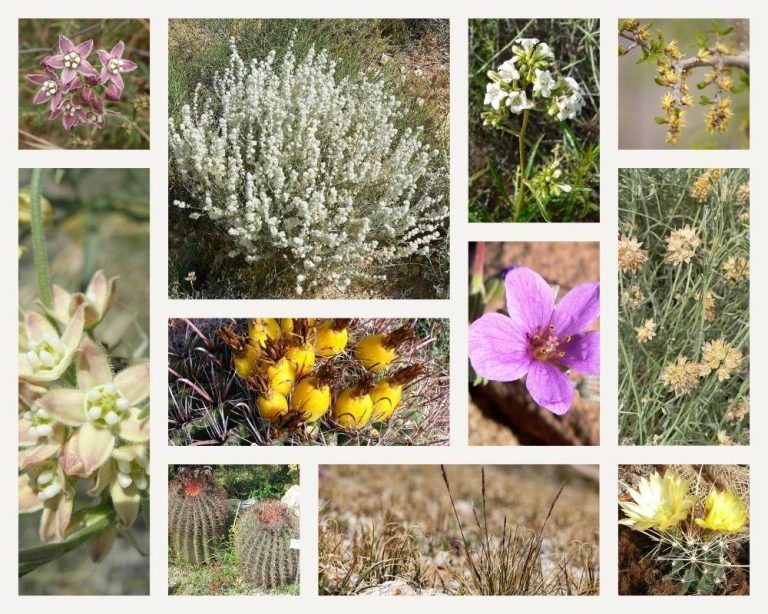

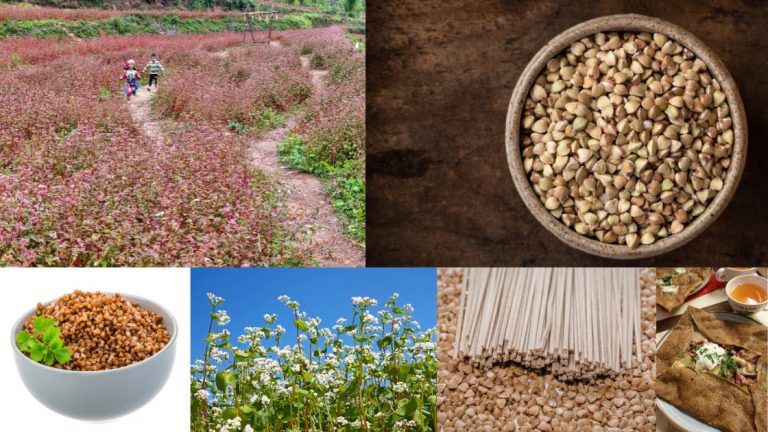
Buckwheat is the common name for several edible and useful plants, especially species in the Polygonaceae family. The best-known is Fagopyrum esculentum , the grain-like crop used in soba noodles, pancakes, groats, and gluten-free flour. But the name also applies to wild buckwheats such as Eriogonum species, many of which are valuable for pollinators, dryland gardens, and ecological restoration.
Key Takeaways
- Buckwheat is not wheat. It is a broadleaf plant, not a grass.
- The name “buckwheat” means “beech wheat,” referring to its beech-nut-shaped seeds.
- Several genera use the common name buckwheat, especially Fagopyrum and Eriogonum.
- Fagopyrum esculentum, common buckwheat, is the most important edible buckwheat crop.
- Buckwheat is useful for food, gluten-free flour, bee forage, green manure, soil cover, and wildlife support.
- Wild buckwheats, especially Eriogonum species, are important plants for drylands, pollinators, and native plant gardening.
- PFAF’s Southwest Expansion is adding and updating many drought-adapted useful plants, including several Polygonaceae species.
Buckwheat: A Common Name With Many Stories
At first glance, buckwheat looks like a simple field crop. A soft green plant. White or pinkish flowers. Dark triangular seeds that end up in pancakes, noodles, porridge, granola, and gluten-free flour.
But follow the name “buckwheat” into the plant world and the story becomes much richer.
In the PFAF database, the common name “buckwheat” is not limited to the familiar grain crop Fagopyrum esculentum. The PFAF database lists 20 species with “buckwheat” in the common name. They include annual grains, perennial herbs, shrubs, and even a tree-like shrub called buckwheat tree. Most are in the Polygonaceae, the knotweed or buckwheat family, but one, Cliftonia monophylla, belongs to a different family entirely.
That tells us something important: common names are practical, not scientific. People often name plants by resemblance, use, seed shape, flower form, habitat, or cultural memory. “Buckwheat” is one of those names that travelled.
The word itself comes from the seed. The triangular grain of common buckwheat looks like a tiny beech nut. The old meaning is essentially “beech wheat”: a wheat-like food with beech-like seeds.
Yet buckwheat is not wheat. It is not even a grass. It is a pseudocereal: a broadleaf plant whose seeds are eaten like cereal grain. This is why buckwheat can be so useful in gluten-free food, ecological gardening, cover cropping, and food forest thinking.
The Buckwheat Family: Polygonaceae in Brief
Most true buckwheats belong to the Polygonaceae family. This family includes some familiar and important genera, such as:
- Fagopyrum — common buckwheat, Tartary buckwheat, perennial buckwheat
- Eriogonum — wild buckwheats, especially important in western North America
- Rumex — docks and sorrels
- Rheum — rhubarb
- Polygonum, Persicaria, Fallopia, and Reynoutria — knotweeds and related plants
The family is botanically diverse. Some members are food plants. Some are medicinal herbs. Some are troublesome weeds. Some are vital wildlife plants. A few, like rhubarb and buckwheat, became important crops. Others, like many Eriogonum species, are ecological specialists of drylands, mountains, coasts, and deserts.
Why So Many Plants Are Called Buckwheat
Plants with the common name buckwheat usually share one or more of these traits:
1. They belong to the buckwheat family
Many Fagopyrum and Eriogonum species are genuine Polygonaceae members.
2. They have small grain-like seeds
The “wheat” part of the name often reflects edible or grain-like seeds.
3. They resemble known buckwheats
Small clustered flowers, dryland habits, or angular fruits may have encouraged the name.
4. They were useful to people or wildlife
Some were food plants, some medicinal, some bee plants, and some valuable for dryland ecology.
This is why the PFAF database includes familiar crop species such as Fagopyrum esculentum, but also wild western plants such as Eriogonum alatum, Eriogonum cernuum, Eriogonum racemosum, and Eriogonum wrightii.
Common Buckwheat: Fagopyrum esculentum

If one plant deserves the plain name “buckwheat,” it is Fagopyrum esculentum.
In the PFAF database, it scores:
- Edible rating: 4/5
- Medicinal rating: 3/5
- Other uses rating: 4/5
That makes it one of the most useful “buckwheat” plants in the PFAF database.
A Crop With Ancient Roots
Buckwheat has been cultivated in Asia for thousands of years. It is thought to have been used as a food crop in China thousands of years ago before spreading into Europe and later North America.
This long history makes sense. Buckwheat grows quickly, handles poor soils better than many grains, and produces a useful seed in a short season.
How Buckwheat Grows
Buckwheat is an annual plant. It is often grown for grain, green manure, pollinators, or soil improvement. It is famous for speed.
Buckwheat can flower within a few weeks and mature in a short growing season. This makes it valuable for gardeners and farmers who need a quick crop between other crops. It can shade soil, suppress weeds, protect against erosion, and help recycle nutrients.
Growing Tips
Buckwheat prefers:
- Warm soil
- A weed-free seedbed
- Moderate moisture
- Low to moderate fertility
- A frost-free growing window
It is usually planted after frost risk has passed. For cover cropping, it can be sown whenever the soil is warm enough and there is enough time for growth.
For a garden, the practical lesson is simple: sow it thickly, keep it moist until germination, and do not let it set seed unless you want volunteers.
A Plant for Bees and Beneficial Insects
Buckwheat is more than a grain crop. It is a living insectary.
Its shallow flowers are accessible to small bees, hoverflies, parasitic wasps, lady beetles, minute pirate bugs, and other beneficial insects.
This is one reason buckwheat is useful in ecological gardens. It does not just feed people. It feeds the small insects that help hold a garden together.
Food Uses

Buckwheat seed can be:
- Cooked like rice
- Ground into flour
- Made into pancakes
- Used in noodles
- Added to breads
- Sprouted for salads
- Used as a thickener in soups
- Made into porridge or groats
The seed has a nutty flavour and can be cooked, sprouted, or ground into flour for pancakes, noodles, bread, and other foods. Buckwheat lacks gluten, making it suitable for gluten-free cooking when processed without contamination.
Classic foods include:
- Japanese soba noodles
- Russian and eastern European kasha
- French galettes
- Buckwheat pancakes
- Gluten-free baking blends
- Sprouted buckwheat granola
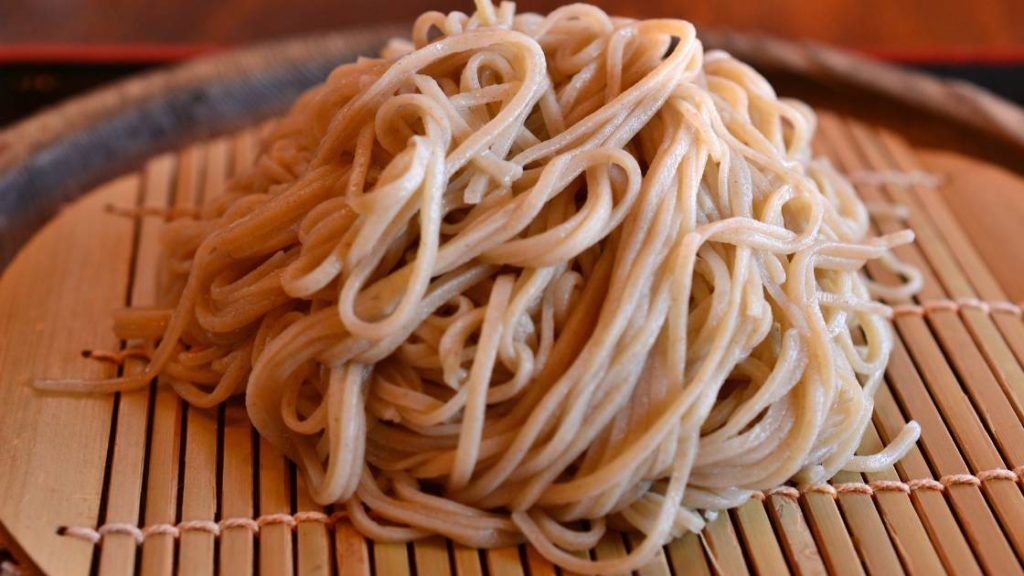
Buckwheat flour behaves differently from wheat flour. It has no gluten network, so it does not rise like wheat bread unless mixed with other flours or binders. But it brings a deep, earthy flavour that many people love.
Nutrition and Medicinal Value
Buckwheat is valued for protein, fibre, minerals, and flavonoids. One of its best-known compounds is rutin, a flavonoid associated with vascular health.
Common buckwheat leaves are rich in rutin, and fresh leaves and inflorescences can be used for industrial extraction of rutin. Fagopyrum tataricum is also commonly grown for rutin production.
A caution is needed: medicinal use should not be casual. Professional advice should be sought before using plants medicinally. Buckwheat may also cause light-sensitive dermatitis in some cases.
Other Uses
Buckwheat is useful beyond the kitchen.
It can be used as:
- Green manure
- Soil cover
- Weed suppressant
- Bee forage
- Wildlife food
- Poultry or livestock feed in some contexts
- Source of rutin
- Brewing grain
- Natural dye or pigment source
It also helps improve soil cover, recycle nutrients, and support beneficial insect populations.
The Genus Fagopyrum: Key Facts
Fagopyrum is the genus of the true cultivated buckwheats. It belongs to Polygonaceae.
Key facts:
- It includes common buckwheat, Fagopyrum esculentum.
- It includes Tartary buckwheat, Fagopyrum tataricum.
- It includes perennial buckwheats such as Fagopyrum dibotrys.
- It is not related to wheat, despite the common name.
- It is grown for seed, leaves, cover cropping, soil improvement, bee forage, and medicinal compounds.
- It is a small but important genus in the Polygonaceae family.
- The two best-known cultivated species are common buckwheat and Tartary buckwheat.
Other Important Buckwheats in the PFAF database
Fagopyrum dibotrys — Perennial Buckwheat
In the database, Fagopyrum dibotrys — Perennial Buckwheat has:
- Edible rating: 4/5
- Medicinal rating: 2/5
- Other uses rating: 3/5
This is one of the most promising edible buckwheats because it is perennial. In food forest terms, perennial grain-like plants are especially interesting because they may reduce the need for yearly soil disturbance.
It is not as widely known as common buckwheat, but it deserves attention in perennial vegetable and food forest systems. Young shoots and leaves may be used as food, and the plant may have value where a longer-lived Polygonaceae crop is wanted.
Fagopyrum tataricum — Tartary Buckwheat
Tartary buckwheat is tougher, more bitter, and often more strongly associated with rutin than common buckwheat.
In the database, it scores:
- Edible rating: 3/5
- Medicinal rating: 1/5
- Other uses rating: 3/5
Its flavour can be more challenging, but its resilience and phytochemical content make it important. Fagopyrum tataricum is commonly associated with rutin production.
Eriogonum Species — The Wild Buckwheats
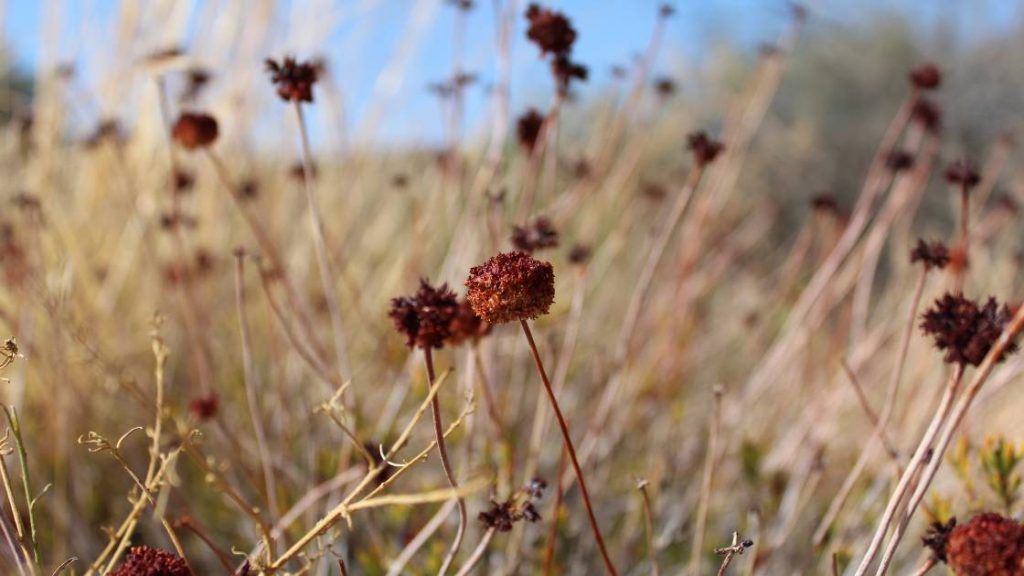
The genus Eriogonum is a different kind of buckwheat story.
These are not the familiar grain buckwheats of pancakes and soba. They are mostly wild buckwheats, many from western North America. They include annuals, perennials, and shrubs. Some have edible or medicinal uses. Many are valuable for wildlife and pollinators.
The PFAF database includes several Eriogonum species, such as:
- Eriogonum alatum — winged buckwheat
- Eriogonum baileyi — Bailey’s buckwheat
- Eriogonum cernuum — nodding buckwheat
- Eriogonum corymbosum — crispleaf buckwheat
- Eriogonum davidsonii — Davidson’s buckwheat
- Eriogonum latifolium — seaside buckwheat
- Eriogonum plumatella — yucca buckwheat
- Eriogonum pusillum — yellow turbans or puny buckwheat
- Eriogonum racemosum — redroot buckwheat
- Eriogonum wrightii — shrubby buckwheat
Several score 2/5 for edible use, showing modest but real food value. Many also score 1–2/5 for medicinal use. Eriogonum corymbosum stands out with an Other Uses rating of 3/5, suggesting broader usefulness.
For ecological planting, Eriogonum may be more important as habitat than as a staple food. Many species thrive in dry, open, nutrient-poor, or rocky places. Their flowers can support native bees, butterflies, and other insects.
Cliftonia monophylla — Buckwheat Tree
The database also includes Cliftonia monophylla, commonly called ironwood or buckwheat tree.
This is a reminder that common names can jump across botanical boundaries. Cliftonia monophylla is not a true buckwheat in the Polygonaceae sense. Its PFAF ratings in the spreadsheet are:
- Edible rating: 0/5
- Medicinal rating: 0/5
- Other uses rating: 2/5
Its inclusion shows why scientific names matter. “Buckwheat” may point toward a useful clue, but it does not always identify a close botanical relative or an edible plant.
PFAF’s Southwest Expansion and Buckwheat Relatives
PFAF’s current Southwest project is directly relevant to wild buckwheats.
The project adds 946 new and updated plant entries focused on the American Southwest, including 570 fully revised profiles and 376 entirely new species. It is designed to improve coverage of drought-adapted, heat-tolerant, climate-resilient plants from arid and semi-arid regions.
This matters for Polygonaceae because many Eriogonum species are plants of drylands, deserts, mountains, open slopes, and western habitats. As PFAF adds or updates several Polygonaceae species, the database becomes more useful for people interested in:
- Dryland food forests
- Native edible plants
- Climate-resilient gardens
- Pollinator habitat
- Restoration planting
- Indigenous and traditional plant knowledge
- Drought-tolerant useful plants
The project also expands categories such as edible uses, taste, processing, harvest workflow, safety, ecology, wildlife value, and identification notes.
Suggested link: PFAF Announces Major Southwest Expansion: 946 New and Updated Plants Coming to the Database
Why Buckwheat Still Matters
Buckwheat is old, but it feels modern.
It is gluten-free. It grows quickly. It supports bees. It can improve soil. It can fit into small gardens, farms, food forests, and ecological restoration projects. It connects ancient grain traditions with modern interest in resilient crops.
The common name also teaches a useful lesson: plant names are stories. “Buckwheat” is not one plant. It is a cluster of relationships, resemblances, and uses. It includes a famous crop from Asia, hardy wildflowers of the American West, useful perennials, bitter medicinal grains, and even plants that only carry the name by resemblance.
For PFAF readers, that makes buckwheat a perfect example of why plant databases matter. A single common name can open the door to food, medicine, ecology, history, and climate resilience.
Glossary
- Buckwheat
- A common name used for several plants, especially species in Fagopyrum and Eriogonum. The best-known edible species is Fagopyrum esculentum.
- Polygonaceae
- The knotweed or buckwheat family. It includes buckwheat, rhubarb, docks, sorrels, knotweeds, and wild buckwheats.
- Pseudocereal
- A plant that is not a grass but produces seeds used like cereal grains. Buckwheat, quinoa, and amaranth are examples.
- Fagopyrum
- The genus that includes common buckwheat, Tartary buckwheat, and perennial buckwheat.
- Eriogonum
- A large genus of wild buckwheats, especially common in western North America. Many are important for pollinators and dryland habitats.
- Rutin
- A plant flavonoid found in buckwheat and especially associated with buckwheat leaves and flowers.
- Green manure
- A crop grown to improve soil, then cut down or incorporated before or after flowering.
- Cover crop
- A crop grown mainly to protect and improve soil rather than for harvest.
- Gluten-free
- Free from gluten proteins found in wheat, barley, and rye. Buckwheat is naturally gluten-free, although contamination can occur during processing.
FAQs About Buckwheat Plants
Is buckwheat a type of wheat?
No. Buckwheat is not wheat and is not a grass. It is a broadleaf plant in the Polygonaceae family. Its seeds are used like cereal grains, so it is called a pseudocereal.
Where does the name buckwheat come from?
The name comes from the shape of the seed. Buckwheat seeds look like small beech nuts, while the seeds are used like wheat. The name means something close to “beech wheat.”
Is buckwheat gluten-free?
Yes. Buckwheat is naturally gluten-free. However, people who need strict gluten avoidance should choose buckwheat products that are processed in gluten-free facilities.
What is common buckwheat used for?
Common buckwheat, Fagopyrum esculentum, is used for flour, groats, pancakes, soba noodles, porridge, sprouts, bee forage, green manure, soil cover, and beneficial insect habitat.
What is Tartary buckwheat?
Tartary buckwheat, Fagopyrum tataricum, is a related species. It is often more bitter than common buckwheat and is known for its association with rutin.
What are wild buckwheats?
Wild buckwheats are often species in the genus Eriogonum. Many grow in western North America and are valuable for pollinators, dryland planting, and ecological restoration.
Are all plants called buckwheat edible?
No. Common names can be misleading. Some plants called buckwheat are edible, while others are mainly useful for wildlife, ecology, or other non-food purposes. Scientific names and reliable plant profiles should always be checked.
Why is buckwheat useful in ecological gardens?
Buckwheat grows quickly, covers soil, suppresses weeds, attracts beneficial insects, feeds bees, and can be used as green manure. Wild buckwheats can also support native pollinators and dryland ecosystems.
What is PFAF’s Southwest Expansion?
PFAF’s Southwest Expansion is a project adding and updating 946 plant entries focused on useful plants of the American Southwest, including drought-adapted and climate-resilient species. Several Polygonaceae species are being added or updated as part of this work.