
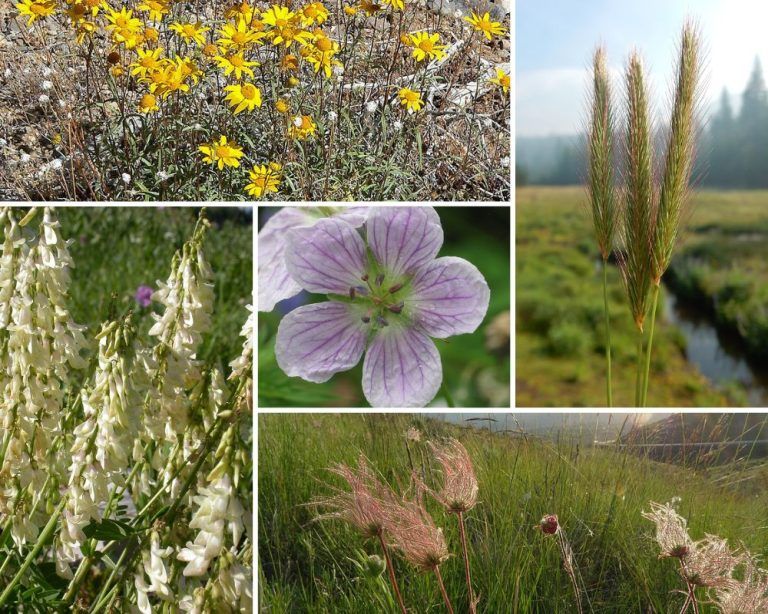
Eight new species and varieties joined the PFAF database in July, while 22 existing plant records received substantial updates.
The Plants For A Future Southwest Expansion continued to gather pace in July 2026. This month’s work added or improved 30 plant profiles, ranging from wet-meadow barley and streamside sunflowers to prairie wildflowers and tough western shrubs.
Eight plants are completely new to the database. Together, they show the extraordinary range of useful plants found across western North America: edible seeds, aromatic roots, traditional medicines, pollinator flowers, nitrogen-fixing legumes, wildlife shrubs and native grasses for wetland restoration. The other 22 records have been expanded with clearer information on identification, habitat, cultivation, edible and medicinal uses, safety and ecological value.
July at a glance
- 30 plant profiles were added or updated.
- Eight plants are new to the PFAF database.
- The month’s plants span nine botanical families, from the rose and pea families to sunflowers and grasses.
- The new records place special emphasis on safe use, habitat, cultivation and ecological function, not simply edibility.
All plants added or updated in July 2026
Follow any name below to open its full PFAF database profile. Plants marked new were added to the database this month.
- Gaillardia pinnatifida
- Galinsoga parviflora
- Galium aparine
- Gaultheria humifusa
- New: Geranium richardsonii
- Geranium viscosissimum
- New: Geum triflorum var. ciliatum
- Glyceria borealis
- Glyceria striata
- Glycyrrhiza lepidota
- Grindelia squarrosa
- Hedysarum alpinum
- Hedysarum boreale
- Hedysarum occidentale
- New: Hedysarum sulphurescens
- Helianthus annuus
- New: Helianthus nuttallii
- Helianthus petiolaris
- New: Heliomeris multiflora var. multiflora
- Heracleum maximum
- Hesperocallis undulata
- Heuchera sanguinea
- Hippuris vulgaris
- Hoffmannseggia glauca
- New: Holodiscus discolor var. discolor
- New: Holodiscus australis
- New: Hordeum brachyantherum
- Hordeum jubatum
- Hordeum murinum
- Hordeum vulgare
New plants added to the PFAF database
The ratings below use the familiar PFAF five-point scale. A low edible rating does not mean a plant lacks value: several of July’s additions are more important as wildlife habitat, restoration plants, traditional medicines or resilient ornamentals.
| Species | Common name | Family | Edible | Medicinal | Other | Main importance |
|---|---|---|---|---|---|---|
| Geranium richardsonii | Richardson’s geranium | Geraniaceae | 2 | 2 | 2 | Woodland wildflower and pollinator plant |
| Geum triflorum var. ciliatum | Prairie-smoke | Rosaceae | 1 | 2 | 2 | Prairie restoration and ornamental seed heads |
| Hedysarum sulphurescens | White sweetvetch | Fabaceae | 2 | 3 | 0 | Mountain legume and pollinator plant |
| Helianthus nuttallii | Nuttall’s sunflower | Asteraceae | 3 | 2 | 2 | Edible seed and wet-meadow wildlife value |
| Heliomeris multiflora var. multiflora | Showy goldeneye | Asteraceae | 3 | 1 | 3 | Edible seed, drought tolerance and pollinators |
| Holodiscus discolor var. discolor | Ocean spray | Rosaceae | 2 | 2 | 4 | Wildlife shrub and exceptionally hard wood |
| Holodiscus australis | Mountain spray | Rosaceae | 1 | 2 | 3 | Rocky-slope shrub and erosion control |
| Hordeum brachyantherum | Meadow barley | Poaceae | 2 | 1 | 2 | Native grain and wetland restoration grass |
Meet July’s eight new plants
Geranium richardsonii — Richardson’s geranium
This hardy perennial brings white to pale-pink, finely veined flowers to cool forests, mountain meadows, stream edges and moist openings. It normally reaches 30–90 cm and is suited to approximately USDA Zones 3–8. The flowers can be used fresh as a delicate garnish, while young leaves are better cooked; boiling and changing the water help soften their strong, tannin-rich astringency.
What makes it interesting: The plant’s familiar “cranesbill” fruit is more than a common name: after flowering, the fruit develops a long beak-like structure characteristic of the genus. Historically, its tannin-rich tissues were valued more as astringent medicine than as food. In gardens it is especially at home in lightly shaded native and pollinator plantings.
Use with care: Eat only correctly identified material and use it in moderation. Young leaves can be confused with poisonous monkshood or delphinium before flowers and mature features make identification easier.
Geum triflorum var. ciliatum — prairie-smoke
Prairie-smoke is among the most memorable wildflowers of western and central North America. Nodding flowers give way to feathery, silvery-pink styles that gather into smoky plumes above low, fern-like foliage. The plant is a long-lived, drought-tolerant perennial for sunny, freely draining sites in roughly USDA Zones 3–8.
What makes it interesting: The roots contain the aromatic compound eugenol, also responsible for the characteristic scent of cloves. Dried and roasted roots have been infused as a strongly flavoured drink, but bitterness and astringency make this a curiosity rather than an everyday beverage. Its greater modern value lies in prairie restoration, early-season pollinator support and spectacular seed heads.
Use with care: High tannin levels can irritate digestion. Root harvesting kills the plant, so cultivated material is preferable and wild populations should be left intact.
Hedysarum sulphurescens — white sweetvetch
White sweetvetch is a comparatively little-known Rocky Mountain legume of meadows, open conifer forest, rocky slopes and subalpine grassland. It grows to about 70 cm and carries pale yellow to creamy-white pea flowers. Like many members of the pea family, it forms a partnership with nitrogen-fixing bacteria, helping it survive in lean mountain soils.
What makes it interesting: Its roots have been recorded as edible, drawing comparison with better-known relatives such as alpine and western sweetvetch. The evidence is sparse, however, and the species is more compelling as a hardy native wildflower and a food source for mountain pollinators. Its restricted distribution also makes conservation-minded cultivation more important than opportunistic wild collection.
Use with care: Do not assume all Hedysarum are interchangeable. The genus includes species with different safety histories, and the limited information available for white sweetvetch does not justify casual or large-scale consumption.
Helianthus nuttallii — Nuttall’s sunflower
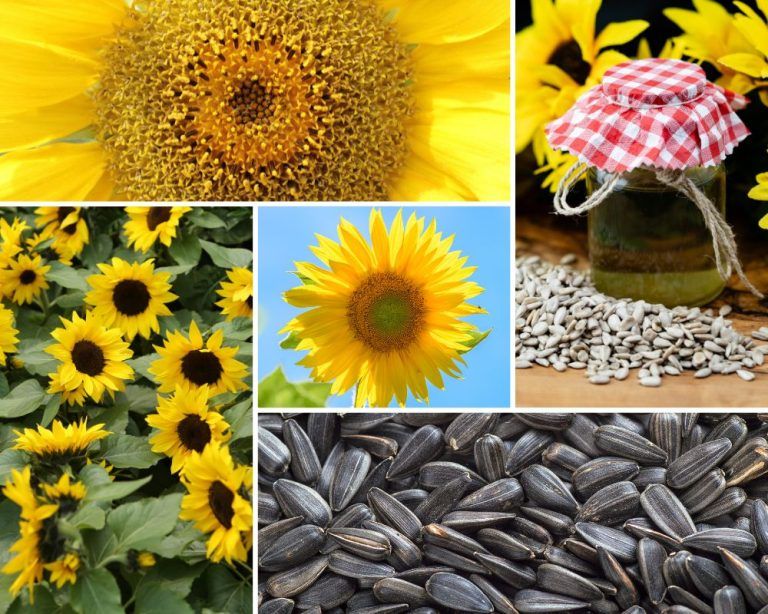
Nuttall’s sunflower is a tall perennial of wet meadows, moist prairies, marsh margins, streambanks and open mountain valleys. In favourable ground it can reach 3 metres, producing numerous golden flower heads above colonies of vigorous stems. Mature seeds can be eaten after cleaning and may be roasted or ground, although they are much smaller than those of cultivated sunflowers.
What makes it interesting: This is a sunflower associated with moisture rather than the dry fields many gardeners expect. Its combination of edible seed, late-season flowers and dense habitat makes it useful to birds, native bees and other wildlife. It can also bring height and movement to large rain gardens or moist meadow plantings.
Use with care: Do not eat underground parts merely because some other perennial sunflowers form edible tubers. Harvest seed only from clean sites, well away from polluted drains, treated farmland or contaminated water.
Heliomeris multiflora var. multiflora — showy goldeneye
Showy goldeneye is a bright, adaptable western perennial found from valley grasslands and sagebrush to pinyon-juniper woodland, aspen openings and mountain slopes. It generally reaches about 1 metre and carries a long display of yellow, daisy-like flowers. The small seeds have a recorded food use and may be parched or ground, though gathering and cleaning them requires patience.
What makes it interesting: Its broad elevational range hints at unusual garden versatility. Once established, it can tolerate drought and poor soils while providing abundant flowers for bees and other insects. For a Southwest planting that must combine resilience, colour and wildlife value, it is one of this month’s standout additions.
Use with care: The food-use record is limited. Confirm identification, collect only clean mature seed and try unfamiliar wild foods in small amounts.
Holodiscus discolor var. discolor — ocean spray
Ocean spray is a substantial western shrub, often about 3 metres high and wide, whose arching branches carry frothy clusters of cream flowers. It occupies open forests, woodland margins, rocky canyons, burns, streambanks and mountain valleys. The flowers support diverse insects, while the dense structure offers cover and nesting habitat.
What makes it interesting: The wood is exceptionally hard and strong for a shrub. Indigenous peoples used it for durable implements such as digging sticks, arrows and tool parts, sometimes hardening the wood further with heat. The shrub also coppices after cutting or fire, making it valuable in resilient hedges, habitat plantings and slope restoration.
Use with care: A history of traditional use does not make large quantities of every plant part suitable as food. Follow the detailed preparation and safety notes in the database profile.
Holodiscus australis — mountain spray
Mountain spray is a tough interior-western shrub of cliffs, canyon walls, talus, dry mountain scrub and open woodland. Plants may reach about 2.5 metres and can root in narrow cracks on steep rock faces. Creamy flower clusters make it attractive to insects, while the dense roots help hold shallow, stony soils.
What makes it interesting: Its ability to establish on near-vertical rock is an impressive example of adaptation to the Southwest’s fragmented mountain habitats. It deserves attention as a native ornamental for difficult sites and as a shrub for erosion control, wildlife cover and low-water landscapes.
Use with care: Mountain spray does not have a well-documented food tradition. Its low edible rating reflects insufficient evidence, and it should not be casually eaten.
Hordeum brachyantherum — meadow barley
Meadow barley is a native cool-season grass of wet meadows, marsh edges, riverbanks, lakeshores, moist pasture and subalpine ground. It commonly forms perennial bunches, despite some variable descriptions in older sources, and reaches around 40–100 cm. Its small grains are edible after careful threshing, cleaning and cooking, parching or grinding.
What makes it interesting: Unlike six-row cultivated barley, its lateral spikelets are generally sterile or male, so a bristly head yields less grain than appearances suggest. Its strongest value is ecological: fibrous roots stabilise wet soil, tolerate periodic flooding and help restore riparian meadows, while the foliage and seeds support meadow food webs.
Use with care: Remove sharp awns and chaff completely. Reject heads showing mould, smut or dark ergot bodies, avoid polluted harvest sites, and remember that wild barley is not gluten-free.
A database record is a starting point, not a foraging shortcut
Edibility ratings summarise potential uses; they do not replace positive identification, careful reading or responsible harvesting. Plant part, preparation, season, dose, site contamination and individual health can all change whether a use is appropriate. Never consume a wild plant unless its identity is certain and the relevant hazards are understood.
What the July updates add
The 22 revised profiles are just as important as the eight new arrivals. They include familiar species such as common sunflower (Helianthus annuus), cleavers (Galium aparine) and cultivated barley (Hordeum vulgare), alongside less familiar plants such as desert lily (Hesperocallis undulata), American licorice (Glycyrrhiza lepidota) and Indian rushpea (Hoffmannseggia glauca).
Bringing these records together makes comparisons easier. Four Hedysarum profiles now sit side by side, helping readers distinguish their uses and safety questions. Three Helianthus species show the contrast between an annual crop, a sand-loving annual and a tall wetland perennial. Four barleys reveal the gulf between a domesticated cereal and wild grasses whose chief value may lie in habitat, restoration or emergency food rather than yield.
This comparative depth is central to the Southwest Expansion. A useful plant database should not simply say that something is edible or medicinal. It should help readers understand which part was used, how it was prepared, how reliable the record is, where the plant grows, what risks apply and what role the species plays in its ecosystem.
From mountain meadows to marsh edges
July’s new plants also broaden the ecological picture of the Southwest. The region is often imagined only through desert basins and dry shrubland, yet its mountains, streams, wetlands and high meadows contain a different—and equally important—flora.
Prairie-smoke and white sweetvetch are plants of open uplands and short growing seasons. Richardson’s geranium favours cool, moist openings. Nuttall’s sunflower and meadow barley lead us to wet meadows and marsh margins. Ocean spray and mountain spray occupy slopes, woodland edges and rocky canyon country. Showy goldeneye connects many of these zones, occurring across a striking range of elevations and plant communities.
Seeing these species together is a reminder that useful-plant conservation depends on whole habitats. Protecting a flower without its pollinators, a wetland grass without seasonal water, or a mountain shrub without the rocky refuges where it regenerates will never be enough.
The Southwest Expansion continues
The Southwest Expansion is building a richer, more practical guide to the region’s edible, medicinal and otherwise useful plants. Each month adds new species while revisiting older records with better detail, clearer cautions and greater attention to cultivation and ecological relationships.
July’s 30 profiles show usefulness in its widest sense. Some offer a modest handful of seeds or an aromatic drink. Others stabilise streambanks, enrich soils, shelter wildlife, feed pollinators or thrive in places where few garden plants can survive. All help us understand the living landscapes of western North America more fully.
Explore the links above, compare the plants and return to the PFAF blog for the next Southwest Expansion update.