Translate this page:
Summary
Showy goldeneye is an abundant mountain and upland wildflower of western North America. Its numerous golden-yellow flower heads can cover hillsides, roadsides, forest openings, and mountain meadows from midsummer into autumn. Although it resembles a small sunflower, its smooth black cypselae lack the pappus found on many related plants. The seeds are edible and were formerly gathered by the Goshiute people of eastern Nevada and western Utah. Despite the plant’s abundance, documented human use as food appears surprisingly limited. This may reflect the small size of the seeds, the effort required to separate them from their shells, or simply gaps in the surviving ethnobotanical record. From a forager’s perspective, showy goldeneye is more promising than its obscurity suggests. The seeds have a genuine grain-like quality, the harvest is easy and painless, the chaff is manageable, and productive colonies may extend across large areas. The species is also useful as a native ornamental, restoration plant, and source of food for insects, birds, and mammals.
Physical Characteristics

 Heliomeris multiflora var. multiflora is a PERENNIAL growing to 1 m (3ft 3in) by 0.6 m (2ft) at a medium rate.
See above for USDA hardiness. It is hardy to UK zone 5. The flowers are pollinated by Bees, Insects, Birds.
It is noted for attracting wildlife.
Suitable for: light (sandy), medium (loamy) and heavy (clay) soils and prefers well-drained soil. Suitable pH: mildly acid, neutral and basic (mildly alkaline) soils and can grow in very acid soils.
It can grow in semi-shade (light woodland) or no shade. It prefers moist soil.
UK Hardiness Map
US Hardiness Map
Synonyms
Heliomeris multiflora var. latifolia Porter. Heliomeris multiflora var. macrocephala Heiser. Viguiera multiflora var. macrocephala (Heiser) B.L.Turner. Viguiera multiflora var. nevadensis S.F.Blake .
Plant Habitats
Edible Uses
The mature seeds are edible and are the only part with a clear traditional food record. Each seed is enclosed within a smooth, dark cypsela approximately 1–3 mm long. Unlike many members of the sunflower family, the fruits lack stiff awns, hooked bristles or a persistent pappus, which makes harvesting more comfortable [2-3]. Whole cypselae are chewable, but the shells have a dry, bran-like texture and are best removed or spat out. A more useful approach is to grind the fruits, toast the material, and winnow away as much of the lighter shell as possible. The resulting seed meal has a much better flavor and texture than whole cypselae [2-3]. Leaves, stems, and flower heads do not have a documented food use and should not be assumed edible merely because the seeds are eaten. The foliage is rough-haired, and members of the sunflower family often contain bitter or resinous compounds. Edible Uses & Rating: Showy goldeneye deserves an edibility rating of 3/5. The seeds taste good, occur abundantly, and are relatively easy to gather. They can be toasted, ground into meal, and stored after careful drying. Their principal limitation is their small size and the difficulty of separating the actual seeds from the surrounding shells [2-3]. The rating may rise to 4/5 where extensive colonies provide a large harvest. A small scattered population would offer too little food to justify the processing time. The plant is therefore best viewed as a potentially valuable bulk seed resource rather than a convenient trailside snack. Taste, Processing & Kitchen Notes: Fresh whole cypselae have a mild, bland flavor with a faint fruity or chamomile-like accent. The shells contribute a bran-like character and can obscure the flavor of the seed inside. Whole fruits are crunchy and chewable, but the dry shell material tends to remain in the mouth and is better discarded. Toasting produces a more recognizable grain-like flavor. The fruits crackle as they heat, and they can burn surprisingly quickly. Low heat, constant movement, and close attention are essential. Toasting also kills insects, reduces moisture, and prepares the fruits for longer storage. Grinding whole cypselae before or after toasting breaks the shells and exposes the kernels. Winnowing the ground material removes a useful proportion of the lightweight shell fragments. The method is imperfect, but it can produce a reasonably pure meal. The pure seed meal is pleasantly rich and substantially better than intact fruits. Water separation is generally ineffective because shells and seeds both tend to sink. Seeds may be slightly more buoyant, but the difference is not large enough to produce clean separation. Dry processing through grinding, sieving and winnowing is more practical. The meal can be added to porridge, mixed with cornmeal or other wild-seed flours, incorporated into flatbreads, or sprinkled over cooked dishes. Because modern nutritional analyses specific to showy goldeneye seed are lacking, it is safest to describe the meal as a concentrated seed food rather than make precise claims about its protein or oil content. Seasonality (Phenology): Showy goldeneye begins active growth in spring and flowers mainly during summer. At higher elevations, flowering may extend well into early autumn. The central disks become increasingly conical as the heads mature, and the entire heads eventually fade from bright yellow to dull brown. Late summer through mid-autumn is usually the best harvesting period. Mature cypselae do not remain on the heads indefinitely, and autumn winds can remove a crop quickly. The ideal approach is to monitor colonies as the heads turn brown and harvest before prolonged dry, windy weather. Seed production can begin in the plant’s first year under favorable cultivation, although wildland plants may take two or three years to mature fully after establishment. Safety & Cautions (Food Use): No specific human poisoning associated with traditionally prepared showy goldeneye seed is well documented. However, the available food-use record is limited, and unfamiliar wild seeds should initially be consumed in small amounts. Showy goldeneye can accumulate nitrates when growing in soils enriched by heavy fertilizer use or concentrated animal manure. USDA guidance identifies nitrate accumulation as a potentially serious livestock hazard under high-nitrogen conditions. This does not establish the nitrate concentration of mature seeds, but it provides a good reason to avoid harvesting any part of the plant from heavily fertilized fields, feedlots, or areas receiving large amounts of animal waste. Natural Resources Conservation Service Avoid harvesting along roadsides treated with herbicides or exposed to polluted runoff. Discard moldy, insect-damaged or foul-smelling fruits. People with allergies to plants or seeds in the sunflower family should proceed cautiously. The documented traditional use applies to the seeds. Leaves, flower heads, and roots should not be eaten without reliable evidence confirming their suitability [2-3]. Harvest & Processing Workflow: Harvest when the heads are dull brown and the cypselae detach readily. A collection bag, basket or sheet can be held beneath the plants while the heads are rubbed, tapped or stripped. The absence of sharp pappi makes the process comparatively painless. Dry the harvested material promptly in a shaded, well-ventilated place. Once thoroughly dry, rub or thresh the heads to release remaining fruits. Winnow away the lightest floral material and chaff. For whole roasted cypselae, spread them in a shallow pan and toast gently, stirring continuously. For meal, grind the fruits coarsely, toast if desired, and winnow or sift repeatedly to remove shell fragments. Grinding after light toasting may make the shells more brittle and easier to separate. Store only fully dry material in airtight containers. Whole cypselae will generally keep longer than ground meal because the intact shells protect the seed from oxygen and moisture. Harvest conservatively. The seeds support birds and small mammals, and enough should remain to maintain the colony. Cultivar/Selection Notes: Showy goldeneye is occasionally offered as native wildflower seed, but named edible cultivars are not available. Seed sold commercially is generally intended for restoration, meadow gardens, pollinator plantings, or naturalistic borders. The species contains considerable natural variation. Variety multiflora generally has flat leaf margins and occupies higher or somewhat moister habitats than variety nevadensis, whose leaves often have rolled margins and which commonly occurs at lower, drier sites. A third variety, brevifolia, is also recognized in modern North American treatments. Potential selection for food use could favor larger cypselae, heavier seed yields, more uniform ripening, and stronger seed retention. Selection for compact growth and prolonged flowering would be more useful from a horticultural standpoint. Look-Alikes & Confusion Risks: Showy goldeneye resembles small sunflowers and several yellow-flowered members of the sunflower family. It has historically been classified within Viguiera, and these genera remain closely related in appearance. The fruits provide an important distinction. Heliomeris cypselae lack a pappus, while Viguiera fruits generally bear two persistent awn-tipped scales, sometimes accompanied by smaller scales. Showy goldeneye fruits are black to brown, hairless or nearly so, weakly four-angled and free of conspicuous bristles. The plant may also be confused with small Helianthus, Heliomeris, Heliopsis, or Heterotheca species. Identification should consider the opposite leaves, clustered yellow heads, conical chaffy receptacles, sterile ray florets, fertile disk florets, and pappus-free cypselae [2-3]. Traditional/Indigenous Use Summary: The best-known record of showy goldeneye as food comes from Ralph Chamberlin’s early twentieth-century account of Goshiute ethnobotany. The Goshiute name was recorded as “icamotaqa,” with the concise note that the seeds were formerly eaten. USDA’s plant guide also recognizes Goshute use of the seed as food and describes the species’ wider Indigenous use as limited (Natural Resources Conservation Service). The brevity of the historical record should not be interpreted as proof that only one community ever ate the seed. Knowledge may have been lost, incompletely documented or never recorded. Nevertheless, it is appropriate to distinguish confirmed Goshiute use from speculation about use by other peoples.
References More on Edible Uses
Medicinal Uses
Plants For A Future can not take any responsibility for any adverse effects from the use of plants. Always seek advice from a professional before using a plant medicinally.
Heliomeris multiflora var. multiflora (showy goldeneye) has no widely recognized modern medical uses. Historically, the Navajo people used a plant decoction (a boiled plant extract) as a gynecological aid. This was taken by middle-aged women to induce childbirth and by pregnant women for sore abdomens.
References More on Medicinal Uses
The Bookshop: Edible Plant Books
Our Latest books on Perennial Plants For Food Forests and Permaculture Gardens in paperback or digital formats.
Edible Tropical Plants
Food Forest Plants for Hotter Conditions: 250+ Plants For Tropical Food Forests & Permaculture Gardens.
More
Edible Temperate Plants
Plants for Your Food Forest: 500 Plants for Temperate Food Forests & Permaculture Gardens.
More
More Books
PFAF have eight books available in paperback and digital formats. Browse the shop for more information.
Shop Now
Other Uses
The small golden heads are produced in clusters and remain attractive for a long period. The species is suitable for mixed borders, meadow gardens, pollinator plantings, roadside restoration, and naturalized mountain landscapes. USDA guidance describes it as manageable in landscapes and useful in mixed borders and meadow gardens. Ecology & Wildlife: Showy goldeneye has broad ecological value. Its flowers support pollinators, its seeds feed birds and small rodents, and its leaves and flower heads are browsed by livestock and large wildlife, including deer and elk. The species is useful in restoration because it establishes on disturbed ground, competes effectively in mixed seedings, and occurs across several stages of ecological succession. It often increases after fire and can help cover exposed soil during early recovery. Its deep perennial root system helps stabilize slopes and upland soils. In native gardens, it combines seasonal beauty, wildlife support, and a modest but genuine human food use, making it a particularly useful multifunctional species.
Special Uses
References More on Other Uses
Cultivation details
Showy goldeneye is an overlooked edible-seed plant with more potential than its limited historical coverage suggests. Its strengths include abundance, easy harvesting, painless fruits, good seed-meal flavor, and adaptation to mountain environments where colonies may be extensive. Its weaknesses are small seed size, shell separation, and a short harvest window. It is not a convenient crop compared with domesticated grains, but it could be an important supplementary seed where large wild stands occur. The plant’s ecological and ornamental values are at least as important as its food use. It flowers abundantly, supports many animals, establishes well in restoration mixes, and tolerates a broad range of western upland conditions. Growing Conditions: Showy goldeneye grows best in full sun, although it tolerates some open shade. It prefers well-drained loam or loamy sand but occurs naturally on soils ranging from heavy clay to sand and gravel, and from acidic to basic. Variety multiflora commonly occupies mountain meadows, sagebrush, pinyon-juniper, aspen, and open forest habitats. The species is adapted to moderate annual precipitation and survives seasonal dryness once its taproot and woody crown are established. It performs poorly in dense, deep shade and is usually most abundant in forest openings, sunny slopes, and disturbed sites. Habitat & Range: Showy goldeneye is native to western and south-central North America. Variety multiflora occurs across Montana, Idaho, Wyoming, Colorado, Utah, Nevada, Arizona, New Mexico, and Texas. The species as a whole extends south into Mexico. It grows from valley grasslands into montane and subalpine communities. Recorded habitats include sagebrush, pinyon-juniper woodland, mountain brush, quaking aspen, spruce-fir forest, stream margins, roadsides, forest openings, and dry to moderately moist slopes. Elevational occurrence for the species as a whole extends approximately from 900 to 3,600 m, with the nominate variety often occupying the higher part of that range. Size & Landscape Performance: Plants generally grow 20–100 cm tall and approximately 30–60 cm wide. The perennial crown produces several branching stems, creating an upright but airy mound. Under favorable conditions, neighboring plants can form broad displays of flowers. The small golden heads are produced in clusters and remain attractive for a long period. The species is suitable for mixed borders, meadow gardens, pollinator plantings, roadside restoration, and naturalized mountain landscapes. USDA guidance describes it as manageable in landscapes and useful in mixed borders and meadow gardens. After flowering, the stems and heads become brown and relatively inconspicuous. Cutting back in late autumn improves tidiness, while leaving stems standing benefits wildlife and seed dispersal. Cultivation (Horticulture): Showy goldeneye is most easily cultivated from seed. Autumn or early winter sowing is particularly suitable because the seeds have a pre-chilling requirement. Sow shallowly, no more than about 6 mm deep, into a firm, weed-free seedbed. Seedlings are reasonably vigorous, but competition from established grasses and weeds can reduce establishment. Keep the seedbed open during the first season. Once mature, plants are drought-tolerant and generally require little maintenance. Direct sowing is practical for restoration. Container-grown seedlings can also be planted while young, before the taproot becomes restricted. Irrigate during establishment, then reduce water as roots develop. Deadheading may prolong flowering and prevent unwanted seed spread. Where seed production is the goal, allow heads to mature fully and protect them from wind loss. Pests & Problems: Showy goldeneye has few serious garden pests. Browsing may occur because cattle, sheep, deer and elk eat the leaves and flower heads, while birds and rodents consume the seed. The most significant known chemical concern is nitrate accumulation in heavily nitrogen-enriched soils. This is primarily documented as a livestock hazard. Avoid excessive nitrogen fertilizer and do not establish food-harvest plots near concentrated manure deposits. Plants can become tall or floppy in rich soil or partial shade. They may also reseed into open ground. No major environmental problem is associated with the species in its native communities. Identification & Habit: Showy goldeneye is an upright, branching perennial arising from a woody crown and taproot. Leaves are simple and usually opposite, although upper leaves may become alternate. The blades range from linear to lance-ovate, with entire or sparsely toothed margins. Variety multiflora generally has flat rather than strongly rolled leaf margins. The foliage is rough-haired. Flower heads occur in terminal clusters and contain golden-yellow sterile ray florets surrounding numerous fertile yellow disk florets. The receptacle becomes conical with age and bears chaffy scales around the disk flowers. The cypselae are black or dark brown, smooth, hairless, weakly four-angled, and lack a pappus. This absence is one of the most useful features for separating Heliomeris from closely related Viguiera species [2-3]. Pollinators: Showy goldeneye is a valuable pollinator plant. USDA records visits by native bees, butterflies, and hummingbirds and specifically notes several native bee species observed on flowers in Colorado. The numerous disk florets provide pollen and nectar over an extended flowering period. Large colonies can become important late-summer resources in mountain landscapes where other flowers are beginning to decline. The open heads are accessible to both long- and short-tongued insects, including solitary bees, bumblebees, flies, and small butterflies. Showy goldeneye, Heliomeris multiflora var. multiflora, belongs to the sunflower family (Asteraceae) and the genus Heliomeris. Older botanical names include Viguiera multiflora and Gymnolomia multiflora. Common names include showy goldeneye, false goldeneye, little sunflower, many-flowered sunflower, mountain sunflower, sunspots and rosinweed. Heliomeris multiflora is currently accepted as a distinct species, native to the western and south-central United States and into Mexico. The nominate variety is the most widely distributed form. It is a perennial generally suited to approximately USDA Hardiness Zones 4b–10a. Plants commonly grow 20–100 cm tall and approximately 30–60 cm wide, although vigorous multi-stemmed plants may become broader. They arise from a branched, somewhat woody crown and taproot rather than spreading aggressively through rhizomes. USDA guidance describes plants reaching about 1 m tall and recommends the species for Zones 4b–10a.
References Carbon Farming Information and Carbon Sequestration Information
Temperature Converter
Type a value in the Celsius field to convert the value to Fahrenheit:
Fahrenheit:
The PFAF Bookshop
Plants For A Future have a number of books available in paperback and digital form. Book titles include Edible Plants, Edible Perennials, Edible Trees,Edible Shrubs, Woodland Gardening, and Temperate Food Forest Plants. Our new book is Food Forest Plants For Hotter Conditions (Tropical and Sub-Tropical).
Shop Now
Plant Propagation
Propagation is primarily by seed. Dormant autumn or winter sowing allows natural cold exposure. Spring sowing is possible after a period of cold, moist stratification. Seeds should be sown shallowly because deep burial reduces emergence. Stored seed can retain viability for several years under suitable dry conditions. USDA guidance reports no significant loss of viability for up to 7 years during warehouse storage. Division is less commonly used because the plant develops a woody crown and taproot rather than soft spreading rhizomes. Young container plants transplant more successfully than mature specimens.
Other Names
If available other names are mentioned here
Showy goldeneye, false goldeneye, little sunflower, many-flowered sunflower, mountain sunflower, sunspots and rosinweed.
Native Range
US. USA. Arizona, Colorado, Idaho, Mexico Central, Mexico Northeast, Mexico Northwest, Mexico Southeast, Mexico Southwest, Montana, Nevada, New Mexico, Texas, Utah, Wyoming.
Weed Potential
Right plant wrong place. We are currently updating this section.
Please note that a plant may be invasive in one area but may not in your area so it's worth checking.
Weed potential is moderate in disturbed, open ground. Showy goldeneye produces large quantities of seed, establishes rapidly after disturbance, and can spread into areas occupied by annuals. It may become locally dominant on burned, grazed, or otherwise opened sites. Despite this colonizing ability, USDA guidance does not consider it an environmental threat to native plant communities within its natural range. It is better described as a vigorous native pioneer than an invasive weed. In gardens, unwanted seedlings can be controlled by deadheading or pulling them while young.
Conservation Status
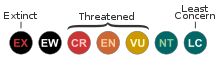
IUCN Red List of Threatened Plants Status : Not listed.
Growth: S = slow M = medium F = fast. Soil: L = light (sandy) M = medium H = heavy (clay). pH: A = acid N = neutral B = basic (alkaline). Shade: F = full shade S = semi-shade N = no shade. Moisture: D = dry M = Moist We = wet Wa = water.
Now available:
Food Forest Plants for Mediterranean Conditions
350+ Perennial Plants For Mediterranean and Drier Food Forests and Permaculture Gardens.
[Paperback and eBook]
This is the third in Plants For A Future's series of plant guides for food forests tailored to
specific climate zones. Following volumes on temperate and tropical ecosystems, this book focuses
on species suited to Mediterranean conditions—regions with hot, dry summers and cool, wet winters,
often facing the added challenge of climate change.
Read More
Expert comment
Author
Nutt.
Botanical References
Links / References
For a list of references used on this page please go here
Readers comment
| Add a comment |
|
If you have important information about this plant that may help other users please add a comment or link below. Only comments or links that are felt to be directly relevant to a plant will be included. If you think a comment/link or information contained on this page is inaccurate or misleading we would welcome your feedback at [email protected]. If you have questions about a plant please use the Forum on this website as we do not have the resources to answer questions ourselves.
* Please note: the comments by website users are not necessarily those held by PFAF and may give misleading or inaccurate information.
|
Subject : Heliomeris multiflora var. multiflora
|
|
|
|