 |
|
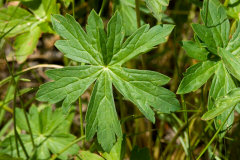
Robert Flogaus-Faust. Creative Commons Attribution 4.0 |
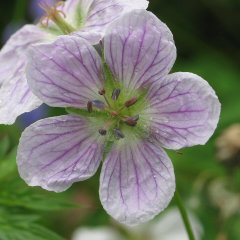 |
| Aspidoscelis. Creative Commons Zero, Public Domain Dedication |
Translate this page:
Summary
Richardson’s geranium is a woodland and mountain meadow species native to western North America. It produces attractive white to pale pink flowers with delicate veins and deeply lobed leaves typical of wild geraniums. Although better known historically as a medicinal plant, the young leaves and flowers have limited edible uses. The plant is not considered a major wild vegetable because of its strong astringency, but careful preparation can make the leaves usable. Richardson’s geranium (Geranium richardsonii) belongs to the geranium family (Geraniaceae) and the genus Geranium. Common names include Richardson’s geranium, white geranium, and Richardson’s cranesbill. It is a hardy perennial wildflower generally suited to USDA Zones 3–8. Plants typically grow 30–90 cm tall with a spread of about 30–60 cm.
Physical Characteristics

 Geranium richardsonii is a PERENNIAL growing to 0.9 m (3ft) by 0.6 m (2ft in) at a medium rate.
See above for USDA hardiness. It is hardy to UK zone 4. The flowers are pollinated by Bees, Insects.
It is noted for attracting wildlife.
Suitable for: light (sandy), medium (loamy) and heavy (clay) soils and prefers well-drained soil. Suitable pH: mildly acid, neutral and basic (mildly alkaline) soils. It can grow in semi-shade (light woodland). It prefers moist soil.
UK Hardiness Map
US Hardiness Map
Synonyms
Geranium albiflorum Hook.
Plant Habitats
Edible Uses
The leaves and flowers are edible. The flowers are the most pleasant part and can be used fresh as an attractive garnish [2-3]. The leaves are edible but are usually too bitter and astringent to enjoy raw. Cooking greatly improves their quality and reduces the harsh flavor. Stems and leaf stalks are generally avoided because they contain tough fibers [2-3]. Edible Uses & Rating: Leaves can be cooked as potherbs, while flowers may be eaten fresh in salads or used as decoration [2-3]. Edibility Rating: 2/5. Richardson’s geranium is edible but not especially desirable. Its abundance and availability are useful, but bitterness and limited food history reduce its value. Taste, Processing & Kitchen Notes: Fresh leaves have a strong, dry, bitter flavor, largely due to astringent compounds such as tannins. They are usually unsuitable for salads. Boiling improves the leaves considerably. The cooked flavor becomes milder, resembling green vegetables such as beans, combined with the distinctive character of geranium foliage. A change of cooking water can further reduce bitterness. The texture remains somewhat chewy, although it is not usually fibrous. Chopping the leaves before cooking improves tenderness and helps remove unwanted flavors. Flowers are much milder. They have a delicate taste and provide visual interest rather than significant nutrition [2-3]. Nutritional Value: Like many leafy wild plants, Richardson’s geranium provides minerals, fiber, and plant compounds. However, its high tannin content limits its value as a regular vegetable. The same astringent compounds responsible for the strong taste contributed to its traditional medicinal uses. Seasonality (Phenology): Young leaves appear in spring and early summer and are best harvested before they become mature and tough. Flowering usually occurs from late spring through summer. Seeds develop after flowering [2-3]. Safety & Cautions (Food Use): Moderation is recommended because wild geraniums contain high levels of tannins and other biologically active compounds. When gathering young leaves, correct identification is essential. Young leaves may superficially resemble poisonous plants such as monkshood (Aconitum species) and delphiniums (Delphinium species). Flowers and mature plant features make separation much easier. Harvest & Processing Workflow. Gather young, healthy leaves before flowering or early in the season. Remove tough stalks and stems. Wash thoroughly, chop, and boil. Discarding the cooking water improves flavor. Flowers can be gathered when fully open and used fresh [2-3]. Cultivar/Selection Notes: Richardson’s geranium is mainly grown as a native ornamental rather than as a food crop. Selection focuses on flower appearance, wildlife value, and adaptation to natural gardens. Look-Alikes & Confusion Risks: Other wild geranium species are similar and can be difficult to distinguish. Identification often depends on flower color, leaf shape, hair characteristics, and fruit structures. The distinctive long-beaked fruits of Geranium species help confirm identification [2-3]. Traditional/Indigenous Use Summary: Wild geraniums were much more important medicinally than as food plants. They were traditionally valued for their strong astringent properties and were used externally and internally in various preparations. Food use appears to have been occasional rather than a major dietary practice [2-3].
References More on Edible Uses
Medicinal Uses
Plants For A Future can not take any responsibility for any adverse effects from the use of plants. Always seek advice from a professional before using a plant medicinally.
Geranium richardsonii (Richardson's geranium) has traditional ethnobotanical uses. Historically, Indigenous communities and herbalists used the plant as a natural remedy. Specific recorded medicinal applications include: Stopping Nosebleeds: Pulverized leaves were used as snuff, and powdered roots were ingested to treat nosebleeds. General Astringent Use: Like other plants in the Geranium genus, it contains tannins and organic acids (like tartaric acid), which provide astringent properties that help clot blood and soothe inflammation.
References More on Medicinal Uses
Other Uses
Suitable for woodland gardens, native plant landscapes, and pollinator gardens. Richardson’s geranium is mainly grown as a native ornamental rather than as a food crop. Selection focuses on flower appearance, wildlife value, and adaptation to natural gardens. Ecology & Wildlife: The plant supports pollinating insects and contributes to the diversity of mountain meadow and woodland ecosystems.
Special Uses
References More on Other Uses
Cultivation details
Richardson’s geranium is a beautiful and widespread native plant with limited edible potential. While the cooked leaves can be eaten and the flowers are pleasant additions to salads, their greatest value lies in their support for wildlife, traditional medicine, and ornamental qualities. Growing Conditions: Richardson’s geranium prefers cool climates, partial shade, and moderately moist soils. It grows well in woodland edges, mountain meadows, and open forests. It tolerates a variety of soils but performs best where moisture is available. Habitat & Range: Native to western North America, especially mountain regions. It occurs in forests, meadows, stream edges, and moist openings. Size & Landscape Performance: Plants form attractive clumps of deeply divided foliage with upright flowering stems. They are suitable for woodland gardens, native plant landscapes, and pollinator gardens. Cultivation (Horticulture): Easy to grow in suitable climates. Plants benefit from natural woodland conditions and usually require little maintenance once established. Pests & Problems: Few serious problems occur. Excessively dry or hot conditions may reduce vigor. Identification & Habit: A perennial herb with rounded, palmately divided leaves and five-petaled flowers. Flowers are usually white to pale pink with visible veins. Fruits form the characteristic elongated “cranesbill” structure of the genus. Pollinators: Flowers attract native bees, flies, and other insects. Open flowers provide accessible pollen and nectar. Richardson’s geranium (Geranium richardsonii) belongs to the geranium family (Geraniaceae) and the genus Geranium. Common names include Richardson’s geranium, white geranium, and Richardson’s cranesbill. It is a hardy perennial wildflower generally suited to USDA Zones 3–8. Plants typically grow 30–90 cm tall with a spread of about 30–60 cm.
References Carbon Farming Information and Carbon Sequestration Information
Temperature Converter
Type a value in the Celsius field to convert the value to Fahrenheit:
Fahrenheit:
The PFAF Bookshop
Plants For A Future have a number of books available in paperback and digital form. Book titles include Edible Plants, Edible Perennials, Edible Trees,Edible Shrubs, Woodland Gardening, and Temperate Food Forest Plants. Our new book is Food Forest Plants For Hotter Conditions (Tropical and Sub-Tropical).
Shop Now
Plant Propagation
Propagation occurs by seed and division of established plants.
Other Names
If available other names are mentioned here
Richardson’s geranium, white geranium, and Richardson’s cranesbill.
Native Range
US. USA. Alberta, Arizona, British Columbia, California, Colorado, Idaho, Montana, Nevada, New Mexico, Northwest Territories, Oregon, Saskatchewan, South Dakota, Utah, Wyoming, Yukon.
Weed Potential
Right plant wrong place. We are currently updating this section.
Please note that a plant may be invasive in one area but may not
in your area so it's worth checking.
Low. Richardson’s geranium may self-seed in suitable habitats but is not generally aggressive.
Conservation Status
IUCN Red List of Threatened Plants Status : Not listed.
IUCN Red List
| Related Plants
|
| Latin Name | Common Name | Habit | Height | Hardiness | Growth | Soil | Shade | Moisture | Edible | Medicinal | Other |
| Bauhinia purpurea | Orchid Tree, Purple Butterfly Tree, Mountain Ebony, Geranium Tree, Purple Bauhinia | Tree | 10.0 |
9-12
| F | LM | SN | M | 2 | 2 | 4 |
| Geranium bicknellii | Bicknell's cranesbill | Annual/Biennial | 0.6 |
0-0
| | LMH | N | M | 1 | 1 | |
| Geranium dissectum | Cut-Leafed Cranesbill, Cutleaf geranium | Annual | 0.6 |
6-9
| | LMH | N | M | 1 | 2 | 2 |
| Geranium erianthum | Wooly Geranium | Perennial | 0.3 |
3-7
| | LMH | SN | M | 1 | 1 | |
| Geranium incanum | Geranium, Cranesbill | Perennial | 0.4 |
4-9
| F | LMH | N | M | 1 | 0 | |
| Geranium lucidum | Shining geranium | Annual | 0.5 |
6-9
| | LMH | N | DM | 0 | 1 | 2 |
| Geranium macrorrhizum | Bigroot Geranium | Perennial | 0.5 |
4-8
| F | LMH | FSN | DM | 0 | 1 | 3 |
| Geranium maculatum | Spotted Cranesbill, Spotted geranium, Crowfoot, Wild Geranium, Cranesbill | Perennial | 0.6 |
3-10
| M | LMH | N | MWe | 0 | 3 | 2 |
| Geranium molle | Dovefoot Geranium | Annual | 0.4 |
-
| | LMH | N | DM | 0 | 1 | |
| Geranium nepalense | Nepalese Crane's Bill | Perennial | 1.0 |
6-9
| | LMH | N | M | 1 | 2 | 1 |
| Geranium ocellatum | | Annual | 0.3 |
-
| | LMH | N | M | 0 | 1 | |
| Geranium pilosum | | Perennial | 0.3 |
-
| | LMH | N | M | 1 | 0 | |
| Geranium potentilloides | Native Carrot, Cinquefoil geranium | Perennial | 0.6 |
0-0
| | LMH | N | M | 1 | 0 | |
| Geranium pratense | Meadow Crane's Bill, Meadow geranium, Geranium | Perennial | 1.2 |
5-9
| F | LMH | N | M | 0 | 2 | |
| Geranium pusillum | Small geranium | Perennial | 1.0 |
6-9
| | LMH | N | DM | 0 | 1 | |
| Geranium robertianum | Herb Robert, Robert geranium | Annual/Biennial | 0.4 |
5-9
| | LMH | SN | DM | 0 | 2 | 2 |
| Geranium rotundifolium | Roundleaf geranium | Annual | 0.4 |
6-9
| | LMH | N | M | 0 | 1 | |
| Geranium sibiricum | Siberian geranium | Perennial | 0.2 |
5-9
| | LMH | N | M | 0 | 1 | |
| Geranium solanderi | Solander's Geranium | Perennial | 0.6 |
-
| | LMH | N | M | 1 | 0 | |
| Geranium sylvaticum | Wood Cranesbill, Woodland geranium | Perennial | 1.0 |
4-8
| | LMH | FSN | M | 0 | 0 | 3 |
| Geranium thunbergii | Thunberg's geranium | Perennial | 0.3 |
6-9
| | LMH | N | M | 1 | 1 | |
| Geranium tuberosum | | Perennial | 0.3 |
7-10
| | LMH | N | M | 2 | 0 | |
| Geranium viscosissimum | Sticky Geranium | Perennial | 0.9 |
4-8
| | LMH | SN | M | 2 | 2 | 1 |
| Geranium wallichianum | | Perennial | 0.3 |
6-9
| | LMH | SN | M | 0 | 2 | 3 |
| Geranium wilfordii | | Perennial | 0.6 |
-
| | LMH | SN | M | 0 | 2 | |
| Heuchera americana | Rock Geranium, American alumroot, Alumroot, Coral Bells, Rock Geranium | Perennial | 0.5 |
4-9
| M | LM | SN | M | 0 | 3 | 2 |
| Pelargonium australe | Ivy Geranium | Perennial | 0.3 |
8-11
| | LM | N | DM | 1 | 1 | |
| Pelargonium capitatum | Rose-Scented Geranium | Shrub | 0.6 |
8-11
| | LM | N | DM | 0 | 3 | 3 |
| Pelargonium crispum | Lemon Geranium | Shrub | 0.7 |
8-11
| | LM | SN | DM | 2 | 2 | 3 |
|
|
Growth: S = slow M = medium F = fast. Soil: L = light (sandy) M = medium H = heavy (clay). pH: A = acid N = neutral B = basic (alkaline). Shade: F = full shade S = semi-shade N = no shade. Moisture: D = dry M = Moist We = wet Wa = water.
Now available:
Food Forest Plants for Mediterranean Conditions
350+ Perennial Plants For Mediterranean and Drier Food Forests and Permaculture Gardens.
[Paperback and eBook]
This is the third in Plants For A Future's series of plant guides for food forests tailored to
specific climate zones. Following volumes on temperate and tropical ecosystems, this book focuses
on species suited to Mediterranean conditions—regions with hot, dry summers and cool, wet winters,
often facing the added challenge of climate change.
Read More
Expert comment
Author
Fisch. & Trautv.
Botanical References
Links / References
For a list of references used on this page please go here
Readers comment
| Add a comment |
|
If you have important information about this plant that may help other users please add a comment or link below. Only comments or links that are felt to be directly relevant to a plant will be included. If you think a comment/link or information contained on this page is inaccurate or misleading we would welcome your feedback at [email protected]. If you have questions about a plant please use the Forum on this website as we do not have the resources to answer questions ourselves.
* Please note: the comments by website users are not necessarily those held by PFAF and may give misleading or inaccurate information.
|
Subject : Geranium richardsonii
|
|
|
|