Translate this page:
Summary
Common burdock is a robust biennial herb in the sunflower family (Asteraceae), native to Europe and Asia but widely naturalized across North America. In its first year, it forms a large rosette of broad leaves; in the second year, it bolts to produce tall flowering stems (50–150 cm). The hooked burrs of its flower heads cling to fur and clothing, making this plant both memorable and weedy. A European native weed invasive in Australia, North and South America, and other areas. Very good medicinal and edible properties. The edible parts: include the leaves; root; seed; and Stem. Burdock is one of the foremost detoxifying herbs in both Chinese and Western herbal medicine.It’s fibre has also been used for paper.
Physical Characteristics

 Arctium minus is a BIENNIAL growing to 1 m (3ft 3in).
See above for USDA hardiness. It is hardy to UK zone 4 and is not frost tender. It is in flower from July to September, and the seeds ripen from September to October. The species is hermaphrodite (has both male and female organs) and is pollinated by Bees, Lepidoptera (Moths & Butterflies). The plant is self-fertile.
It is noted for attracting wildlife.
Suitable for: light (sandy), medium (loamy) and heavy (clay) soils and prefers well-drained soil. Suitable pH: mildly acid, neutral and basic (mildly alkaline) soils. It can grow in semi-shade (light woodland) or no shade. It prefers moist soil.
UK Hardiness Map
US Hardiness Map
Synonyms
Plant Habitats
Woodland Garden Sunny Edge;
Edible Uses
Edible Parts: Leaves Root Seed Stem
Edible Uses: Coffee
Burdock is a high-value wild food, though not all parts are equally palatable. The roots are the most important edible portion, ranking among the top ten wild foods. First-year roots are preferred, dug before stems form, and can even be spotted in winter beneath snow by the massive egg-shaped leaves. Fresh roots are dull white with brown skins, tasting earthy and starchy with mild resins. They are tough when raw but soften to carrot-like firmness after boiling 1–2 hours. They are excellent in soups, stews, or stir-fries. The leaf stalks and stems are also edible. Young stalks resemble celery in size and texture, though their flavor leans toward artichoke with a salty-bitter accent. Boiling softens the cobweb-like hairs, and the stalks can be used as vegetables. The pith of young stems is soft and mild, though extracting it is difficult. Older stems become extremely fibrous and woody [2-3]. The leaf blades, though large and visually impressive (up to 30 × 50 cm), are less desirable. They are bitter, salty, and mucilaginous, with boiling only slightly improving flavor. They are not suitable as vegetables, though they can be used in survival contexts [2-3]. Overall, burdock roots are the star food part, while stems and stalks provide a secondary vegetable resource. Leaves are best avoided [2-3]. Root - raw or cooked[62, 85]. The best roots are obtained from young plants[85]. Usually peeled and sliced[183]. The roasted root is a coffee substitute[183]. Young leaves and leaf stems - raw or cooked[85]. Used as a potherb[183]. Mucilaginous. It is best to remove the rind from the stem[85]. Young flowering stem - peeled and eaten raw or cooked like asparagus[177, 183]. Seed sprouts[55]. No further details. Edibility rating: 4/5 – Roots excellent, stalks useful, leaves poor. According to USDA data (for greater burdock, Arctium lappa, but closely comparable): 100 g of raw root provides ~72 kcal, 1.5 g protein, 17 g carbohydrates, and useful amounts of potassium (308 mg), calcium, phosphorus, magnesium, iron, and B vitamins.
References More on Edible Uses
Medicinal Uses
Plants For A Future can not take any responsibility for any adverse effects from the use of plants. Always seek advice from a professional before using a plant medicinally.
Alterative Antibacterial Antifungal Aperient Blood purifier Carminative Cholagogue Diaphoretic
Diuretic Eczema Hypoglycaemic
Burdock is one of the foremost detoxifying herbs in both Chinese and Western herbal medicine[254]. Arctium lappa is the main species used, though this species has similar properties[254]. The dried root of one year old plants is the official herb, but the leaves and fruits can also be used[4]. It is used to treat conditions caused by an 'overload' of toxins, such as throat and other infections, boils, rashes and other skin problems[254]. The root is thought to be particularly good at helping to eliminate heavy metals from the body[254]. The plant is antibacterial, antifungal and carminative[9, 21, 147, 165, 176]. It has soothing, mucilaginous properties and is said to be one of the most certain cures for many types of skin diseases, burns, bruises etc[4, 244]. It is used in the treatment of herpes, eczema, acne, impetigo, ringworm, boils, bites etc[244]. The plant can be taken internally as an infusion, or used externally as a wash[244]. Use with caution[165]. One-year old roots are alterative, aperient, blood purifier, cholagogue, depurative, diaphoretic, diuretic and stomachic[218, 222]. The seed is alterative, antibacterial, antifungal, antiphlogistic, depurative, diaphoretic, diuretic and hypoglycaemic[176, 218]. It is used in the treatment of colds with sore throat and cough, measles, pharyngitis, acute tonsillitis and abscesses[176]. The crushed seed is poulticed onto bruises[222]. The seed is harvested in the summer and dried for later use[254]. The seed contains arctiin, this excites the central nervous system producing convulsions an increase in respiration and later paralysis. It also lowers the blood pressure by dilating the blood vessels[176]. The leaves are poulticed onto burns, ulcers and sores[222].
References More on Medicinal Uses
The Bookshop: Edible Plant Books
Our Latest books on Perennial Plants For Food Forests and Permaculture Gardens in paperback or digital formats.
Edible Tropical Plants
Food Forest Plants for Hotter Conditions: 250+ Plants For Tropical Food Forests & Permaculture Gardens.
More
Edible Temperate Plants
Plants for Your Food Forest: 500 Plants for Temperate Food Forests & Permaculture Gardens.
More
More Books
PFAF have eight books available in paperback and digital formats. Browse the shop for more information.
Shop Now
Other Uses
Paper
A fibre is obtained from the inner bark and is used to make paper. It is about 0.9mm long[189]. The stems are harvested in late summer, the leaves are removed and the stems steamed in order to strip off the fibre. The fibres are then cooked for two hours in soda ash before being put in a ball mill for 2 hours[189]. The resulting paper is a light tan/ brown colour[189]. Burrs famously inspired the invention of Velcro.
Special Uses
Attracts Wildlife Dynamic accumulator Food Forest
References More on Other Uses
Cultivation details
Succeeds on most soils, preferably moist[200]. Prefers a sunny position. Prefers partial shade according to another report[200]. A polymorphic species[17]. A good butterfly plant[24]. In garden design, as well as the above-ground architecture of a plant, root structure considerations help in choosing plants that work together for their optimal soil requirements including nutrients and water. The root pattern is fleshy. Thick or swollen - fibrous or tap root [2-1].
References Carbon Farming Information and Carbon Sequestration Information
Temperature Converter
Type a value in the Celsius field to convert the value to Fahrenheit:
Fahrenheit:
The PFAF Bookshop
Plants For A Future have a number of books available in paperback and digital form. Book titles include Edible Plants, Edible Perennials, Edible Trees,Edible Shrubs, Woodland Gardening, and Temperate Food Forest Plants. Our new book is Food Forest Plants For Hotter Conditions (Tropical and Sub-Tropical).
Shop Now
Plant Propagation
Seed - best sown in situ in autumn.
Other Names
If available other names are mentioned here
Bardane, beggar's button, button-bur, common burdock, burweed, cuckoo-button, lesser burdock, louse-bur, wild burdock, wild rhubarb.
Native Range
TEMPERATE ASIA: Afghanistan, Cyprus, Iran (northwest), Iraq, Lebanon, Syria (west), Turkey, Russian Federation-Ciscaucasia (Ciscaucasia), Georgia EUROPE: Denmark, Finland, United Kingdom, Ireland, Sweden, Austria, Belgium, Switzerland, Czech Republic, Germany, Hungary, Netherlands, Poland, Slovakia, Russian Federation-European part (European part (west)), Belarus, Estonia, Lithuania, Latvia, Moldova, Ukraine (incl. Krym), Albania, Bulgaria, Bosnia and Herzegovina, Greece, Croatia, Italy (incl. Sardinia, Sicily), North Macedonia, Montenegro, Romania, Serbia, Slovenia, Spain (incl. Baleares), France (incl. Corsica), Portugal
Weed Potential
Right plant wrong place. We are currently updating this section.
Please note that a plant may be invasive in one area but may not in your area so it's worth checking.
High. Burdock is a notorious weed, troublesome for livestock (burrs entangle wool and fur), difficult to eradicate due to its deep taproot, and quick to colonize disturbed ground. This plant can be weedy or invasive. Noxious Weed Information: Colorado (common burdock) C list (noxious weeds). Wyoming (common burdock) Noxious weed.
Conservation Status
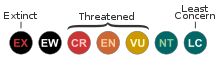
IUCN Red List of Threatened Plants Status : This taxon has not yet been assessed.
Growth: S = slow M = medium F = fast. Soil: L = light (sandy) M = medium H = heavy (clay). pH: A = acid N = neutral B = basic (alkaline). Shade: F = full shade S = semi-shade N = no shade. Moisture: D = dry M = Moist We = wet Wa = water.
Now available:
Food Forest Plants for Mediterranean Conditions
350+ Perennial Plants For Mediterranean and Drier Food Forests and Permaculture Gardens.
[Paperback and eBook]
This is the third in Plants For A Future's series of plant guides for food forests tailored to
specific climate zones. Following volumes on temperate and tropical ecosystems, this book focuses
on species suited to Mediterranean conditions—regions with hot, dry summers and cool, wet winters,
often facing the added challenge of climate change.
Read More
Expert comment
Author
(Hill.)Bernh.
Botanical References
17200
Links / References
For a list of references used on this page please go here
Readers comment
| Add a comment |
|
If you have important information about this plant that may help other users please add a comment or link below. Only comments or links that are felt to be directly relevant to a plant will be included. If you think a comment/link or information contained on this page is inaccurate or misleading we would welcome your feedback at [email protected]. If you have questions about a plant please use the Forum on this website as we do not have the resources to answer questions ourselves.
* Please note: the comments by website users are not necessarily those held by PFAF and may give misleading or inaccurate information.
|
|