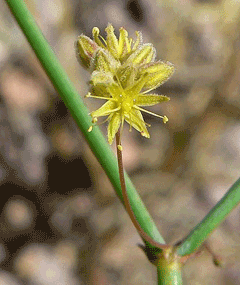
 |
|
http://commons.wikimedia.org/wiki/User:Stan_Shebs |
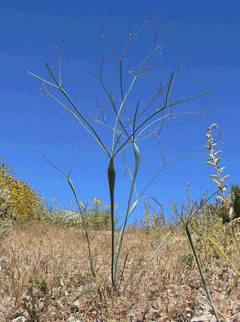 |
| http://commons.wikimedia.org/wiki/User:Stan_Shebs |
Translate this page:
Summary
Desert trumpets is one of the most distinctive wild buckwheats of the desert Southwest. Its inflated, hollow-looking stems make it easy to recognize, even after the growing season. As a food plant it is most useful for young stems, which are juicy, acidic, and refreshing, with a rhubarb-like quality. It also has edible roots, leaves, and seeds, but the young stems are the best part. Desert trumpets, Eriogonum inflatum, belongs to the buckwheat family (Polygonaceae). Common names include desert trumpets, pipeweed, bottle stopper, bladder-stem, and Indian pipeweed. It is a desert annual or short-lived perennial of the southwestern United States and northwestern Mexico. It is generally suited to USDA Zones 8–11 in hot, dry climates. Plants commonly grow 20–100 cm tall and 20–60 cm wide, with distinctive inflated stems. The U.S. Forest Service notes that it occurs in desert landscapes, sandy to gravelly washes, mixed grasslands, and communities with saltbush, creosote, and mesquite.
Physical Characteristics

 Eriogonum inflatum is a PERENNIAL growing to 0.6 m (2ft) by 0.4 m (1ft 4in) at a fast rate.
See above for USDA hardiness. It is hardy to UK zone 9. It is in flower from August to October. The species is hermaphrodite (has both male and female organs) and is pollinated by Bees, insects.
Suitable for: light (sandy) and medium (loamy) soils, prefers well-drained soil and can grow in nutritionally poor soil. Suitable pH: mildly acid, neutral and basic (mildly alkaline) soils and can grow in very alkaline soils.
It cannot grow in the shade. It prefers dry or moist soil. The plant can tolerates strong winds but not maritime exposure.
UK Hardiness Map
US Hardiness Map
Synonyms
KB Homotypic Synonyms Eriogonum inflatum subsp. typicum S.Stokes
Plant Habitats
Cultivated Beds;
Edible Uses
Edible Parts: Leaves Seed Stem
Edible Uses:
The edible parts include young stems, roots, leaves, and seeds. The stems are the most valuable part of the food. Leaves are edible but generally inferior because of dryness, bitterness, and astringency [2-3]. Edible Uses & Rating: Desert Trumpet ranks as a fair to good trail snack and a modest wild food. It is refreshing, easy to recognize, and locally common, but its oxalic tang and rapid fiber development limit its value [2-3]. Taste, Processing & Kitchen Notes: Young stems are tender, juicy, acidic, and rhubarb-like. They are best eaten young, before the inflated sections become fibrous. Leaves are dry and bitter, and seeds are small enough to require careful gathering and processing. Because the tanginess comes partly from oxalic acid, the plant should be eaten in moderation [2-3]. Seasonality (Phenology): New growth can emerge from late winter to early spring, and sometimes later after summer rains. Flowering can occur over a long season in warm desert regions; the Forest Service notes it can flower year-round in some parts of its range. Safety & Cautions (Food Use): The acidic stems should be used moderately because of oxalic acid. People prone to kidney stones or advised to limit oxalates should be especially cautious. Older stems are fibrous and not worth eating [2-3]. Harvest & Processing Workflow: Harvest young, soft stems before or just as inflations begin. Peel or trim if fibers are present. Eat fresh in small amounts or cook lightly. For seeds, collect dry flower clusters, thresh, winnow, and toast or grind. Cultivar/Selection Notes: No food cultivars are known. The best wild plants are young, vigorous, and growing after good moisture. Look-Alikes & Confusion Risks: The inflated stems are highly distinctive. Few buckwheats have the same trumpet-like stem swelling [2-3]. Traditional/Indigenous Use Summary: Desert trumpets have traditional utility beyond food; dried stems were used as pipe stems, reflected in names such as pipeweed and Indian pipeweed. Its young stems also served as a refreshing desert snack [2-3]. Young leaves and stems - raw or cooked[46, 61, 177, 257]. Tender[161]. Eaten before flowering[207]. Most commonly harvested just after emerging through the ground in spring[270]. Seed - pounded into a powder and eaten dry or mixed with water[257].
References More on Edible Uses
Medicinal Uses
Plants For A Future can not take any responsibility for any adverse effects from the use of plants. Always seek advice from a professional before using a plant medicinally.
The plant is used as a lotion for bear and dog bites[257].
References More on Medicinal Uses
The Bookshop: Edible Plant Books
Our Latest books on Perennial Plants For Food Forests and Permaculture Gardens in paperback or digital formats.
Edible Tropical Plants
Food Forest Plants for Hotter Conditions: 250+ Plants For Tropical Food Forests & Permaculture Gardens.
More

Edible Temperate Plants
Plants for Your Food Forest: 500 Plants for Temperate Food Forests & Permaculture Gardens.
More
More Books
PFAF have eight books available in paperback and digital formats. Browse the shop for more information.
Shop Now
Other Uses
Straw
The hollow stems can be cut at each end and used as drinking tubes[257]. Its inflated stems give it strong curiosity value in desert naturalistic gardens. Ecology & Wildlife: Provides nectar and seed in desert communities and often marks places where seasonal moisture has supported annual growth.
Special Uses
References More on Other Uses
Cultivation details
Desert trumpets are one of the more memorable and useful desert buckwheats. It is not a staple, but young stems are genuinely refreshing and worth knowing. Growing Conditions: It thrives in full sun, sandy, gravelly, rocky, or alkaline desert soils, often in washes, flats, slopes, and open desert scrub. Habitat & Range: It occurs from the southwestern United States into northwestern Mexico, including Arizona, California, Colorado, Nevada, New Mexico, and Utah. Size & Landscape Performance: Its inflated stems give it strong curiosity value in desert naturalistic gardens. Cultivation (Horticulture): It is rarely cultivated but could be grown from seed in sharply drained desert soils. Pests & Problems: Older stems become fibrous quickly. Overwatering and rich soils are unsuitable. Identification & Habit: An annual or short-lived perennial buckwheat with distinctive swollen stem sections, small flowers in buckwheat involucres, and dry achenes. Pollinators: The flowers attract small bees, flies, butterflies, and other desert pollinators. Desert trumpets, Eriogonum inflatum, belongs to the buckwheat family (Polygonaceae). Common names include desert trumpets, pipeweed, bottle stopper, bladder-stem, and Indian pipeweed. It is a desert annual or short-lived perennial of the southwestern United States and northwestern Mexico. It is generally suited to USDA Zones 8–11 in hot, dry climates. Plants commonly grow 20–100 cm tall and 20–60 cm wide, with distinctive inflated stems. The U.S. Forest Service notes that it occurs in desert landscapes, sandy to gravelly washes, mixed grasslands, and communities with saltbush, creosote, and mesquite.
References Carbon Farming Information and Carbon Sequestration Information
Temperature Converter
Type a value in the Celsius field to convert the value to Fahrenheit:
Fahrenheit:
The PFAF Bookshop
Plants For A Future have a number of books available in paperback and digital form. Book titles include Edible Plants, Edible Perennials, Edible Trees,Edible Shrubs, Woodland Gardening, and Temperate Food Forest Plants. Our new book is Food Forest Plants For Hotter Conditions (Tropical and Sub-Tropical).
Shop Now
Plant Propagation
Seed - best sown as soon as it is ripe in the autumn in a sandy compost in a greenhouse. Sow stored seed in early spring in a warm greenhouse[1]. As soon as they are large enough to handle, prick the seedlings out into individual pots and grow them on in the greenhouse for at least their first winter. Plant out in late spring or early summer, after the last expected frosts. Division in early spring[1]. This has to be done with care because the plant resents root disturbance[200]. Try to obtain divisions from around the edges of the plants without digging up the whole clump. Tease the divisions out with as much root on them as possible and pot them up. Grow them on in light shade in the greenhouse until they are rooting well and plant them out in the summer. Cuttings of greenwood with a heel in the summer[200].
Other Names
If available other names are mentioned here
American Pipeweed, desert trumpets, pipeweed, bottle stopper, bladder-stem, and Indian pipeweed.
Native Range
NORTHERN AMERICA: United States (Colorado (west), New Mexico (northwest), Arizona, California (s. & e.-c.), Nevada (south & central), Utah (east & south)), Mexico (Baja, Sonora)
Weed Potential
Right plant wrong place. We are currently updating this section.
Please note that a plant may be invasive in one area but may not in your area so it's worth checking.
Low to moderate in desert settings, but not generally troublesome.
Conservation Status
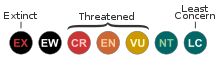
IUCN Red List of Threatened Plants Status : Not listed
Growth: S = slow M = medium F = fast. Soil: L = light (sandy) M = medium H = heavy (clay). pH: A = acid N = neutral B = basic (alkaline). Shade: F = full shade S = semi-shade N = no shade. Moisture: D = dry M = Moist We = wet Wa = water.
Now available:
Food Forest Plants for Mediterranean Conditions
350+ Perennial Plants For Mediterranean and Drier Food Forests and Permaculture Gardens.
[Paperback and eBook]
This is the third in Plants For A Future's series of plant guides for food forests tailored to
specific climate zones. Following volumes on temperate and tropical ecosystems, this book focuses
on species suited to Mediterranean conditions—regions with hot, dry summers and cool, wet winters,
often facing the added challenge of climate change.
Read More
Expert comment
Author
Torr.
Botanical References
71270
Links / References
For a list of references used on this page please go here
Readers comment
| Add a comment |
|
If you have important information about this plant that may help other users please add a comment or link below. Only comments or links that are felt to be directly relevant to a plant will be included. If you think a comment/link or information contained on this page is inaccurate or misleading we would welcome your feedback at [email protected]. If you have questions about a plant please use the Forum on this website as we do not have the resources to answer questions ourselves.
* Please note: the comments by website users are not necessarily those held by PFAF and may give misleading or inaccurate information.
|
Subject : Eriogonum inflatum
|
|
|
|