 |
|
http://www.edibleplants.org |
 |
| http://www.edibleplants.org |
Translate this page:
Summary
Taxonomic Note: This genus was formerly classified in the family Tiliaceae. Modern classifications include it within the Malvaceae.
A fast-growing and natural pioneer species within its native range known as Quararibes cordata or South American Sapote is medium-sized tree growing about 30 m in height and 50 cm in bole diameter. The leaves are heart-shaped, green, and alternate. The flowers are creamy-yellow. Though the plant has no medicinal uses, it is valued for its edible, large, and round fruits with yellow-orange pulp and sweet flavor. The wood of this species is easy to cut but has poor mechanical properties. It is used for doors and panelling, and to make light boxes. Plants are grown from seeds.
Physical Characteristics

 Quararibea cordata is a deciduous Tree growing to 20 m (65ft) by 16 m (52ft) at a fast rate.
See above for USDA hardiness. It is hardy to UK zone 10 and is frost tender. The flowers are pollinated by Insects, humming birds.
Suitable for: medium (loamy) and heavy (clay) soils and prefers well-drained soil. Suitable pH: mildly acid, neutral and basic (mildly alkaline) soils and can grow in saline soils.
It cannot grow in the shade. It prefers moist soil.
UK Hardiness Map
US Hardiness Map
Synonyms
Matisia cordata Bonpl.
Plant Habitats
Edible Uses
Edible Parts: Fruit
Edible Uses: Drink
Fruit - raw[301 ]. The fibrous yellow-orange pulp of the fruit is sweet and is eaten raw[301 ]. The flavour is reminiscent of a very sweet pumpkin with overtones of mango and apricot[301 ]. Opinions vary widely over the quality of this fruit, with some people describing it enthusiastically as like a blend of mangoes, peaches and strawberries, whilst others have found it to be bland[307 ]. There are forms with very little fibre and these can be utilised for juice[301 ]. The fruit is up to 10cm in diameter[416 ].
References More on Edible Uses
Medicinal Uses
Plants For A Future can not take any responsibility for any adverse effects from the use of plants. Always seek advice from a professional before using a plant medicinally.
None known
References More on Medicinal Uses
The Bookshop: Edible Plant Books
Our Latest books on Perennial Plants For Food Forests and Permaculture Gardens in paperback or digital formats.
Edible Tropical Plants
Food Forest Plants for Hotter Conditions: 250+ Plants For Tropical Food Forests & Permaculture Gardens.
More
Edible Temperate Plants
Plants for Your Food Forest: 500 Plants for Temperate Food Forests & Permaculture Gardens.
More
More Books
PFAF have eight books available in paperback and digital formats. Browse the shop for more information.
Shop Now
Other Uses
Containers Houseplant Pioneer Wood
Sheltered seaside. Backyard tree. Public open space. Large conservatory. Agroforestry Uses: A fast-growing, natural pioneer species within its native range. With its edible fruit it could very well be useful in a mixed planting to restore native woodland or to establish a woodland garden[K ]. The large trees of this species are grown in association with avocados. This combination works well because both species have the same soil requirements, and zapote provides necessary shade for the avocados[355 ]. Other Uses The wood is coarse-textured, irregular-grained, light in weight, with a low resistance to wood-eating organisms[625 ]. It is easy to cut, but has poor mechanical properties. It is used as core material for doors and panelling, and to make light boxes[625 ].
Special Uses
Food Forest
References More on Other Uses
Cultivation details
Likes to grow in hot, humid, lowland tropical to subtropical regions with lots of rainfall[335 ]. Plants are very susceptible to frost injury[335 ]. Prefers a fertile, moisture-retentive soil and a position in full sun[307 ]. Young plants are fast-growing[625 ].
References Carbon Farming Information and Carbon Sequestration Information
Temperature Converter
Type a value in the Celsius field to convert the value to Fahrenheit:
Fahrenheit:
The PFAF Bookshop
Plants For A Future have a number of books available in paperback and digital form. Book titles include Edible Plants, Edible Perennials, Edible Trees,Edible Shrubs, Woodland Gardening, and Temperate Food Forest Plants. Our new book is Food Forest Plants For Hotter Conditions (Tropical and Sub-Tropical).
Shop Now
Plant Propagation
Seed - best sown as soon as it is ripe in a partially shaded position in individual containers. A high germination rate can be expected, with the seed sprouting within 20 - 30 days[625 ]. Stem cuttings.
Other Names
If available other names are mentioned here
Apasi, Chupa chupa, Chupa-chupa, Cordate matisia, Matisia, Patintoqui, Sapote Sapotillo, Saput, Zapote de monte,
Native Range
SOUTHERN AMERICA: Costa Rica, Panama, Brazil (west), Bolivia, Colombia, Ecuador, Peru
Weed Potential
Right plant wrong place. We are currently updating this section.
Please note that a plant may be invasive in one area but may not in your area so it's worth checking.
Conservation Status
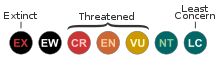
IUCN Red List of Threatened Plants Status : This taxon has not yet been assessed
Growth: S = slow M = medium F = fast. Soil: L = light (sandy) M = medium H = heavy (clay). pH: A = acid N = neutral B = basic (alkaline). Shade: F = full shade S = semi-shade N = no shade. Moisture: D = dry M = Moist We = wet Wa = water.
Now available:
Food Forest Plants for Mediterranean Conditions
350+ Perennial Plants For Mediterranean and Drier Food Forests and Permaculture Gardens.
[Paperback and eBook]
This is the third in Plants For A Future's series of plant guides for food forests tailored to
specific climate zones. Following volumes on temperate and tropical ecosystems, this book focuses
on species suited to Mediterranean conditions—regions with hot, dry summers and cool, wet winters,
often facing the added challenge of climate change.
Read More
Expert comment
Author
(Bonpl.) Vischer
Botanical References
Links / References
For a list of references used on this page please go here
A special thanks to Ken Fern for some of the information used on this page.
Readers comment
| Add a comment |
|
If you have important information about this plant that may help other users please add a comment or link below. Only comments or links that are felt to be directly relevant to a plant will be included. If you think a comment/link or information contained on this page is inaccurate or misleading we would welcome your feedback at [email protected]. If you have questions about a plant please use the Forum on this website as we do not have the resources to answer questions ourselves.
* Please note: the comments by website users are not necessarily those held by PFAF and may give misleading or inaccurate information.
|
Subject : Quararibea cordata
|
|
|
|