 |
|
http://commons.wikimedia.org/wiki/User:Stan_Shebs |
 |
| http://commons.wikimedia.org/wiki/User:Stan_Shebs |
Translate this page:
Summary
Torrey’s ephedra is a broad-ranging arid-land jointfir of the interior Southwest and nearby regions. It is a classic tea shrub rather than a food shrub and is part of the wider desert ephedra complex that gives many dry landscapes their sparse green structure. It is more useful as a medicinal-beverage plant than as a source of edible seeds.
Physical Characteristics

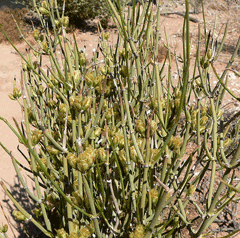
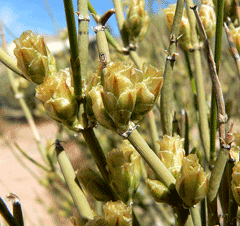
 Ephedra torreyana is an evergreen Shrub growing to 1 m (3ft 3in) by 1 m (3ft 3in). It is in leaf all year, in flower from April to May. The species is dioecious (individual flowers are either male or female, but only one sex is to be found on any one plant so both male and female plants must be grown if seed is required). and is pollinated by Wind. The plant is not self-fertile.
Suitable for: light (sandy) and medium (loamy) soils and prefers well-drained soil. Suitable pH: mildly acid, neutral and basic (mildly alkaline) soils. It cannot grow in the shade. It prefers dry or moist soil and can tolerate drought.
UK Hardiness Map
US Hardiness Map
Synonyms
E. torreyana var. powelliorum T.Wendt. E. torreyana var. torreyana
Plant Habitats
Cultivated Beds;
Edible Uses
Edible Parts: Fruit
Edible Uses: Tea
The stems can be brewed into tea. Seeds are sometimes cited as edible in Ephedra generally, but they remain a doubtful secondary use [2-3]. Edible Uses & Rating: Torrey’s ephedra ranks as a moderate tea species and a weak seed food. Tea is the main reason to know it [2-3]. Taste, Processing & Kitchen Notes: Fresh young stems should produce the best tea, with mild sweetness, faint evergreen notes, and a dry desert-herbal finish. Roasting before brewing can deepen the flavor. Seeds are better treated as experimental and cautious rather than routine food [2-3]. Seasonality (Phenology): Flowering falls in the spring-to-early-summer period typical of southwestern ephedras. Tea material can be collected more broadly through the year, with greener stems preferred. Safety & Cautions (Food Use): Tea should be used moderately, not heavily, over long periods. Seeds should not be assumed safe or pleasant in quantity [2-3]. Harvest & Processing Workflow: Clip fresh twigs with scissors, use fresh or dry them for later tea, and avoid heavily infested or old stems. Cultivar/Selection Notes: There are no food cultivars. The best shrubs for use are vigorous, green, and free of visible infestation. Look-Alikes & Confusion Risks: It resembles other southwestern ephedras, especially where ranges overlap. Within the genus, differences matter mostly for habitat and beverage quality [2-3]. Traditional/Indigenous Use Summary: Torrey’s ephedra belongs to the long western tradition of jointfir tea use and medicinal ephedra beverages. An excellent tea is made by boiling the stems for a few minutes and allowing the brew to steep[177, 183]. Fruit - raw or cooked.
References More on Edible Uses
Medicinal Uses
Plants For A Future can not take any responsibility for any adverse effects from the use of plants. Always seek advice from a professional before using a plant medicinally.
Diuretic Kidney Pectoral Salve Stomachic VD
This plant has a wide reputation as a cure for syphilis[216]. A decoction of the stems is used, this decoction is also used in treating coughs, bladder and kidney problems and stomach disorders[257]. A decoction of the leaves and stems has been used as a lotion on itchy skin[257]. The stems of most members of this genus contain the alkaloid ephedrine and are valuable in the treatment of asthma and many other complaints of the respiratory system[K]. The whole plant can be used at much lower concentrations than the isolated constituents - unlike using the isolated ephedrine, using the whole plant rarely gives rise to side-effects[254]. Ephedra does not cure asthma but in many cases it is very effective in treating the symptoms and thus making life somewhat easier for the sufferer. The stems can be used fresh or dried and are usually made into a tea, though they can also be eaten raw[K]. The young stems are best if eating them raw, though older stems can be used if a tea is made[K]. The stems can be harvested at any time of the year and are dried for later use[238].
References More on Medicinal Uses
The Bookshop: Edible Plant Books
Our Latest books on Perennial Plants For Food Forests and Permaculture Gardens in paperback or digital formats.
Edible Tropical Plants
Food Forest Plants for Hotter Conditions: 250+ Plants For Tropical Food Forests & Permaculture Gardens.
More
Edible Temperate Plants
Plants for Your Food Forest: 500 Plants for Temperate Food Forests & Permaculture Gardens.
More
More Books
PFAF have eight books available in paperback and digital formats. Browse the shop for more information.
Shop Now
Other Uses
Suitable for native dryland planting. Ecology & Wildlife: It helps form the shrub matrix of interior southwestern drylands and provides cover in sparse habitats.
Special Uses
References More on Other Uses
Cultivation details
Torrey’s ephedra is a solid tea shrub of the arid Southwest but not a major food plant. It is best valued for beverage use and ecological role. Growing Conditions: It prefers full sun, very well-drained soils, and arid shrubland conditions. Habitat & Range: The accepted species includes the typical variety native across Arizona, Colorado, Nevada, New Mexico, Texas, and Utah, with another variety extending from Texas into Chihuahua. Size & Landscape Performance: It forms an open, airy shrub suitable for native dryland planting. Cultivation (Horticulture): It should be grown with excellent drainage and minimal irrigation. Pests & Problems: Overwatering and occasional infestations are the main issues. Identification & Habit: A jointed, green, photosynthetic shrub with scale leaves and separate male and female cone-bearing plants. Pollinators: It is wind-pollinated. Torrey’s ephedra, now best referred to as Ephedra torreyana, belongs to the joint-fir family (Ephedraceae) and the genus Ephedra. Common names include Torrey’s ephedra and Torrey’s jointfir. It is an accepted species, with the typical variety native across parts of Arizona, Colorado, Nevada, New Mexico, Texas, and Utah, and another accepted variety extending into Chihuahua. It is generally suited to USDA Zones 6–10 in dry climates. Plants are usually about 30–150 cm tall and often as wide or wider.
References Carbon Farming Information and Carbon Sequestration Information
Temperature Converter
Type a value in the Celsius field to convert the value to Fahrenheit:
Fahrenheit:
The PFAF Bookshop
Plants For A Future have a number of books available in paperback and digital form. Book titles include Edible Plants, Edible Perennials, Edible Trees,Edible Shrubs, Woodland Gardening, and Temperate Food Forest Plants. Our new book is Food Forest Plants For Hotter Conditions (Tropical and Sub-Tropical).
Shop Now
Plant Propagation
Seed - best sown as soon as it is ripe in the autumn in a greenhouse[200]. It can also be sown in spring in a greenhouse in a sandy compost[K]. Prick out the seedlings into individual pots as soon as they are large enough to handle and grow them on for at least their first winter in a greenhouse. Plant out in the spring or early summer after the last expected frosts and give some protection in their first winter[K]. Division in spring or autumn[238]. Layering.
Other Names
If available other names are mentioned here
Torrey’s ephedra and Torrey’s jointfir.
Native Range
NORTHERN AMERICA: United States (Colorado (southwest), New Mexico, Texas (west), Arizona (north), Nevada (south), Utah (east & south)), Mexico (Chihuahua)
Weed Potential
Right plant wrong place. We are currently updating this section.
Please note that a plant may be invasive in one area but may not in your area so it's worth checking.
Very low.
Conservation Status
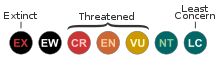
IUCN Red List of Threatened Plants Status : Least Concern.
Growth: S = slow M = medium F = fast. Soil: L = light (sandy) M = medium H = heavy (clay). pH: A = acid N = neutral B = basic (alkaline). Shade: F = full shade S = semi-shade N = no shade. Moisture: D = dry M = Moist We = wet Wa = water.
Now available:
Food Forest Plants for Mediterranean Conditions
350+ Perennial Plants For Mediterranean and Drier Food Forests and Permaculture Gardens.
[Paperback and eBook]
This is the third in Plants For A Future's series of plant guides for food forests tailored to
specific climate zones. Following volumes on temperate and tropical ecosystems, this book focuses
on species suited to Mediterranean conditions—regions with hot, dry summers and cool, wet winters,
often facing the added challenge of climate change.
Read More
Expert comment
Author
S.Watson.
Botanical References
270
Links / References
For a list of references used on this page please go here
Readers comment
| Add a comment |
|
If you have important information about this plant that may help other users please add a comment or link below. Only comments or links that are felt to be directly relevant to a plant will be included. If you think a comment/link or information contained on this page is inaccurate or misleading we would welcome your feedback at [email protected]. If you have questions about a plant please use the Forum on this website as we do not have the resources to answer questions ourselves.
* Please note: the comments by website users are not necessarily those held by PFAF and may give misleading or inaccurate information.
|
Subject : Ephedra torreyana
|
|
|
|