Translate this page:
Summary
Nodding thistle—also called musk thistle—is a tall, spiny, invasive biennial notorious among ranchers and land managers for its aggressive spread and formidable defenses. While technically edible, the plant is far from a desirable wild food. The stems, leaves, and flower receptacles can be eaten after painstaking preparation, but yield very little nutrition relative to the effort involved. Fibrous tissues, persistent spines, and a generally tough structure limit its usefulness. Although the flavours of the cleaned parts—especially the upper stems—resemble mildly bitter artichoke, this resemblance is not enough to compensate for the plant’s difficult processing. For foragers, nodding thistle is more a botanical curiosity than a practical food source, though its abundance makes it tempting to experiment with. Its nodding, pink-purple flowerheads and spiny winged stems make identification easy.
Physical Characteristics

 Carduus nutans is a BIENNIAL growing to 0.9 m (3ft).
See above for USDA hardiness. It is hardy to UK zone 7. It is in flower from May to August, and the seeds ripen from July to August. The species is hermaphrodite (has both male and female organs) and is pollinated by Bees, Lepidoptera (Moths & Butterflies).
It is noted for attracting wildlife.
Suitable for: light (sandy), medium (loamy) and heavy (clay) soils. Suitable pH: mildly acid, neutral and basic (mildly alkaline) soils. It cannot grow in the shade. It prefers moist soil.
UK Hardiness Map
US Hardiness Map
Synonyms
Plant Habitats
Meadow; Cultivated Beds;
Edible Uses
Edible Parts: Oil Stem
Edible Uses: Curdling agent Oil
Pith of stem - boiled[61]. A pleasant taste[105], it is eaten like asparagus[177]. Said to be delicious[183]. The dried flowers are used as a curdling agent for plant milks etc[61, 183]. Edible Uses & Rating:
Only the leaves, upper stems, and flower receptacles are edible, and all require extensive preparation to remove spines and fibrous tissues. The edible portions have a mild, artichoke-like flavour with moderate bitterness. However, yield is extremely low and the labour high. The stems’ inner pith, though edible, is not calorically rewarding. Leaves provide little substance after the spiny margins are cut off or burned away. Flowers have a fibrous, gum-like texture and are unpleasant to chew [2-3]. Overall, nodding thistle rates 1/5 for practicality, 2/5 for flavour, and 5/5 for abundance—but abundance alone does not compensate for its shortcomings as food. Taste, Processing & Kitchen Notes: Fresh stems taste mildly bitter and vaguely reminiscent of artichokes, but the tough fibres—especially in lower stems—make chewing difficult. Upper stems contain softer fibres and are the only viable source of stem food. Preparation requires shaving or burning off the spiny wings, cutting the stem lengthwise, and scooping out the pith. Boiling does little to soften the fibres. Leaves must have the spiny margins fully removed or scorched off; boiling alone is insufficient unless the leaves are very young. Flowers remain fibrous no matter how they are cooked and break down very poorly when chewed. The best culinary application is to simmer all parts to produce a bitter, vegetable-like broth that contains modest carbohydrate content but is not flavourful. As a wild edible, nodding thistle is essentially a desperation food [2-3]. Seasonality (Phenology): Basal rosettes emerge in the first year and persist through winter. Flowering occurs from May to September, with peak bloom in mid-summer. Second-year plants die soon after seed production. Leaves are most tender early in the season; stems become progressively more fibrous with age. Flower receptacles are accessible mid-summer, but their usefulness is minimal [2-3]. Safety & Cautions (Food Use): Only known edible parts (leaves, upper stems, receptacles) should be eaten. Spines pose mechanical hazards and must be completely removed. Fibres can cause throat irritation if insufficiently prepared. Because the plant is commonly targeted with herbicides, avoid roadside or agricultural populations. No known toxic compounds in edible parts have been documented, but roots—lacking documentation—should not be consumed. Harvest & Processing Workflow: Harvest young leaves early in the season and remove spiny margins thoroughly. For stems, select upper sections only, shave or burn off spines, split the stem, and extract the pith. Flowers can be simmered for broth but are not suitable for direct consumption. As stems and seeds are produced in the second year, plan harvest timing accordingly. Gloves are essential. Dispose of spiny waste carefully, and avoid inadvertently spreading seeds. Look-Alikes & Confusion Risks: May be confused with native Cirsium thistles, but Carduus nutans is distinguished by its broad spiny wings running continuously down the stem and its nodding flowerheads. Cirsium species typically have feather-like pappus bristles; Carduus has hair-like pappus with minute barbs. The drooping flowerhead posture is a key diagnostic trait. Traditional / Indigenous Use Summary: Despite its abundance after introduction, nodding thistle does not appear prominently in Indigenous North American ethnobotany. In Eurasia, its native range, only limited use of stems, leaves, and flowers is recorded, and the absence of root use may reflect toughness, poor flavour, or possible toxicity.
References More on Edible Uses
Medicinal Uses
Plants For A Future can not take any responsibility for any adverse effects from the use of plants. Always seek advice from a professional before using a plant medicinally.
Blood purifier Febrifuge
The flowers are febrifuge and are used to purify the blood[145, 240]. The seeds contain a fixed oil that is rich in linoleic acid[240]. This has proved of benefit in the prevention of atherosclerosis[240].
References More on Medicinal Uses
The Bookshop: Edible Plant Books
Our Latest books on Perennial Plants For Food Forests and Permaculture Gardens in paperback or digital formats.
Edible Tropical Plants
Food Forest Plants for Hotter Conditions: 250+ Plants For Tropical Food Forests & Permaculture Gardens.
More
Edible Temperate Plants
Plants for Your Food Forest: 500 Plants for Temperate Food Forests & Permaculture Gardens.
More
More Books
PFAF have eight books available in paperback and digital formats. Browse the shop for more information.
Shop Now
Other Uses
Oil Paper
The down of the plant is used to make paper[4]. The seed of all species of thistles yields a good oil by expression[4]. This species contains 41 - 44% oil[240]. The plant is very attractive to bees, hoverflies and butterflies[13, 245], it is a food plant for the caterpillars of many lepidoptera species[30]. Dynamic accumulator. Ecology & Wildlife: Nodding thistle is predominantly pollinated by insects, especially bees, butterflies, flies, and beetles attracted to the abundant nectar and pollen. Despite its status as a noxious weed, it can temporarily benefit pollinators when blooming en masse. Birds and small mammals may feed on seeds opportunistically, but the plant’s overall ecological impact is negative, as it outcompetes native flora and reduces habitat quality.
Special Uses
Attracts Wildlife Dynamic accumulator Scented Plants
References More on Other Uses
Cultivation details
Succeeds in a sunny position in ordinary garden soil[1, 200]. The flowers, and indeed the whole plant, give off a pleasing musk-like perfume[245]. Growing Conditions: Nodding thistle thrives in disturbed locations—roadsides, pastures, overgrazed rangeland, gravel pits, construction sites, field edges, and degraded prairie. It prefers full sun and well-drained soils but tolerates clay and poor fertility. It is hardy and drought-resistant, flourishing in temperate climates and adapted to USDA Hardiness Zones 3–9. Habitat & Range: Native to Europe, Asia, and northern Africa, Carduus nutans is now naturalized across much of North America. It is abundant in the Southwest, Great Plains, Mountain West, and northern states. Its spread was rapid after its early 19th-century introduction. Today it is widespread in disturbed landscapes, where it forms dense stands. Size & Landscape Performance: Plants range from 30 cm in nutrient-poor soils to over 170 cm in fertile, moist locations. The basal rosettes can span more than 60 cm across. In the landscape, nodding thistle forms dense, spiny monocultures capable of outcompeting grasses and forbs. Cultivation (Horticulture): Cultivation is strongly discouraged due to the plant’s invasive nature. It germinates readily from seed, grows rapidly in its second year, and produces enormous quantities of wind-dispersed seeds. While historically grown in some regions as an ornamental curiosity, it is universally regarded today as a noxious weed. Pests & Problems: Biological control insects—including the seedhead weevils Rhinocyllus conicus and Trichosirocalus horridus—have been introduced to manage its populations. Plants are otherwise robust and resistant to most pests and diseases. In foraging contexts, insect damage is minimal. Cultivar / Selection Notes: There are no cultivars. All material in the Southwest and elsewhere is wild-type and often part of invasive populations. Identification & Habit: Nodding thistle is a spiny, upright biennial typically standing 30–170 cm tall. During its first year it forms a basal rosette; in the second year it produces tall, winged stems clad in decurrent, deeply pinnatifid leaves edged with stiff, painful spines. The stems bear continuous spiny wings—an important diagnostic feature differentiating Carduus from Cirsium. Flowerheads are large (3–6 cm across), globose, ragged at the margins, and characteristically drooping. The phyllaries taper to sharp spines, and the receptacle beneath the flowers is densely bristly rather than honeycomb-pitted. The flowers lack rays entirely, consisting only of reddish-purple discoid florets. Mature fruits are golden-brown cypselae with hair-like pappus bristles that carry minute barbs. Colony formation is common in disturbed or overgrazed ground.
References Carbon Farming Information and Carbon Sequestration Information
Temperature Converter
Type a value in the Celsius field to convert the value to Fahrenheit:
Fahrenheit:
The PFAF Bookshop
Plants For A Future have a number of books available in paperback and digital form. Book titles include Edible Plants, Edible Perennials, Edible Trees,Edible Shrubs, Woodland Gardening, and Temperate Food Forest Plants. Our new book is Food Forest Plants For Hotter Conditions (Tropical and Sub-Tropical).
Shop Now
Plant Propagation
Seed - sow spring in situ.
Other Names
If available other names are mentioned here
Preferred Common Name: nodding thistle. Other Names: musk thistle. Spanish: cardo almizclero; cardo pendiente; cardo rojo. French: chardon nu; chardon penche. Germany: Nickende Distel. Italy: cardo rosso. Netherlands: knikkende Distel. Sweden: nicktistel.
Native Range
TEMPERATE ASIA: Afghanistan, Iran (northwest), Turkey, Russian Federation-Ciscaucasia (Ciscaucasia), Armenia, Azerbaijan, Georgia, Russian Federation (Dagestan), Russian Federation (Altay, Buryatia, Chita, Gorno-Altay, Irkutsk (south), Kemerovskaja oblast, Krasnoyarsk, Kurganskaja oblast, Novosibirsk, Omsk, Tomsk, Tyumen, Tyva, Respublika, Yakutia-Sakha (south)), Kazakhstan, Mongolia, China (Xinjiang Uygur Zizhiqu (north)) EUROPE: United Kingdom, Ireland, Austria, Belgium, Switzerland, Czech Republic, Germany, Hungary, Netherlands, Slovakia, Russian Federation (European part), Belarus, Estonia, Lithuania, Moldova, Ukraine (incl. Krym), Albania, Bulgaria, Bosnia and Herzegovina, Greece, Croatia, Italy (incl. Sardinia, Sicily), North Macedonia, Montenegro, Romania, Serbia, Slovenia, Spain, France AFRICA: Algeria, Morocco, Tunisia
Weed Potential
Right plant wrong place. We are currently updating this section.
Please note that a plant may be invasive in one area but may not in your area so it's worth checking.
Extremely high. Nodding thistle is one of the most problematic thistles in North America. It spreads aggressively, reduces forage availability for livestock, and is targeted by biological control programs including weevils and other specialist herbivores. Its ability to dominate pastures makes eradication difficult. Foragers should take care not to spread seed or disturb stands in a way that encourages further spread. A serious pasture weed in parts of New Zealand, Australia, USA, Canada and Argentina.
Conservation Status
IUCN Red List of Threatened Plants Status : This taxon has not yet been assessed.
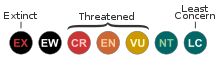
Growth: S = slow M = medium F = fast. Soil: L = light (sandy) M = medium H = heavy (clay). pH: A = acid N = neutral B = basic (alkaline). Shade: F = full shade S = semi-shade N = no shade. Moisture: D = dry M = Moist We = wet Wa = water.
Now available:
Food Forest Plants for Mediterranean Conditions
350+ Perennial Plants For Mediterranean and Drier Food Forests and Permaculture Gardens.
[Paperback and eBook]
This is the third in Plants For A Future's series of plant guides for food forests tailored to
specific climate zones. Following volumes on temperate and tropical ecosystems, this book focuses
on species suited to Mediterranean conditions—regions with hot, dry summers and cool, wet winters,
often facing the added challenge of climate change.
Read More
Expert comment
Author
L.
Botanical References
17200
Links / References
For a list of references used on this page please go here
Readers comment
| Add a comment |
|
If you have important information about this plant that may help other users please add a comment or link below. Only comments or links that are felt to be directly relevant to a plant will be included. If you think a comment/link or information contained on this page is inaccurate or misleading we would welcome your feedback at [email protected]. If you have questions about a plant please use the Forum on this website as we do not have the resources to answer questions ourselves.
* Please note: the comments by website users are not necessarily those held by PFAF and may give misleading or inaccurate information.
|
|