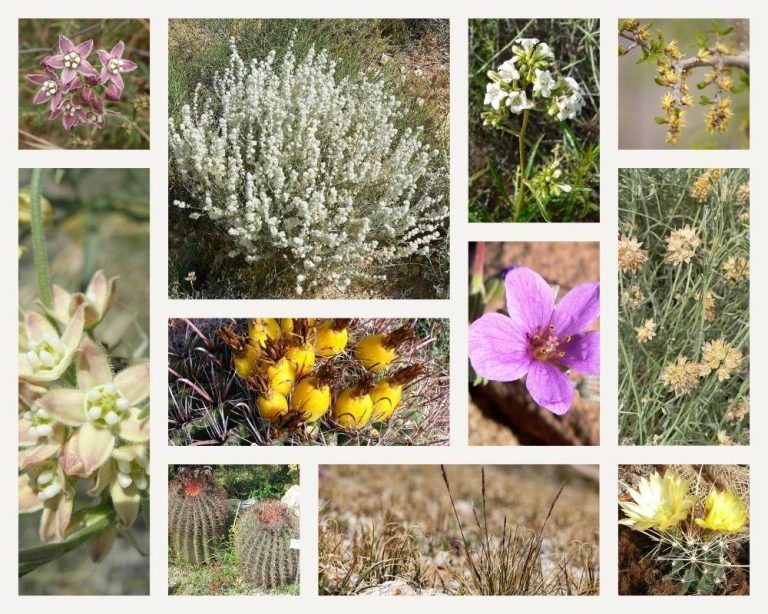

Thistles sit at a surprising crossroads between noxious weed and useful food crop: many are edible, some are excellent vegetables or medicinal plants, and a few are best left alone unless you know exactly what you are doing. Their story runs through one of the world’s biggest plant families, the Asteraceae, and increasingly through modern edible-plant work such as the Plants For A Future (PFAF) database and its new Southwest expansion.
Asteraceae: more than weeds
Asteraceae is the daisy or sunflower family, a huge group of more than 20,000 species that includes lettuces, artichokes, sunflowers, chamomile, dandelions, and, of course, thistles. Most are herbaceous plants (annuals, biennials, or perennials) with composite flower heads composed of many tiny florets, often found in open, sunny habitats from temperate grasslands to Mediterranean scrub and semi-arid deserts.
As a family, Asteraceae offers an unusually wide range of edible genera, including:
- Cynara (artichokes and cardoons) is used as a vegetable and herbal extract.
- Cirsium and Carduus (true thistles) have edible roots, young stems, and inner flower bases in some species.
- Arctium (burdock) is widely eaten in East Asian cuisine.
- Silybum (milk thistle) is a liver-support herb with edible leaves and seeds.
Medicinally, the family is equally rich: chamomile and feverfew for traditional teas, Echinacea for immune support, burdock as a cleansing root, and milk thistle as one of the most widely used liver tonics. Many Asteraceae also support pollinators, provide oilseed crops, or offer natural insecticides such as pyrethrins from certain species.
PFAF’s Southwest thistle push
Plants For A Future has announced a major update focused on plants of the American Southwest, adding 946 new and updated entries to its free online database. As part of this project, PFAF has brought in field-based ethnobotanical information and expanded details on edibility, preparation, toxicity, and ecological roles—crucial for spiny genera like Cirsium and related thistles. Read more >> on the major update focused on plants of the American Southwest
Within this Southwest work, PFAF has added several new thistle species and extensively updated others to better document which parts are edible, how they are traditionally prepared, and when they should be avoided. This helps foragers, food foresters, and land managers move beyond the blanket label of “weed” and see thistles as nuanced plants with both risks and real food value.
Are thistles edible? A cautious yes
“Thistle” is a loose common name that cuts across multiple genera:
- Primary thistles: Cirsium, Carduus, Onopordum, Silybum (all Asteraceae).
- Thistle-like genera: Cynara (artichokes/cardoon), Centaurea, Sonchus, Carlina, Arctium (burdock), Scolymus.
- Other “thistles” are in different families, such as Salsola (Russian thistle) and Eryngium (sea holly).
Within these groups, many species have edible parts—usually roots, young stems, leaf midribs, young flower stalks, or the fleshy receptacle beneath the spines. However:
- Identification must be exact: some lookalikes are prickly but unpalatable or contain problematic compounds.
- Preparation matters: spines are almost always trimmed or peeled, and some roots contain inulin, which can cause digestive upset in sensitive people.
- Habitat and pollution: roadside or sprayed thistles may accumulate contaminants and should not be eaten.
Thistles are therefore “conditionally edible”: a useful food for those who know their species, their ecology, and their preparation, rather than a casual trail snack.
Habit, habitat, and growing conditions
Most edible thistles in Asteraceae share a common life pattern:
- Life cycle: annual or biennial rosettes that flower and set seed in the second year; some, like Cynara species, are long-lived perennials.
- Size: from 30–60 cm dwarf thistles up to 2 m or more in robust Cirsium, Cynara, and Arctium species.
- Habitat: open, sunny ground; pastures, field edges, disturbed soils, dry slopes, and, for artichokes and cardoons, cultivated beds with good soil.
- Soils: many tolerate light, medium, and heavy soils, often preferring well-drained conditions, but with some species thriving in moister meadows.
This combination—hardy, spiny, tolerant of disturbance—explains both their success as invasive weeds in some regions and their value as tough, climate-resilient plants in dryland food systems.
Top edible thistles in the PFAF data
Below is a selection of thistles from the PFAF database, focusing on edibility and other uses.
Cynara scolymus – Globe artichoke
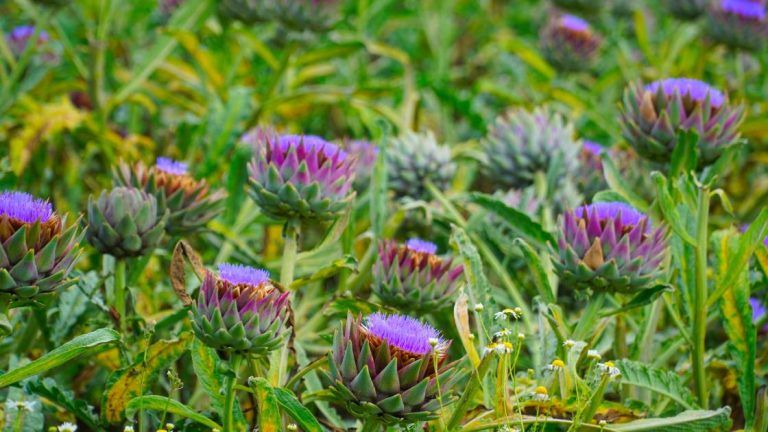
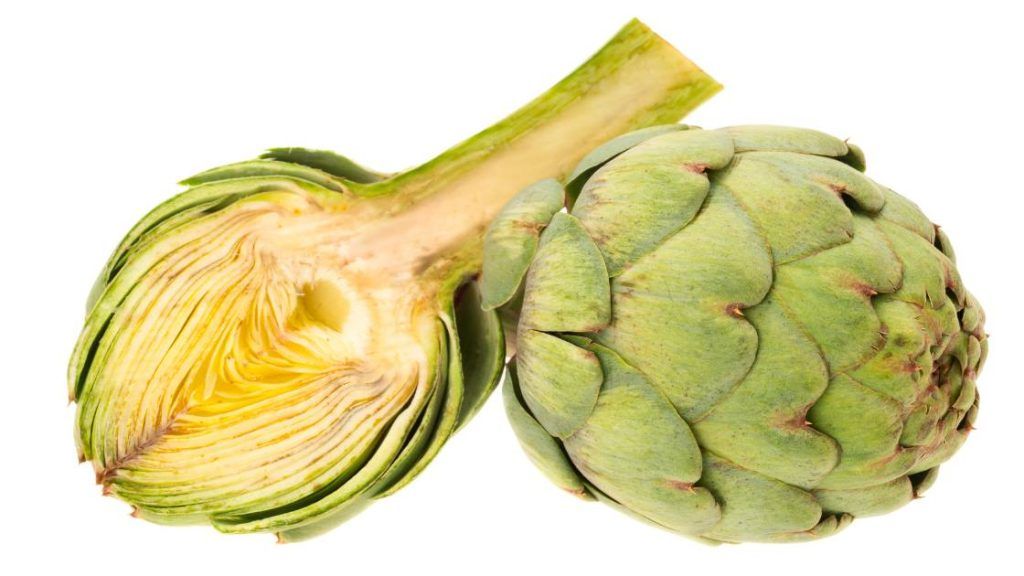
- Habit and growth: A perennial thistle grown as a vegetable, typically 1.5 m tall, thriving in full sun and reasonably moist, fertile soils.
- Edible parts: The immature flower head (the familiar “artichoke”) is eaten boiled or steamed, with the fleshy bracts and heart prized in cuisines around the Mediterranean and beyond.
- Other qualities: Artichoke leaf extracts are studied for liver-protective and cholesterol-lowering effects, linked to compounds such as cynarin and related polyphenols.
Cynara cardunculus – Cardoon
- Habit and growth: A tall, statuesque perennial to around 2 m, forming clumps of deeply divided silver-grey leaves and large purple thistle flowers.
- Edible parts: Traditionally, the blanched leaf stalks (petioles) are eaten as a vegetable, somewhat like a more fibrous celery with an artichoke-like flavour.
- Other uses: Cardoon has been explored as a biomass and oilseed crop for Mediterranean drylands, and its flowers have been used as a plant-based rennet substitute in cheese-making.
Cynara humilis – Wild thistle
- Habit and growth: A lower-growing perennial around 30 cm, suited to dry, open sites and poor soils in Mediterranean-type climates.
- Edible parts: Rated moderately edible in the PFAF data; like other Cynara species, it can provide edible flower bases or young leaf stalks when carefully prepared.
- Interest: Offers a wild relative of cultivated artichokes and cardoons, with potential for breeding and climate-resilient forage or food in semi-arid landscapes.
Cirsium edule – Edible thistle
- Habit and growth: A perennial thistle to about 2 m, with a rosette-to-flowering pattern typical of Cirsium and a preference for moderately moist soils.
- Edible parts: As its name suggests, this species offers multiple edible parts, including young stems and the fleshy flower receptacle, once de-spined and cooked.
- Cultural notes: Various Indigenous peoples of western North America traditionally used edible thistles as seasonal vegetables, showing that careful preparation can turn a spiny plant into a valued food.
Cirsium foliosum – Elk thistle
- Habit and growth: A smaller perennial, about 60 cm tall, favouring meadows and moister ground conditions (indicated by the moisture rating, including wet soils).
- Edible parts: PFAF rates it as reasonably edible, with potential for young leaves and flower bases once the spines are removed.
- Ecology: The name “elk thistle” hints at its importance as forage for wild herbivores, underscoring its role in native ecosystems as more than just a prickly nuisance.
Cirsium ochrocentrum – Yellow-spined thistle
- Habit and growth: A strongly armed perennial around 1 m tall, adapted to dry, open habitats with well-drained soils.
- Edible parts: Despite fierce spines, it is rated as having useful edible parts, likely including young stems or inner tissues once thoroughly peeled.
- Other qualities: PFAF notes both medicinal and “other” uses, typical of Southwestern thistles that have complex ethnobotanical histories now being better documented in the new database update.
Cirsium vulgare – Common/bull thistle
- Habit and growth: A biennial species up to 2 m tall, common in disturbed soils, pastures, and field margins across much of the temperate world.
- Edible parts: The taproot, peeled flower stems, and the inner base of the flower head are all edible once carefully cleaned and de-spined, with a flavour sometimes compared to a mild Jerusalem artichoke.
- Nutritional and medicinal notes: Bull thistle is considered a fibre- and mineral-rich plant, and traditional herbal uses include support for joint and tendon inflammation, though the evidence is largely historical and experiential rather than clinical.
Arctium lappa – Great burdock
- Habit and growth: A biennial up to about 2 m tall, with large, broad leaves and burr-like seed heads that cling to clothing and animal fur.
- Edible parts: The long taproot (known as gobo in Japanese cuisine) is widely eaten cooked or pickled, with a crisp texture and mildly sweet, earthy flavour.
- Medicinal and other uses: Rated highly for both edible and medicinal uses in the PFAF data, burdock is traditionally used as a “blood cleansing” and skin-support herb, and its burrs famously inspired the invention of Velcro.
Arctium minus – Lesser burdock
- Habit and growth: A smaller, biennial relative to around 1 m, occupying similar disturbed habitats.
- Edible parts: Roots are edible in much the same way as great burdock, and PFAF gives it a high edibility rating.
- Other qualities: This species scores strongly for “other uses”, reflecting its role in traditional medicine and possibly in wildlife value and soil improvement.
Silybum marianum – Milk thistle
- Habit and growth: A robust biennial to about 1.2 m, often strikingly marked with white marbling on the leaves and favouring dry, sunny, well-drained sites.
- Edible parts: Young leaves can be eaten after the spines are removed, and seeds are sometimes used as a food supplement, though the plant is more renowned as a medicine than a staple vegetable.
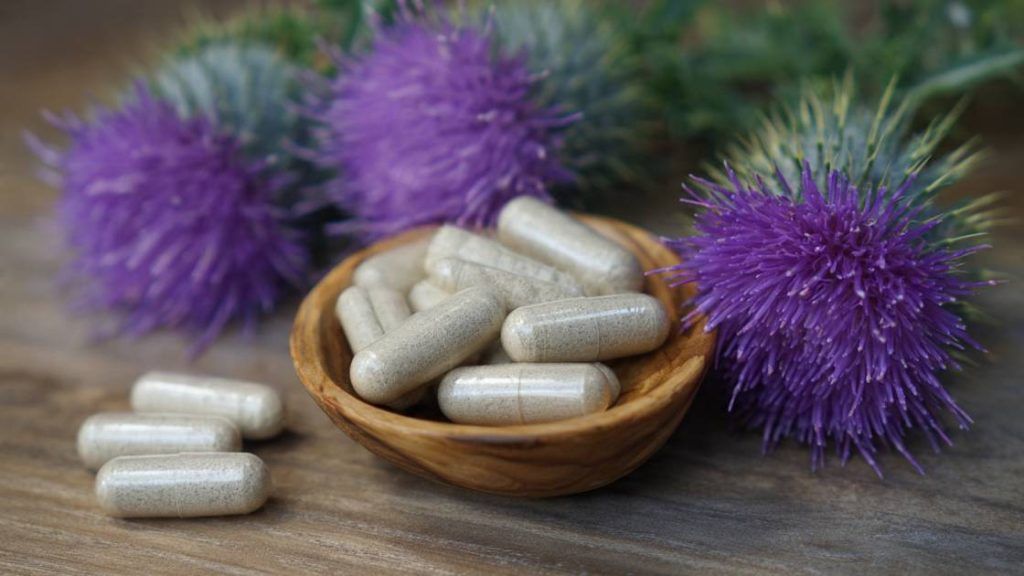
- Medicinal importance: Milk thistle seeds contain silymarin, a complex of flavonolignans widely used as a liver-protective agent and studied in conditions such as non-alcoholic fatty liver disease.
Thistles, medicine, and multifunctional landscapes
Across Asteraceae, thistles and thistle-like plants blur the boundaries between food, medicine, and ecological service.
- Medicinal roles: Milk thistle and artichoke for liver health, burdock for digestion and skin, and various Cirsium species with local traditional applications.
- Ecological roles: Nectar-rich flowers for bees and butterflies, seed for birds, structural habitat for invertebrates, and root systems that stabilize soil and bring up minerals.
- Human uses: Vegetables, teas, fodder, natural curdling agents, insecticides, ornamentals, and even inspiration for technologies such as Velcro.
For environmental journalists, gardeners, and foragers, the key message is that “thistle” is not a verdict—it is a starting point. With careful identification, respectful harvesting, and attention to both ecology and traditional knowledge, many of these prickly plants can move from the “weed” bin into an integrated role in resilient, food- and medicine-rich landscapes, a shift that resources such as PFAF’s expanding database are now making far easier.
| Scientific Name | Common Name | Habit | Height (m) | Edible value | Medicinal value | Other uses |
|---|---|---|---|---|---|---|
| Cynara cardunculus | Cardoon | Perennial | 2 | Medium | High | Low |
| Cynara humilis | Wild thistle | Perennial | 0.3 | Medium | Low | None |
| Cynara scolymus | Globe Artichoke | Perennial | 1.5 | High | High | Medium |
| Cirsium arizonicum | Arizona thistle | Biennial | 1 | Medium | None | Medium |
| Cirsium brevistylum | Indian Thistle, Clustered thistle | Perennial | 1.8 | Medium | None | Medium |
| Cirsium drummondii | Dwarf thistle | Biennial | 0.4 | Medium | None | Low |
| Cirsium edule | Edible Thistle | Perennial | 2 | Medium | None | Medium |
| Cirsium foliosum | Elk thistle | Perennial | 0.6 | Medium | None | Medium |
| Cirsium neomexicanum | New Mexico thistle | Perennial | 1 | Medium | None | Low |
| Cirsium ochrocentrum | Yellow Spined Thistle | Perennial | 1 | Medium | Medium | Medium |
| Cirsium scariosum | Meadow Thistle | Biennial | 1 | Medium | None | Low |
| Cirsium spicatum | Perennial | 1.8 | Medium | Low | Medium | |
| Cirsium tuberosum | Tuberous Thistle | Perennial | 0.6 | Medium | None | Medium |
| Cirsium undulatum | Wavy-Leaved Thistle, Tracy's thistle | Perennial | 0.6 | Medium | Low | Medium |
| Cirsium vulgare | Common Thistle, Bull thistle, Dodder, Boar Thistle, Bull Thistle | Biennial | 2 | Medium | Low | Medium |
| Arctium lappa | Great Burdock, Gobo | Biennial | 2 | High | High | Medium |
| Arctium minus | Lesser Burdock | Biennial | 1 | High | High | High |
| Silybum marianum | Milk Thistle, Blessed milkthistle | Biennial | 1.2 | Medium | High | Medium |