 |
|
commons.wikimedia.org/wiki/User:Stan_Shebs |
 |
| commons.wikimedia.org/wiki/User:Stan_Shebs |
Translate this page:
Summary
Taxonomic Note: This genus was formerly classified in the family Agavaceae. Modern classifications include it within the Asparagaceae.
Bloom Color: White. Main Bloom Time: Early fall. Form: Rounded.
Physical Characteristics

 Yucca_schidigera is an evergreen Tree growing to 4.5 m (14ft 9in).
See above for USDA hardiness. It is hardy to UK zone 8. It is in leaf all year. The species is hermaphrodite (has both male and female organs).
Suitable for: light (sandy), medium (loamy) and heavy (clay) soils and can grow in nutritionally poor soil. Suitable pH: mildly acid, neutral and basic (mildly alkaline) soils. It cannot grow in the shade. It prefers dry or moist soil.
UK Hardiness Map
US Hardiness Map
Synonyms
Sarcoyucca mohavensis. Yucca californica. Yucca mohavensis
Plant Habitats
Edible Uses
Young flowering stems - chopped and cooked like asparagus[164] or baked like a sweet potato[183]. Fruit - raw or cooked[257]. Baked then dried and ground into a powder then used in soups etc or made into a drink[257]. The fruit can also be used to make jellies[183]. Flowers - raw or cooked[257]. They are delicious raw, and can also be dried, crushed and used as a flavouring[164] and can also be used in jellies[183].
References More on Edible Uses
Medicinal Uses
Plants For A Future can not take any responsibility for any adverse effects from the use of plants. Always seek advice from a professional before using a plant medicinally.
None known
References More on Medicinal Uses
Other Uses
The leaves, or a fibre obtained from them, has been used for making ropes, baskets and mats[82, 169]. The strong fibres have been used to make shoes and sandals[257]. The leaves have been used to make brushes for body painting and for painting pots etc[257]. The roots are rich in saponins and can be used as a soap substitute[82, 257].
Special Uses
References More on Other Uses
Cultivation details
Landscape Uses:Border, Container, Seashore, Specimen. Thrives in any soil but prefers a sandy loam and full exposure to the south[11]. Plants are hardier when grown on poor sandy soils[200]. Established plants are very drought tolerant[200]. In the plants native environment, its flowers can only be pollinated by a certain species of moth. This moth cannot live in Britain and, if fruit and seed is required, hand pollination is necessary. This can be quite easily and successfully done using something like a small paint brush. Individual crowns are monocarpic, dying after flowering[233]. However, the crown will usually produce a number of sideshoots before it dies and these will grow on to flower in later years[233]. Plants in this genus are notably resistant to honey fungus[200]. Members of this genus seem to be immune to the predations of rabbits[233]. Special Features:
North American native.
References Carbon Farming Information and Carbon Sequestration Information
Temperature Converter
Type a value in the Celsius field to convert the value to Fahrenheit:
Fahrenheit:
Plant Propagation
Seed - sow spring in a greenhouse. Pre-soaking the seed for 24 hours in warm water may reduce the germination time. It usually germinates within 1 - 12 months if kept at a temperature of 20°c. Prick out the seedlings into individual pots when they are large enough to handle and grow them on in the greenhouse or cold frame for at least their first two winters. Plant them out into their permanent positions in early summer and consider giving them some winter protection for at least their first winter outdoors - a simple pane of glass is usually sufficient[K]. Seed is not produced in Britain unless the flowers are hand pollinated. Root cuttings in late winter or early spring. Lift in April/May and remove small buds from base of stem and rhizomes. Dip in dry wood ashes to stop any bleeding and plant in a sandy soil in pots in a greenhouse until established[78].
Other Names
If available other names are mentioned here
Native Range
NORTHERN AMERICA: United States (Arizona, California, Nevada), Mexico (Baja California (Norte))
Weed Potential
Right plant wrong place. We are currently updating this section.
Please note that a plant may be invasive in one area but may not
in your area so it's worth checking.
Conservation Status
IUCN Red List of Threatened Plants Status :
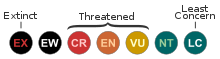
IUCN Red List
Growth: S = slow M = medium F = fast. Soil: L = light (sandy) M = medium H = heavy (clay). pH: A = acid N = neutral B = basic (alkaline). Shade: F = full shade S = semi-shade N = no shade. Moisture: D = dry M = Moist We = wet Wa = water.
Support Plants For A Future
Plants For A Future relies on regular donations to keep our free database and search facilities going, to pay for ongoing research, improvements and enhancements, and to develop and publish new books.
Read more
Choose Currency
Donate in £ GBP
Donate in $ USD
Donate in € EUR
Securely pay via PayPal or Credit/Debit Card without an account.
Expert comment
Author
Roezl.
Botanical References
200
Links / References
For a list of references used on this page please go here
Readers comment