Translate this page:
Summary
Physical Characteristics

 Viburnum_veitchii is a deciduous Shrub growing to 1.5 m (5ft).
See above for USDA hardiness. It is hardy to UK zone 5. It is in flower from May to June. The species is hermaphrodite (has both male and female organs) and is pollinated by Insects. The plant is not self-fertile.
Suitable for: light (sandy), medium (loamy) and heavy (clay) soils. Suitable pH: mildly acid, neutral and basic (mildly alkaline) soils. It can grow in semi-shade (light woodland) or no shade. It prefers moist soil.
UK Hardiness Map
US Hardiness Map
Synonyms
Viburnum glomeratum subsp. glomeratum
Plant Habitats
Edible Uses
Fruit - raw or cooked. A sweet flavour, but the fruit contains a large seed and does not have much flesh[K]. The ellipsoid fruit is about 8mm long and contains a single large seed[200].
References More on Edible Uses
Medicinal Uses
Plants For A Future can not take any responsibility for any adverse effects from the use of plants. Always seek advice from a professional before using a plant medicinally.
None known
References More on Medicinal Uses
Other Uses
References More on Other Uses
Cultivation details
An easily grown plant, it succeeds in most soils but is ill-adapted for poor soils and for dry situations[1]. It prefers a deep rich loamy soil in sun or semi-shade[11, 200]. Best if given shade from the early morning sun in spring[200]. This species is closely related to V. lantana[11]. Plants are self-incompatible and need to grow close to a genetically distinct plant in the same species in order to produce fruit and fertile seed[11, 200].
References Carbon Farming Information and Carbon Sequestration Information
Temperature Converter
Type a value in the Celsius field to convert the value to Fahrenheit:
Fahrenheit:
Plant Propagation
Seed - best sown in a cold frame as soon as it is ripe. Germination can be slow, sometimes taking more than 18 months. If the seed is harvested 'green' (when it has fully developed but before it has fully ripened) and sown immediately in a cold frame, it should germinate in the spring[80]. Stored seed will require 2 months warm then 3 months cold stratification and can still take 18 months to germinate[113]. Prick out the seedlings into individual pots when they are large enough to handle and grow them on in a cold frame or greenhouse. Plant out into their permanent positions in late spring or early summer of the following year. Cuttings of soft-wood, early summer in a frame[200]. Pot up into individual pots once they start to root and plant them out in late spring or early summer of the following year. Cuttings of half-ripe wood, 5 - 8 cm long with a heel if possible, July/August in a frame[78, 113]. Plant them into individual pots as soon as they start to root. These cuttings can be difficult to overwinter, it is best to keep them in a greenhouse or cold frame until the following spring before planting them out[113]. Cuttings of mature wood, winter in a frame. They should root in early spring - pot them up when large enough to handle and plant them out in the summer if sufficient new growth is made, otherwise keep them in a cold frame for the next winter and then plant them out in the spring. Layering of current seasons growth in July/August. Takes 15 months[78].
Other Names
If available other names are mentioned here
Native Range
TEMPERATE ASIA: China (c.)
Weed Potential
Right plant wrong place. We are currently updating this section.
Please note that a plant may be invasive in one area but may not
in your area so it's worth checking.
Conservation Status
IUCN Red List of Threatened Plants Status :
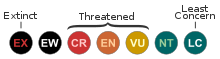
IUCN Red List
Growth: S = slow M = medium F = fast. Soil: L = light (sandy) M = medium H = heavy (clay). pH: A = acid N = neutral B = basic (alkaline). Shade: F = full shade S = semi-shade N = no shade. Moisture: D = dry M = Moist We = wet Wa = water.
Support Plants For A Future
Plants For A Future relies on regular donations to keep our free database and search facilities going, to pay for ongoing research, improvements and enhancements, and to develop and publish new books.
Read more
Choose Currency
Donate in £ GBP
Donate in $ USD
Donate in € EUR
Securely pay via PayPal or Credit/Debit Card without an account.
Expert comment
Author
C.H.Wright.
Botanical References
11200
Links / References
For a list of references used on this page please go here
Readers comment
| Add a comment |
|
If you have important information about this plant that may help other users please add a comment or link below. Only comments or links that are felt to be directly relevant to a plant will be included. If you think a comment/link or information contained on this page is inaccurate or misleading we would welcome your feedback at [email protected]. If you have questions about a plant please use the Forum on this website as we do not have the resources to answer questions ourselves.
* Please note: the comments by website users are not necessarily those held by PFAF and may give misleading or inaccurate information.
|
Subject : Viburnum_veitchii
|
|
|
|