Translate this page:
Summary
Physical Characteristics
![]()
![]() Triticum turgidum dicoccon is a ANNUAL.
It is not frost tender. It is in flower from June to July, and the seeds ripen from August to September. The species is hermaphrodite (has both male and female organs) and is pollinated by Wind.
Suitable for: light (sandy), medium (loamy) and heavy (clay) soils, prefers well-drained soil and can grow in nutritionally poor soil. Suitable pH: mildly acid, neutral and basic (mildly alkaline) soils. It cannot grow in the shade. It prefers dry or moist soil.
UK Hardiness Map
US Hardiness Map
Synonyms
Plant Habitats
Cultivated Beds;
Edible Uses
Edible Parts: Seed
Edible Uses:
Seed - cooked[46, 61, 105]. It is usually ground into a flour and used as a cereal for making bread, biscuits etc[183]. The seed retains its glumes when it is threshed[50, 57]
References More on Edible Uses
Medicinal Uses
Plants For A Future can not take any responsibility for any adverse effects from the use of plants. Always seek advice from a professional before using a plant medicinally.
None known
References More on Medicinal Uses
Other Uses
Biomass Mulch Paper Starch Thatching
The straw has many uses, as a biomass for fuel etc, for thatching, as a mulch in the garden etc[141]. A fibre obtained from the stems is used for making paper[189]. The stems are harvested in late summer after the seed has been harvested, they are cut into usable pieces and soaked in clear water for 24 hours. They are then cooked for 2 hours in lye or soda ash and then beaten in a ball mill for 1½ hours in a ball mill. The fibres make a green-tan paper[189]. The starch from the seed is used for laundering, sizing textiles etc[46, 61]. It can also be converted to alcohol for use as a fuel.
Special Uses
References More on Other Uses
Cultivation details
An easily grown plant, it succeeds in most well-drained soils in a sunny position. Succeeds in poor rocky[57] and in dry soils[171]. One of the oldest cultivated wheats, it arose over 10,000 years ago through cultivation of the wild emmer, T. dicoccoides. Its cultivation is declining but it is still grown in some mountainous regions of Europe[46, 50, 57, 183]. There are some named varieties[46]. A rather low yielding species compared to modern cultivars. It is believed that a cross between this species and Aegilops squarrosa, probably about 8,000 years ago, introduced an extra protein gene into the seed making a much stronger flour for baking as bread. Most modern species and cultivars of wheat have been developed from this cross. A tetraploid species[142].
References Carbon Farming Information and Carbon Sequestration Information
Temperature Converter
Type a value in the Celsius field to convert the value to Fahrenheit:
Fahrenheit:
Plant Propagation
Seed - sow early spring or autumn in situ and only just cover the seed. Germination should take place within a few days[K].
Other Names
If available other names are mentioned here
Native Range
(Triticum turgidum) TEMPERATE ASIA: Iran (west), Iraq (north), Israel, Jordan, Lebanon, Syria, Turkey (east).
Weed Potential
Right plant wrong place. We are currently updating this section.
Please note that a plant may be invasive in one area but may not
in your area so it's worth checking.
Conservation Status
IUCN Red List of Threatened Plants Status :
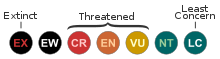
IUCN Red List
Growth: S = slow M = medium F = fast. Soil: L = light (sandy) M = medium H = heavy (clay). pH: A = acid N = neutral B = basic (alkaline). Shade: F = full shade S = semi-shade N = no shade. Moisture: D = dry M = Moist We = wet Wa = water.
Support Plants For A Future
Plants For A Future relies on regular donations to keep our free database and search facilities going, to pay for ongoing research, improvements and enhancements, and to develop and publish new books.
Read more
Choose Currency
Donate in £ GBP
Donate in $ USD
Donate in € EUR
Securely pay via PayPal or Credit/Debit Card without an account.
Expert comment
Author
(Schrank.)Thell.
Botanical References
50
Links / References
For a list of references used on this page please go here
Readers comment
© 2010, Plants For A Future. Plants For A Future is a charitable company limited by guarantee, registered in England and Wales. Charity No. 1057719, Company No. 3204567.