Translate this page:
Summary
Sago pondweed offers edible roots but is rarely available in quantity in the US Southwest. In areas where it thrives, it can supplement a forager’s diet with a small but starchy food source. Its scarcity in desert and semi-arid regions limits its practical use, but in wetter areas, it has more potential. Stuckenia pectinata is an aquatic herbaceous plant with stems usually up to 100cm long. It is generally completely submerged, except for the reproductive spike that peaks above the water. It is nearly unbranched at the base, becoming freely branched towards the top[277 ]. The plant is harvested from the wild for local use as food and medicine. It can remove toxins from aquatic environments and help reduce erosion along the edges of aquatic environments. This species may become weedy or invasive in some regions or habitats and displace more desirable vegetation if not properly managed. It is considered a nuisance or noxious weed in irrigation canals and in some waters that are used for recreational purposes[277 ].
Physical Characteristics

 Stuckenia pectinata is a PERENNIAL growing to 1 m (3ft 3in) by 0.3 m (1ft) at a fast rate.
See above for USDA hardiness. It is hardy to UK zone 5 and is not frost tender. The flowers are pollinated by Water.
Suitable for: light (sandy), medium (loamy) and heavy (clay) soils. Suitable pH: neutral and basic (mildly alkaline) soils and can grow in very alkaline and saline soils.
It cannot grow in the shade. It prefers wet soil and can grow in water.
UK Hardiness Map
US Hardiness Map
Synonyms
Homotypic Synonyms: Buccaferrea pectinata (L.) Bubani. Coleogeton pectinatus (L.) Les & R.R.Haynes. Potamogeton pectinatus L. Spirillus pectiniformis Nieuwl.
Plant Habitats
Edible Uses
Leaves and stems[105 ]. No more details are given. Root - raw[105 ]. It tastes like nuts[85 ]. The outer rind should be removed[85 ]. The roots of sago pondweed are edible, though this species, along with other pondweeds, is rarely abundant in the arid Southwest due to a lack of suitable aquatic habitats. Where it occurs in lakes, ponds, and slow-moving waterways, the starchy roots can be harvested and eaten after proper cleaning and cooking [2-3]. Nutritional & Foraging Notes: While pondweeds have a history of being consumed in some regions, in the Southwest US, they were generally too scarce to be reliable food sources. Roots are typically starchy, providing a modest source of carbohydrates. Harvesting would require wading into aquatic habitats and carefully uprooting the plants [2-3].
References More on Edible Uses
Medicinal Uses
Plants For A Future can not take any responsibility for any adverse effects from the use of plants. Always seek advice from a professional before using a plant medicinally.
A decoction of the plant is used in the treatment of a feverish liver[218 ].
References More on Medicinal Uses
The Bookshop: Edible Plant Books
Our Latest books on Perennial Plants For Food Forests and Permaculture Gardens in paperback or digital formats.
Edible Tropical Plants
Food Forest Plants for Hotter Conditions: 250+ Plants For Tropical Food Forests & Permaculture Gardens.
More
Edible Temperate Plants
Plants for Your Food Forest: 500 Plants for Temperate Food Forests & Permaculture Gardens.
More
More Books
PFAF have eight books available in paperback and digital formats. Browse the shop for more information.
Shop Now
Other Uses
A submerged aquatic plant that can be used as an oxygenator of ponds[1 ]. The plant may suppress phytoplankton blooms in ponds and lakes by taking phosphorus from the water[277 ]. The plant may also monitor heavy metal pollution in rivers[277 ]. The wave-dampening action of the plant can be used for erosion control of shores and dams[277 ].
Special Uses
References More on Other Uses
Cultivation details
Stuckenia pectinata is a cosmopolitan plant found in most regions, though not in Australia. The plant can grow in nearly all bottom substrates and tolerate high salinity, pH, and alkaline water[277 ]. It is best given a loam based medium in full sun[200 ]. Plants can tolerate up to 3 months in a year when the water is absent[277 ]. A polymorphic species[17 ]. A fast-growing plant needs constant checking to ensure it does not overrun the pond[200 ]. It provides a good food source for ducks and other water fowl[212 ]. Plants do not flower every year[212 ]. Hybridizes freely with other members of this genus; the resulting progeny is usually sterile[200 ]. USDA Hardiness Zone: 4–10. Weed Potential: Moderate. In some regions outside the Southwest, sago pondweed can become invasive in ponds and waterways, where it spreads rapidly and forms dense mats.
References Carbon Farming Information and Carbon Sequestration Information
Temperature Converter
Type a value in the Celsius field to convert the value to Fahrenheit:
Fahrenheit:
The PFAF Bookshop
Plants For A Future have a number of books available in paperback and digital form. Book titles include Edible Plants, Edible Perennials, Edible Trees,Edible Shrubs, Woodland Gardening, and Temperate Food Forest Plants. Our new book is Food Forest Plants For Hotter Conditions (Tropical and Sub-Tropical).
Shop Now
Plant Propagation
Seed - we have no information for this species but suggest sowing the seed in a pot standing in its depth of water in a greenhouse as soon as the seed is ripe if possible. Stored seed is likely to have a short viability. Prick out the seedlings when they are large enough to handle and increase the water depth around the pot until the plants are covered by a few centimetres of water. Grow the plants in a sunny position in the greenhouse for their first winter, increasing the water depth as the plants grow larger. Plant them out into their permanent positions in early summer. Division in spring[56 ]. Cuttings of erect shoots in the growing season[56 ].
Other Names
If available other names are mentioned here
Fennel-Leaved Pondweed. Sago Pondweed (Stuckenia pectinata (L.) Börner = Potamogeton pectinatus L.)
Native Range
Native to: Afghanistan, Alabama, Alaska, Albania, Alberta, Aleutian Is., Algeria, Altay, Amur, Angola, Arizona, Arkansas, Assam, Austria, Baleares, Baltic States, Bangladesh, Belarus, Belgium, Belize, Bolivia, Botswana, British Columbia, Bulgaria, Burundi, Buryatiya, California, Cape Provinces, Caprivi Strip, Central American Pac, Central European Rus, Chile Central, China North-Central, China South-Central, China Southeast, Chita, Colombia, Colorado, Connecticut, Corse, Cuba, Cyprus, Czechoslovakia, Denmark, East European Russia, Ecuador, Egypt, El Salvador, Eritrea, Ethiopia, Finland, Florida, France, Free State, Galápagos, Germany, Great Britain, Greece, Guatemala, Gulf States, Hainan, Haiti, Hungary, Idaho, Illinois, India, Indiana, Inner Mongolia, Iowa, Iran, Iraq, Ireland, Irkutsk, Italy, Japan, Kamchatka, Kansas, Kazakhstan, Kentucky, Kenya, Kirgizstan, Korea, Krasnoyarsk, Kriti, Krym, Kuril Is., KwaZulu-Natal, Lebanon-Syria, Lesser Sunda Is., Libya, Louisiana, Madagascar, Magadan, Maine, Malawi, Manchuria, Manitoba, Maryland, Massachusetts, Mauritania, Mauritius, Mexico Central, Mexico Gulf, Mexico Northeast, Mexico Northwest, Mexico Southeast, Mexico Southwest, Michigan, Minnesota, Missouri, Mongolia, Montana, Morocco, Mozambique, Myanmar, Namibia, Nansei-shoto, Nebraska, Nepal, Netherlands, Nevada, New Brunswick, New Caledonia, New Hampshire, New Jersey, New Mexico, New York, New Zealand North, New Zealand South, Newfoundland, North Carolina, North Caucasus, North Dakota, North European Russi, Northern Provinces, Northwest European R, Northwest Territorie, Norway, Nova Scotia, Ohio, Oklahoma, Oman, Ontario, Oregon, Pakistan, Palestine, Panamá, Pennsylvania, Peru, Philippines, Poland, Portugal, Primorye, Prince Edward I., Qinghai, Québec, Rhode I., Romania, Rwanda, Réunion, Sakhalin, Sardegna, Saskatchewan, Saudi Arabia, Sicilia, Sinai, Socotra, Solomon Is., South Dakota, South European Russi, Spain, Sri Lanka, Sudan, Sulawesi, Sumatera, Sweden, Switzerland, Tadzhikistan, Taiwan, Tanzania, Tennessee, Texas, Tibet, Transcaucasus, Tunisia, Turkey, Turkey-in-Europe, Turkmenistan, Tuva, Uganda, Ukraine, Utah, Uzbekistan, Vanuatu, Venezuela, Vermont, Virginia, Washington, West Himalaya, West Siberia, West Virginia, Wisconsin, Wyoming, Xinjiang, Yakutskiya, Yemen, Yugoslavia, Yukon, Zambia, Zaïre, Zimbabwe. Introduced into: Hawaii.
Weed Potential
Right plant wrong place. We are currently updating this section.
Please note that a plant may be invasive in one area but may not in your area so it's worth checking.
This plant may become weedy or invasive in some regions or habitats and may displace desirable vegetation if not properly managed. Sago pondweed is considered a nuisance weed or noxious weed in some waters that are used for recreational purposes. In some regions outside the US Southwest, sago pondweed can become invasive in ponds and waterways, where it spreads rapidly and forms dense mats.
Conservation Status
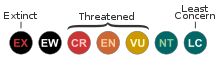
IUCN Red List of Threatened Plants Status : Not available
Growth: S = slow M = medium F = fast. Soil: L = light (sandy) M = medium H = heavy (clay). pH: A = acid N = neutral B = basic (alkaline). Shade: F = full shade S = semi-shade N = no shade. Moisture: D = dry M = Moist We = wet Wa = water.
Now available:
Food Forest Plants for Mediterranean Conditions
350+ Perennial Plants For Mediterranean and Drier Food Forests and Permaculture Gardens.
[Paperback and eBook]
This is the third in Plants For A Future's series of plant guides for food forests tailored to
specific climate zones. Following volumes on temperate and tropical ecosystems, this book focuses
on species suited to Mediterranean conditions—regions with hot, dry summers and cool, wet winters,
often facing the added challenge of climate change.
Read More
Expert comment
Author
(L.) Börner
Botanical References
Links / References
For a list of references used on this page please go here
A special thanks to Ken Fern for some of the information used on this page.
Readers comment
| Add a comment |
|
If you have important information about this plant that may help other users please add a comment or link below. Only comments or links that are felt to be directly relevant to a plant will be included. If you think a comment/link or information contained on this page is inaccurate or misleading we would welcome your feedback at [email protected]. If you have questions about a plant please use the Forum on this website as we do not have the resources to answer questions ourselves.
* Please note: the comments by website users are not necessarily those held by PFAF and may give misleading or inaccurate information.
|
Subject : Stuckenia pectinata
|
|
|
|