 |
|
http://commons.wikimedia.org/wiki/File:Tephroseris_palustris.jpg |
 |
| http://commons.wikimedia.org/wiki/User:Tigerente |
Translate this page:
Summary
Physical Characteristics

 Senecio congestus is a ANNUAL/BIENNIAL growing to 0.6 m (2ft).
See above for USDA hardiness. It is hardy to UK zone 4. It is in flower from June to July, and the seeds ripen from July to August. The species is hermaphrodite (has both male and female organs) and is pollinated by Bees, flies.
Suitable for: light (sandy) and medium (loamy) soils. Suitable pH: mildly acid, neutral and basic (mildly alkaline) soils. It can grow in semi-shade (light woodland) or no shade. It prefers moist or wet soil.
UK Hardiness Map
US Hardiness Map
Synonyms
Senecio congestus. (R.Br.)DC. S. palustris. (L.)Hook.
Plant Habitats
Edible Uses
Young leaves and flowering stems - raw or cooked[177, 257]. They have been eaten raw in salads, cooked as greens or have been fermented into a sauerkraut[257]. Some caution is advised, see the notes above on toxicity.
References More on Edible Uses
Medicinal Uses
Plants For A Future can not take any responsibility for any adverse effects from the use of plants. Always seek advice from a professional before using a plant medicinally.
None known
References More on Medicinal Uses
Other Uses
References More on Other Uses
Cultivation details
Requires a gritty, moisture-retentive but well-drained circumneutral soil and a sunny position[200]. Plants can be short-lived in cultivation[200].
References Carbon Farming Information and Carbon Sequestration Information
Temperature Converter
Type a value in the Celsius field to convert the value to Fahrenheit:
Fahrenheit:
Plant Propagation
Seed - sow spring or late summer in situ. Only just cover the seed and make sure the soil remains moist to enable germination to take place.
Other Names
If available other names are mentioned here
Native Range
TEMPERATE ASIA: Russian Federation-Western Siberia (Western Siberia), Russian Federation-Eastern Siberia (Eastern Siberia), Kazakhstan, Russian Federation-Far East (Far East) NORTHERN AMERICA: Canada (Northwest Territories, Yukon, Québec, Ontario, Newfoundland and Labrador, Saskatchewan, Alberta, Manitoba, British Columbia), United States (Alaska, Michigan (Emmet Co.), Iowa, Minnesota, North Dakota, South Dakota (east), Wisconsin) EUROPE: Denmark, Sweden, Belgium, Czech Republic, Germany, Netherlands, Poland, Russian Federation (European part), Belarus, Estonia, Lithuania, Latvia, Ukraine, Romania, France
Weed Potential
Right plant wrong place. We are currently updating this section.
Please note that a plant may be invasive in one area but may not
in your area so it's worth checking.
Conservation Status
IUCN Red List of Threatened Plants Status :
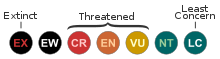
IUCN Red List
Growth: S = slow M = medium F = fast. Soil: L = light (sandy) M = medium H = heavy (clay). pH: A = acid N = neutral B = basic (alkaline). Shade: F = full shade S = semi-shade N = no shade. Moisture: D = dry M = Moist We = wet Wa = water.
Support Plants For A Future
Plants For A Future relies on regular donations to keep our free database and search facilities going, to pay for ongoing research, improvements and enhancements, and to develop and publish new books.
Read more
Choose Currency
Donate in £ GBP
Donate in $ USD
Donate in € EUR
Securely pay via PayPal or Credit/Debit Card without an account.
Expert comment
Author
(L.)Fourr.
Botanical References
17200
Links / References
For a list of references used on this page please go here
Readers comment
| Add a comment |
|
If you have important information about this plant that may help other users please add a comment or link below. Only comments or links that are felt to be directly relevant to a plant will be included. If you think a comment/link or information contained on this page is inaccurate or misleading we would welcome your feedback at [email protected]. If you have questions about a plant please use the Forum on this website as we do not have the resources to answer questions ourselves.
* Please note: the comments by website users are not necessarily those held by PFAF and may give misleading or inaccurate information.
|
Subject : Senecio congestus
|
|
|
|