Translate this page:
Summary
Physical Characteristics

 Sambucus_melanocarpa is a deciduous Shrub growing to 4 m (13ft 1in).
See above for USDA hardiness. It is hardy to UK zone 6. It is in flower from June to July, and the seeds ripen from August to September. The species is hermaphrodite (has both male and female organs) and is pollinated by Insects.
Suitable for: light (sandy), medium (loamy) and heavy (clay) soils and can grow in heavy clay soil. Suitable pH: mildly acid, neutral and basic (mildly alkaline) soils. It can grow in semi-shade (light woodland) or no shade. It prefers moist soil. The plant can tolerates strong winds but not maritime exposure.
It can tolerate atmospheric pollution.
UK Hardiness Map
US Hardiness Map
Synonyms
S. racemosa pubens melanocarpa. (Gray.)McMinn.
Plant Habitats
Edible Uses
Fruit - raw or cooked[105, 161]. Low in pectin, it is best mixed with crab-apples or other pectin-rich fruits if used in making jams, jellies etc[183]. The fruit is about 6mm in diameter and is borne in large clusters[200]. Some caution is advised, see the notes above on toxicity. Flowers - raw or cooked.
References More on Edible Uses
Medicinal Uses
Plants For A Future can not take any responsibility for any adverse effects from the use of plants. Always seek advice from a professional before using a plant medicinally.
The dried ripe berries have been eaten as a treatment for diarrhoea[257]. A decoction of the roots has been used in the treatment of diarrhoea and dysentery[257]. A poultice of the boiled, mashed roots has been used as a treatment for caked breasts, cuts and wounds[257]. A decoction of the flowers has been used in the treatment of tuberculosis, coughs and colds[257]. It has also been given to children as a spring tonic[257]. A poultice of the crushed leaves has been used to treat bruises and bleeding wounds[257].
References More on Medicinal Uses
Other Uses
References More on Other Uses
Cultivation details
Tolerates most soils, including chalk[200], but prefers a moist loamy soil[11, 200]. Grows well in heavy clay soils. Tolerates some shade but is best in a sunny position[1]. Tolerates atmospheric pollution and coastal situations[200]. Plants in this genus are notably resistant to honey fungus[200].
References Carbon Farming Information and Carbon Sequestration Information
Temperature Converter
Type a value in the Celsius field to convert the value to Fahrenheit:
Fahrenheit:
Plant Propagation
Seed - best sown as soon as it is ripe in the autumn in a cold frame, when it should germinate in early spring. Stored seed can be sown in the spring in a cold frame but will probably germinate better if it is given 2 months warm followed by 2 months cold stratification first[78, 98, 113]. Prick out the seedlings into individual pots when they are large enough to handle. If good growth is made, the young plants can be placed in their permanent positions during the early summer. Otherwise, either put them in a sheltered nursery bed, or keep them in their pots in a sheltered position and plant them out in spring of the following year. Cuttings of half-ripe wood, 7 - 10cm with a heel, July/August in a frame[78]. Cuttings of mature wood of the current season's growth, 15 - 20cm with a heel, late autumn in a frame or a sheltered outdoor bed[78].
Other Names
If available other names are mentioned here
Native Range
NORTHERN AMERICA: Canada (Alberta, British Columbia), United States (Idaho, Montana (west), Oregon (west), Washington, New Mexico, Arizona, California (n.w. & w.-c.), Utah)
Weed Potential
Right plant wrong place. We are currently updating this section.
Please note that a plant may be invasive in one area but may not
in your area so it's worth checking.
Conservation Status
IUCN Red List of Threatened Plants Status :
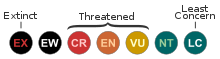
IUCN Red List
Growth: S = slow M = medium F = fast. Soil: L = light (sandy) M = medium H = heavy (clay). pH: A = acid N = neutral B = basic (alkaline). Shade: F = full shade S = semi-shade N = no shade. Moisture: D = dry M = Moist We = wet Wa = water.
Support Plants For A Future
Plants For A Future relies on regular donations to keep our free database and search facilities going, to pay for ongoing research, improvements and enhancements, and to develop and publish new books.
Read more
Choose Currency
Donate in £ GBP
Donate in $ USD
Donate in € EUR
Securely pay via PayPal or Credit/Debit Card without an account.
Expert comment
Author
A.Gray.
Botanical References
1171200
Links / References
For a list of references used on this page please go here
Readers comment
© 2010, Plants For A Future. Plants For A Future is a charitable company limited by guarantee, registered in England and Wales. Charity No. 1057719, Company No. 3204567.