 |
|
Mark W. Skinner @ USDA-NRCS PLANTS Database |
 |
| Mark W. Skinner @ USDA-NRCS PLANTS Database |
Translate this page:
Summary
Physical Characteristics
![]()
![]() Rubus_ursinus is a deciduous Shrub.
See above for USDA hardiness. It is hardy to UK zone 7 and is not frost tender. The species is hermaphrodite (has both male and female organs) and is pollinated by Insects.
Suitable for: light (sandy), medium (loamy) and heavy (clay) soils and prefers well-drained soil. Suitable pH: mildly acid, neutral and basic (mildly alkaline) soils. It can grow in semi-shade (light woodland) or no shade. It prefers moist soil.
UK Hardiness Map
US Hardiness Map
Synonyms
Plant Habitats
Edible Uses
Fruit - raw or cooked and used in pies, preserves etc[177, 183]. The fruit can also be dried for later use[183]. A sweet flavour[11, 62, 101, 105]. The fruit can vary in flavour, the best forms have a large, sweet and well flavoured fruit[183], whilst some forms are large but sour or insipid[2]. Young shoots - raw or cooked like asparagus[183]. They are harvested in the spring as they emerge through the soil and are still tender. A tea is made from the fresh or dried leaves[177, 183, 257]. The young shoots can be made into a tea, usually mixed with the young shoots of other Rubus species[257]. The half-ripe fruits can be soaked in water to make a pleasant drink[183].
References More on Edible Uses
Medicinal Uses
Plants For A Future can not take any responsibility for any adverse effects from the use of plants. Always seek advice from a professional before using a plant medicinally.
The dried bark of the root is astringent and has been used in the treatment of diarrhoea and dysentery[213]. A decoction of the roots has been used in the treatment of diarrhoea and dysentery[257]. The roots have been used as a disinfectant wash on infected sores[257]. The fresh fruit has been eaten in the treatment of diarrhoea[257]. A decoction of the entire vine has been used in the treatment of stomach complaints, diarrhoea and a general feeling of sickness[257]. A decoction of the vines and roots has been used in the treatment of vomiting and the spitting of blood[257].
References More on Medicinal Uses
Other Uses
A purple to dull blue dye is obtained from the fruit[168].
Special Uses
References More on Other Uses
Cultivation details
Easily grown in a good well-drained loamy soil in sun or semi-shade[1, 11, 200]. This species is the parent of many hybrid cultivated forms[71], including the loganberry and the primus berry[183]. Some botanists include the cultivated loganberry (treated here as a separate species, R. loganobaccus) under this species[200]. This species is a blackberry with biennial stems, it produces a number of new stems each year from the perennial rootstock, these stems fruit in their second year and then die[200]. Plants in this genus are notably susceptible to honey fungus[200].
References Carbon Farming Information and Carbon Sequestration Information
Temperature Converter
Type a value in the Celsius field to convert the value to Fahrenheit:
Fahrenheit:
Plant Propagation
Seed - requires stratification, is best sown in early autumn in a cold frame. Sow stored seed as early as possible in the year in a cold frame and stratify for a month at 3°c if sowing later than February. Prick out the seedlings when they are large enough to handle and grow on in a cold frame. Plant them out into their permanent positions in late spring of the following year. Tip layering in July. Plant out in autumn. Division in early spring.
Other Names
If available other names are mentioned here
Native Range
NORTHERN AMERICA: Canada (British Columbia (southwest)), United States (Idaho, Oregon, Washington, California (w.-c. (Mendocino to San Luis Obispo Cos.))), Mexico (Baja California (Norte) (north))
Weed Potential
Right plant wrong place. We are currently updating this section.
Please note that a plant may be invasive in one area but may not
in your area so it's worth checking.
Conservation Status
IUCN Red List of Threatened Plants Status :
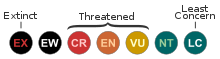
IUCN Red List
Growth: S = slow M = medium F = fast. Soil: L = light (sandy) M = medium H = heavy (clay). pH: A = acid N = neutral B = basic (alkaline). Shade: F = full shade S = semi-shade N = no shade. Moisture: D = dry M = Moist We = wet Wa = water.
Support Plants For A Future
Plants For A Future relies on regular donations to keep our free database and search facilities going, to pay for ongoing research, improvements and enhancements, and to develop and publish new books.
Read more
Choose Currency
Donate in £ GBP
Donate in $ USD
Donate in € EUR
Securely pay via PayPal or Credit/Debit Card without an account.
Expert comment
Author
Cham.&Schltdl.
Botanical References
1171200
Links / References
For a list of references used on this page please go here
Readers comment