 |
|
http://commons.wikimedia.org/wiki/File:Rubus_moluccanus_Blanco2.393-cropped.jpg |
 |
|
Translate this page:
Summary
Physical Characteristics

 Rubus_moluccanus is a deciduous Shrub growing to 6 m (19ft) by 6 m (19ft). The species is hermaphrodite (has both male and female organs) and is pollinated by Insects.
Suitable for: light (sandy), medium (loamy) and heavy (clay) soils and prefers well-drained soil. Suitable pH: mildly acid, neutral and basic (mildly alkaline) soils. It can grow in semi-shade (light woodland) or no shade. It prefers moist soil.
UK Hardiness Map
US Hardiness Map
Synonyms
Plant Habitats
Edible Uses
Fruit - raw or cooked and used in pies, preserves etc[146, 177, 183]. It has a sour flavour and is astringent[193].
References More on Edible Uses
Medicinal Uses
Plants For A Future can not take any responsibility for any adverse effects from the use of plants. Always seek advice from a professional before using a plant medicinally.
The leaves are abortifacient, astringent and emmenagogue[240
, 360
]. The leaves, or the sap they contain, can be used to treat dysentery[310
]. The sap from young shoots is drunk in a single dose to induce labour[310
]. A decoction of the tender leaves, combined with the leaves of Psidium guajava, Perilla ocimoides and Vernonia volkameriaefolia plus the root of Urena lobota root, is used to treat abdominal pain[360
].
The leaves are chewed with salt and then spat onto sores to promote healing[310
]
Sap from the leaves or stems is used to treat eye diseases[310
].
The fruit is considered to be a useful remedy for the nocturnal micturition of children (bed-wetting)[240
, 360
].
The roots are astringent and a blood tonic[310
, 360
]. A decoction of the roots is used in the treatment of dysentery and other internal complaints[310
].
The bark contains around 10% tannins and is an effective astringent[360
].
References More on Medicinal Uses
Other Uses
A purple to dull blue dye is obtained from the fruit[168].
Special Uses
References More on Other Uses
Cultivation details
Rubus moluccanus has a wide native range from the Himalayas through tropical southeast Asia to eastern Australia, where it can be found as far south as the warm temperate zone of Victoria. In the temperate zone, it can only be grown in regions with mild winters.
Easily grown in a good well-drained, loamy soil in sun or semi-shade[1
, 11
, 200
].
The plant spreads by means of bird-sown seeds and vegetatively to form thickets. It has escaped from cultivation and become a weed in several areas, including the Mascarene Islands and southeastern N. America[413
].
There is at least one named variety occasionally cultivated for its edible fruit. 'Keri' (or Keriberry) is a very vigorous plant with mild-flavoured large black fruits that lack the distinctive flavour of blackberries[183
].
Plants in this genus are notably susceptible to honey fungus[200
].
References Carbon Farming Information and Carbon Sequestration Information
Temperature Converter
Type a value in the Celsius field to convert the value to Fahrenheit:
Fahrenheit:
Plant Propagation
Seed - requires stratification and is best sown in early autumn in a cold frame. Stored seed requires one month stratification at about 3°c and is best sown as early as possible in the year. Prick out the seedlings when they are large enough to handle and grow on in a cold frame. Plant them out into their permanent positions in late spring of the following year. Cuttings of half-ripe wood, July/August in a frame[200]. Tip layering in July. Plant out in autumn. Division in early spring or just before leaf-fall in the autumn[200].
Other Names
If available other names are mentioned here
Native Range
TROPICAL ASIA: Sri Lanka, Papua New Guinea, Solomon Islands, India (Andaman and Nicobar Islands (Nicobar Island)), Laos, Myanmar, Thailand, Vietnam, Indonesia, Malaysia, Philippines PACIFIC: New Caledonia AUSTRALASIA: Australia (New South Wales (east), Queensland (east & north), Victoria (east))
Weed Potential
Right plant wrong place. We are currently updating this section.
Please note that a plant may be invasive in one area but may not
in your area so it's worth checking.
Conservation Status
IUCN Red List of Threatened Plants Status :
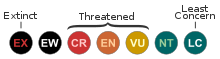
IUCN Red List
Growth: S = slow M = medium F = fast. Soil: L = light (sandy) M = medium H = heavy (clay). pH: A = acid N = neutral B = basic (alkaline). Shade: F = full shade S = semi-shade N = no shade. Moisture: D = dry M = Moist We = wet Wa = water.
Support Plants For A Future
Plants For A Future relies on regular donations to keep our free database and search facilities going, to pay for ongoing research, improvements and enhancements, and to develop and publish new books.
Read more
Choose Currency
Donate in £ GBP
Donate in $ USD
Donate in € EUR
Securely pay via PayPal or Credit/Debit Card without an account.
Expert comment
Author
L.
Botanical References
Links / References
For a list of references used on this page please go here
Readers comment
© 2010, Plants For A Future. Plants For A Future is a charitable company limited by guarantee, registered in England and Wales. Charity No. 1057719, Company No. 3204567.