 |
|
http://commons.wikimedia.org/wiki/File:Primula_spp_Sturm63.jpg |
 |
| http://commons.wikimedia.org/wiki/User:Don_Pedro28 |
Translate this page:
Summary
Physical Characteristics

 Primula auricula is a PERENNIAL growing to 0.2 m (0ft 8in) by 0.2 m (0ft 8in).
See above for USDA hardiness. It is hardy to UK zone 3 and is not frost tender. It is in flower from April to May. The species is hermaphrodite (has both male and female organs) and is pollinated by Insects.
Suitable for: light (sandy), medium (loamy) and heavy (clay) soils, prefers well-drained soil and can grow in heavy clay soil. Suitable pH: mildly acid, neutral and basic (mildly alkaline) soils. It can grow in semi-shade (light woodland). It prefers moist soil.
UK Hardiness Map
US Hardiness Map
Synonyms
Plant Habitats
Ground Cover; Cultivated Beds;
Edible Uses
References More on Edible Uses
Medicinal Uses
Plants For A Future can not take any responsibility for any adverse effects from the use of plants. Always seek advice from a professional before using a plant medicinally.
Antitussive
The leaves are used as a remedy for coughs[4]. Used in the treatment of headaches[61].
References More on Medicinal Uses
Other Uses
When growing in the right conditions this species and its cultivars make a good ground cover[208]. They are best spaced about 30cm apart each way[208].
Special Uses
Ground cover Scented Plants
References More on Other Uses
Cultivation details
Prefers a freely-draining moderately fertile humus-rich sandy loam[200]. Prefers an alkaline soil[188]. Grows well in heavy clay soils[208]. Dislikes dry soils[200]. Requires some shelter from the summer sun[1, 200]. Grows well in the shade of a north wall but does not like growing under trees[208]. A very ornamental and polymorphic species[1]. The flowers are sweetly honey-scented[245].
References Carbon Farming Information and Carbon Sequestration Information
Temperature Converter
Type a value in the Celsius field to convert the value to Fahrenheit:
Fahrenheit:
Plant Propagation
Seed - best sown as soon as it is ripe in a cold frame. Sow stored seed in early spring in a cold frame. Germination is inhibited by temperatures above 20°c. When they are large enough to handle, prick the seedlings out into individual pots and grow them on in the greenhouse for their first winter. Plant them out into their permanent positions in late spring or early summer, after the last expected frosts. Division in autumn.
Other Names
If available other names are mentioned here
Native Range
EUROPE: Austria, Switzerland, Germany (south), Liechtenstein, Poland (southwest), Slovakia, France (east)
Weed Potential
Right plant wrong place. We are currently updating this section.
Please note that a plant may be invasive in one area but may not
in your area so it's worth checking.
Conservation Status
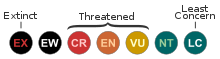
IUCN Red List of Threatened Plants Status :
IUCN Red List
| Related Plants
|
| Latin Name | Common Name | Habit | Height | Hardiness | Growth | Soil | Shade | Moisture | Edible | Medicinal | Other |
| Anagallis arvensis | Scarlet Pimpernel | Annual | 0.1 |
6-9
| | LMH | N | DM | 2 | 2 | 3 |
| Androsace sarmentosa | Rock Jasmine | Perennial | 0.1 |
3-7
| | LM | SN | DM | 0 | 2 | 3 |
| Ardisia crenata | Coralberry, Hen's eyes, Spiceberry | Shrub | 2.0 |
7-10
| S | LMH | S | M | 0 | 1 | 1 |
| Ardisia crispa | | Shrub | 1.2 |
6-9
| | LMH | S | M | 1 | 1 | 0 |
| Ardisia japonica | Marlberry | Shrub | 0.5 |
8-10
| M | LMH | S | M | 0 | 3 | 2 |
| Ardisia sieboldii | Duo Zhi Zi Jin Niu | Shrub | 6.0 |
0-0
| | LMH | S | M | 1 | 0 | 0 |
| Cyclamen hederifolium | Cyclamen, Alpine Violet, Persian Violet | Perennial | 0.1 |
6-9
| M | LM | FSN | M | 0 | 1 | 3 |
| Dodecatheon hendersonii | Sailor-Caps, Mosquito bills | Perennial | 0.3 |
5-9
| | LMH | FS | M | 1 | 0 | |
| Embelia ribes | False black pepper, White-flowered Embelia | Climber | 15.0 |
10-12
| F | LMH | S | M | 3 | 4 | 2 |
| Glaux maritima | Black Saltwort, Sea milkwort | Perennial | 0.3 |
0-0
| | LMH | N | M | 2 | 1 | |
| Hottonia palustris | Water Violet | Perennial | 0.9 |
5-9
| F | LMH | N | Wa | 0 | 1 | |
| Lysimachia barystachys | Manchurian yellow loosestrife | Perennial | 0.6 |
4-8
| | LMH | SN | M | 1 | 0 | |
| Lysimachia christiniae | Jin Qian Cao | Perennial | 0.3 |
-
| | LMH | SN | M | 0 | 2 | |
| Lysimachia clethroides | Gooseneck Loosestrife, Gooseneck yellow loosestrife, Japanese Loosestrife, Shepherd's Crook | Perennial | 1.0 |
3-8
| F | LMH | SN | M | 1 | 0 | |
| Lysimachia eleutheroides | | Perennial | 0.0 |
-
| | LMH | SN | M | 3 | 0 | |
| Lysimachia foenum-graecum | Ling Xiang Cao | Perennial | 0.5 |
-
| | LMH | SN | M | 0 | 1 | 1 |
| Lysimachia fortunei | | Perennial | 0.5 |
6-9
| | LMH | SN | MWeWa | 1 | 0 | |
| Lysimachia nemorum | Yellow Pimpernel | Perennial | 0.5 |
5-9
| | LMH | SN | MWe | 0 | 1 | |
| Lysimachia nummularia | Creeping Jenny, Moneywort, Creeping Charlie | Perennial | 0.2 |
4-8
| F | LMH | SN | MWeWa | 1 | 2 | 3 |
| Lysimachia paridiformis | | Perennial | 0.3 |
6-9
| | LMH | SN | MWeWa | 0 | 2 | |
| Lysimachia quadrifolia | Whorled Yellow Loosestrife | Perennial | 0.6 |
-
| | LMH | SN | M | 1 | 1 | |
| Lysimachia sikokiana | | Perennial | 0.6 |
-
| | LMH | SN | M | 0 | 1 | |
| Lysimachia vulgaris | Yellow Loosestrife, Garden yellow loosestrife | Perennial | 1.2 |
4-8
| | LMH | SN | MWeWa | 1 | 2 | 2 |
| Primula denticulata | Drumstick Primula | Perennial | 0.3 |
4-8
| | LMH | SN | MWe | 2 | 0 | 2 |
| Primula elatior | Oxlip | Perennial | 0.3 |
3-7
| | MH | FS | M | 2 | 2 | |
| Primula involucrata | | Perennial | 0.3 |
4-8
| | LMH | S | MWe | 0 | 2 | |
| Primula macrophylla | | Perennial | 0.3 |
5-9
| | LMH | N | M | 0 | 2 | |
| Primula parryi | Parry's primrose | Perennial | 0.3 |
4-8
| | LMH | FS | M | 0 | 0 | 1 |
| Primula pauciflora | Dark-Throated Shootingstar | Perennial | 0.5 |
3-8
| S | LM | SN | M | 1 | 1 | 2 |
|
|
Growth: S = slow M = medium F = fast. Soil: L = light (sandy) M = medium H = heavy (clay). pH: A = acid N = neutral B = basic (alkaline). Shade: F = full shade S = semi-shade N = no shade. Moisture: D = dry M = Moist We = wet Wa = water.
Support Plants For A Future
Plants For A Future relies on regular donations to keep our free database and search facilities going, to pay for ongoing research, improvements and enhancements, and to develop and publish new books.
Read more
Choose Currency
Donate in £ GBP
Donate in $ USD
Donate in € EUR
Securely pay via PayPal or Credit/Debit Card without an account.
Expert comment
Author
L.
Botanical References
50200
Links / References
For a list of references used on this page please go here
Readers comment
| Add a comment |
|
If you have important information about this plant that may help other users please add a comment or link below. Only comments or links that are felt to be directly relevant to a plant will be included. If you think a comment/link or information contained on this page is inaccurate or misleading we would welcome your feedback at [email protected]. If you have questions about a plant please use the Forum on this website as we do not have the resources to answer questions ourselves.
* Please note: the comments by website users are not necessarily those held by PFAF and may give misleading or inaccurate information.
|
Subject : Primula auricula
|
|
|
|