 |
|
http://commons.wikimedia.org/wiki/File:Podolepis_acuminata.jpg |
 |
| www.flickr.com/photos/ogcodes |
Translate this page:
Summary
Physical Characteristics

 Podolepis jaceoides is a PERENNIAL growing to 0.6 m (2ft).
See above for USDA hardiness. It is hardy to UK zone 9. It is in flower from July to August. The species is hermaphrodite (has both male and female organs) and is pollinated by Insects.
Suitable for: light (sandy) and medium (loamy) soils and prefers well-drained soil. Suitable pH: mildly acid, neutral and basic (mildly alkaline) soils and can grow in saline soils.
It cannot grow in the shade. It prefers moist soil.
UK Hardiness Map
US Hardiness Map
Synonyms
P. acuminata. P. robusta. (Maiden.&Betch.)J.H.Wallis. Scalia jaceoides.
Plant Habitats
Cultivated Beds;
Edible Uses
Edible Parts: Root
Edible Uses:
Root[144]. No more details are given.
References More on Edible Uses
Medicinal Uses
Plants For A Future can not take any responsibility for any adverse effects from the use of plants. Always seek advice from a professional before using a plant medicinally.
None known
References More on Medicinal Uses
Other Uses
References More on Other Uses
Cultivation details
Prefers a light well-drained soil in a sunny position[1]. Plants tolerate temperatures down to at least -7°c in Australian gardens[157], but this cannot be translated directly to British gardens due to our cooler summers and longer, colder and wetter winters. They are usually grown as an annual in Britain[1, 200], but could possibly succeed as a perennial in the milder areas of the country.
References Carbon Farming Information and Carbon Sequestration Information
Temperature Converter
Type a value in the Celsius field to convert the value to Fahrenheit:
Fahrenheit:
Plant Propagation
Seed - sow early to mid spring in a greenhouse. When they are large enough to handle, prick the seedlings out into individual pots and plant them out into their permanent positions in late spring or early summer, after the last expected frosts[1]. If you have plenty of seed it is worth trying a sowing outdoors in situ in late spring[1]. Division in spring.
Other Names
If available other names are mentioned here
Native Range
AUSTRALASIA: Australia (Tasmania, New South Wales, Queensland, South Australia, Victoria)
Weed Potential
Right plant wrong place. We are currently updating this section.
Please note that a plant may be invasive in one area but may not
in your area so it's worth checking.
Conservation Status
IUCN Red List of Threatened Plants Status :
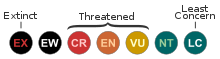
IUCN Red List
Growth: S = slow M = medium F = fast. Soil: L = light (sandy) M = medium H = heavy (clay). pH: A = acid N = neutral B = basic (alkaline). Shade: F = full shade S = semi-shade N = no shade. Moisture: D = dry M = Moist We = wet Wa = water.
Support Plants For A Future
Plants For A Future relies on regular donations to keep our free database and search facilities going, to pay for ongoing research, improvements and enhancements, and to develop and publish new books.
Read more
Choose Currency
Donate in £ GBP
Donate in $ USD
Donate in € EUR
Securely pay via PayPal or Credit/Debit Card without an account.
Expert comment
Author
(Sims.)Voss.
Botanical References
154200265
Links / References
For a list of references used on this page please go here
Readers comment
| Add a comment |
|
If you have important information about this plant that may help other users please add a comment or link below. Only comments or links that are felt to be directly relevant to a plant will be included. If you think a comment/link or information contained on this page is inaccurate or misleading we would welcome your feedback at [email protected]. If you have questions about a plant please use the Forum on this website as we do not have the resources to answer questions ourselves.
* Please note: the comments by website users are not necessarily those held by PFAF and may give misleading or inaccurate information.
|
Subject : Podolepis jaceoides
|
|
|
|