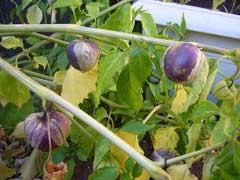
 |
|
http://commons.wikimedia.org/wiki/User:Abrahami |
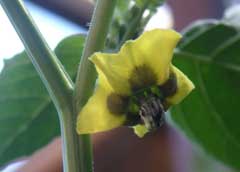 |
| http://de.wikipedia.org/wiki/Benutzer:Carstor |
Translate this page:
Summary
UPDATE: Physalis ixocarpa Brot. ex Hornem. is a synonym of Physalis philadelphica Lam
Physical Characteristics

 Physalis_ixocarpa is a ANNUAL growing to 1.2 m (4ft).
See above for USDA hardiness. It is hardy to UK zone 8 and is frost tender. It is in flower from July to September, and the seeds ripen from August to October. The species is hermaphrodite (has both male and female organs) and is pollinated by Bees.
Suitable for: light (sandy), medium (loamy) and heavy (clay) soils and prefers well-drained soil. Suitable pH: mildly acid, neutral and basic (mildly alkaline) soils. It can grow in semi-shade (light woodland) or no shade. It prefers dry or moist soil and can tolerate drought.
UK Hardiness Map
US Hardiness Map
Synonyms
P. aequata. Jacq.
Plant Habitats
Edible Uses
Fruit - raw or cooked[3, 38, 61]. The fruit is a berry that is 2.5cm or more in diameter[200]. When not fully ripe, the fruit can be cooked and used in curries, sauces, soups, stews etc[183]. A delicious flavouring when used like a tomato and added to soups, stews etc[K]. The fully ripe fruit is sweeter and can be eaten out of hand, added to salads or used in pies, preserves etc[183]. The plant conveniently wraps up each fruit in its own 'paper bag' (botanically, the calyx) to protect it from pests and the elements. This calyx is toxic and should not be eaten. The fruit can be stored for up to a year if picked before they are fully ripe and left inside their calyx.
References More on Edible Uses
Medicinal Uses
Plants For A Future can not take any responsibility for any adverse effects from the use of plants. Always seek advice from a professional before using a plant medicinally.
References More on Medicinal Uses
The Bookshop: Edible Plant Books
Our Latest books on Perennial Plants For Food Forests and Permaculture Gardens in paperback or digital formats.

Edible Tropical Plants
Food Forest Plants for Hotter Conditions: 250+ Plants For Tropical Food Forests & Permaculture Gardens.
More

Edible Temperate Plants
Plants for Your Food Forest: 500 Plants for Temperate Food Forests & Permaculture Gardens.
More

More Books
PFAF have eight books available in paperback and digital formats. Browse the shop for more information.
Shop Now
Other Uses
Pollinator Support: Tomatillo flowers attract native bees, bumblebees, and other beneficial pollinators. It blooms for an extended period, providing nectar and pollen throughout the season. Trap Crop in Pest Management: Tomatillo has been experimented with as a trap crop in integrated pest management systems. It can attract pests like flea beetles or whiteflies, helping to divert them away from more vulnerable crops (e.g. tomatoes or peppers). Research is still limited, but it’s promising in organic and permaculture systems. Green Mulch / Biomass: The fast-growing foliage produces a good amount of biomass, which can be used as green mulch or compost material. Useful in chop-and-drop systems for soil fertility and moisture retention. Cultural and Ornamental Use: Its papery husks (calyx) are attractive and sometimes used in folk art, decoration, or crafts (similar to Physalis alkekengi, the “Chinese lantern plant”). Dried husks can be used in natural decor or educational displays. Medicinal/Folk Uses (less documented for ixocarpa specifically). Some Physalis species have been used in traditional medicine for anti-inflammatory, diuretic, or antibacterial properties. While most such uses relate to Physalis peruviana or Physalis angulata, P. ixocarpa is sometimes used in herbal infusions in Mexican folk medicine — but this is not widely studied or recommended without more data.
Special Uses
References More on Other Uses
Cultivation details
Succeeds in any well-drained soil in full sun or light shade[200]. Prefers a rich light soil[33, 38]. Tolerates hot dry weather[160]. One report suggests that the plant is a perennial but, if this is true, it is not winter hardy in Britain though it can be cultivated as an annual for its edible fruit in much the same way that tomatoes are grown[34]. There are some named varieties[183]. Some botanists unite this species with P. philadelphica[50], saying that it arose from P. philadelphica through cultivation. A slow growing plant[160]. Insect resistant[160].
References Carbon Farming Information and Carbon Sequestration Information
Temperature Converter
Type a value in the Celsius field to convert the value to Fahrenheit:
Fahrenheit:
The PFAF Bookshop
Plants For A Future have a number of books available in paperback and digital form. Book titles include Edible Plants, Edible Perennials, Edible Trees,Edible Shrubs, Woodland Gardening, and Temperate Food Forest Plants. Our new book is Food Forest Plants For Hotter Conditions (Tropical and Sub-Tropical).
Shop Now
Plant Propagation
Seed - sow March/April in a greenhouse only just covering the seed. Germination usually takes place quickly and freely. Prick out the seedlings into individual pots of fairly rich soil when they are large enough to handle and plant them out after the last expected frosts. Consider giving them some protection such as a cloche until they are growing away well. Diurnal temperature fluctuations assist germination[170].
Other Names
If available other names are mentioned here
Native Range
NORTHERN AMERICA: Mexico (Zacatecas, Aguascalientes, Jalisco) SOUTHERN AMERICA: Guatemala, El Salvador
Weed Potential
Right plant wrong place. We are currently updating this section.
Please note that a plant may be invasive in one area but may not in your area so it's worth checking.
Conservation Status
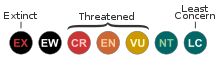
IUCN Red List of Threatened Plants Status :
Growth: S = slow M = medium F = fast. Soil: L = light (sandy) M = medium H = heavy (clay). pH: A = acid N = neutral B = basic (alkaline). Shade: F = full shade S = semi-shade N = no shade. Moisture: D = dry M = Moist We = wet Wa = water.
Now available:
Food Forest Plants for Mediterranean Conditions
350+ Perennial Plants For Mediterranean and Drier Food Forests and Permaculture Gardens.
[Paperback and eBook]
This is the third in Plants For A Future's series of plant guides for food forests tailored to
specific climate zones. Following volumes on temperate and tropical ecosystems, this book focuses
on species suited to Mediterranean conditions—regions with hot, dry summers and cool, wet winters,
often facing the added challenge of climate change.
Read More
Expert comment
Author
Brot.
Botanical References
43170200
Links / References
For a list of references used on this page please go here
Readers comment