 |
|
edibleplants.org |
 |
| Krzysztof Ziarnek, Kenraiz Creative Commons Attribution-Share Alike 4.0 |
Translate this page:
Summary
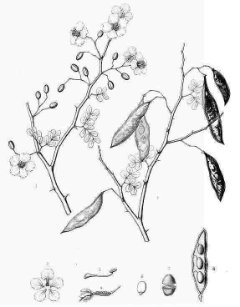
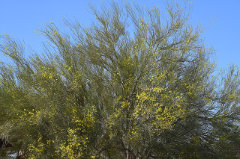
Parkinsonia florida is a prickly, deciduous shrub or a tree with a spreading crown; it usually grows from 2.5 - 8 metres tall, occasionally reaching 12 metres[1333 ]. The plant is harvested from the wild for local use as a food and source of materials. Blue paloverde (Parkinsonia florida) is a common desert tree with edible young pods and mature seeds, both requiring thorough cooking. The pods are stringy and earthy-tasting, while the beans are mild but often slimy when cooked. Traditional Native American use was occasional, and large amounts may cause digestive upset. USDA Zones 8–11; native, not generally invasive.
Physical Characteristics
 Parkinsonia florida is a deciduous Tree growing to 5 m (16ft) by 5 m (16ft).
See above for USDA hardiness. It is hardy to UK zone 9 and is not frost tender. The flowers are pollinated by Bees, Insects.
Suitable for: light (sandy) and medium (loamy) soils, prefers well-drained soil and can grow in nutritionally poor soil. Suitable pH: mildly acid, neutral and basic (mildly alkaline) soils. It cannot grow in the shade. It prefers dry or moist soil and can tolerate drought.
UK Hardiness Map
US Hardiness Map
Synonyms
Homotypic Synonyms: Cercidium floridum Benth. ex A.Gray. Accepted Infraspecifics: Parkinsonia florida subsp. florida.
Plant Habitats
Edible Uses
Seeds - cooked[257 ]. The dried beans were roasted (often until almost burnt) then ground into a powder and made into a mush or into cakes[257 ]. Usually viewed as a famine food and only used when better foods were not available[257 ]. The seedpods are 3 - 11cm long, each pod containing 1 - 8 (usually 3) flat seeds 9 - 12mm long and 5 - 7mm wide[1333 ]. Green pods - eaten raw[257 ]. The immature pods and green seeds are eaten cooked[1050 ]. Blue paloverde (Parkinsonia florida), also known as desert or bigleaf paloverde, is a dominant tree of the southwestern deserts. Like all paloverde species, its pods and seeds should be regarded with caution, as they contain compounds that can cause digestive upset and are reported to be mildly poisonous. Native Americans traditionally ate both immature pods and mature seeds after cooking. The immature pods, available in late spring to summer, are moist, fibrous, and somewhat like garden peas, though stringier. Even very young pods are tough and gummy, and while boiling improves the flavor, it does little to eliminate the stringiness. The taste has elements of peas with earthy, slightly unpleasant accents. Mature beans, which develop later in summer and autumn, are hard and encased in papery pods that crumble easily when dried. After soaking and boiling, the beans soften, double in size, and taste mild and comparable to white beans, though they often develop a slimy texture. Changing the cooking water helps reduce this mucilage. Despite these issues, the beans have some food value and were used in traditional diets. However, they also suffer from frequent insect damage, so careful sorting is required. Overall, blue paloverde provides an abundant but low-quality wild food, with both young pods and mature seeds offering potential in survival situations rather than as a preferred staple [2-3].
References More on Edible Uses
Medicinal Uses
Plants For A Future can not take any responsibility for any adverse effects from the use of plants. Always seek advice from a professional before using a plant medicinally.
None known
References More on Medicinal Uses
The Bookshop: Edible Plant Books
Our Latest books on Perennial Plants For Food Forests and Permaculture Gardens in paperback or digital formats.
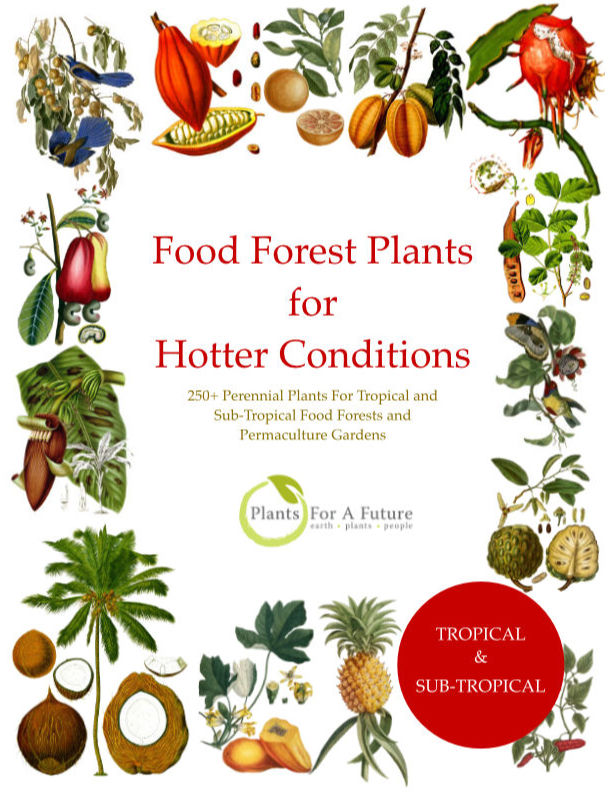
Edible Tropical Plants
Food Forest Plants for Hotter Conditions: 250+ Plants For Tropical Food Forests & Permaculture Gardens.
More
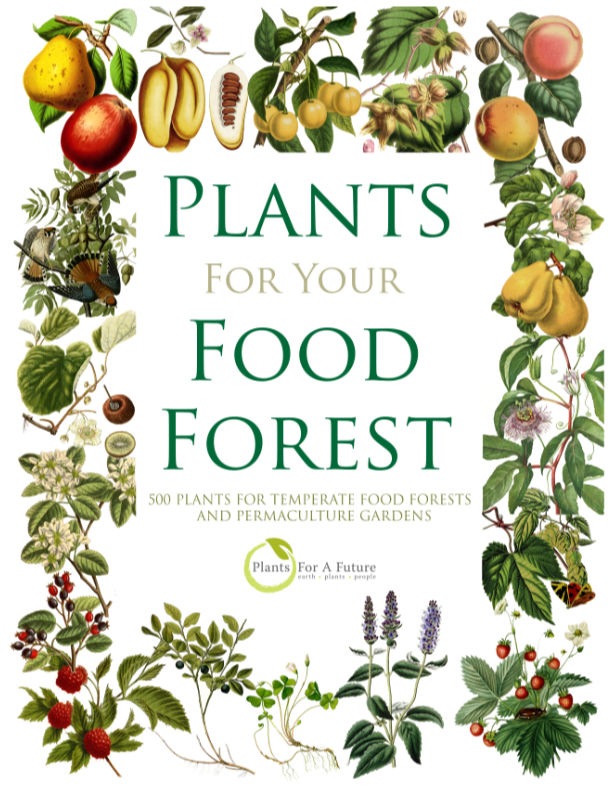
Edible Temperate Plants
Plants for Your Food Forest: 500 Plants for Temperate Food Forests & Permaculture Gardens.
More
More Books
PFAF have eight books available in paperback and digital formats. Browse the shop for more information.
Shop Now
Other Uses
The wood is soft and close-grained. The trunk and any branches large enough were traditionally used to make ladles[257 ]. The wood is used for fuel[1050 ].
Special Uses
References More on Other Uses
Cultivation details
Parkinsonia florida is a plant of arid and semi-arid climates in southwestern N. America, experiencing high summer temperatures and a highly variable rainfall[1050 ]. Requires a sunny position, growing in soils with low levels of nutrients, especially nitrogen and phosphorus. It is usually found on sandy to gravelly, coarse loamy to fine sandy soils overlain with fine gravel[1050 ]. The leaves of this plant are ephemeral, being mainly present in the rainy season. Much of the photosynthesis is carried out by the plant's green stems[1333 ]. This species occasionally forms hybrids throughout its range with yellow paloverde (Parkinsonia microphylla). Although many species within the family Fabaceae have a symbiotic relationship with soil bacteria, this species is said to be devoid of such a relationship and therefore does not fix atmospheric nitrogen[1309 ]. Suitable for Temperate Forest and Shrubland. Subtropical/Tropical Dry Shrubland. Typically hardy in Zones 8–11, thriving in hot, arid desert regions of the American Southwest.
References Carbon Farming Information and Carbon Sequestration Information
Temperature Converter
Type a value in the Celsius field to convert the value to Fahrenheit:
Fahrenheit:
The PFAF Bookshop
Plants For A Future have a number of books available in paperback and digital form. Book titles include Edible Plants, Edible Perennials, Edible Trees,Edible Shrubs, Woodland Gardening, and Temperate Food Forest Plants. Our new book is Food Forest Plants For Hotter Conditions (Tropical and Sub-Tropical).
Shop Now
Plant Propagation
Seed
Other Names
If available other names are mentioned here
Blue, Desert, or Bigleaf Paloverde
Native Range
Native to: Arizona, California, Mexico Northeast, Mexico Northwest, Nevada.
Weed Potential
Right plant wrong place. We are currently updating this section.
Please note that a plant may be invasive in one area but may not in your area so it's worth checking.
Native to the southwestern U.S. deserts and not generally considered invasive within its natural range. However, in non-native regions it may spread readily due to prolific seed production.
Conservation Status
IUCN Red List of Threatened Plants Status : Least Concern.
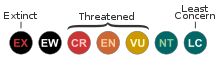
Growth: S = slow M = medium F = fast. Soil: L = light (sandy) M = medium H = heavy (clay). pH: A = acid N = neutral B = basic (alkaline). Shade: F = full shade S = semi-shade N = no shade. Moisture: D = dry M = Moist We = wet Wa = water.
Now available:
Food Forest Plants for Mediterranean Conditions
350+ Perennial Plants For Mediterranean and Drier Food Forests and Permaculture Gardens.
[Paperback and eBook]
This is the third in Plants For A Future's series of plant guides for food forests tailored to
specific climate zones. Following volumes on temperate and tropical ecosystems, this book focuses
on species suited to Mediterranean conditions—regions with hot, dry summers and cool, wet winters,
often facing the added challenge of climate change.
Read More
Expert comment
Author
(Benth. ex A.Gray) S.Watson
Botanical References
Links / References
For a list of references used on this page please go here
A special thanks to Ken Fern for some of the information used on this page.
Readers comment
| Add a comment |
|
If you have important information about this plant that may help other users please add a comment or link below. Only comments or links that are felt to be directly relevant to a plant will be included. If you think a comment/link or information contained on this page is inaccurate or misleading we would welcome your feedback at [email protected]. If you have questions about a plant please use the Forum on this website as we do not have the resources to answer questions ourselves.
* Please note: the comments by website users are not necessarily those held by PFAF and may give misleading or inaccurate information.
|
Subject : Parkinsonia florida
|
|
|
|