Translate this page:
Summary
Taxonomic Note: This genus was formerly classified in the family Palmae. Modern classifications include it within the Arecaceae.
Physical Characteristics

 Oenocarpus_distichus is an evergreen Tree growing to 8 m (26ft) by 4 m (13ft) at a slow rate.
See above for USDA hardiness. It is hardy to UK zone 10.
Suitable for: light (sandy), medium (loamy) and heavy (clay) soils and prefers well-drained soil. Suitable pH: mildly acid and neutral soils and can grow in very acid soils.
It cannot grow in the shade. It prefers moist soil.
UK Hardiness Map
US Hardiness Map
Synonyms
Oenocarpus discolor Barb.Rodr. Oenocarpus tarampabo Mart.
Plant Habitats
Edible Uses
Fruit - raw or cooked[416 ]. It has a thin, fleshy pulp[416 ]. A high-calorie beverage is commonly made from the fruit by removing the pulp and then whipping it with water[416 ]. Called 'Bacaba branca', it is highly esteemed locally[46 ]. It can also be fermented into a vinegar[301 ]. The pulp of the fruit contains a clear, yellow, sweet-flavoured oil[314 ]. It can be used as a perfect substitute for olive oil[301 ]. Used in cooking[46 ]. Leaves - cooked[763 ]. The apical bud, often known as a 'palm heart', is eaten as a vegetable[763 ]. Eating this bud leads to the death of the tree because it is unable to make side shoots[K ].
References More on Edible Uses
Medicinal Uses
Plants For A Future can not take any responsibility for any adverse effects from the use of plants. Always seek advice from a professional before using a plant medicinally.
The oil from the fruit pulp is emollient[739 ].
References More on Medicinal Uses
The Bookshop: Edible Plant Books
Our Latest books on Perennial Plants For Food Forests and Permaculture Gardens in paperback or digital formats.

Edible Tropical Plants
Food Forest Plants for Hotter Conditions: 250+ Plants For Tropical Food Forests & Permaculture Gardens.
More

Edible Temperate Plants
Plants for Your Food Forest: 500 Plants for Temperate Food Forests & Permaculture Gardens.
More

More Books
PFAF have eight books available in paperback and digital formats. Browse the shop for more information.
Shop Now
Other Uses
The leaves are used for thatching and weaving[317 ].
Special Uses
References More on Other Uses
Cultivation details
A plant of the tropics, it can also be grown in the warm sub-tropics[314 ]. Grows best in a sunny, moist, but well drained position[314 ].
References Carbon Farming Information and Carbon Sequestration Information
Temperature Converter
Type a value in the Celsius field to convert the value to Fahrenheit:
Fahrenheit:
The PFAF Bookshop
Plants For A Future have a number of books available in paperback and digital form. Book titles include Edible Plants, Edible Perennials, Edible Trees,Edible Shrubs, Woodland Gardening, and Temperate Food Forest Plants. Our new book is Food Forest Plants For Hotter Conditions (Tropical and Sub-Tropical).
Shop Now
Plant Propagation
Seed
Other Names
If available other names are mentioned here
Pataua, Bacaba, White bacaba, Bacaba palm
Native Range
SOUTHERN AMERICA: Brazil (Maranhão, Mato Grosso, Pará, Rondônia, Tocantins), Bolivia (El Beni, Santa Cruz)
Weed Potential
Right plant wrong place. We are currently updating this section.
Please note that a plant may be invasive in one area but may not in your area so it's worth checking.
None Known
Conservation Status
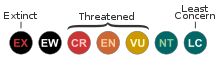
IUCN Red List of Threatened Plants Status : This taxon has not yet been assessed
Growth: S = slow M = medium F = fast. Soil: L = light (sandy) M = medium H = heavy (clay). pH: A = acid N = neutral B = basic (alkaline). Shade: F = full shade S = semi-shade N = no shade. Moisture: D = dry M = Moist We = wet Wa = water.
Now available:
Food Forest Plants for Mediterranean Conditions
350+ Perennial Plants For Mediterranean and Drier Food Forests and Permaculture Gardens.
[Paperback and eBook]
This is the third in Plants For A Future's series of plant guides for food forests tailored to
specific climate zones. Following volumes on temperate and tropical ecosystems, this book focuses
on species suited to Mediterranean conditions—regions with hot, dry summers and cool, wet winters,
often facing the added challenge of climate change.
Read More
Expert comment
Author
Mart.
Botanical References
Links / References
For a list of references used on this page please go here
A special thanks to Ken Fern for some of the information used on this page.
Readers comment
| Add a comment |
|
If you have important information about this plant that may help other users please add a comment or link below. Only comments or links that are felt to be directly relevant to a plant will be included. If you think a comment/link or information contained on this page is inaccurate or misleading we would welcome your feedback at [email protected]. If you have questions about a plant please use the Forum on this website as we do not have the resources to answer questions ourselves.
* Please note: the comments by website users are not necessarily those held by PFAF and may give misleading or inaccurate information.
|
Subject : Oenocarpus_distichus
|
|
|
|