Translate this page:
Summary
Purplemat (Nama demissa) is a small, ground-hugging annual wildflower native to the deserts of southwestern North America. Growing only 2–10 cm tall, it produces attractive purple, funnel-shaped flowers from February to May, usually in sandy or gravelly habitats at low elevations. The plant has a documented history as a traditional seed food among the Kawaiisu people of southern California. Whole plants were gathered as their capsules began to mature, dried in the sun, threshed, and winnowed to separate the tiny seeds. The cleaned seeds were then ground into meal and boiled to make porridge. Harvesting is difficult because the plants become inconspicuous after flowering and the mature capsules split open readily, releasing their seeds. Field notes report that observed colonies did not yield enough seeds to assess their flavor. Purplemat grows rapidly following suitable seasonal rainfall and reproduces entirely by seed. Its greatest food value is as a documented traditional supplementary grain rather than a practical modern crop. Edibility rating: 2/5.
Physical Characteristics

 Nama demissa is a ANNUAL growing to 0.1 m (0ft 4in) by 0.3 m (1ft) at a fast rate.
See above for USDA hardiness. It is hardy to UK zone 9. It is in flower from February to May. The flowers are pollinated by Insects.
It is noted for attracting wildlife.
Suitable for: light (sandy) and medium (loamy) soils, prefers well-drained soil and can grow in nutritionally poor soil. Suitable pH: mildly acid, neutral and basic (mildly alkaline) soils and can grow in very alkaline soils.
It cannot grow in the shade. It prefers dry or moist soil and can tolerate drought.
UK Hardiness Map
US Hardiness Map
Synonyms
Nama demissa var. covillei Brand. Nama demissa var. demissa. Nama demissum
Plant Habitats
Edible Uses
Purplemat is an attractive, low-growing desert annual with a documented history as a traditional seed food. The Kawaiisu people of southern California gathered the plants as their seed capsules began to mature, dried them, threshed and winnowed the seeds, ground them into meal, and boiled the meal into porridge. This traditional process demonstrates a practical solution to the challenges of harvesting extremely small seeds from capsules that open readily. However, purplemat is not an easy wild food to collect. The plants become inconspicuous after flowering, the seeds disperse rapidly, and the harvesting period is short. Field notes report [2-3] that the observed colonies did not provide sufficient seeds for a direct tasting assessment. Its historical food value is therefore better documented than its modern practical usefulness. Purplemat is best regarded as a traditional supplementary seed food with considerable ethnobotanical interest, rather than a productive grain crop. Edible part: Mature seeds [2-3] . Purplemat has a documented history of seed use among the Kawaiisu people of Southern California. The seeds are collected, cleaned, ground, and boiled into porridge [2-3]. This is the principal edible use associated with the species. Seeds: The seeds are tiny and produced in considerable numbers within small capsules. Each capsule opens naturally from its tip as it matures. The seeds can then fall or be dispersed by wind, making the harvesting period extremely short. Field notes describe a traditional method of collecting whole plants before the capsules fully open [2-3]. This approach allowed the seeds to finish drying while remaining associated with the harvested plant material. Once dry, the plants were threshed to release the seeds. The seeds were then separated from chaff and other debris before being ground into meal. The resulting meal was boiled to prepare porridge. Leaves: Field notes do not identify the leaves as edible [2-3] . Although the foliage is small and relatively soft during active growth, no evidence is provided to support its use as a vegetable. Flowers: The attractive purple flowers are not identified as a food resource [2-3]. There is insufficient evidence to recommend their consumption. Roots: The roots are not recorded as edible. Because purplemat is a small annual, its root system is relatively limited and is essential for completing the plant's short life cycle. Harvesting the roots would destroy the plant without providing a documented food benefit. Edibility Rating: 2 out of 5 – Edible seeds with limited practical harvesting potential. Purplemat receives a provisional edibility rating of 2/5. The seeds have documented historical food use and were traditionally prepared as porridge by the Kawaiisu people. This provides stronger evidence of human food use than is available for many little-known wild grasses and desert annuals. However, purplemat has several disadvantages as a food plant. Its seeds are extremely small, the plants are low-growing, and mature capsules release their seeds readily. The harvesting period is short and may be difficult to predict. Field notes also report that the colonies observed during fieldwork did not produce enough seeds for a direct tasting assessment [2-3] . Consequently, the flavor, texture, and practical food yield remain uncertain. A rating of 2/5 recognizes its historical edible use while reflecting the difficulty of gathering sufficient quantities. Taste and Preparation: Field notes do not provide a direct flavor assessment [2-3]. Although several purplemat colonies were located during fieldwork, none yielded enough seeds to evaluate their taste, texture or aroma. The following preparation method is based on the traditional Kawaiisu harvesting process. Harvesting Whole Plants: The Kawaiisu people gathered whole plants as the seed capsules began to mature. This timing mattered because fully mature capsules split open and released their seeds. Harvesting slightly before complete seed dispersal reduced the likelihood of losing the crop. Sun-Drying: The collected plants were spread out and allowed to dry in the sun. Drying helped prepare the capsules for threshing and made the seeds easier to separate from the surrounding plant material. For modern food handling, drying should be carried out on clean surfaces protected from soil contamination and excessive moisture. Threshing: Once the plants were dry, they were threshed to release the seeds. Threshing involves separating seeds from the dried stems, leaves, and capsules. Because purplemat seeds are very small, the process requires careful handling to avoid losing them. Winnowing: The harvested material was winnowed to remove chaff and other lightweight debris. This produced a cleaner seed supply suitable for grinding. Grinding: The cleaned seeds were ground in a mortar. Grinding converted the small seeds into meal, making them more practical to cook and consume. Cooking: The ground seeds were boiled to prepare porridge. This is the principal traditional culinary preparation documented [2-3]. No specific cooking time, water-to-meal ratio, or flavor description is provided. Seasonality: Flowering period: February to May. Purplemat is a spring-flowering desert annual. Its growth depends strongly on seasonal rainfall and suitable temperatures. In favorable years, the plant may germinate following winter rains and flower during late winter or spring. Field notes describe flowering from February to May across its southwestern North American range [2-3] . Seed development follows flowering. Seed Harvesting Period: The seed harvesting period is brief. As the capsules mature, they split open naturally and release their contents. A single gust of wind may disperse much of the available crop. This makes careful observation essential. Locating Productive Colonies: Purplemat is easiest to locate while flowering. The purple blossoms make the small plants relatively conspicuous against the desert surface. Once flowering ends, the plants begin to wither and become difficult to distinguish from surrounding soil and dry vegetation. We recommend locating colonies during flowering and returning when the capsules approach maturity. Rainfall and Seed Production: As an annual desert plant, purplemat depends on favorable seasonal conditions to complete its life cycle. Seed production may vary substantially from year to year. During dry years, germination and flowering may be limited. Even when plants are abundant, successful harvesting depends on reaching them before the seeds disperse. Traditional Uses: Purplemat has a documented history as a seed food among the Kawaiisu people of southern California. Field notes describe a complete harvesting and preparation sequence [2-3] . Whole plants were gathered as their capsules began to mature, spread out to dry in the sun, threshed to release the seeds and winnowed to remove unwanted material. The cleaned seeds were then ground in a mortar and boiled to make porridge. This process demonstrates considerable knowledge of the plant's reproductive cycle. Rather than waiting until the seeds were fully mature and easily lost, harvesters collected the plants at a stage when the seeds could be retained and processed. The method also addressed the problem of handling extremely small seeds. Grinding converted them into a form that could be cooked efficiently. Field notes do not provide further information about the nutritional composition of the seeds, their flavor or the frequency with which purplemat was consumed [2-3]. It should therefore be described as a documented traditional seed food without assuming that it was a major dietary staple. Safety: Correct Identification: Purplemat should be correctly identified before its seeds are considered for food. The genus Nama contains several similar species, and not all have documented edible uses. The traditional use of Nama demissum seeds does not establish that every species in the genus is suitable for consumption. Seed Maturity: Harves plants as their capsules began to mature. This allowed the seeds to finish drying before processing. Immature seeds should not be assumed to have the same food value or safety as mature seeds. Cleaning: The traditional preparation included threshing and winnowing. These processes remove unwanted plant material, soil, and debris. Thorough cleaning is particularly important because the seeds are extremely small. Cooking: Documented Kawaiisu preparation involved grinding and boiling the seeds [2-3]. We do not provide a specific cooking time or establish the safety of raw seed consumption. Plant Chemistry: The plant should not be described as extensively tested for food safety. Environmental Contamination: Purplemat may grow along roadsides, washes, and other open desert habitats. Do not harvest seeds from sites potentially contaminated by agricultural chemicals, industrial activities, or polluted runoff. Sustainable Harvesting: Because purplemat is an annual, seed production is essential to maintaining populations. Harvesting whole plants before seed dispersal can remove both the parent plants and their potential contribution to the next generation. Modern harvesting should therefore be conservative, particularly where colonies are small or rainfall has been poor. Leaving a substantial proportion of plants to release their seeds naturally is important.
References More on Edible Uses
Medicinal Uses
Plants For A Future can not take any responsibility for any adverse effects from the use of plants. Always seek advice from a professional before using a plant medicinally.
No documented medicinal uses.
References More on Medicinal Uses
Other Uses
Purplemat may suit specialist native wildflower gardens, but it is not an established food crop. Its small size and attractive purple flowers make it interesting for naturalistic desert planting. Purplemat may be suitable for rock gardens, desert wildflower displays, and naturalistic plantings in arid climates. Wildlife Value: Purplemat contributes to the seasonal biodiversity of desert ecosystems. Its flowers may provide resources for small insects, although research does not identify particular pollinators. The seeds may also be available to seed-eating animals, but specific feeding relationships have not been documented. Pollinators: Purplemat produces conspicuous purple flowers with both male and female reproductive structures. Insects may visit the flowers for pollen or nectar. However, nectar production and the identity of important pollinators have not been established. Seed-Eating Wildlife: The plant produces numerous small seeds. These may be accessible to ants, birds, or small mammals. Desert Biodiversity: Purplemat is part of the seasonal annual flora that responds to rainfall in desert environments. These plants provide temporary vegetation, flowers, and seeds when conditions are favorable. Their life cycles help explain how desert ecosystems can support substantial biological activity despite prolonged dry periods.
Special Uses
References More on Other Uses
Cultivation details
Growing conditions: Light: Full sun. Purplemat is characteristic of open desert habitats with little overhead vegetation. It grows in sandy and gravelly areas where sunlight reaches the soil surface. Some plants may occur near shrubs or rocks that provide temporary shade, but the species is primarily adapted to exposed conditions. Soil: Well-drained sandy or gravelly soils. Field notes [2-3] identify sandy and gravelly areas at low elevations as characteristic habitats. These soils allow rainfall to infiltrate relatively quickly and generally do not remain waterlogged. Purplemat is unlikely to thrive in persistently saturated soil. Soil pH: Soil pH tolerance: Not reliably established. Purplemat occurs in desert landscapes with variable soil chemistry. Some of these soils may be alkaline; field notes [2-3] do not establish a specific pH preference or tolerance range. Moisture: Low overall moisture requirements, with seasonal rainfall essential for germination. Purplemat is adapted to arid environments. However, like other desert annuals, it requires sufficient moisture during germination and early development. Winter or spring rainfall can trigger growth and flowering. Once the soil dries and temperatures rise, plants may complete seed production and die. Purplemat should not be described as requiring no water. Its survival strategy depends on using moisture when it becomes available. Soil Fertility: Purplemat grows in relatively open desert soils that may contain limited organic matter. It is not known to require highly fertile soil. Heavy fertilization is unlikely to be necessary and may encourage competing vegetation. Nitrogen Fixation: Purplemat is not known to fix atmospheric nitrogen. It does not belong to a plant group commonly associated with specialized nitrogen-fixing root nodules. Habitat: Purplemat is native to the deserts of southwestern North America. Field notes [2-3] describe its distribution from western Texas to southern California. It occurs primarily in low-elevation sandy and gravelly habitats. Desert Flats: Purplemat may grow on open desert flats where rainfall produces a brief period of suitable moisture. These environments can support seasonal displays of annual wildflowers. Sandy Washes: Sandy washes and drainage areas may provide favorable conditions for germination. Rainfall can temporarily concentrate moisture in these habitats. However, flooding and sediment movement may also disturb or bury seedlings. Gravelly Slopes: Purplemat also occurs on gravelly ground where small pockets of soil retain enough moisture for germination. Its low growth habit allows it to occupy spaces between stones and other desert vegetation. Open Desert Scrub: The species may grow among widely spaced desert shrubs. Its seasonal development allows it to take advantage of periods when moisture is available without maintaining a large perennial structure. Cultivation: Purplemat may suit specialist native wildflower gardens, but it is not an established food crop. Its small size and attractive purple flowers make it interesting for naturalistic desert planting. However, cultivation requires conditions that resemble its native environment. Garden Use: Purplemat may suit rock gardens, desert wildflower displays, and naturalistic plantings in arid climates. Its flowers provide seasonal color close to the soil surface. As an annual, plants disappear after seed production. Future displays depend on successful reseeding. Soil Preparation: A well-drained sandy or gravelly growing medium is preferable. Rich compost and excessive fertilizer are unlikely to be necessary. Open soil is important because small seedlings may struggle to establish beneath dense competing vegetation. Watering: Moisture is needed for germination and early growth. Once established, plants should not be kept continuously wet. The best watering regime would imitate seasonal rainfall rather than maintaining permanently moist conditions. Maintenance: Purplemat generally requires little pruning or other maintenance. Allowing plants to complete seed production may encourage natural reseeding. However, seed dispersal can be rapid, and subsequent germination depends on suitable weather. Food Production: Purplemat is not recommended as a primary grain crop. Although its seeds have documented traditional food use, their small size and short harvesting period make production difficult. Cultivation for food would require further investigation into seed yield, harvest timing, cleaning, and processing. USDA Hardiness Zones: USDA Zones 8–11 – provisional growing range. Purplemat is a desert annual, so USDA hardiness zones are less useful than they are for perennial plants. The species survives between growing seasons primarily through seeds rather than persistent above-ground growth. Its ability to establish depends on suitable rainfall, soil temperatures, and the survival of dormant seeds. Purplemat occurs in low-elevation desert environments where winters are generally mild, although some populations may experience occasional frost. Zones 8–11 may be used as a broad indication of potential growing climates, but this range has not been independently verified as a horticultural hardiness classification. An annual desert wildflower adapted to winter and spring growth in arid climates. Growth Rate: Growth rate: Fast under favorable seasonal conditions. Purplemat is a short-lived annual that must germinate, grow, flower and produce seeds within a limited period. Its development is closely linked to rainfall. Following sufficient winter or early spring moisture, seedlings can establish and develop flowering shoots. The plant must then produce mature seeds before rising temperatures and declining soil moisture end the growing season. Growth may be rapid during favorable conditions, but the species can remain absent above ground during dry years. The proposed fast-growth classification refers to its seasonal development, not a measured daily growth rate. Mature Size: Height: Approximately 2–10 cm (0.8–4 inches). Spread: Variable; generally a small, ground-hugging mat. Purplemat is a very low-growing plant. Its stems spread close to the soil surface, creating a flattened, mat-like appearance. Individual plants may form small patches, while groups of plants can create the impression of a continuous purple-flowered carpet. The small stature is important for harvesting because mature plants can become almost invisible against the desert surface after flowering. Identification: Purplemat is a small, ground-hugging annual with narrow leaves, purple funnel-shaped flowers and numerous tiny seeds. Its distinctive appearance makes it relatively easy to recognize when it is flowering. Growth Form: The plant is a low-growing annual approximately 2–10 cm tall. Its stems spread close to the ground, creating a mat-like appearance. Stems: The stems are slender and may branch near the base. They spread outward across the soil surface. The exact degree of branching varies with growing conditions. Leaves: The leaves are simple and arranged alternately along the stems. They are lanceolate, meaning they are relatively narrow and taper toward their ends. The leaf blades narrow toward short stalks. The margins are entire, without conspicuous teeth or lobes. Stipules are absent. Flowers: The flowers are purple and relatively conspicuous compared with the small size of the plant. They may occur individually or in small cymes. The flowers are regular, meaning they are radially symmetrical. They are also perfect, containing both male and female reproductive structures. Sepals: There are five free sepals. They are narrow, hairy, and approximately equal in length. Corolla: The corolla is broadly funnel-shaped. Field notes [2-3] describe flowers more than 4 mm across at the rim. The purple corolla is the plant's most conspicuous identifying feature. Stamens: There are usually five stamens. They are unequal in length and attach to the corolla tube at different levels. This arrangement is an important characteristic of Nama. Style and Ovary: The ovary is superior. The styles are divided to their bases. These reproductive structures can be useful when distinguishing similar species. Fruits: The fruits are capsules. They split open from their tips as they mature. Each capsule contains numerous tiny seeds. Seeds: The seeds are small and readily dispersed. Field notes [2-3] emphasize that wind can rapidly remove mature seeds from open capsules. Roots: Purplemat has a relatively small annual root system. Similar Species: Other Nama Species: The genus Nama includes numerous species native to southwestern North America. Several have small purple or bluish flowers and may resemble purplemat. Identification may require examination of the leaves, flower structure, stamens, and fruit capsules. Approximately 20 species of Nama occur in the United States. Phacelia Species: Some Phacelia species have flowers that superficially resemble those of Nama. Both groups were historically associated with the waterleaf family. In Nama, the stamens attach to the corolla tube at different levels. In Phacelia, the stamens are generally inserted at the same level. This feature may be useful when examining flowers closely, although identification should consider the complete plant rather than a single characteristic. Other Purple-Flowered Desert Annuals: Several unrelated desert wildflowers produce small purple flowers and grow close to the ground. They may resemble purplemat from a distance. Leaf arrangement, flower symmetry, stamen insertion, and capsule structure are important for reliable identification. Important Taxonomic Note: Purplemat has traditionally been placed in the genus Nama within Hydrophyllaceae, the waterleaf family. Modern molecular research has led to changes in the classification of these plants. Depending on the botanical authority, Nama may be placed within a broadly defined Boraginaceae or in the separate family Namaceae. These differences reflect alternative treatments of the evolutionary relationships among borage and waterleaf relatives.
References Carbon Farming Information and Carbon Sequestration Information
Temperature Converter
Type a value in the Celsius field to convert the value to Fahrenheit:
Fahrenheit:
Plant Propagation
Seed. Purplemat is an annual and depends on successful seed production for persistence. Capsules split naturally and release numerous seeds. Seed Collection: Collect seeds when the capsules are approaching maturity but before extensive dispersal. The traditional Kawaiisu method described above involved gathering whole plants and drying them before threshing. For conservation-oriented propagation, collecting a limited number of mature capsules while leaving the plants rooted may be preferable where feasible. Seed Germination: The species is likely to respond to suitable seasonal moisture and temperatures. Requirements for cold stratification, light exposure, and specific germination temperatures have not been established in the supplied information. Direct Sowing: Direct sowing into well-drained soil may be suitable in climates resembling the species' native range. Seeds should not be buried deeply because of their small size. However, a precise sowing depth has not been verified. Natural Reseeding: Purplemat can reproduce through natural seed dispersal. Its capsules open at maturity, allowing seeds to fall onto surrounding soil or be carried away. Successful establishment in subsequent years depends on seed survival and favorable rainfall.
Other Names
If available other names are mentioned here
Nama demissum. Purple nama.
Native Range
US. USA. Arizona, California, Mexico Northeast, Mexico Northwest, Nevada, Utah.
Weed Potential
Right plant wrong place. We are currently updating this section.
Please note that a plant may be invasive in one area but may not
in your area so it's worth checking.
Low. Purplemat is a small annual associated with particular desert growing conditions. It is not generally recognized as a major agricultural or environmental weed. Although it produces numerous seeds, successful establishment depends on suitable rainfall, soil conditions, and available growing space. Its low stature also makes it relatively uncompetitive in dense vegetation. Natural reseeding may occur in suitable desert gardens, but this should not automatically be classified as invasive behavior.
Conservation Status
IUCN Red List of Threatened Plants Status : Not listed.
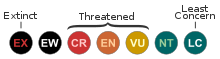
IUCN Red List
Growth: S = slow M = medium F = fast. Soil: L = light (sandy) M = medium H = heavy (clay). pH: A = acid N = neutral B = basic (alkaline). Shade: F = full shade S = semi-shade N = no shade. Moisture: D = dry M = Moist We = wet Wa = water.
Support Plants For A Future
Plants For A Future relies on regular donations to keep our free database and search facilities going, to pay for ongoing research, improvements and enhancements, and to develop and publish new books.
Read more
Choose Currency
Donate in £ GBP
Donate in $ USD
Donate in € EUR
Securely pay via PayPal or Credit/Debit Card without an account.
Expert comment
Author
A.Gray
Botanical References
Links / References
For a list of references used on this page please go here
Readers comment
| Add a comment |
|
If you have important information about this plant that may help other users please add a comment or link below. Only comments or links that are felt to be directly relevant to a plant will be included. If you think a comment/link or information contained on this page is inaccurate or misleading we would welcome your feedback at [email protected]. If you have questions about a plant please use the Forum on this website as we do not have the resources to answer questions ourselves.
* Please note: the comments by website users are not necessarily those held by PFAF and may give misleading or inaccurate information.
|
|