Translate this page:
Summary
Texas mulberry is a small, thornless, deciduous tree or shrub that produces delicious, raspberry-like fruits in the warm, dry landscapes of the American Southwest. It commonly grows in canyons, along seasonal waterways, and in other habitats where sufficient soil moisture is available. Although the surrounding landscape may be arid, Texas mulberry generally benefits from the additional moisture found in sheltered drainage systems and riparian environments. The tree usually reaches a maximum height of approximately 7 meters, although many individuals remain considerably smaller. Its leaves are rough to the touch, with toothed margins and sometimes conspicuous finger-like lobes. This sandpaper texture is one of the plant's most useful identification features. The fruits are small, juicy, and pleasantly sweet. They resemble miniature blackberries or raspberries and gradually change from green to red, then to dark reddish-black as they mature. According to field notes, Texas mulberry produces some of the most enjoyable wild fruits available in the southwestern United States. The fruits are sweet without being excessively tart, and a productive tree can provide a surprisingly large harvest. The fruits generally ripen during late spring or early summer, often as temperatures begin to rise sharply in desert regions. Timing is important because fully ripe fruits drop from the tree relatively quickly. However, not all fruits mature at the same time, allowing repeated harvesting from the same tree over several days. Field notes also identify young leaves and shoots as edible after cooking, although the ripe fruits are by far the most valuable food resource. Unripe fruits contain milky sap and should not be eaten. Texas mulberry is also an interesting candidate for cultivation in dryland gardens, food forests and native plant landscapes where adequate soil moisture can be provided. Its edible fruits, relatively compact size, and potential value to wildlife make it a particularly useful native tree.
Physical Characteristics

 Morus_microphylla is a deciduous Tree growing to 6 m (19ft) by 6 m (19ft) at a slow rate.
See above for USDA hardiness. It is hardy to UK zone 6. It is in flower in May, and the seeds ripen in July. The species is dioecious (individual flowers are either male or female, but only one sex is to be found on any one plant so both male and female plants must be grown if seed is required). . The plant is not self-fertile.
It is noted for attracting wildlife.
Suitable for: light (sandy) and medium (loamy) soils, prefers well-drained soil and can grow in nutritionally poor soil. Suitable pH: mildly acid, neutral and basic (mildly alkaline) soils and can grow in very alkaline soils.
It can grow in semi-shade (light woodland) or no shade. It prefers moist soil and can tolerate drought. The plant can tolerates strong winds but not maritime exposure.
UK Hardiness Map
US Hardiness Map
Synonyms
Morus confinis Greene. Morus grisea Greene. Morus radulina Greene.
Plant Habitats
Edible Uses
Texas mulberry is an excellent native fruit tree with considerable potential for dryland gardens and food forests. Its fruits are sweet, juicy, and highly enjoyable when fully ripe. The PFAF field notes describe them as among the best wild fruits encountered in the American Southwest. A productive tree can provide a substantial harvest, particularly in years with favorable rainfall. The fruits ripen over several days, allowing repeated harvesting, although they must be collected promptly because they fall soon after maturity. Young leaves and shoots are also reported to be edible after cooking, providing secondary food uses. Texas mulberry's relatively compact size, tolerance of difficult soils, and wildlife value make it an attractive candidate for cultivation. Its main limitations are the perishability of its fruits, the need to select productive female trees, and the importance of adequate moisture during establishment. Edible parts: Fully ripe fruits, cooked young leaves, and cooked young shoots [2-3]. Texas mulberry is an excellent wild food plant, with the ripe fruits providing its greatest culinary value. Fruits: The fruits are the most desirable edible part. They are juicy, pleasantly sweet and only mildly tart. Field notes describe them as absolutely delicious, with a flavor that compares favorably with other wild mulberries [2-3]. The fruits resemble raspberries or small blackberries, although botanically they are multiple fruits formed from the development of several flowers within a cluster. Their color changes as they ripen. Immature fruits are pale green, developing red coloring before becoming dark reddish-black at full maturity. The darkest fruits generally have the best flavor, although red fruits can also taste good [2-3]. The fruits contain small seeds that vary in texture. Some are barely noticeable when eaten, while others are relatively firm and resemble the seeds found in raspberries. Small stalks often remain attached to harvested fruits. These are edible in the practical sense that they can be swallowed with the fruit, and there are no reported problems with leaving them attached. A productive tree can yield a considerable quantity of fruit, particularly following favorable rainfall [2-3]. Young Leaves: Young Texas mulberry leaves are reported to be edible after cooking. The mature leaves are relatively rough, which may make them less appealing as a vegetable. Edible foliage: young leaves, cooked, rather than suggesting that mature leaves are suitable for raw consumption. Young Shoots: Young shoots are also reported as edible after cooking. The young shoots are a secondary food resource and are much less important than the fruits. Unripe Fruits: Unripe fruits should not be eaten. Immature fruits contain milky sap. In mulberries, immature fruits and latex-containing tissues can cause adverse reactions, including gastrointestinal irritation. The safest approach is to harvest only fully ripe fruits and avoid green or partly developed fruits. Edibility Rating: 5 out of 5 – Excellent edible fruit plant. Texas mulberry deserves the highest PFAF edibility rating because of the exceptional quality of its ripe fruits. Field notes describe the fruits as delicious, pleasantly sweet and not excessively tart [2-3]. They can be eaten directly from the tree, require little preparation, and may be produced in considerable quantities. The fruits also ripen over a period rather than all at once, allowing several harvests from a productive tree. Their main disadvantage is that they are highly perishable and may fall soon after reaching full maturity. The edible young leaves and shoots provide additional potential food uses, although these are secondary to the fruit. A rating of 5/5 reflects the excellent flavor, ease of consumption, and potential abundance of the ripe fruits. Taste and Preparation: Fresh Fruits: Fresh Texas mulberries are sweet, juicy, and mildly tart. Their flavor is particularly enjoyable, without the excessive acidity sometimes found in wild fruits [2-3]. Fully ripe fruits are usually dark reddish-black. They can be eaten directly after harvesting, provided they are correctly identified, fully ripe, and collected from a clean site. The fruits are soft and delicate, making them best suited to immediate consumption. Red and Black Fruits: Fruits become progressively darker as they mature. Green fruits are immature and should not be eaten. Red fruits may already have developed a pleasant flavor, but the darkest fruits generally provide the best eating quality [2-3]. Color alone should not be the only test of maturity. Fully ripe fruits should also be soft and detach readily. Fruit Stalks: Small stalks may remain attached to harvested fruits. Field notes indicate that removing these stalks is unnecessary because they do not interfere significantly with eating [2-3]. However, removing them may improve the appearance and texture of prepared foods. Seeds: The fruits contain small seeds. Some seeds are barely noticeable, while others are relatively firm. Their texture can resemble raspberry seeds. The seeds are normally consumed as part of the ripe fruit rather than harvested separately. Cooked Fruits: Although we focus on fresh consumption, ripe Texas mulberries could potentially be used in preparations similar to those made with other edible mulberries. These may include fruit sauces, compotes, preserves, and baked desserts. However, these uses are culinary extrapolations from other Morus species rather than preparations specifically documented in the PFAF field notes. Young Leaves and Shoots: The young leaves and shoots are reported to be edible after cooking. They should not be presented as established raw salad vegetables. Cooking may soften the foliage, but no species-specific cooking time or safety assessment has been provided. Seasonality: Texas mulberry generally flowers in spring and produces ripe fruit in late spring or early summer. Flowering from April to May in the southwestern United States [2-3]. Fruit ripening follows flowering and may occur as temperatures begin to rise sharply in the desert. The precise harvest period varies with elevation, rainfall, temperature and geographical location. Fruit Harvest: We emphasize the importance of harvesting at the correct time. Fully ripe fruits can fall from the tree soon after maturity. However, individual fruits do not all ripen at the same time. A tree with ripe fruit may continue producing additional ripe fruit over several days. Returning to the same tree can therefore provide several harvests. In years with plentiful rainfall, fruit production may be particularly impressive. Leaf and Shoot Harvest: Young leaves and shoots are most readily available during spring, when new growth develops. Their quality likely declines as the foliage matures and becomes tougher. Traditional Uses: Texas mulberry is a native fruit-producing tree of the southwestern United States and northern Mexico. Its ripe fruits are a readily accessible seasonal food. It would be inappropriate to attribute specific traditional uses to Native American peoples without reliable ethnobotanical references. The fruits' sweetness, ease of harvesting, and seasonal abundance suggest that they could have been a useful food resource in areas where the species occurs. However, this is an ecological and culinary inference rather than documented evidence of a particular historical practice. Safety: Unripe Fruits: Unripe Texas mulberries should not be eaten. Unripe mulberry fruits and latex-containing tissues may cause gastrointestinal irritation. Only fully ripe fruits should be collected for food. Milky Sap: Mulberry trees produce a milky latex when certain tissues are damaged. This sap may irritate the skin or digestive system in sensitive individuals. Avoid contact with the eyes and do not consume the sap. Young Leaves and Shoots: Young leaves and shoots are edible after cooking. However, we do not provide a verified cooking method or detailed safety assessment. These parts should not be recommended for raw consumption. Allergic Reactions: Some people may experience allergic reactions to mulberry fruits or other plant tissues. Individuals with known mulberry allergies should avoid the plant. Collection Sites: Texas mulberry often grows along roads, agricultural areas, and waterways. Collect fruit only from sites free of significant contamination. Fruit Spoilage: Ripe mulberries are soft and deteriorate quickly. Damaged, moldy, or fermenting fruits should be discarded. Fruit - raw. Small and dry[149, 161, 177]. Sweet and palatable[82, 200]. The fruits can be sweet or sour[227]. The fruit can be dried for later use[257]. It is up to 15mm in diameter[200].
References More on Edible Uses
Medicinal Uses
Plants For A Future can not take any responsibility for any adverse effects from the use of plants. Always seek advice from a professional before using a plant medicinally.
None known
References More on Medicinal Uses
Other Uses
Texas mulberry is a promising native fruit tree for dryland gardens, food forests, and wildlife plantings. Its relatively small size, edible fruit, and tolerance for difficult growing conditions make it particularly interesting to cultivate. Unlike some larger mulberry species, Texas mulberry can suit gardens where space is limited. Wildlife Value: Texas mulberry is a valuable native tree for wildlife. Its fruits provide a seasonal food resource for birds and potentially other fruit-eating animals. The plant also provides shelter and nesting opportunities within woodland and riparian habitats. Birds: The ripe fruits are attractive to birds. Birds may compete with people for ripe fruit, particularly because the fruit is soft and easy to remove. Mammals: The fruits may also be consumed by mammals that feed on soft fruits. However, specific mammal species should not be listed as confirmed consumers without supporting evidence. Insects: Mulberry foliage can support leaf-feeding insects. The flowers are inconspicuous and are primarily adapted to wind pollination rather than attracting conspicuous insect pollinators. Habitat Value: Texas mulberry contributes to the structural diversity of riparian and woodland vegetation. Its branches provide shelter, while its seasonal foliage and fruits support wildlife activity. In native landscapes, it can be a useful component of mixed plantings designed to provide food and habitat year-round. The twigs have been split in half lengthways and used to make serviceable baskets[257]. Wood - heavy, hard, elastic, close grained. Used for carpentry[149], but it is too small to be commercially important[229].
Special Uses
References More on Other Uses
Cultivation details
Texas mulberry is adapted to the dry landscapes of the southwestern United States, but it generally performs best where its roots can access some reliable moisture. It is particularly associated with canyons, washes, rocky slopes, and riparian habitats. Light: Full sun to partial shade. Texas mulberry grows in open woodland, canyon environments, and along waterways. It can tolerate full sun, particularly where sufficient soil moisture is available. In extremely hot, exposed locations, young plants may benefit from some protection while establishing. It also tolerates partial shade, although fruit production may be better in a sunny position. Soil: Well-drained sandy, loamy, gravelly or rocky soils. Texas mulberry occurs naturally on limestone and igneous slopes, often near streams. The species is therefore adapted to a range of mineral soils. Soil pH: Mildly acidic to alkaline soils. Texas mulberry is associated with limestone habitats, suggesting tolerance of alkaline conditions. However, it is not restricted to limestone soils. A precise species-specific pH tolerance range has not been established. Moisture: Moderate moisture during establishment; some drought tolerance once established. Although Texas mulberry occurs in arid regions, it is frequently found along streams and in sheltered drainage systems. These locations provide access to moisture that may not be available on surrounding desert slopes. Established trees can tolerate periods of drought, but prolonged water stress may reduce growth and fruit production. Impressive fruit harvests follow years with plentiful rainfall. Soil Fertility: Texas mulberry can grow in relatively poor rocky soils. However, growth and fruit production may improve where moisture and nutrients are more readily available. Heavy fertilization is unlikely to be necessary. Excessive nitrogen may encourage vegetative growth at the expense of fruiting, although this response has not been specifically quantified for Texas mulberry. Wind Exposure: Established trees can tolerate exposed conditions, but strong winds may dislodge ripe fruits. Sheltered planting locations may help reduce fruit loss and make harvesting easier. Habitat: Texas mulberry is native to the southwestern United States and northern Mexico. Kew's Plants of the World Online recognizes its native distribution in Arizona, New Mexico, Oklahoma, Texas, and northern Mexico. The species occurs in dry shrubland and woodland environments, particularly where suitable soil moisture is available. Canyons and Rocky Slopes: Texas mulberry commonly grows in canyons and on rocky slopes. These environments may provide some protection from extreme heat and wind. The tree is particularly associated with sites where runoff or groundwater provides additional moisture. Riparian Habitats: Riparian habitats are among its most characteristic environments. The plant may grow along streams, seasonal waterways, and drainage channels. Its presence in these habitats does not mean that it requires permanently wet soil. Instead, it often benefits from moisture retained beneath the soil surface. Desert Woodlands: Texas mulberry also occurs in woodland and upper desert environments. The University of Arizona records it in riparian and pinyon-juniper woodland communities. Elevation: Published botanical descriptions place Texas mulberry across a broad elevation range, approximately 200–2,200 meters above sea level. This wide range helps explain its ability to tolerate both hot lowland conditions and cooler mountain environments. Cultivation: Texas mulberry is a promising native fruit tree for dryland gardens, food forests and wildlife plantings. Its relatively small size, edible fruits, and tolerance of difficult growing conditions make it particularly interesting for cultivation. Unlike some larger mulberry species, Texas mulberry can suit gardens where space is limited. However, successful fruit production requires attention to the plant's reproductive biology. Male and Female Trees: Texas mulberry is generally dioecious, meaning that male and female flowers occur on separate trees. Female trees produce the edible fruits. Male trees produce pollen. For reliable fruit production, it is advisable to grow both male and female plants or ensure that a suitable pollen source is nearby. Seed-grown plants may take several years before their sex can be determined from flowering. This is an important consideration when establishing a small orchard or food forest. Planting Position: A sunny or lightly shaded position with well-drained soil is suitable. Although Texas mulberry tolerates dry conditions, access to occasional moisture will help young trees establish. In hot climates, a location near a seasonal drainage line or where rainwater naturally infiltrates the soil may be beneficial, provided flooding and waterlogging are not persistent. Watering: Young trees should be watered during establishment. Once established, irrigation can generally be reduced. However, supplementary watering during prolonged drought may improve fruit production. Pruning: Texas mulberry generally requires relatively little pruning. Dead, damaged, or crossing branches can be removed to maintain a healthy structure. Heavy pruning may reduce fruit production by removing flowering wood. Pruning is best carried out during winter dormancy. Harvesting: The fruits are delicate and highly perishable. Harvest them when fully ripe and use them promptly. Because ripe fruits fall relatively quickly, frequent harvesting is preferable to waiting for the entire crop to mature. Revisit productive trees every few days during the fruiting season. USDA Hardiness Zones: USDA Zones 5–9. Texas mulberry is adapted to regions with hot summers and, in some locations, relatively cold winters. Established plants can tolerate seasonal drought, particularly where their roots can reach moisture deeper in the soil. However, hardiness varies with growing conditions, plant age, and local climate. Young trees may be more vulnerable to severe frost than established individuals. In cooler regions, a sheltered position with good drainage may improve survival. For PFAF, Zones 5–9 is a reasonable existing database classification, although it should not be interpreted as a guarantee of successful cultivation throughout those zones. Growth Rate: Growth rate: Slow to moderate (provisional). Texas mulberry is generally a relatively small tree compared with several commonly cultivated mulberry species. Its growth rate depends strongly on soil moisture, temperature, and growing conditions. In dry, rocky habitats, growth may be relatively slow because water availability limits the development of new shoots. In cultivation, where soil moisture is more reliable, growth may be more vigorous. Mature Size:er Height: Usually 3–7 metres (10–23 feet), occasionally taller. Spread: Approximately 3–6 meters (10–20 feet), depending on growing conditions. Texas mulberry is a thornless shrub or small tree that can reach about 7 meters tall. The species may develop a single trunk or several stems emerging near the base. In exposed, rocky habitats, plants may remain relatively short and shrubby. In sheltered riparian environments, they can develop into larger trees. The University of Arizona describes plants approximately 5 meters tall and up to 6 meters wide, while UC Davis records cultivated trees reaching approximately 6–9 meters. Identification: Texas mulberry is a thornless, deciduous shrub or small tree with rough leaves and dark red to black multiple fruits. Its leaf texture, fruit appearance, and growth habit are particularly useful for identification. Growth Form: The plant grows as a large shrub or small tree, usually reaching approximately 3–7 meters tall. It may develop several stems from the base. The branches are thornless. Bark: The bark is generally light grey. Young bark is relatively smooth, becoming rougher and more fissured as the tree ages. Leaves: The leaves are simple and arranged alternately along the stems. Leaf blades are approximately 3–7 cm long, with petioles up to 15 mm long. The leaves may be unlobed or have several finger-like lobes. Their margins are toothed. The surfaces are rough, producing the sandpaper-like texture reflected in one of the plant's common names. Flowers: The flowers are small and inconspicuous. Texas mulberry is generally dioecious, with male and female flowers on separate trees. The flowers occur in short clusters. Both male and female flowers have four sepals and no petals. Male flowers contain four stamens. Female flowers have superior ovaries and two-branched styles. Flowering generally occurs during spring. Fruits: The fruits are multiple fruits formed from clusters of small flowers. They resemble miniature raspberries or blackberries. The color changes from green to red and finally dark reddish-black. The fruits are juicy and sweet when fully ripe. They contain small seeds that vary in firmness. Roots: Texas mulberry develops a woody root system that can access moisture beneath the soil surface. This is important in its native riparian and canyon habitats. The roots are not recognized as an edible part in the PFAF field notes. Similar Species: White Mulberry (Morus alba): White mulberry is widely cultivated and naturaliz,ed in many regions. Its leaves are generally larger and more variable in shape than those of Texas mulberry. The fruits may be white, pink, red or dark purple, depending on the variety. White mulberry can grow considerably larger and may become invasive in some regions. Red Mulberry (Morus rubra): Red mulberry is native primarily to eastern North America. It produces dark, edible fruits and has relatively large leaves. Texas mulberry generally has smaller, rougher leaves and is associated with drier southwestern habitats. Black Mulberry (Morus nigra): Black mulberry is a widely cultivated fruit tree valued for its richly flavoured dark fruits. It generally has larger leaves and a different geographical origin. Texas mulberry is native to southwestern North America, while black mulberry originated in western Asia. Mexican Mulberry (Morus celtidifolia): Mexican mulberry is closely related to Texas mulberry. Some botanical treatments have combined the two species, while others recognise them separately. Trees and Shrubs Online notes this taxonomic disagreement and follows the treatment recognising Morus microphylla as a distinct species. Important Taxonomic Note: Kew's Plants of the World Online currently recognises ** Morus microphylla Buckley as an accepted species**. It lists Morus confinis, Morus grisea and Morus radulina among its synonyms. Some botanical treatments have included Texas mulberry within a broader concept of Morus celtidifolia. However, other authorities, including Kew, retain Morus microphylla as a distinct species.
References Carbon Farming Information and Carbon Sequestration Information
Temperature Converter
Type a value in the Celsius field to convert the value to Fahrenheit:
Fahrenheit:
Plant Propagation
The seed germinates best if given 2 - 3 months cold stratification[80, 98]. Sow the seed as soon as it is ripe if possible, otherwise in February in a cold frame. The seed usually germinates in the first spring, though it sometimes takes another 12 months. Prick out the seedlings into individual pots when they are large enough to handle and grow them on in the cold frame for their first winter. Plant them out in late spring or early summer after the last expected frosts. Cuttings of half-ripe wood, 7 - 10cm with a heel, July/August in a frame. Plant out in spring. A good percentage take, though they sometimes fail to thrive[78, 113]. Cuttings of mature wood of the current season's growth, 25 - 30cm with a heel of 2 year old wood, autumn or early spring in a cold frame or a shady bed outside[78, 113, 200]. Bury the cuttings to threequarters of their depth. Layering in autumn[200].
Other Names
If available other names are mentioned here
Texas mulberry, littleleaf mulberry, sandpaper mulberry. Mountain mulberry
Native Range
NORTHERN AMERICA: United States (Oklahoma, New Mexico, Texas, Arizona), Mexico (Chihuahua, Coahuila de Zaragoza, Sonora (north))
Weed Potential
Right plant wrong place. We are currently updating this section.
Please note that a plant may be invasive in one area but may not
in your area so it's worth checking.
Low. Texas mulberry is not generally recognized as a major agricultural or environmental weed within its native range. It is a relatively small tree or shrub and does not normally form aggressive, rapidly spreading colonies. However, birds and other animals may disperse its seeds after consuming the fruits. Seedlings may establish in suitable moist or disturbed habitats. Outside its native range, assess the potential for naturalization before planting.
Conservation Status
IUCN Red List of Threatened Plants Status :
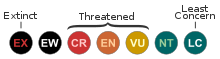
IUCN Red List
Growth: S = slow M = medium F = fast. Soil: L = light (sandy) M = medium H = heavy (clay). pH: A = acid N = neutral B = basic (alkaline). Shade: F = full shade S = semi-shade N = no shade. Moisture: D = dry M = Moist We = wet Wa = water.
Support Plants For A Future
Plants For A Future relies on regular donations to keep our free database and search facilities going, to pay for ongoing research, improvements and enhancements, and to develop and publish new books.
Read more
Choose Currency
Donate in £ GBP
Donate in $ USD
Donate in € EUR
Securely pay via PayPal or Credit/Debit Card without an account.
Expert comment
Author
Buckley.
Botanical References
11200270
Links / References
For a list of references used on this page please go here
Readers comment
| Add a comment |
|
If you have important information about this plant that may help other users please add a comment or link below. Only comments or links that are felt to be directly relevant to a plant will be included. If you think a comment/link or information contained on this page is inaccurate or misleading we would welcome your feedback at [email protected]. If you have questions about a plant please use the Forum on this website as we do not have the resources to answer questions ourselves.
* Please note: the comments by website users are not necessarily those held by PFAF and may give misleading or inaccurate information.
|
Subject : Morus_microphylla
|
|
|
|