Translate this page:
Summary
American pinesap is one of the most unusual flowering plants found in North American forests. Unlike most plants, it has no green leaves and does not obtain its energy from sunlight through photosynthesis. Instead, it survives through a specialized relationship with fungi growing in the soil. These fungi are connected to the roots of living trees, allowing pinesap to obtain carbon and nutrients indirectly from the surrounding forest. This unusual nutritional strategy makes American pinesap a mycoheterotrophic plant. The plant emerges from the forest floor as a thick, fleshy flowering stalk, usually between 5 and 30 cm tall. Its color varies from yellow and orange to pink, red or brown. The PFAF field notes describe red as a particularly common color. American pinesap grows in coniferous and mixed forests, often where deep layers of pine needles, fallen leaves and decomposing organic matter cover the ground. In the American Southwest, it is associated with mountain forests rather than hot, open desert habitats. The plant produces several bell-shaped flowers along each flowering stalk. These flowers may initially hang downward before becoming more upright as the fruits mature. Although American pinesap has been reported as edible fresh or cooked, consumption is not recommended. Field notes warn that American pinesap and the closely related Indianpipe (Monotropa uniflora) contain harmful compounds. We recommend cooking, but we do not know whether cooking reliably removes these substances or makes the plants safe. Neither species was located during the fieldwork, so their flavor, texture, and preparation were not assessed directly. American pinesap is also ecologically specialized and difficult to cultivate. Its dependence on underground fungal networks makes it a poor candidate for harvesting as a wild food. Its greatest value lies in its remarkable biology and its contribution to forest biodiversity.
Physical Characteristics

 Monotropa hypopitys is a PERENNIAL growing to 0.3 m (1ft) by 0.1 m (0ft 4in) at a medium rate.
See above for USDA hardiness. It is hardy to UK zone 4. It is in flower from June to September. The flowers are pollinated by Insects.
Suitable for: medium (loamy) and heavy (clay) soils. Suitable pH: mildly acid, neutral and basic (mildly alkaline) soils. It can grow in full shade (deep woodland) or semi-shade (light woodland). It prefers moist or wet soil.
UK Hardiness Map
US Hardiness Map
Synonyms
Hypopitys hypopitys (L.) Small. Hypopitys monotropa Crantz. Hypopitys multiflora Scop. Monotropa hypopitys subsp. multiflora Fritsch. Monotropa multiflora Fritsch. Orobanche hypopitys (L.) Hill.
Plant Habitats
Edible Uses
American pinesap is a remarkable woodland plant whose value lies primarily in its unusual biology and ecological relationships. It lacks chlorophyll, produces no ordinary green leaves, and obtains its nutrition through specialized fungal associations connected to living trees. Its fleshy flowering shoots may be yellow, orange, pink, red or brown, and it produces several bell-shaped flowers along each stalk. Although historical accounts describe the plant as edible raw or cooked, PFAF field notes explicitly warn that it contains harmful compounds [2-3]. No reliable safe preparation method has been established, and neither American pinesap nor Indianpipe was directly assessed during the fieldwork [2-3]. Its specialized ecology also makes it unsuitable for ordinary cultivation and an inappropriate target for wild-food harvesting. Reported edible part: Fleshy flowering shoots [2-3]. Recommendation: Do not consume. American pinesap has appeared in some historical wild-food accounts as a plant that can be eaten fresh or cooked. However, the evidence supporting its safety is limited. Field notes [2-3] specifically warn that American pinesap and Indianpipe contain harmful compounds. They do not identify the compounds involved, provide a safe serving size, or demonstrate that any particular cooking method removes the risk. Consequently, the reported edible use should be treated as historical information rather than a recommendation. The fleshy flowering shoots are the plant parts most commonly associated with reported consumption. These shoots are soft and lack the woody structure found in many ordinary plants, but their appearance does not establish that they are safe to eat. The flowers form part of the above-ground flowering structure, but their safety as a separate food has not been established. The underground structures should not be harvested. They are essential to the plant's survival and are closely associated with the fungi it depends on. American pinesap should be classified as a plant with reported historical edibility but insufficient evidence of safe consumption [2-3]. Edibility Rating: 1 out of 5 – Not recommended for consumption. American pinesap receives a low edibility rating because its reported food uses are accompanied by significant safety uncertainties. The PFAF field notes [2-3] explicitly warn of harmful compounds and provide no direct observations of taste or preparation. The plant is also difficult to find consistently, produces relatively little above-ground material, and depends on specialized fungal relationships that harvesting can damage. Although historical reports of consumption exist, they do not provide sufficient evidence to recommend the plant as food. A rating of 1/5 reflects the absence of an established safe culinary use. It does not necessarily mean that every part of the plant is poisonous in every quantity. Taste and Preparation: PFAF field notes do not provide a direct assessment of the flavor or texture of American pinesap. Neither American pinesap nor Indianpipe was encountered during the fieldwork referenced in [2-3]. It would therefore be inappropriate to describe the plant as sweet, bitter, bland, or otherwise palatable without reliable supporting evidence. Raw Consumption: Raw consumption has been reported in some historical accounts. However, the plant contains harmful compounds. Raw consumption is not recommended. Cooked Consumption: The field notes [2-3] advise cooking the plant rather than eating it fresh. However, they do not identify a specific cooking method or provide evidence that boiling, steaming, or other preparation techniques reliably eliminate potentially harmful compounds. Cooking should not be presented as a proven way to make American pinesap safe to eat. Herbal Preparations: American pinesap should not be assumed safe for herbal teas, tinctures, or concentrated extracts. Extracting compounds into water or alcohol may expose users to substances whose toxicological effects are poorly understood. Seasonality: American pinesap is a perennial plant, but its above-ground flowering shoots appear only seasonally. Flowering from June to September in western North America. Timing varies with elevation, rainfall, temperature, and the condition of the associated fungal network. Unlike ordinary green plants, pinesap may remain completely hidden beneath the forest floor for extended periods. Its flowering shoots emerge when environmental and physiological conditions are suitable. In some years, an established population may produce numerous flowering stalks. In other years, very few may be visible. The plant's absence above ground does not necessarily indicate that the underground organism has died. After flowering, the fruits mature and release numerous tiny seeds. Traditional Uses: American pinesap has been mentioned in historical botanical and wild-food literature as a plant with reported edible uses. However, field notes [2-3] do not identify particular Indigenous communities, recipes, or medicinal preparations associated with this species. American pinesap has attracted scientific and cultural interest because of its unusual appearance and lack of green foliage. Before modern understanding of mycorrhizal relationships, plants such as pinesap were often thought to obtain nutrients directly from decaying organic matter. Modern research has shown that their nutritional relationships are considerably more complex. Safety: Consumption is not recommended. Field notes [2-3] warn that American pinesap and Indianpipe contain harmful compounds. However, those notes do not identify the specific compounds, concentrations, or effects. There is insufficient evidence to establish a safe serving size or preparation method. Uncertain Toxicity: Reports of edibility should be interpreted cautiously. Historical accounts of consumption do not necessarily establish safety. Cooking Does Not Guarantee Safety. No verified boiling time or other preparation can be recommended as a safe detoxification method. Raw Consumption: Raw consumption is not recommended. The plant's soft texture and unusual appearance provide no indication of its toxicological safety. Medicinal Preparations: Concentrated extracts, tinctures, and herbal preparations should not be assumed safe. Historical medicinal use, where documented, is not equivalent to evidence of safety or effectiveness. Environmental Considerations: Harvesting can damage an ecologically specialized organism. Because American pinesap is difficult to cultivate and depends on fungal networks, collecting wild plants for food is particularly difficult to justify.
References More on Edible Uses
Medicinal Uses
Plants For A Future can not take any responsibility for any adverse effects from the use of plants. Always seek advice from a professional before using a plant medicinally.
Traditional and Herbal Claims: Monotropa hypopitys is closely related to Monotropa uniflora (ghost pipe). In some traditional or folk herbal references, it has been reported to contain glucosides that yield methyl salicylate and has historically been described as having antispasmodic and expectorant properties. There are no established biomedical, clinical, or rigorous ethnobotanical studies supporting the safety or effectiveness of Monotropa hypopitys for any medical condition. Chemical Profile: Like its relative ghost pipe, it contains compounds such as glycosides that can break down into methyl salicylate (related to aspirin-like compounds), which contributes to historical claims of pain-relieving or anti-inflammatory effects, though these uses are largely anecdotal or derived from historical Eclectic medicine texts rather than modern pharmacology. Safety & Conservation: Because it is a rare, non-photosynthetic, mycoheterotrophic plant that relies on a complex underground fungal and tree root network, harvesting it is ecologically disruptive, and official medical guidance does not endorse its use.
References More on Medicinal Uses
Other Uses
American pinesap is a remarkable woodland plant whose value lies primarily in its unusual biology and ecological relationships. American pinesap has ecological value through its relationships with fungi and forest vegetation. Its unusual nutritional strategy makes it an important example of forest ecosystem complexity. Insects can visit the flowers, although specific pollinators vary geographically. American pinesap is closely associated with mycorrhizal fungi. Its presence demonstrates that suitable fungal relationships exist within the surrounding forest. However, it should not be treated as a universal indicator of forest health. The species contributes to the diversity of flowering plants and ecological relationships within forests. Its dependence on fungi demonstrates how plants, fungi, and trees can be connected through complex nutritional pathways. Specific wildlife species consuming American pinesap have not been established in this assessment. It should therefore not be described as an important wildlife food plant without supporting evidence.
Special Uses
References More on Other Uses
Cultivation details
American pinesap requires a specialized forest environment. Its successful growth depends on much more than ordinary soil, light, and moisture conditions. Light: Deep shade to partial shade. American pinesap is usually associated with shaded forest floors. Because it lacks chlorophyll and does not photosynthesize, it does not require direct sunlight for energy production. However, the surrounding forest vegetation depends on sunlight, and the health of the host trees influences the fungal network that supports pinesap. Soil: Humus-rich forest soil containing suitable mycorrhizal fungi. It is also associated with other coniferous and mixed forest habitats. Deep organic litter, decomposing vegetation, and suitable soil fungi are important characteristics of its environment. A particular soil texture or pH cannot be recommended independently of the required fungal relationships. Moisture: The plant is generally associated with forest soils that retain some moisture. However, it also occurs in mountain forests with pronounced seasonal dry periods. The timing of flowering may be influenced by rainfall and soil moisture. Prolonged disturbance, soil compaction and changes in forest moisture conditions may affect its survival. Nutrients: American pinesap does not obtain its nutrition in the same way as ordinary green plants. It receives carbon and nutrients through specialized associations with fungi. Adding fertilizer cannot replace these relationships. Fungal Relationships: Compatible fungi are essential for survival. American pinesap is fully mycoheterotrophic. It obtains carbon and nutrients through fungi that form mycorrhizal relationships with living trees. The fungi receive carbon compounds from photosynthesizing trees, while pinesap obtains carbon through its association with those fungi. This makes the plant indirectly dependent on the photosynthesis of surrounding trees. It is therefore inaccurate to describe American pinesap simply as a plant that feeds on decaying pine trees. Habitat: American pinesap occurs in temperate and mountain forests across a broad geographical range. Native distribution extends across the temperate Northern Hemisphere and into Central America. In North America, the plant is associated with coniferous and mixed forests, often where the soil contains substantial organic matter. Arizona, New Mexico, Utah, Nevada, and California are among its western locations. Pine Forests: Pine forests are characteristic habitats. The plant may emerge from deep needle litter and humus, particularly where suitable fungal partners occur. Mixed Conifer Forests: American pinesap may also occur in forests containing several conifer species. Its distribution is not determined simply by the presence of pine trees. The identity of the associated fungi is particularly important. Mountain Forests: In the American Southwest, the species is more likely to occur in suitable mountain forests than in hot, open desert lowlands. Cooler temperatures, forest cover, and seasonal moisture provide conditions that support the relevant fungal communities. Forest Soil: Pinesap is associated with forest soil systems that support suitable mycorrhizal fungi. Heavy soil disturbance, excavation, and vegetation removal can disrupt the fungal networks it depends on. Cultivation: Not recommended for ordinary cultivation. American pinesap is extremely difficult to cultivate because it depends entirely on specialized fungal relationships. Unlike ordinary flowering plants, it cannot simply be grown from seed in potting compost. Even apparently suitable woodland soil may not contain the correct fungal partners. Successful establishment requires a compatible fungus connected to an appropriate living tree. The fungus must function within a suitable forest ecosystem, and the pinesap must establish its own specialized relationship with that fungus. Providing shade, moisture, and organic matter alone is insufficient. Transplanting wild plants is not recommended. The visible flowering shoots represent only part of the organism, and digging them up can damage underground structures and disrupt fungal connections. American pinesap is best appreciated in its natural habitat. Its unusual appearance and specialized biology make it an interesting subject for botanical observation, photography and ecological education. USDA Zones 3–8 – approximate climatic range, not a verified cultivation rating. American pinesap occurs in temperate and cool mountain forests, including regions with cold winters and seasonal snow. The plant survives unfavorable seasons through underground structures associated with its fungal partners. However, USDA hardiness zones are of limited practical value because pinesap cannot be cultivated successfully simply by providing suitable winter temperatures. It also requires compatible fungi, appropriate host trees, and a functioning forest soil ecosystem. The suggested zone range should therefore be treated as a broad climatic indication rather than a cultivation recommendation. Growth Rate: Growth rate: Unknown. American pinesap has a very different growth pattern from ordinary green plants. Most of its existence is associated with underground structures and fungal relationships. The visible flowering shoots appear seasonally and may develop over a relatively short period. However, this does not mean that the plant itself grows rapidly. Establishment, underground development, and reproduction may take much longer. Its growth is influenced by the condition of the surrounding forest ecosystem and the availability of compatible fungi. Height: 5–30 cm (2–12 inches). Flowering shoots are approximately 5–30 cm tall. The shoots are thick, fleshy and generally unbranched. Their colour varies from yellow and orange to pink, red or brown. Spread: Not reliably established. American pinesap does not form ordinary leafy clumps or spreading ground cover. Several flowering shoots may emerge close together from an established underground system. However, the visible spacing of these shoots does not reliably indicate the plant's full underground extent. Identification: American pinesap is an unusual non-green perennial that produces fleshy flowering shoots from the forest floor. It lacks ordinary green leaves and is sometimes mistaken for a fungus by inexperienced observers. Growth Form: The plant produces upright or ascending flowering shoots approximately 5–30 cm tall. The shoots are thick, fleshy and unbranched. They may initially be curved or nodding as they emerge. Colour: Flowering shoots may be yellow, orange, pink, red or brown. PFAF field notes describe red as a common color in the populations considered. Color varies considerably and should not be used alone for identification. Stems: The visible flowering axis is generally unbranched. Sometimes hairy and sometimes hairless. Leaves: Ordinary green leaves are absent. Instead, the flowering stalk bears simple, scale-like bracts arranged alternately. These scales do not function as normal photosynthetic leaves. Flowers: The flowers are arranged in a raceme, meaning that several flowers are borne along the flowering axis. This is one of the most useful differences between American pinesap and Indianpipe. The flowers are generally nodding, particularly during early development. They are bell-shaped and radially symmetrical. Three to six free sepals and three to six free petals, which may be white, pink, or red. There are six to fourteen stamens, usually ten, and a superior ovary. The anthers are kidney-shaped and lack awns. The petals may be hairy on their inner surfaces. Fruits: The fruits are capsules. After flowering, the stalk and developing fruits may become more upright. The capsules eventually release numerous tiny seeds. Roots and Underground Structures: American pinesap has specialized underground structures associated with its fungal partners. These structures are essential to its survival. They should not be disturbed for identification unless necessary for authorized botanical research. Similar Species: Indianpipe (Monotropa uniflora): Indianpipe is the most important species for comparison. Both are non-green, mycoheterotrophic members of Ericaceae that obtain nutrients through fungal relationships. However, they differ substantially in flowering structure. American pinesap produces several flowers along each flowering stalk, while Indianpipe normally produces a single flower. American pinesap is often yellow, orange, pink, red, or brown, whereas Indianpipe is usually translucent white, although pinkish forms also occur. Both species lack ordinary green leaves and grow in shaded forest habitats. The number of flowers per stem is generally the easiest distinguishing feature. Other Pinesaps (Hypopitys Species and Forms): Depending on the botanical authority, plants historically included in Monotropa hypopitys may be treated within Hypopitys. Regional differences in color, hairiness, floral structures, and geographical distribution have contributed to complex taxonomic treatments. These differences can make identification difficult, particularly when comparing populations from widely separated regions. Snow Plant (Sarcodes sanguinea): Snow plant is another striking, non-green member of Ericaceae. It produces bright red flowering shoots in western North American coniferous forests. However, snow plant has a much denser, more robust inflorescence than American pinesap. Both are mycoheterotrophic, but they belong to different genera. Pinedrops (Pterospora andromedea): Pinedrops is another mycoheterotrophic plant found in coniferous forests. It generally produces taller flowering stems with numerous small flowers. Its overall appearance differs from the shorter, fleshier shoots of American pinesap. Important Taxonomic Note: Kew's Plants of the World Online currently accepts ** Monotropa hypopitys L.** as the scientific name and treats Hypopitys monotropa Crantz as a homotypic synonym. The International Plant Names Index explains that Linnaeus originally used the spelling hypopithys, which is correctable to hypopitys.
References Carbon Farming Information and Carbon Sequestration Information
Temperature Converter
Type a value in the Celsius field to convert the value to Fahrenheit:
Fahrenheit:
Plant Propagation
Propagation is specialized and not practical for ordinary gardeners. American pinesap reproduces sexually by seed. Its flowers produce capsules containing numerous very small seeds. However, successful germination and development depend on appropriate fungal associations. The seeds have limited stored nutritional reserves and cannot develop into independent green seedlings because the species lacks photosynthesis. Successful establishment requires access to a compatible fungal partner. Germination and early development therefore differ greatly from those of conventional garden plants. No established practical method of vegetative propagation is suitable for ordinary horticulture. The most effective way to support existing populations is to protect their forest habitat, host trees, and associated soil fungal communities.
Other Names
If available other names are mentioned here
Pinesap, false beechdrops, yellow bird's-nest
Native Range
US. USA. Afghanistan, Alabama, Alaska, Albania, Alberta, Algeria, Altay, Amur, Arizona, Arkansas, Austria, Baleares, Baltic States, Belarus, Belgium, British Columbia, Bulgaria, Buryatiya, California, Central European Russia, China North-Central, China South-Central, China Southeast, Chita, Colorado, Connecticut, Corse, Cyprus, Czechia-Slovakia, Delaware, Denmark, District of Columbia, East Aegean Is., East European Russia, East Himalaya, Finland, Florida, France, Georgia, Germany, Great Britain, Greece, Guatemala, Honduras, Hungary, Idaho, Illinois, Indiana, Inner Mongolia, Iowa, Iran, Ireland, Irkutsk, Italy, Japan, Kansas, Kazakhstan, Kentucky, Khabarovsk, Kirgizstan, Korea, Krasnoyarsk, Krym, Kuril Is., Lebanon-Syria, Louisiana, Maine, Manchuria, Maryland, Massachusetts, Mexico Central, Mexico Gulf, Mexico Northeast, Mexico Northwest, Mexico Southeast, Mexico Southwest, Michigan, Minnesota, Missouri, Mongolia, Montana, Myanmar, Nebraska, Nepal, Netherlands, New Brunswick, New Hampshire, New Jersey, New Mexico, New York, Newfoundland, North Carolina, North Caucasus, North European Russia, Northwest European Russia, Norway, Nova Scotia, NW. Balkan Pen., Ohio, Oklahoma, Ontario, Oregon, Pakistan, Pennsylvania, Poland, Portugal, Primorye, Prince Edward I., Qinghai, Québec, Rhode I., Romania, Sakhalin, Saskatchewan, Sicilia, South Carolina, South European Russia, Spain, Sweden, Switzerland, Taiwan, Tennessee, Texas, Thailand, Tibet, Transcaucasus, Tuva, Türkiye, Ukraine, Vermont, Virginia, Washington, West Himalaya, West Siberia, West Virginia, Wisconsin, Wyoming, Xinjiang, Yakutiya
Weed Potential
Right plant wrong place. We are currently updating this section.
Please note that a plant may be invasive in one area but may not
in your area so it's worth checking.
Very low. American pinesap is not an agricultural or garden weed. Its dependence on specialised fungi and suitable forest habitats severely limits its ability to colonise ordinary disturbed ground. It does not spread aggressively through lawns, cultivated fields or garden beds. Its presence is generally associated with established woodland ecosystems rather than human disturbance.
Conservation Status
IUCN Red List of Threatened Plants Status : Not listed.
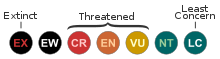
IUCN Red List
Growth: S = slow M = medium F = fast. Soil: L = light (sandy) M = medium H = heavy (clay). pH: A = acid N = neutral B = basic (alkaline). Shade: F = full shade S = semi-shade N = no shade. Moisture: D = dry M = Moist We = wet Wa = water.
Support Plants For A Future
Plants For A Future relies on regular donations to keep our free database and search facilities going, to pay for ongoing research, improvements and enhancements, and to develop and publish new books.
Read more
Choose Currency
Donate in £ GBP
Donate in $ USD
Donate in € EUR
Securely pay via PayPal or Credit/Debit Card without an account.
Expert comment
Author
L.
Botanical References
Links / References
For a list of references used on this page please go here
Readers comment
| Add a comment |
|
If you have important information about this plant that may help other users please add a comment or link below. Only comments or links that are felt to be directly relevant to a plant will be included. If you think a comment/link or information contained on this page is inaccurate or misleading we would welcome your feedback at [email protected]. If you have questions about a plant please use the Forum on this website as we do not have the resources to answer questions ourselves.
* Please note: the comments by website users are not necessarily those held by PFAF and may give misleading or inaccurate information.
|
Subject : Monotropa hypopitys
|
|
|
|