Translate this page:
Summary
Green carpetweed is a small, fast-growing annual plant that spreads across open ground, forming loose, carpet-like patches of green foliage. It is widespread throughout much of the United States and occurs in many other warm and temperate regions of the world. The plant is particularly common in disturbed habitats, including cultivated fields, gardens, roadsides, sandy soils, and open ground following summer rainfall. Green carpetweed has slender, branching stems and small, narrow leaves arranged in distinctive whorls of three to eight. Its tiny white flowers appear during summer and early autumn, followed by small capsules containing numerous seeds. The leaves are reported to be edible fresh or cooked, although their flavor and the difficulty of harvesting them make the plant a relatively poor wild vegetable. According to the PFAF field notes, fresh leaves have an acrid, salty flavour resembling spinach or certain goosefoots (Chenopodium species). Cooking improves the flavor slightly, but the difference is modest. The leaves are small and tender, while the wiry stems contain tough, irritating fibers that remain unpleasant even after cooking. Although green carpetweed may form extensive colonies, collecting enough leaves for a meal is tedious because they are difficult to strip from the stems. The plant is therefore best regarded as an occasional edible wild green rather than a valuable food crop. Its greater significance lies in its ability to colonize disturbed soils, provide temporary ground cover, and complete its life cycle rapidly during warm, moist conditions
Physical Characteristics

 Mollugo verticillata is a ANNUAL growing to 0.2 m (0ft 8in) by 0.3 m (1ft) at a fast rate.
See above for USDA hardiness. It is hardy to UK zone 5. It is in flower from August to September. The species is hermaphrodite (has both male and female organs) and is pollinated by Insects. The plant is self-fertile.
It is noted for attracting wildlife.
Suitable for: light (sandy), medium (loamy) and heavy (clay) soils, prefers well-drained soil and can grow in nutritionally poor soil. Suitable pH: mildly acid, neutral and basic (mildly alkaline) soils. It can grow in semi-shade (light woodland) or no shade. It prefers moist soil.
UK Hardiness Map
US Hardiness Map
Synonyms
Mollugo berteriana Ser. Pharnaceum verticillatum (L.) Spreng.
Plant Habitats
Cultivated Beds;
Edible Uses
Edible Parts: Leaves
Edible Uses:
Green carpetweed is a widespread annual plant with edible leaves but limited culinary value. Its foliage is tender and can be eaten raw or cooked, although the flavor is somewhat acrid and salty. Cooking improves the taste only slightly. The greatest disadvantage is the difficulty of harvesting. The leaves are small and resist being separated from the stems, while the wiry stems remain unpleasant even after cooking. Although the plant can form extensive colonies, collecting enough edible foliage for a substantial meal is time-consuming. Green carpetweed is therefore best regarded as an occasional wild vegetable rather than an important food resource. Its rapid growth, abundant seed production, and ability to colonize disturbed soil also make it a potentially troublesome garden and agricultural weed [2-3]. The leaves are edible fresh or cooked [2-3]. They are small, tender, and relatively soft when separated from the stems. Fresh leaves have a noticeably acrid, salty flavor, similar to spinach and some goosefoots. Cooking reduces the unpleasant qualities slightly, although the improvement is limited. The main disadvantage is the effort required to gather enough leaves. Green carpetweed has numerous small leaves distributed along thin, branching stems. The leaves resist being stripped off, making harvesting slow and frustrating. Collecting entire plants may seem more convenient, but the stems contain tough fibers that remain unpleasant after cooking. For this reason, only the leaves are recommended as the edible portion [2-3]. The stems, roots, flowers, and seeds are not established as edible [2-3]. Because green carpetweed often grows in disturbed agricultural and roadside environments, contamination from herbicides, pesticides, heavy metals, and other pollutants is an additional concern. Edibility Rating: 2 out of 5 – Edible but of limited food value. Green carpetweed has edible leaves that can be eaten raw or cooked. However, several characteristics reduce its usefulness as a wild vegetable. The leaves are small, difficult to separate from the stems, and have an acrid, somewhat salty flavor. Cooking provides only a modest improvement. The wiry stems are unsuitable for eating because their fibers remain tough and irritating. Although the plant may be locally abundant, gathering enough edible foliage is relatively labor-intensive. A rating of 2/5 reflects its limited culinary quality and poor harvesting efficiency [2-3]. Taste and Preparation: Green carpetweed leaves have a distinctive flavor that is not especially appealing compared with more desirable wild greens. They are acrid, salty, and somewhat similar to spinach or goosefoot leaves. Raw Leaves: Fresh leaves are tender and easy to chew. However, their acrid flavor limits their usefulness in salads. They may be more acceptable when combined with milder leafy vegetables, although this is a culinary suggestion rather than a documented traditional preparation. Cooked Leaves: Cooking improves the flavor slightly. The leaves can be boiled or steamed, but the improvement is relatively minor [2-3]. The resulting vegetable remains somewhat acrid and is unlikely to compare favorably with spinach or other commonly eaten greens. Stems: Exclude the stems from food preparations. They are slender and wiry, with tough fibers that can irritate the mouth. Cooking does not reliably soften these fibers. Harvesting: Harvesting is the main practical difficulty. The leaves are small and closely associated with the branching stems. They do not strip off easily, so gathering enough foliage for a substantial serving requires considerable time. Pulling up entire plants is quicker but leaves large amounts of fibrous stem material to remove. For this reason, green carpetweed is most suitable for occasional use rather than bulk harvesting. Seasonality: Green carpetweed is primarily a warm-season annual. In much of the United States, it germinates during late spring or summer when soil temperatures rise, and sufficient moisture becomes available. Growth can be rapid following summer rainfall. The plant is most useful during late summer [2-3]. Flowering generally occurs from summer into early autumn, although the precise timing varies with latitude, elevation, and rainfall. In warm climates, plants may germinate and flower over an extended period. Because the species is annual, individual plants complete their life cycle within a single growing season. Traditional Uses: Green carpetweed has been used as a leafy vegetable in some regions, although we focus on direct field observations rather than documented traditional recipes. Its leaves are edible but of limited culinary value [2-3]. The species is also reported in ethnobotanical literature as having medicinal uses in parts of its wider geographical range. However, specific medicinal applications and their safety have not been verified here. For PFAF, its principal documented use in the present assessment should remain the consumption of leaves as an occasional wild green. The plant should not be described as a major traditional food source without stronger historical evidence [2-3]. Safety: Green carpetweed leaves are edible fresh or cooked. However, several precautions are appropriate. Acrid Flavor: Fresh leaves have a noticeably acrid flavor. Although this does not necessarily indicate toxicity, it reduces their culinary appeal. Cooking produces only a modest improvement. Tough Stems: The wiry stems contain fibers that remain unpleasant after cooking. Exclude them from food preparations. Contaminated Growing Sites: Green carpetweed commonly grows in agricultural fields, gardens, roadsides, and disturbed soil. These environments may contain pesticide residues, herbicides, heavy metals, or other contaminants. Do not collect plants for food from areas where contamination is suspected. Nutritional and Toxicological Information: This review did not establish detailed nutritional analyses or toxicological studies specific to Mollugo verticillata. The plant's flavor similarity to spinach or goosefoots does not mean it has the same nutrient composition or concentrations of naturally occurring compounds. Used as a pot herb[55, 105, 106, 177].
References More on Edible Uses
Medicinal Uses
Plants For A Future can not take any responsibility for any adverse effects from the use of plants. Always seek advice from a professional before using a plant medicinally.
Demulcent Poultice
Demulcent, poultice[106]. Mollugo verticillata has a history of traditional and folk use, though modern clinical evidence in humans remains limited. Traditional and Folk Uses: Ailments treated: Traditionally used in folk medicine to help lower fever, soothe aches and pains, and ease digestive complaints or act as a mild laxative. Topical uses: Applied as a poultice or wash for skin inflammation, minor wounds, sores, and swelling. Nutritional/tonic uses: Ethnomedicinal records also cite use as a tonic for conditions like anemia and to help alleviate premenstrual symptoms (PMS). Phytochemicals and Pharmacological Properties: Laboratory and preliminary studies on plant extracts have identified several active compounds that support these traditional claims: Key constituents: Contains flavonoids, saponins, and terpenoids (such as mollupentin). Antioxidant & Anti-inflammatory: In vitro and animal studies indicate potential antioxidant, anti-inflammatory, and antimicrobial activities. Metabolic properties: Some computational and animal research suggests potential antihyperlipidemic (lipid-lowering) and antihyperglycemic effects, though extensive human clinical trials are lacking.
References More on Medicinal Uses
Other Uses
Green carpetweed is rarely cultivated deliberately because of its limited ornamental and food value. Green carpetweed contributes temporary ground cover in disturbed habitats. Its small flowers attract insects, although the species can also self-pollinate. The Burke Herbarium identifies self-pollination, flies, and wind as its pollination mechanisms. Its low-growing stems may provide shelter for small soil-dwelling invertebrates. The plant also produces numerous seeds, which small granivorous animals could potentially consume, although specific wildlife feeding relationships have not been verified here. Green carpetweed is not generally considered an important wildlife food plant. Its ecological role is primarily associated with rapid colonization of open soil.
Special Uses
References More on Other Uses
Cultivation details
Green carpetweed grows best in full sun to partial shade, warm temperatures, and well-drained soils with adequate seasonal moisture. It is particularly successful in disturbed ground where competition from established vegetation is limited. The plant tolerates sandy, loamy, and relatively poor soils. It can grow in cultivated fields, gardens, roadsides, and open patches of soil. Although it is associated with warm conditions, it generally requires some moisture for germination and vigorous growth. In the southwestern United States, populations often appear following seasonal summer rainfall. The species is not particularly well adapted to prolonged freezing conditions because it is an annual. It can tolerate temporary dry periods but generally grows most vigorously when soil moisture is available. Habitat: Green carpetweed is widely distributed across much of the United States and occurs in many other parts of the world. It is particularly associated with disturbed and open habitats. Typical locations include agricultural fields, gardens, roadsides, sandy riverbanks, open grasslands, and recently disturbed soil. Field notes describe observations from the Pajarito and Atascosa mountains of southern Arizona, near the Mexican border [2-3]. These observations were made in a region containing a mixture of desert grasslands, mountain habitats, and seasonally moist environments. The species can form extensive colonies where warm temperatures, exposed soil, and rainfall coincide. It is often absent or less abundant in extremely arid environments where insufficient moisture prevents establishment. USDA Hardiness Zones: USDA Zones 4–11 (approximate growing range). Green carpetweed is a warm-season annual, not a frost-hardy perennial. Consequently, USDA hardiness zones are less useful for this species than for plants that survive winter through persistent roots or stems. It can complete its life cycle in regions with cold winters, provided the growing season is warm enough and long enough. Seeds can remain in the soil and germinate when favorable conditions return. The suggested range describes where seasonal growth may be possible, not where individual plants survive freezing winters. Growth Rate: Fast. Green carpetweed germinates during warm weather and can rapidly produce numerous branching stems. Virginia Tech's weed identification guide confirms that germination typically begins in late spring or early summer, followed by rapid growth and flowering during summer. Weed Identification: The plant can complete its life cycle within a single growing season. Its ability to establish quickly in exposed soil contributes to its success as a common agricultural and garden weed. Mature Size: Height: typically 3–15 cm (1–6 inches), occasionally reaching 45 cm (18 inches). Flora of North America gives this range for plants growing from a prostrate to ascending position. The field notes describe plants about 4–25 cm tall, consistent with the broader botanical range [2-3]. Spread: commonly up to 30–40 cm (12–16 inches) across. The Burke Herbarium describes stems reaching approximately 30 cm in length, while regional floras describe plants forming mats up to approximately 40 cm wide. The plant's overall spread is often more noticeable than its height. Individual stems branch repeatedly, producing low mats of foliage that cover patches of exposed ground. Cultivation: Green carpetweed is rarely cultivated deliberately because of its limited ornamental and food value. However, it grows easily in warm conditions with sufficient moisture. It prefers open, sunny sites and relatively loose soils. Seeds can germinate in disturbed ground, cultivated beds, and other areas with sparse competing vegetation. The plant grows rapidly and may produce multiple generations during an extended warm season. Although its foliage is edible, the small leaves and tough stems make it an impractical cultivated vegetable. Its ability to produce numerous seeds also means that intentional cultivation could create unwanted populations in gardens or agricultural areas. For PFAF, green carpetweed is better described as an occasional wild food than as a recommended crop. Similar Species: Threadleaf Carpetweed (Mollugo cerviana) Threadleaf carpetweed is one of the most important species for comparison. Both plants are small annual herbs with narrow leaves and inconspicuous flowers. However, green carpetweed has relatively broader leaves, usually arranged in whorls of three to eight. Its leaf surfaces are not dusty, and its flower clusters lack a separate supporting stalk. Threadleaf carpetweed generally has narrower, almost thread-like leaves, often arranged in groups of four to twelve. The foliage may appear dusty or powdery, and the inflorescences are stalked. The seeds of threadleaf carpetweed have a more net-like pattern of ridges, while those of green carpetweed are smooth or have more parallel ridges. These distinctions are described in the PFAF field notes [2-3] and can be particularly useful when mature fruits are available. Purslane (Portulaca oleracea): Purslane is another low-growing annual that commonly appears in disturbed soil. It differs from green carpetweed in having thicker, succulent stems and fleshy leaves. Its flowers are usually yellow, and its fruits open differently. Purslane is a more substantial edible leafy vegetable, with larger, easier-to-harvest foliage. Sea Purslane and Related Plants (Sesuvium Species): Some Sesuvium species resemble green carpetweed in their low growth habit and preference for open ground. However, they generally have more succulent leaves and stems. Their capsules often open circumscissilely, splitting around the middle rather than lengthwise. Horse Purslane (Trianthema Species): Trianthema species can also resemble carpetweeds. They often have fleshy leaves and prostrate stems. Their fruits differ from those of Mollugo in opening around the capsule rather than lengthwise. Interesting Botanical Features: Green carpetweed has several characteristics that make it botanically interesting despite its modest appearance. Whorled leaves: Its leaves are arranged in conspicuous groups around the stem nodes, making the plant relatively easy to recognize. Rapid colonization: It can establish quickly on exposed soil after rainfall or disturbance. Small but productive flowers: Although the flowers are inconspicuous, they produce capsules containing numerous seeds. Unusual photosynthesis: Green carpetweed has attracted scientific interest because it exhibits characteristics intermediate between C3 and C4 photosynthesis. Researchers have studied these features to better understand the evolution of photosynthetic pathways. Variable growth habit: Plants may remain almost flat against the ground or develop more ascending stems, depending on growing conditions. Important Taxonomic Note: The accepted scientific name is Mollugo verticillata L. Kew's Plants of the World Online recognizes this name and places the species in Molluginaceae. The name Mollugo berteriana Ser. has also been used historically and appears in botanical databases as a synonym. The species is morphologically variable, particularly in leaf shape, overall size, and growth habit. Flora of North America notes that attempts to divide North American populations into clearly defined subspecies have been unsuccessful.
References Carbon Farming Information and Carbon Sequestration Information
Temperature Converter
Type a value in the Celsius field to convert the value to Fahrenheit:
Fahrenheit:
Plant Propagation
Seed - Green carpetweed reproduces primarily by seed. The plant produces numerous small capsules, each containing multiple seeds. Flora of North America describes approximately 15–35 seeds per capsule. Seeds are small, dark reddish-brown to nearly black, and may have smooth or finely ridged surfaces. They germinate when warm temperatures and suitable soil moisture become available. Because green carpetweed can become a troublesome garden weed, deliberate seed propagation is generally unnecessary.
Other Names
If available other names are mentioned here
Indian Chickweed, Green carpetweed, carpetweed, Indian chickweed, green mollugo.
Native Range
NORTHERN AMERICA: Canada (Québec, Nova Scotia, Ontario, New Brunswick, Manitoba, British Columbia), United States (Connecticut, Indiana, Maine, Massachusetts, Michigan, New Hampshire, New Jersey, New York, Ohio, Pennsylvania, Rhode Island, Vermont, Iowa, Kansas, Minnesota, Missouri, Nebraska, North Dakota, South Dakota, Illinois, Oklahoma, Wisconsin, Colorado, Idaho, Montana, Oregon, Washington, Wyoming, Alabama, Arkansas, Delaware, Florida, Georgia, Kentucky, Louisiana, Maryland, Mississippi, North Carolina, South Carolina, Tennessee, Virginia, New Mexico, Texas, Arizona, California, Nevada), Mexico (Baja, Chihuahua, Coahuila de Zaragoza, Durango, San Luis Potosí, Sinaloa, Sonora, Tamaulipas, Campeche, Guanajuato, Guerrero, Hidalgo, Jalisco, México, Michoacán de Ocampo, Nayarit, Oaxaca, Puebla, Querétaro, Quintana Roo, Tabasco, Veracruz de Ignacio de la Llave, Yucatán) SOUTHERN AMERICA: Hispaniola, Cuba, United States (Puerto Rico, Virgin Islands, U.S.), Virgin Islands (British), Belize, Costa Rica, Guatemala, Honduras, Nicaragua, Panama, El Salvador, Brazil (Rio Grande do Sul, Santa Catarina), Bolivia, Ecuador (El Oro, Guayas, Manabí), Peru (Ancash, Arequipa, Cajamarca, La Libertad, Lambayeque, Lima, Piura, Tumbes), Argentina, Paraguay, Uruguay
Weed Potential
Right plant wrong place. We are currently updating this section.
Please note that a plant may be invasive in one area but may not
in your area so it's worth checking.
Moderate to high. Green carpetweed is a widespread annual weed of cultivated and disturbed ground. It can establish rapidly in gardens, agricultural fields, thin lawns, and exposed soil. Its branching stems form low mats that may compete with seedlings and small cultivated plants. The species produces numerous seeds and can regenerate from the soil seed bank when conditions become favorable. Virginia Tech identifies it as a weed of turf, agricultural crops, flower beds, and gardens. However, it is generally less competitive in dense, established vegetation. Its status as a native or introduced plant varies geographically. Kew recognizes a broad native range in the Americas and southern Africa, as well as introduced populations elsewhere.
Conservation Status
IUCN Red List of Threatened Plants Status :
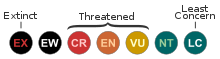
IUCN Red List
Growth: S = slow M = medium F = fast. Soil: L = light (sandy) M = medium H = heavy (clay). pH: A = acid N = neutral B = basic (alkaline). Shade: F = full shade S = semi-shade N = no shade. Moisture: D = dry M = Moist We = wet Wa = water.
Support Plants For A Future
Plants For A Future relies on regular donations to keep our free database and search facilities going, to pay for ongoing research, improvements and enhancements, and to develop and publish new books.
Read more
Choose Currency
Donate in £ GBP
Donate in $ USD
Donate in € EUR
Securely pay via PayPal or Credit/Debit Card without an account.
Expert comment
Author
L.
Botanical References
50270274
Links / References
For a list of references used on this page please go here
Readers comment
| Add a comment |
|
If you have important information about this plant that may help other users please add a comment or link below. Only comments or links that are felt to be directly relevant to a plant will be included. If you think a comment/link or information contained on this page is inaccurate or misleading we would welcome your feedback at [email protected]. If you have questions about a plant please use the Forum on this website as we do not have the resources to answer questions ourselves.
* Please note: the comments by website users are not necessarily those held by PFAF and may give misleading or inaccurate information.
|
Subject : Mollugo verticillata
|
|
|
|