Translate this page:
Summary
Nodding silverpuff is a perennial wildflower native to western North America, particularly the Great Basin and surrounding mountain regions. It belongs to the sunflower family (Asteraceae), which includes dandelions, chicory, lettuce, and many other edible and useful plants. The plant grows in open grasslands, sagebrush communities, mountain meadows, and moist canyons. It is distinguished by its narrow leaves, yellow dandelion-like flowers, and distinctive fluffy seed heads. Its common name refers to the flower buds, which often nod downward before opening, and the silvery-white seed heads that develop after flowering. The thick, fleshy roots are edible raw or cooked and are considered an excellent wild food. They have a crisp, tender texture and a mild flavor that becomes particularly pleasant when cooked. Boiled roots taste somewhat like potatoes, with an earthy accent and slight bitterness from the plant's milky latex. Fire-baked roots are especially appealing. Nodding silverpuff roots are relatively small, generally measuring 3–15 mm thick and 4–20 cm long, but their tenderness and versatility make them a valuable seasonal food. The plant's main limitation is its relatively scattered distribution. Although it can occur in suitable habitats throughout the Great Basin, it is often too uncommon to provide enough food.
Physical Characteristics

 Microseris nutans is a PERENNIAL growing to 0.6 m (2ft) by 0.3 m (1ft in) at a medium rate.
See above for USDA hardiness. It is hardy to UK zone 5. The species is hermaphrodite (has both male and female organs) and is pollinated by Insects.
Suitable for: light (sandy), medium (loamy) and heavy (clay) soils. Suitable pH: mildly acid, neutral and basic (mildly alkaline) soils and can grow in saline soils.
It can grow in semi-shade (light woodland) or no shade. It prefers moist soil.
UK Hardiness Map
US Hardiness Map
Synonyms
Scorzonella nutans.
Plant Habitats
Cultivated Beds;
Edible Uses
Edible Parts: Root
Edible Uses:
Nodding silverpuff is a valuable but relatively uncommon edible root plant of western North America. Its roots are unusually tender, mild, and versatile. You can eat them raw, boiled, roasted, or fire-baked, and they cook quickly. Boiled roots have a pleasant potato-like flavor with earthy and slightly bitter notes. The plant also has ornamental and ecological value because of its yellow flowers and attractive silvery seed heads. However, its food potential is limited by the relatively small size of individual roots, the effort required to dig them, and the scattered distribution of suitable populations. Harvesting the root also destroys the plant, so sustainable collection is especially important. The fleshy roots are edible and can be eaten raw or cooked. Our field assessments describe nodding silverpuff roots as a particularly high-quality wild food because of their mild flavor, crisp texture, and ease of preparation [2-3]. Fresh roots are tender, delicate, and readily chewable [2-3]. They contain milky latex, which may impart a slightly bitter flavour. Cooking softens the roots quickly, usually within a few minutes, and produces a texture similar to cooked potatoes. The roots can be boiled, roasted, or baked in hot ashes. Observations indicate that virtually any conventional cooking method produces satisfactory results [2-3]. Although the roots can be harvested at different times of the year, spring is generally the most productive season, particularly when plants first emerge. Field tasting of the leaves described a flavor resembling dandelion greens, with slightly bitter, salty, and marshy notes. However, a favorable taste assessment does not establish food safety, and consumption of the leaves should not be recommended without further evidence [2-3]. The flowers, seeds, and stems are also not established as edible. Edibility Rating: 4 out of 5 – Excellent edible root plant. Nodding silverpuff has several desirable qualities as a wild food. Its roots are tender, crisp, mild, and versatile. You can eat them raw or cooked; they require little preparation and develop a pleasant potato-like flavor when boiled. Fire-baking is particularly effective. The main limitations are the relatively small size of individual roots, the effort required to dig them, and the plant's limited abundance in many areas. The rating reflects the quality of the edible roots rather than the quantity of food typically available. Taste and Preparation: Nodding silverpuff roots have a mild, pleasant flavor and a delicate texture. Our field observations describe them as one of the better wild root foods encountered in western North America [2-3]. Raw Roots: Fresh roots are crisp, tender, and easy to chew. Their texture is delicate rather than woody or fibrous. The flavor is generally mild, although the milky latex can introduce some bitterness. Wash the roots thoroughly to remove soil before preparing them [2-3]. Boiled Roots: Boiling is one of the simplest preparation methods. The roots cook quickly, often becoming tender within minutes. Their flavor resembles potatoes, although they retain an earthy character and some bitterness. They may be served whole or chopped and incorporated into other dishes. Fire-Baked Roots: Fire-baking is described as an especially satisfying preparation method. You can bake the roots in hot ashes or roast them using other suitable cooking methods. Heating softens the flesh and produces a pleasant cooked-root flavor. Because the roots are relatively small, monitor them carefully to avoid excessive drying or burning [2-3]. Other Cooking Methods: Steaming, roasting, and pan-cooking are reasonable alternatives. Observations indicate that the roots respond well to a variety of cooking methods. [2-3] However, the provided information does not include detailed historical recipes specifically associated with Microseris nutans. Seasonality: Nodding silverpuff generally flowers during spring and summer. The precise flowering period varies with elevation, temperature, and seasonal moisture. At lower elevations, plants may emerge and flower earlier, while populations in cooler mountain habitats may develop later. You can harvest the roots throughout the year when plants are available. However, we recommend harvesting during early spring, when new growth first appears [2-3]. At this stage, the roots are particularly tender and may contain substantial stored energy accumulated during the previous growing season. Root harvesting later in the season is also possible, although locating plants after the foliage has withered may be difficult. Traditional Uses: Nodding silverpuff belongs to a group of western North American plants with edible, fleshy roots. Roots are a high-quality food that can be eaten raw, boiled, or fire-baked. However, we did not identify a particular Indigenous community or traditional recipe specifically associated with Microseris nutans. Its edible use is therefore best described as supported by direct field observations rather than a verified traditional staple food. The genus is closely related to other members of the sunflower family that produce edible roots, including certain species of Microseris, Tragopogon, and Taraxacum. Nevertheless, edible uses should not automatically be transferred between related species. Safety: detailed toxicological studies and nutritional analyses specific to Microseris nutans are not available [2-3]. Root - raw[105, 161, 177]. The bitter, milky root juice is eaten raw[257].
References More on Edible Uses
Medicinal Uses
Plants For A Future can not take any responsibility for any adverse effects from the use of plants. Always seek advice from a professional before using a plant medicinally.
None known
References More on Medicinal Uses
Other Uses
Nodding silverpuff may be suitable for native wildflower gardens, dryland meadow plantings, and ecological restoration projects within its natural range. The plant's yellow flowers and distinctive silvery seed heads also give it ornamental value. Nodding silverpuff contributes to the diversity of native grasslands, sagebrush communities, and mountain meadows. Its yellow flowers may provide pollen and nectar for native bees, flies, and other insects. The feathery fruits are adapted for wind dispersal, allowing seeds to reach suitable sites for establishment. Herbivorous wildlife may also use the foliage and roots, although the supplied notes do not document specific feeding relationships. As a native perennial, it contributes to the seasonal vegetation of western North American landscapes.
Special Uses
References More on Other Uses
Cultivation details
Nodding silverpuff grows best in full sun to partial shade and well-drained soils with reliable seasonal moisture. It is particularly associated with open grasslands, sagebrush communities, mountain meadows, and moist canyons. The species appears to favor soils that retain sufficient moisture during spring and early summer without remaining permanently waterlogged. Its fleshy perennial roots allow it to survive periods of drought and resume growth when favorable conditions return. It can grow in relatively poor soils, although adequate moisture is important for vigorous development. The plant is adapted to environments with cold winters and relatively dry summers. Habitat: Nodding silverpuff is native to western North America. It occurs throughout much of the Great Basin, particularly in moist canyons and other open habitats. It grows in sagebrush communities, grasslands, open woodlands, and mountain meadows. The species occurs across a broad range of elevations, from foothills to montane environments. It may occur in areas where seasonal snowmelt provides spring moisture. Although locally abundant in suitable habitats, the plant is often scattered across the landscape. This limits its value as a regularly harvested wild food. USDA Hardiness Zones: USDA Zones 4–8 (approximate). Nodding silverpuff is a cold-adapted perennial that grows naturally in western North American environments with freezing winters and relatively dry summers. Its underground root system lets it survive dormancy and produce new foliage when conditions become favorable. The suggested hardiness range is an ecological estimate, not a verified species-specific horticultural classification. For cultivation, summer moisture, drainage, and competition from surrounding vegetation may be as important as winter temperature. Growth Rate: Moderate. Nodding silverpuff is a perennial herb that produces new leaves and flowering stalks during the growing season. Its above-ground growth can develop relatively quickly during spring, particularly when moisture is available. However, the plant must also maintain and replenish its fleshy root system. Seedlings may take more than one growing season to develop substantial roots. No reliable quantitative growth-rate measurements were provided in the supplied reference. Mature Size: Height: approximately 10–60 cm (4–24 inches). This range comes from the supplied botanical descriptions and includes the flowering stalks. The plant has a relatively low basal cluster of leaves, with slender flowering stalks rising above the foliage. Root dimensions: Generally 4–20 cm long and 3–15 mm thick, according to the supplied field observations. The roots are fleshy, creamy white internally, and covered with light brown skins. Spread: Individual plants generally have a compact basal growth habit, but the supplied references do not establish a reliable mature width. Overall plant size varies with age, moisture availability, and growing conditions. Cultivation: Nodding silverpuff may suit native wildflower gardens, dryland meadow plantings, and ecological restoration projects within its natural range. It prefers full sun to partial shade and soils that drain well while retaining some moisture during active growth. The plant is adapted to cold winters and seasonal moisture, particularly from spring rainfall or snowmelt. Because it develops fleshy perennial roots, it may tolerate periods of summer drought once established. For cultivation as an edible root plant, loose, relatively deep soil would make harvesting easier and reduce the likelihood of root damage. This is a practical horticultural suggestion rather than a documented species-specific requirement. The plant's yellow flowers and distinctive silvery seed heads also give it ornamental value. However, cultivation information specifically for Microseris nutans is limited, and it is not widely grown as a vegetable. Identification: Nodding silverpuff is a perennial herb growing from thick, fleshy roots. The plant produces a basal cluster of narrow leaves and one or more slender flowering stalks. Its flowers resemble small yellow dandelions, while its mature seed heads have a distinctive silvery-white appearance. Stems: The plant is generally scapose or scapiform. This means that its flowering stalks are either completely leafless or bear only a few small leaves near their bases. The stalks are slender, upright, and may branch. They contain milky latex. Leaves: The leaves are simple and primarily clustered at the base of the plant. They are narrow, linear to lance-shaped, and may have entire margins or irregularly divided teeth. The surfaces are generally hairless or sparsely covered with fine, scaly hairs. The leaves resemble those of certain narrow-leaved dandelions and other members of the chicory tribe. Flowers: The flowering heads are usually solitary or occur in small numbers at the ends of long stalks. The developing buds often nod downward, giving the plant its common name. The flowers are yellow and composed entirely of ligulate florets, sometimes called ray florets. There are no separate central disk florets. Several overlapping rows of green bracts, known as phyllaries, surround the flower heads. The receptacle lacks chaffy scales between the florets. Fruits and Seeds: The fruits are narrow, cylindrical cypselae with longitudinal ridges. A cypsela is a small, dry, one-seeded fruit characteristic of many members of the sunflower family. The fruits lack a distinct elongated beak. Each fruit bears a pappus consisting of approximately 15–20 narrow white scales, each supporting a feathery awn arising from a notch near its tip. The numerous feathery awns create the distinctive silvery-white appearance of the mature seed head. These structures help disperse the fruits by wind. Roots: The roots are thick, fleshy, and generally creamy white internally, with light brown skins. Our field observations describe roots approximately 3–15 mm thick and 4–20 cm long. Their crisp, tender texture is one of the plant's most distinctive edible characteristics. Similar Species: Starpoints (Microseris lindleyi) Starpoints, also known as Uropappus lindleyi, is a closely related annual wildflower found in the southwestern United States. It generally grows 10–60 cm tall and produces yellow flower heads on slender stalks. Its leaves are narrow and may be entire or irregularly toothed. The most important distinction is found in the mature fruits. Starpoints has a pappus consisting of five silvery scales, each bearing a single awn. Nodding silverpuff has approximately 15–20 narrow white scales, each bearing a feathery awn. Starpoints is also an annual, while nodding silverpuff is perennial. Starpoints' leaves are exceptionally mild, resembling dark-green lettuce. However, their edibility was not verified, and they should not be recommended as food. Dandelion (Taraxacum officinale): Dandelion is a familiar perennial herb with basal leaves, yellow flower heads, milky latex, and a fleshy taproot. It differs from nodding silverpuff in its leaf shape, flower-head structure, and mature fruits. Dandelion roots are edible, but this similarity should not be used as the sole basis for identifying nodding silverpuff. Salsify (Tragopogon species): Salsify species are members of the sunflower family with narrow leaves, milky latex, yellow or purple flowers, and fleshy taproots. Some species are cultivated or gathered for their edible roots. They generally produce larger flower heads and different fruit and pappus structures. Other Microseris Species: Several other Microseris species occur in western North America. They may differ in their life cycles, leaf shapes, flower heads, fruit structure, and root development. Examination of mature fruits is often important for reliable identification. Interesting Botanical Features: Nodding silverpuff has several features that make it particularly interesting. Nodding flower buds: The flower heads often hang downward before opening. This feature gives it its common name. Silvery seed heads: Numerous feathery awns create a conspicuous silvery-white puffball that aids wind dispersal. Fleshy perennial roots: The underground roots store resources that allow the plant to survive dormancy and resume growth during favorable conditions. Milky latex: Like dandelions and many other members of the chicory tribe, nodding silverpuff produces a milky sap. Edible root texture: Unlike many wild roots that become woody or fibrous, nodding silverpuff roots remain relatively crisp and tender.
References Carbon Farming Information and Carbon Sequestration Information
Temperature Converter
Type a value in the Celsius field to convert the value to Fahrenheit:
Fahrenheit:
Plant Propagation
Seed - we have no information for this species but suggest sowing the seed in early spring in a greenhouse. Prick out the seedlings into individual pots when they are large enough to handle and grow them on in the greenhouse for their first winter, planting them out in late spring or early summer. Division in spring might be possible.
Other Names
If available other names are mentioned here
Yam Daisy, nodding microseris, nodding silverpuffs, Scorzonella nutans
Native Range
NORTHERN AMERICA: Canada (Alberta, British Columbia), United States (South Dakota, Colorado, Idaho, Montana, Oregon, Washington, Wyoming, California, Nevada, Utah)
Weed Potential
Right plant wrong place. We are currently updating this section.
Please note that a plant may be invasive in one area but may not
in your area so it's worth checking.
Very low. Nodding silverpuff is a native perennial wildflower and is not generally recognized as an invasive or agricultural weed. Its occurrence is strongly influenced by suitable soil conditions, seasonal moisture, and competition from surrounding vegetation. Although its wind-dispersed seeds may spread into nearby suitable habitats, the supplied material provides no evidence that it forms invasive populations. Its relatively scattered distribution further limits its potential to become troublesome. Outside its native range, its ability to establish and spread remains poorly documented.
Conservation Status
IUCN Red List of Threatened Plants Status : Not listed.
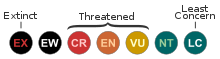
IUCN Red List
Growth: S = slow M = medium F = fast. Soil: L = light (sandy) M = medium H = heavy (clay). pH: A = acid N = neutral B = basic (alkaline). Shade: F = full shade S = semi-shade N = no shade. Moisture: D = dry M = Moist We = wet Wa = water.
Support Plants For A Future
Plants For A Future relies on regular donations to keep our free database and search facilities going, to pay for ongoing research, improvements and enhancements, and to develop and publish new books.
Read more
Choose Currency
Donate in £ GBP
Donate in $ USD
Donate in € EUR
Securely pay via PayPal or Credit/Debit Card without an account.
Expert comment
Author
(Geyer.)Sch.Bip.
Botanical References
60
Links / References
For a list of references used on this page please go here
Readers comment
| Add a comment |
|
If you have important information about this plant that may help other users please add a comment or link below. Only comments or links that are felt to be directly relevant to a plant will be included. If you think a comment/link or information contained on this page is inaccurate or misleading we would welcome your feedback at [email protected]. If you have questions about a plant please use the Forum on this website as we do not have the resources to answer questions ourselves.
* Please note: the comments by website users are not necessarily those held by PFAF and may give misleading or inaccurate information.
|
Subject : Microseris nutans
|
|
|
|