Translate this page:
Summary
Brook saxifrage is a perennial herbaceous plant native to the mountains of western North America. It grows in cool, moist environments, particularly alongside mountain streams, springs, seeps, and wet rocky slopes. The plant is distinguished by its rounded, kidney-shaped leaves, which grow from the base of the plant on long, slender stalks. During spring and summer, it produces upright flowering stems bearing clusters of delicate white flowers. The leaves are edible raw and cooked and have a mild, pleasant flavor. Unlike many wild leafy vegetables, brook saxifrage leaves remain palatable as they mature, retaining their flavor and relatively tender texture throughout the growing season. The leaves are leathery but not fibrous, making them suitable for salads or as a cooked green vegetable. Even the leaf stalks are reported to be free of tough, stringy fibers. Brook saxifrage can form extensive colonies where conditions are favorable, particularly along mountain streams that receive sufficient sunlight. However, these habitats are relatively uncommon in the arid southwestern United States. Its main limitation as a wild food is therefore not its flavor or preparation, but its patchy distribution and the need to protect moist mountain habitats. The plant also has considerable ornamental and ecological value, particularly in shaded, damp gardens and natural streamside environments.
Physical Characteristics

 Micranthes odontoloma is a PERENNIAL growing to 0.5 m (1ft 8in) by 0.4 m (1ft 4in) at a medium rate.
See above for USDA hardiness. It is hardy to UK zone 4. It is in flower from May to September. The flowers are pollinated by Bees, Insects.
It is noted for attracting wildlife.
Suitable for: light (sandy), medium (loamy) and heavy (clay) soils. Suitable pH: mildly acid, neutral and basic (mildly alkaline) soils. It can grow in semi-shade (light woodland). It prefers moist soil.
UK Hardiness Map
US Hardiness Map
Synonyms
Saxifraga odontoloma Piper
Plant Habitats
Edible Uses
Brook saxifrage is a useful but relatively uncommon edible leafy plant of western North America's cool mountain environments. Its leaves have several desirable characteristics: a mild flavor, pleasant texture, and the ability to remain palatable throughout the growing season. They can be eaten fresh or cooked, and even the leaf stalks are reported to be free of tough fibers. The main limitation is availability. Brook saxifrage depends on consistently moist mountain habitats, which are often scattered and ecologically sensitive. For this reason, the plant is better regarded as an occasional wild vegetable and a valuable native perennial than as a significant food resource for widespread harvesting [2-3]. The leaves are edible and can be eaten raw or cooked. Our field assessments describe brook saxifrage leaves as mild, pleasant, and suitable for fresh salads [2-3]. The leaves have a somewhat leathery texture but are free of stringy material, making them easy to chew. The long leaf stalks are also reported to be free of tough fibers and may be eaten with the leaves. An especially useful characteristic is that the leaves remain palatable as they age. Unlike many wild greens, which become bitter, fibrous, or tough as they mature, healthy brook saxifrage leaves reportedly retain their pleasant flavor throughout the growing season. Field notes describe the leaves as rich in vitamins A and C. However, the notes do not provide quantitative nutritional analyses, so the precise vitamin concentrations should be considered unverified [2-3]. We did not establish the flowers, seeds, roots, or rhizomes as edible, and they should not be considered food without further evidence. Edibility Rating: 3 out of 5 – Good edible leafy vegetable with limited availability. Brook saxifrage has several desirable characteristics as a wild food. Its leaves are mild, pleasant, edible raw or cooked, and remain palatable throughout the growing season. The foliage also requires relatively little preparation. However, the plant is generally restricted to cool, moist mountain habitats and is often too uncommon to harvest regularly. Its ecological sensitivity and relatively slow-growing perennial habit further limit its suitability as a widely gathered wild vegetable [2-3]. Taste and Preparation: Brook saxifrage leaves have a mild, pleasant flavor that makes them suitable for eating fresh. The leaves are enjoyable regardless of age, as long as they remain healthy. Raw Leaves: Add fresh leaves to salads or eat them as a simple wild green. Their mild flavor makes them suitable for combining with stronger-tasting vegetables. The leaf blades have a somewhat leathery texture but are not stringy. The long stalks can also be eaten, according to the supplied observations. Cooked Leaves The leaves may be cooked as a green vegetable. Light steaming, blanching, or brief boiling are reasonable preparation methods, although the supplied reference does not describe particular traditional recipes. Cooking may soften the leathery texture [2-3]. Harvesting: Gather leaves in spring and summer, or whenever healthy foliage is available before seasonal dieback. Our observations indicate that mature leaves are just as palatable as younger leaves [2-3]. However, because brook saxifrage is a perennial that often grows in sensitive streamside habitats, harvest conservatively. Removing a small number of leaves from abundant, healthy colonies is preferable to stripping individual plants. Do not collect plants growing beside contaminated waterways or roads for food. Seasonality: Brook saxifrage generally flowers from May to September, depending on elevation and local climate. Leaves emerge during the growing season and remain available until they begin to wither. In cooler mountain environments, leaf development may begin later than in lower-elevation habitats. Healthy leaves remain palatable throughout spring and summer, without the noticeable decline in quality common to many other wild greens. The best harvesting period is therefore determined more by leaf condition and local growing conditions than by leaf age. Traditional Uses: Brook saxifrage is reported as an edible leafy plant, with the supplied field assessments documenting the pleasant flavor and texture of its leaves. Its edible use is therefore best described as a documented modern field observation rather than a verified traditional staple food. Encounters with brook saxifrage in the Sangre de Cristo Mountains of northern New Mexico with One particularly productive colony was observed on Cerro Vista Mountain, southeast of Taos, where water flowing along an abandoned forest road created suitable growing conditions [2-3]. The combination of flowing water, exposed soil, and increased sunlight allowed the plants to establish successfully. This observation illustrates the species' dependence on both moisture and adequate light. Safety: Our field observations report that brook saxifrage leaves are edible raw or cooked and have a pleasant flavor. However, we found no detailed toxicological or nutritional studies specific to Micranthes odontoloma. The claimed high vitamin A and C content should therefore remain provisional until laboratory analysis supports it [2-3].
References More on Edible Uses
Medicinal Uses
Plants For A Future can not take any responsibility for any adverse effects from the use of plants. Always seek advice from a professional before using a plant medicinally.
Micranthes odontoloma has no documented traditional, pharmaceutical, or clinical medicinal uses in formal herbal medicine or modern pharmacology.
References More on Medicinal Uses
Other Uses
The plant has considerable ornamental and ecological value, particularly in shaded, damp gardens and natural streamside environments. Brook saxifrage suits cool, moist gardens, woodland gardens, streamside plantings, and naturalistic water gardens. It is particularly attractive for locations that call for moisture-loving perennial plants. Brook saxifrage contributes to the biodiversity of moist mountain habitats. Its flowers may provide pollen and nectar for small insects, including native bees and flies. The basal leaves provide ground-level vegetation and may offer shelter for small invertebrates. Colonies growing along streams also contribute to the plant cover of wet soils. However, the references consulted did not include detailed species-specific pollination and wildlife-feeding studies.
Special Uses
References More on Other Uses
Cultivation details
Brook saxifrage grows best in consistently moist, cool soils with partial shade or filtered sunlight. It is particularly well adapted to mountain streamsides, seeps, springs, and damp rocky environments. The species requires reliable moisture during the growing season and does not tolerate prolonged drying of its root zone. Although it can grow beneath trees, excessive shade may reduce flowering and overall vigour. The plants can form substantial colonies where they receive both adequate moisture and sunlight. Suitable soils are generally moist, humus-rich, and well aerated. The plant can also grow among rocks and in shallow soils where water is continuously available. Hot, dry, exposed sites are unsuitable unless irrigation and protection from excessive heat are provided. Habitat: Brook saxifrage is native to the mountains of western North America. It occurs along mountain streams, springs, seeps, wet meadows, and other consistently moist habitats. The species is particularly associated with cool montane environments, including forest openings and rocky streambanks. It occurs throughout much of the western United States. In the Southwest, it is especially associated with mountain ranges where permanent or seasonal streams provide sufficient moisture. One documented observation comes from Cerro Vista Mountain in New Mexico's Sangre de Cristo Mountains. In these habitats, brook saxifrage may grow alongside mosses, sedges, grasses, and other moisture-loving plants. Although colonies can become extensive under favorable conditions, suitable habitats are often scattered and relatively uncommon in arid regions. USDA Hardiness Zones: USDA Zones 3–7 (approximate). Brook saxifrage is a cold-adapted mountain perennial. It grows naturally in high-elevation habitats with long, snowy winters. It likely tolerates substantial winter cold when protected by snow cover and growing in suitable moist soils. However, it tolerates hot, dry conditions much less well. The proposed zone range is an ecological estimate, not a published, species-specific hardiness classification. Summer moisture and temperature are likely to be more important cultivation constraints than winter minimum temperatures. Growth Rate: Moderate, potentially slow during establishment. Brook saxifrage is a perennial herb that grows from a persistent rhizome. It produces new basal leaves and flowering stems during the growing season. In consistently moist, favorable habitats, plants may form colonies over time. However, our supplied field notes do not provide measured annual growth rates, and we did not find a species-specific quantitative growth rate in the botanical references consulted. Mature Size: Height: 20–65 cm (8–26 inches), occasionally reaching 85 cm (33 inches) when flowering. Our field notes give a typical plant height of 10–50 cm, which is consistent with smaller or less vigorous specimens. Leaf stalk length: 2–30 cm. Leaf blade width: approximately 7–40 cm according to the Flora of North America description, although this unusually broad range should not be treated as typical for every population. Mature spread: No reliable measurement of the width of an individual mature plant was established. Plants may grow singly or in groups, with colonies occupying larger areas where conditions are favorable. Cultivation: Brook saxifrage may suit cool, moist gardens, woodland gardens, streamside plantings, and naturalistic water gardens. It is particularly attractive for locations where moisture-loving perennial plants are desired. The species requires consistent moisture, especially during warm weather. Do not allow it to dry out completely during the growing season. Partial shade is generally suitable, although plants may tolerate greater sunlight where the soil remains cool and wet. Its rounded leaves and delicate white flowers provide ornamental interest. For cultivation, a humus-rich soil that retains moisture while allowing some drainage is preferable. Because brook saxifrage is adapted to cool mountain conditions, it may struggle in hot lowland climates, particularly where summer temperatures remain high overnight. Use nursery-propagated plants or responsibly sourced seed, rather than removing plants from natural streamside populations. Identification: Several related saxifrages have similar basal leaves and white flowers. Correct identification matters because documented edible use for one species should not automatically apply to other members of the family. Sustainable Harvesting: Brook saxifrage grows in sensitive wetland and streamside environments. Harvest only where collection is lawful, populations are abundant, and leave enough healthy foliage for the plants to continue growing. Avoid disturbing rhizomes or damaging streambanks. Brook saxifrage is a perennial herb growing from a thick, horizontal rhizome. Its leaves are concentrated at the base of the plant, while the flowering stems rise above the foliage. Leaves: The leaves are simple, rounded to kidney-shaped, and borne on long stalks. The leaf bases are heart-shaped or nearly straight across. The margins have relatively large, regular teeth, sometimes with small pointed tips. The upper surfaces are generally hairless, while the undersides may have sparse brownish hairs. The leaves are thin to slightly fleshy, with a somewhat leathery texture. Flowers: The flowers are small, white, and arranged in open, branching clusters. Flora of North America records inflorescences bearing approximately 10–30 or more flowers. Each flower has five sepals and five white petals. The petals are rounded to broadly elliptical, approximately 3–4.5 mm long, and each bears two yellow spots near its base. The flower has ten stamens with conspicuously club-shaped filaments. The two pistils are joined for approximately half their length. The ovary is superior. Fruits and Seeds: The fruits are small capsules, generally green to purple. They contain numerous small seeds. As in other members of Micranthes, seed surface characteristics can help distinguish the genus from closely related Saxifraga species. The flowers do not produce bulbils. Similar Species: Snowball saxifrage (Micranthes rhomboidea) is another species occurring in the mountains of the southwestern United States. It is particularly associated with alpine and subalpine environments. Its leaves tend to be more diamond-shaped or broadly ovate, and its flowering structures differ from the open, loosely branched inflorescences of brook saxifrage. Redfuzz saxifrage (Micranthes eriophora) occurs in the mountains of southeastern Arizona. It differs in its leaves and flowering characteristics and is much more geographically restricted. Nelson's saxifrage (Micranthes nelsoniana) also has rounded to kidney-shaped basal leaves, but its flowering clusters are generally more compact than those of brook saxifrage. This distinction is included in the Flora of North America identification key. Miner's lettuce (Claytonia perfoliata) is not closely related but may superficially resemble brook saxifrage because of its soft, rounded leaves and preference for moist habitats. However, its flowers, leaf arrangement, and overall growth habit differ. Important Taxonomic Note: Brook saxifrage was originally described as Saxifraga odontoloma Piper. It is now widely accepted as Micranthes odontoloma (Piper) A.Heller. The USDA's Germplasm Resources Information Network and the Integrated Taxonomic Information System recognize this accepted name. The distinction between Micranthes and Saxifraga reflects botanical research that separated several groups previously included in the broadly defined genus Saxifraga. For the PFAF database, we retained Saxifraga odontoloma as a synonym to help users find the plant under its historical name.
References Carbon Farming Information and Carbon Sequestration Information
Temperature Converter
Type a value in the Celsius field to convert the value to Fahrenheit:
Fahrenheit:
Plant Propagation
Brook saxifrage can be propagated from seed and, with careful division, from established rhizomatous plants. The species produces numerous small seeds in capsules following flowering. Seeds may be sown on the surface of a consistently moist growing medium. However, the references consulted did not establish detailed germination requirements for Micranthes odontoloma, including any need for cold stratification. Division may be possible where plants have developed multiple growing points, but this should be regarded as a tentative horticultural approach rather than a verified propagation protocol. Keep young plants cool and moist.
Other Names
If available other names are mentioned here
Brook saxifrage, bog saxifrage, brookside saxifrage.
Native Range
Canada: Alberta (s.w.), British Columbia. NORTHWESTERN U.S.A.: United States (Colorado (w.), Idaho, Montana (w.), Oregon, Washington, Wyoming). SOUTH-CENTRAL U.S.A.: United States (New Mexico (n. & w.)). SOUTHWESTERN U.S.A.: United States (Arizona (n. & e.), California, Nevada (n.), Utah).
Weed Potential
Right plant wrong place. We are currently updating this section.
Please note that a plant may be invasive in one area but may not
in your area so it's worth checking.
Very low. Brook saxifrage is a native perennial restricted largely to cool, moist habitats. It is not generally recognized as an invasive or agricultural weed. Its dependence on reliable moisture and suitable mountain conditions limits its ability to spread into dry or heavily disturbed environments. Although it can form colonies where conditions are ideal, this is normal behavior within its native habitat and does not indicate invasive potential.
Conservation Status
IUCN Red List of Threatened Plants Status : Not listed.
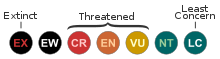
IUCN Red List
Growth: S = slow M = medium F = fast. Soil: L = light (sandy) M = medium H = heavy (clay). pH: A = acid N = neutral B = basic (alkaline). Shade: F = full shade S = semi-shade N = no shade. Moisture: D = dry M = Moist We = wet Wa = water.
Support Plants For A Future
Plants For A Future relies on regular donations to keep our free database and search facilities going, to pay for ongoing research, improvements and enhancements, and to develop and publish new books.
Read more
Choose Currency
Donate in £ GBP
Donate in $ USD
Donate in € EUR
Securely pay via PayPal or Credit/Debit Card without an account.
Expert comment
Author
(Piper) A.Heller
Botanical References
Links / References
For a list of references used on this page please go here
Readers comment
| Add a comment |
|
If you have important information about this plant that may help other users please add a comment or link below. Only comments or links that are felt to be directly relevant to a plant will be included. If you think a comment/link or information contained on this page is inaccurate or misleading we would welcome your feedback at [email protected]. If you have questions about a plant please use the Forum on this website as we do not have the resources to answer questions ourselves.
* Please note: the comments by website users are not necessarily those held by PFAF and may give misleading or inaccurate information.
|
Subject : Micranthes odontoloma
|
|
|
|