Translate this page:
Summary
Important Taxonomic Note: An important distinction exists between the historical and modern interpretation of Mentzelia multiflora. Older botanical references treated this species as widespread across the American Southwest, including Arizona, Nevada, Utah, and California. PFAF field notes follow this broader interpretation. However, the modern treatment in Flora of North America recognizes M. multiflora more narrowly, primarily in Colorado, Nebraska, New Mexico, and Wyoming. Many plants previously identified as M. multiflora elsewhere are now assigned to Mentzelia longiloba or other related species. Dune blazingstar is a showy, biennial wildflower native to the dry landscapes of western North America. It belongs to the Mentzelia genus, a group of plants commonly called blazingstars or stickleafs because of their bright flowers and rough foliage that can cling to clothing. The plant produces upright, branching stems, deeply toothed or lobed leaves, and attractive golden-yellow flowers. Its flowers are particularly distinctive because five of the outer stamens resemble additional petals, giving them the appearance of having ten petals. Dune blazingstar grows in open, sunny habitats, including rocky hillsides, sandy soils, dry washes, and disturbed ground. It is well adapted to relatively poor soils and seasonal drought. The plant produces cylindrical capsules containing small, flattened, winged seeds. These seeds have been reported as edible and can be parched and ground into meal. The PFAF database records medicinal uses, including treating toothache, although evidence for these applications is limited. Dune blazingstar is primarily valuable as a native wildflower, pollinator plant, and potential traditional seed food.
Physical Characteristics

 Mentzelia_multiflora is a BIENNIAL growing to 0.8 m (2ft 7in) by 0.3 m (1ft) at a medium rate.
See above for USDA hardiness. It is hardy to UK zone 6. It is in flower from July to August. The species is hermaphrodite (has both male and female organs) and is pollinated by Bees, insects.
It is noted for attracting wildlife.
Suitable for: light (sandy), medium (loamy) and heavy (clay) soils, prefers well-drained soil and can grow in nutritionally poor soil. Suitable pH: mildly acid, neutral and basic (mildly alkaline) soils. It cannot grow in the shade. It prefers dry or moist soil and can tolerate drought.
UK Hardiness Map
US Hardiness Map
Synonyms
Bartonia multiflora Nutt.; Mentzelia pumila var. multiflora (Nutt.) Urb. & Gilg.
Plant Habitats
Edible Uses
Dune blazingstar is an attractive native wildflower with reported edible seeds and a history of traditional uses recorded under its scientific name. However, its botanical classification has changed significantly. Many plants historically identified as Mentzelia multiflora are now recognized as different species. This makes interpreting older edible-use records particularly challenging. The plant is best regarded as a potentially useful wild seed food, but its edible properties require further species-specific verification. Its strongest established values are as a native wildflower, a pollinator habitat contributor, and a plant adapted to dry, rocky environments. The seeds are the edible part of dune blazingstar [2-3]. Seeds may be eaten raw or cooked, and they were traditionally parched and ground into meal. Seeds are flat, lens-shaped, and winged, closely resembling those of bullet blazingstar (Mentzelia pumila). Both species can be gathered and processed similarly. However, because older botanical treatments included several plants now recognized as different species, some historical edible-use records may not apply to M. multiflora in its modern, narrower sense [2-3]. The leaves, stems, flowers, and roots are not established as edible and should not be considered food without further evidence. Edibility Rating: 2 out of 5 – Limited but potentially useful edible seed plant. Dune blazingstar produces seeds reported to be edible, and historical sources describe their use as meal. However, the small, papery seeds require considerable processing, detailed information about flavor and nutritional value is limited, and some older edible-use records may refer to related species. Taste and Preparation: Dune blazingstar seeds are small, flattened, and surrounded by thin wings that give them a somewhat papery appearance. They are similar to the seeds of bullet blazingstar, which have been directly sampled in the supplied field assessments. Gathering the Seeds: Collect seeds when the capsules are fully mature and dry. You can gather the capsules and break them apart to release the seeds. Because the seeds are relatively small and winged, separating them from fragments of the dry capsules may require careful rubbing, screening, and winnowing. Fully dried capsules are generally easier to process than those that still contain moisture. Toasting: Seeds can be parched before being ground into meal. We note Bullet blazingstar seeds develop a pleasant, pancake-like aroma when lightly toasted [2-3]. However, this flavor assessment was made for M. pumila, not M. multiflora, and should not automatically be applied to dune blazingstar. Grinding: Cleaned seeds may be ground into meal and incorporated into cooked foods. The thin wings may contribute fibrous material to the resulting meal. Although historical sources describe seed meal as edible, detailed preparation methods specifically verified for modern M. multiflora remain limited. Seasonality: Dune blazingstar flowers primarily from July to September, according to Flora of North America. Older references report a longer flowering period, sometimes extending from April to September, but these records may include related species previously classified as M. multiflora. Seed maturation follows flowering, with capsules generally maturing in late summer and autumn. The precise timing varies with elevation, rainfall, and local temperature. The best time to gather seeds is when the capsules have fully dried. Traditional Uses: Dune blazingstar seeds were parched and ground into meal. Traditional medicinal applications include use for toothache, as a diuretic, and in treatments associated with tuberculosis. A National Park Service botanical report similarly records food, medicinal, and ceremonial uses under the historical name Mentzelia multiflora. However, these records require careful interpretation because older botanical treatments included plants now classified as separate species. Consequently, they should not all be attributed with certainty to M. multiflora as currently defined. The medicinal uses are historical records, not evidence that the plant is effective or safe for treating these conditions. Safety: The seeds are reported to be edible, but their use as food requires further verification under the modern taxonomic definition of Mentzelia multiflora. Correct identification matters because related blazingstars may differ in chemical composition. Some members of the genus, including ten-petal blazingstar (Mentzelia decapetala), have been reported to accumulate selenium. This does not establish that M. multiflora accumulates harmful concentrations, but it is a reason to avoid assuming that all blazingstar seeds are equally suitable for food. The plant's leaves and stems bear specialized hooked hairs that can cling to clothing and skin, sometimes causing mechanical irritation. Avoid gathering plants from contaminated soils, mining areas, or chemically treated sites. Do not interpret historical medicinal uses as recommendations for self-treatment. Seed - raw or cooked[257]. They are parched and ground into a meal[177]. This use has not been verified[216].
References More on Edible Uses
Medicinal Uses
Plants For A Future can not take any responsibility for any adverse effects from the use of plants. Always seek advice from a professional before using a plant medicinally.
The plant is used as a toothache medicine[216]. The plant is diuretic[257]. The leaves and the roots have been used as a treatment for tuberculosis. It was the strongest TB medicine for the strongest patients[257].
References More on Medicinal Uses
Other Uses
Dune blazingstar may be suitable for native wildflower gardens, dryland landscaping, and ecological restoration projects within its natural range. The plant is particularly suited to rocky slopes, sandy or gravelly beds, and naturalistic plantings. Dune blazingstar provides floral resources for native pollinating insects. Its golden-yellow flowers contain numerous stamens and offer pollen to visiting bees and other insects. The seeds may also provide food for seed-eating wildlife, although detailed species-specific feeding records are limited. The plant contributes to native wildflower diversity in dry grasslands, open shrublands, and rocky upland habitats.
Special Uses
References More on Other Uses
Cultivation details
Dune blazingstar grows best in full sun and well-drained soils. It occurs naturally in sandy, gravelly, rocky, and sometimes clayey soils. The species tolerates relatively low soil fertility and is adapted to dry, open environments. Seasonal rainfall supports germination and early growth, but established plants are adapted to drought. It performs best where competition from taller vegetation is limited. The plant can tolerate mildly acidic, neutral, and mildly alkaline soils, provided drainage is adequate. Heavy, persistently waterlogged soils are unsuitable. Habitat: Under the modern botanical interpretation, dune blazingstar is native primarily to Colorado, Nebraska, New Mexico, and Wyoming. Flora of North America records it in dry roadsides, hillsides, and washes, growing in clayey, rocky, or sandy soils at elevations of approximately 1,200–2,100 meters. Older references describe a much wider distribution across Arizona, Texas, Nevada, Utah, and other southwestern states. Many of these historical records are now considered to represent related species, particularly Mentzelia longiloba. The plant is associated with open, sunny landscapes with relatively sparse vegetation. USDA Hardiness Zones: USDA Zones 5–9 (approximate). Dune blazingstar is a biennial, meaning that it generally develops vegetatively during its first growing season and flowers during its second. Its occurrence in the southern Rocky Mountains indicates it can survive relatively cold winters, particularly in well-drained soils. The suggested hardiness range is an ecological estimate, not a verified horticultural classification. Growth Rate: Moderate. Dune blazingstar generally develops a basal rosette and taproot before producing its flowering stems. Kew's Plants of the World Online classifies the species as a biennial. Growth depends on rainfall, soil conditions, and temperature. Flowering stems may develop rapidly once established plants enter their reproductive stage. Mature Size: Height: approximately 40–80 cm (16–31 inches). This is a practical provisional range consistent with older regional descriptions. The National Park Service describes plants identified as M. multiflora at Arches National Park as reaching 40–80 cm, although these populations may not belong to the species under the modern taxonomic treatment. Spread: Variable, generally upright and branching. Plants typically have a central flowering stem with upward-curving branches, producing a somewhat candelabra-shaped appearance. Cultivation: Dune blazingstar may suit native wildflower gardens, dryland landscaping, and ecological restoration projects within its natural range. It prefers full sun, well-drained soils, and relatively low competition from surrounding vegetation. The plant is particularly suited to rocky slopes, sandy or gravelly beds, and naturalistic plantings. Its bright yellow flowers make it an attractive ornamental species. Because it is generally biennial, flowering may not occur until the second growing season. Allow plants to produce mature seeds if natural regeneration is desired. For conservation planting, obtain seeds from correctly identified populations within the species' accepted native range. Identification Dune blazingstar is an upright biennial herb with a branching, often candelabra-shaped growth habit. The stems are erect and covered with rough hairs. The leaves are simple and alternate, with narrow blades and distinctly toothed or lobed margins. Flora of North America describes leaves approximately 3.6–12.5 cm long, occasionally reaching 14.6 cm. Flowers: The flowers are light to golden yellow. They have five true petals and five outer stamens modified into petal-like structures, often giving the appearance of ten petals. The true petals are generally approximately 14–24 mm long, although somewhat shorter or longer examples occur. The petal tips are rounded, an important characteristic when comparing this species with bullet blazingstar. Numerous additional stamens form a conspicuous cluster in the center of each flower. Fruits and Seeds: The fruits are cylindrical capsules approximately 11–25 mm long and 6–9 mm wide. The capsules are generally smooth-sided rather than prominently longitudinally ridged. The seeds are small, flattened, lens-shaped, and winged. Detailed microscopic characteristics of the seed coat can help distinguish this species from closely related blazingstars. Similar Species: Bullet blazingstar (Mentzelia pumila) is particularly similar. Bullet blazingstar has more pointed petal tips and slightly longer capsules, while dune blazingstar has more rounded petal tips. Both produce flattened, winged seeds. Long-lobed blazingstar (Mentzelia longiloba) is especially important because many historical records of M. multiflora in the Intermountain West are now assigned to this species. Their similarity has contributed to considerable confusion in botanical records. Smoothstem blazingstar (Mentzelia laevicaulis) is generally larger, with conspicuous golden-yellow flowers and winged seeds. Its flowers are typically larger than those of dune blazingstar. Whitestem blazingstar (Mentzelia albicaulis) has smaller flowers and grain-shaped seeds with irregular ridges and pointed surface bumps. Correct identification may require examining the leaves, flowers, capsules, and mature seeds together. Succeeds in ordinary garden soil[1]. Prefers a moderately fertile well-drained soil in a warm sunny sheltered position[200]. This species is said to be a perennial in [71], whilst [1] lists it as an annual.
References Carbon Farming Information and Carbon Sequestration Information
Temperature Converter
Type a value in the Celsius field to convert the value to Fahrenheit:
Fahrenheit:
The PFAF Bookshop
Plants For A Future have a number of books available in paperback and digital form. Book titles include Edible Plants, Edible Perennials, Edible Trees,Edible Shrubs, Woodland Gardening, and Temperate Food Forest Plants. Our new book is Food Forest Plants For Hotter Conditions (Tropical and Sub-Tropical).
Shop Now
Plant Propagation
Seed - sow spring in situ[200]. Germination should take place within a couple of weeks. Dune blazingstar reproduces by seed. Seeds develop inside cylindrical capsules that mature after flowering. Direct sowing into well-drained soil is a reasonable propagation approach. Seeds may benefit from exposure to natural seasonal temperature and moisture changes, although species-specific dormancy requirements are not well established. Because Mentzelia species often develop substantial taproots, transplanting established plants may be difficult.
Other Names
If available other names are mentioned here
Dune blazingstar, manyflowered blazingstar, Adonis blazingstar, manyflowered Mentzelia, desert stickleaf.
Native Range
NORTHERN AMERICA: United States (Nebraska (west), Oklahoma (west), Colorado, Wyoming, New Mexico, Texas (west), Arizona, California (south), Nevada (east), Utah), Mexico (Baja California (Norte), Chihuahua, Coahuila de Zaragoza, Sonora)
Weed Potential
Right plant wrong place. We are currently updating this section.
Please note that a plant may be invasive in one area but may not
in your area so it's worth checking.
Low. Dune blazingstar is a native North American wildflower and is not generally regarded as an invasive environmental weed within its natural range. It may establish in disturbed soils, including roadsides and open ground. However, its occurrence in disturbed habitats does not necessarily indicate invasive behavior. Its potential to spread outside its native range is poorly documented.
Conservation Status
IUCN Red List of Threatened Plants Status :
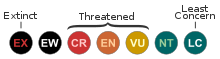
IUCN Red List
Growth: S = slow M = medium F = fast. Soil: L = light (sandy) M = medium H = heavy (clay). pH: A = acid N = neutral B = basic (alkaline). Shade: F = full shade S = semi-shade N = no shade. Moisture: D = dry M = Moist We = wet Wa = water.
Now available:
Food Forest Plants for Mediterranean Conditions
350+ Perennial Plants For Mediterranean and Drier Food Forests and Permaculture Gardens.
[Paperback and eBook]
This is the third in Plants For A Future's series of plant guides for food forests tailored to
specific climate zones. Following volumes on temperate and tropical ecosystems, this book focuses
on species suited to Mediterranean conditions—regions with hot, dry summers and cool, wet winters,
often facing the added challenge of climate change.
Read More
Expert comment
Author
(Nutt.)A.Gray.
Botanical References
171
Links / References
For a list of references used on this page please go here
Readers comment
| Add a comment |
|
If you have important information about this plant that may help other users please add a comment or link below. Only comments or links that are felt to be directly relevant to a plant will be included. If you think a comment/link or information contained on this page is inaccurate or misleading we would welcome your feedback at [email protected]. If you have questions about a plant please use the Forum on this website as we do not have the resources to answer questions ourselves.
* Please note: the comments by website users are not necessarily those held by PFAF and may give misleading or inaccurate information.
|
Subject : Mentzelia_multiflora
|
|
|
|