 |
|
http://www.hear.org/starr/ |
 |
| http://www.hear.org/starr/ |
Translate this page:
Summary
Cheeseweed is one of the finest edible weeds available in the US. Southwest. Its abundant, mild-flavored leaves make an excellent cooked green, while the young fruits provide an additional vegetable over an exceptionally long season. Easy to recognize, widely distributed, and highly productive, it deserves far more appreciation than it usually receives and is one of the best members of the mallow family for foragers. Taxonomic Note: This genus was formerly classified in the family Tiliaceae. Modern classifications include it within the Malvaceae.
Physical Characteristics

 Malva_parviflora is a ANNUAL growing to 0.5 m (1ft 8in) at a fast rate.
See above for USDA hardiness. It is hardy to UK zone 6 and is not frost tender. The species is hermaphrodite (has both male and female organs) and is pollinated by Insects.
Suitable for: light (sandy), medium (loamy) and heavy (clay) soils and prefers well-drained soil. Suitable pH: mildly acid, neutral and basic (mildly alkaline) soils. It can grow in semi-shade (light woodland) or no shade. It prefers dry or moist soil.
UK Hardiness Map
US Hardiness Map
Synonyms
Althaea parviflora (L.) Alef. Malva rotundifolia subsp. parviflora (L.) Ball.
Plant Habitats
Edible Uses
Cheeseweed is one of the finest edible weeds available in the Southwest US. Its abundant, mild-flavored leaves make an excellent cooked green, while the young fruits provide an additional vegetable over an exceptionally long season. Easy to recognize, widely distributed, and highly productive, it deserves far more appreciation than it usually gets and is one of the best mallow family members for foragers, though foragers usually eat the leaves and young fruits. You can eat them raw or cooked, but the leaves are. The roots, young shoots, leaves, flower buds, flowers, and immature fruits are edible, although the leaves and young fruits are the principal food parts. They may be eaten raw or cooked, but the leaves are generally best prepared as a cooked vegetable. Like other mallows, excessive consumption may have a mild laxative effect because of the plant's mucilage [2-3]. Edibility Rating: 5 out of 5 – An outstanding edible weed with excellent leaves and young fruits that are available for much of the year [2-3]. Taste and Preparation: Cheeseweed leaves are excellent in soups and stews. After only a brief boil, they become soft and collapse into a texture similar to cooked spinach or seaweed. Although this texture may seem unusual, the flavor is mild and pleasant, without the bitterness or harshness found in many wild greens. The leaf stalks can become hairy or fibrous, so removing them before cooking improves the finished dish. Young leaves are also suitable for salads, while older leaves hold up well after cooking. Compared with many members of the mallow family, cheeseweed contains relatively little mucilage, producing less of the thick, slippery texture often associated with mallows. The immature fruits, commonly called "cheeses" because of their wheel-like shape, make an interesting vegetable when harvested soon after the flowers fade. At this stage, they are tender and pleasantly flavored. As they mature, they quickly become coarse, hard, and unpalatable. Since plants continue flowering for much of the year, fresh crops of young fruits are often available. Seasonality: Cheeseweed blooms primarily from March to June, but in mild climates, plants often keep growing and producing fresh leaves and young fruits for much of the year [2-3]. Traditional Uses: Following its introduction into North America, Native Americans adopted the leaves and immature fruits of several Malva species as food. Cheeseweed itself has also been cultivated historically as a leafy vegetable in various parts of the world [2-3]. Safety: Cheeseweed is generally considered a safe edible plant. Its relatively low mucilage content makes it one of the more pleasant mallows to eat, although consuming very large quantities may have a mild laxative effect. Eat only the young fruits, as mature fruits quickly become hard and unpalatable [2-3]. Leaves - raw or cooked as a potherb[61, 114, 183]. A mild pleasant flavour, they make a very acceptable alternative to lettuce in salads[K]. Immature seeds - raw or cooked[114, 183]. They are used to make a creamed vegetable soup that resembles pea soup[183]. A few leaves are also added for colouring[183]. The seeds have a pleasant nutty flavour, though they are too small for most people to want to collect in quantity[K].
References More on Edible Uses
Medicinal Uses
Plants For A Future can not take any responsibility for any adverse effects from the use of plants. Always seek advice from a professional before using a plant medicinally.
The whole plant is emollient and pectoral[114, 240]. It can be used as a poultice on swellings, running sores and boils[257]. The seeds are demulcent[240]. They are used in the treatment of coughs and ulcers in the bladder[240]. A decoction of the roots or leaves has been used as a hair rinse to remove dandruff and to soften the hair[257].
References More on Medicinal Uses
Other Uses
The seed contains up to 18% of a fatty oil[114]. No more details are given, though the oil is likely to be edible[K]. Cream, yellow and green dyes can be obtained from the plant and the seed heads[168]. A decoction of the roots or leaves has been used as a hair rinse to soften the hair[257]. The flowers attract bees and other pollinating insects, while the foliage provides food for several insect species.
Special Uses
References More on Other Uses
Cultivation details
Cheeseweed grows well in full sun to partial shade and tolerates a wide range of soils, including compacted, disturbed, and nutrient-poor ground. It responds well to winter and spring rainfall. Habitat: It is common in fields, gardens, roadsides, agricultural land, vacant lots, and other disturbed areas, particularly throughout the southwestern United States. USDA Hardiness Zones: USDA Zones 5–10. Growth Rate: Fast. Plants establish readily from seed and produce abundant foliage throughout the growing season. Mature Size: Plants typically grow 20–80 cm (8–32 inches) tall. Cultivation: Cheeseweed is easy to cultivate from seed and grows vigorously in most garden soils. Regular moisture encourages lush leaf production, although established plants tolerate dry conditions well. Identification: Cheeseweed is an upright annual with rounded to kidney-shaped leaves divided into five to nine shallow lobes with rounded teeth along the margins. The leaves may be hairy or nearly hairless. Small white, pink, or pale purple flowers arise singly or in small clusters from the leaf axils. The distinctive wheel-shaped fruits consist of 10–15 netted segments, giving rise to the common name "cheeseweed." Similar Species: Cheeseweed closely resembles common mallow (Malva neglecta), but generally grows more upright, bears much smaller flowers, and produces fruits with netted rather than smooth segments. Both species are excellent edible plants and frequently grow together in disturbed habitats. A very easily grown plant, succeeding in ordinary garden soil[1], though it prefers a reasonably well-drained and moderately fertile soil in a sunny position[200]. Plants seem to be immune to the predations of rabbits[233]. Plants are prone to infestation by rust fungus[200].
References Carbon Farming Information and Carbon Sequestration Information
Temperature Converter
Type a value in the Celsius field to convert the value to Fahrenheit:
Fahrenheit:
The PFAF Bookshop
Plants For A Future have a number of books available in paperback and digital form. Book titles include Edible Plants, Edible Perennials, Edible Trees,Edible Shrubs, Woodland Gardening, and Temperate Food Forest Plants. Our new book is Food Forest Plants For Hotter Conditions (Tropical and Sub-Tropical).
Shop Now
Plant Propagation
Seed - sow early spring in situ. Germination should take place within 2 weeks.
Other Names
If available other names are mentioned here
Cheeseweed, smallflower mallow
Native Range
TEMPERATE ASIA: Kuwait, Afghanistan, Cyprus, Egypt (Sinai), Iran, Israel, Jordan, Lebanon, Syria, Turkey, Armenia, Azerbaijan, Turkmenistan EUROPE: Albania, Bosnia and Herzegovina, Greece, Croatia, Italy, Malta, Spain (incl. Baleares), France, Portugal AFRICA: Algeria, Egypt, Libya, Morocco, Tunisia
Weed Potential
Right plant wrong place. We are currently updating this section.
Please note that a plant may be invasive in one area but may not
in your area so it's worth checking.
High. Cheeseweed readily self-seeds and is commonly regarded as an agricultural and garden weed throughout the Southwest.
Conservation Status
IUCN Red List of Threatened Plants Status : Not Listed.
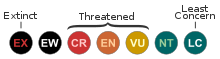
IUCN Red List
Growth: S = slow M = medium F = fast. Soil: L = light (sandy) M = medium H = heavy (clay). pH: A = acid N = neutral B = basic (alkaline). Shade: F = full shade S = semi-shade N = no shade. Moisture: D = dry M = Moist We = wet Wa = water.
Now available:
Food Forest Plants for Mediterranean Conditions
350+ Perennial Plants For Mediterranean and Drier Food Forests and Permaculture Gardens.
[Paperback and eBook]
This is the third in Plants For A Future's series of plant guides for food forests tailored to
specific climate zones. Following volumes on temperate and tropical ecosystems, this book focuses
on species suited to Mediterranean conditions—regions with hot, dry summers and cool, wet winters,
often facing the added challenge of climate change.
Read More
Expert comment
Author
L.
Botanical References
50
Links / References
For a list of references used on this page please go here
Readers comment