Translate this page:
Summary
Darnel ryegrass is an annual grass native to Europe and the Mediterranean region that has become established in cultivated fields in many parts of the world. Although the grains themselves are edible, the species is frequently infected by the toxic ergot fungus (Claviceps purpurea), making it an unreliable and potentially dangerous food source. Historically, contaminated grain caused outbreaks of ergotism, also known as Saint Anthony's Fire, one of the most notorious food poisoning diseases in history.
Physical Characteristics

 Lolium_temulentum is a ANNUAL growing to 1 m (3ft 3in) by 0.3 m (1ft) at a fast rate.
See above for USDA hardiness. It is hardy to UK zone 5 and is not frost tender. It is in flower from May to August. The species is hermaphrodite (has both male and female organs) and is pollinated by Wind.
It is noted for attracting wildlife.
Suitable for: light (sandy), medium (loamy) and heavy (clay) soils. Suitable pH: mildly acid, neutral and basic (mildly alkaline) soils. It cannot grow in the shade. It prefers moist soil.
UK Hardiness Map
US Hardiness Map
Synonyms
Craepalia temulenta (L.) Schrank. Festuca temulenta (L.) J.P.Sm. & Columbus.
Plant Habitats
Edible Uses
Although darnel ryegrass grains are technically edible, the species earned its reputation because of its close association with ergot fungus, one of history's most dangerous grain contaminants. Given the serious health risks and the availability of many safer wild grasses, darnel ryegrass should generally be avoided as a food plant [2-3]. The grains can be eaten only if free from fungal infection, but because ergot contamination is common and cannot be made safe by cooking, this species is not recommended for foraging [2-3]. Edibility Rating: 1 out of 5 – Technically edible, but the frequent risk of toxic fungal contamination makes it unsuitable as a practical food plant. Taste and Preparation: Healthy grains may be prepared like other cereal grains after cleaning and cooking. However, because ergot-infected grains cannot be reliably made safe and visual inspection may not always detect early infection, harvesting this species for food is strongly discouraged [2-3]. Seasonality (Phenology): Flowers in spring, with grains maturing during summer [2-3]. Traditional Uses: Historically, darnel ryegrass occasionally became mixed with cultivated cereal crops rather than being intentionally harvested. Its association with ergot fungus made contaminated grain infamous throughout Europe, where outbreaks of ergot poisoning caused severe illness and death [2-3]. Safety: Do not harvest grain showing any signs of ergot infection. The ergot fungus (Claviceps purpurea) produces toxic alkaloids that are not destroyed by cooking. Infected seed heads typically develop dark brown to purplish-black, elongated fungal bodies that replace the normal grains. Consumption can cause ergotism, resulting in serious circulatory and neurological illness [2-3]. Seed - cooked. Used as a piñole or ground into a flour and used to make bread, etc. [213, 257]. It is very nutritious, like oats, but it is not advisable to eat the seed due to the risk of fungal infection[114]. This fungal infection, called ergot, causes hallucinations in small doses but can cause severe damage to the nervous system in larger quantities.
References More on Edible Uses
Medicinal Uses
Plants For A Future can not take any responsibility for any adverse effects from the use of plants. Always seek advice from a professional before using a plant medicinally.
The seed is anodyne and sedative[4]. It is not actually the seed, but a fungus that is often found on the seed that has the medicinal properties[K].
References More on Medicinal Uses
The Bookshop: Edible Plant Books
Our Latest books on Perennial Plants For Food Forests and Permaculture Gardens in paperback or digital formats.

Edible Tropical Plants
Food Forest Plants for Hotter Conditions: 250+ Plants For Tropical Food Forests & Permaculture Gardens.
More

Edible Temperate Plants
Plants for Your Food Forest: 500 Plants for Temperate Food Forests & Permaculture Gardens.
More

More Books
PFAF have eight books available in paperback and digital formats. Browse the shop for more information.
Shop Now
Other Uses
Generally regarded as an agricultural weed rather than a cultivated plant. Wildlife Value: Some birds may eat the seeds, and the foliage can provide limited forage. However, fungal infections can reduce its value and potentially affect grazing animals if heavily contaminated.
Special Uses
References More on Other Uses
Cultivation details
Prefers disturbed soils, cultivated fields, roadsides, and agricultural land. It grows best in temperate climates with moderate soil moisture. Habitat: Found primarily in agricultural fields and other disturbed habitats. Within the southwestern United States, it is relatively uncommon and has only a limited distribution. USDA Hardiness Zones: Annual species grown across approximately USDA Zones 4–10, depending on climate. Growth Rate: Fast. Germinates, flowers, and sets seed within a single growing season. Mature Size: Typically 30–100 cm (1–3.3 ft) tall. Cultivation: Generally regarded as an agricultural weed rather than a cultivated plant. Modern farming practices usually aim to eliminate it from grain crops because it can contaminate them. Identification: Darnel ryegrass is an annual tufted grass with upright stems and narrow leaves. Its flowering spikes resemble those of cultivated ryegrass, with flattened spikelets arranged alternately along the central stem. Mature grains develop in summer, but any seed heads showing dark, elongated fungal growths should be avoided. Similar Species: It resembles other ryegrasses (Lolium spp.), particularly perennial ryegrass (Lolium perenne). Unlike most forage ryegrasses, darnel ryegrass is primarily associated with cultivated grain fields and is historically notorious for its susceptibility to ergot infection. Succeeds in ordinary garden soil[1].
References Carbon Farming Information and Carbon Sequestration Information
Temperature Converter
Type a value in the Celsius field to convert the value to Fahrenheit:
Fahrenheit:
The PFAF Bookshop
Plants For A Future have a number of books available in paperback and digital form. Book titles include Edible Plants, Edible Perennials, Edible Trees,Edible Shrubs, Woodland Gardening, and Temperate Food Forest Plants. Our new book is Food Forest Plants For Hotter Conditions (Tropical and Sub-Tropical).
Shop Now
Plant Propagation
Seed - sow spring in situ.
Other Names
If available other names are mentioned here
Darnel ryegrass, darnel, poison ryegrass.
Native Range
Afghanistan, Albania, Algeria, Austria, Azores, Baleares, Baltic States, Belarus, Bulgaria, Canary Is., Central European Russia, China North-Central, China Southeast, Corse, Cyprus, Czechia-Slovakia, East Aegean Is., East European Russia, Egypt, France, Greece, Gulf States, Hungary, India, Iran, Iraq, Italy, Kazakhstan, Kirgizstan, Korea, Krasnoyarsk, Kriti, Krym, Kuwait, Lebanon-Syria, Libya, Madeira, Manchuria, Morocco, Myanmar, North Caucasus, North European Russia, Northwest European Russia, NW. Balkan Pen., Oman, Pakistan, Palestine, Poland, Portugal, Qinghai, Romania, Sardegna, Saudi Arabia, Selvagens, Sicilia, Spain, Sri Lanka, Tadzhikistan, Tibet, Transcaucasus, Tunisia, Turkmenistan, Tuva, Türkiye, Türkiye-in-Europe, Ukraine, Uzbekistan, West Himalaya, Xinjiang, Yemen.
Weed Potential
Right plant wrong place. We are currently updating this section.
Please note that a plant may be invasive in one area but may not in your area so it's worth checking.
High. Darnel ryegrass behaves as an agricultural weed and readily invades cereal crops, where it competes for nutrients and increases the risk of grain contamination.
Conservation Status
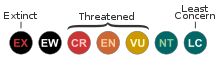
IUCN Red List of Threatened Plants Status : Not Listed.
Growth: S = slow M = medium F = fast. Soil: L = light (sandy) M = medium H = heavy (clay). pH: A = acid N = neutral B = basic (alkaline). Shade: F = full shade S = semi-shade N = no shade. Moisture: D = dry M = Moist We = wet Wa = water.
Now available:
Food Forest Plants for Mediterranean Conditions
350+ Perennial Plants For Mediterranean and Drier Food Forests and Permaculture Gardens.
[Paperback and eBook]
This is the third in Plants For A Future's series of plant guides for food forests tailored to
specific climate zones. Following volumes on temperate and tropical ecosystems, this book focuses
on species suited to Mediterranean conditions—regions with hot, dry summers and cool, wet winters,
often facing the added challenge of climate change.
Read More
Expert comment
Author
L.
Botanical References
17200
Links / References
For a list of references used on this page please go here
Readers comment
© 2010, Plants For A Future. Plants For A Future is a charitable company limited by guarantee, registered in England and Wales. Charity No. 1057719, Company No. 3204567.