 |
|
http://commons.wikimedia.org/wiki/File:Illustration_Linaria_vulgaris0_clean.jpg |
 |
| http://fr.wikipedia.org/wiki/Utilisateur:Jeffdelonge |
Translate this page:
Summary
Physical Characteristics

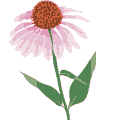 Linaria_vulgaris is a PERENNIAL growing to 0.6 m (2ft) by 0.6 m (2ft in).
See above for USDA hardiness. It is hardy to UK zone 4 and is not frost tender. It is in flower from July to October, and the seeds ripen from August to October. The species is hermaphrodite (has both male and female organs) and is pollinated by Bees.
It is noted for attracting wildlife.
Suitable for: light (sandy), medium (loamy) and heavy (clay) soils and prefers well-drained soil. Suitable pH: mildly acid, neutral and basic (mildly alkaline) soils. It can grow in semi-shade (light woodland) or no shade. It prefers dry or moist soil and can tolerate drought.
UK Hardiness Map
US Hardiness Map
Synonyms
Plant Habitats
Edible Uses
Young shoots - cooked[7]. Use with caution, see the notes above on toxicity.
References More on Edible Uses
Medicinal Uses
Plants For A Future can not take any responsibility for any adverse effects from the use of plants. Always seek advice from a professional before using a plant medicinally.
Yellow toadflax has a long history of herbal use. It acts mainly on the liver and was once widely employed as a diuretic in the treatment of oedema[238]. It is little used now, but undoubtedly merits investigation[238]. The whole plant is antiphlogistic, astringent, cathartic, detergent, depurative, diuretic, hepatic, ophthalmic and purgative[4, 7, 9, 21]. It is gathered when just coming into flower and can be used fresh or dried[4, 238]. The plant is especially valued for its strongly laxative and diuretic activities[4]. It is employed internally in the treatment of oedema, jaundice, liver diseases, gall bladder complaints and skin problems[4, 222, 238]. Externally it is applied to haemorrhoids, skin eruptions, sores and malignant ulcers[238]. The plant should be used with caution. It should preferably only be prescribed by a qualified practitioner and should not be given to pregnant women[238]. Dosage is critical, the plant might be slightly toxic[21, 238]. The fresh plant, or an ointment made from the flowers, is applied to piles, skin eruptions etc[4, 222]. The juice of the plant, or the distilled water, is a good remedy for inflamed eyes and cleaning ulcerous sores[4]. A homeopathic remedy is made from the plant[9]. It is used in the treatment of diarrhoea and cystitis[9].
References More on Medicinal Uses
Other Uses
A yellow dye is obtained from the whole plant[7, 13]. It is obtained from the flowers according to other reports[4, 100]. A tea made from the plant has been used as an insecticide[222]. A good bee plant[24]. Dynamic accumulator.
Special Uses
References More on Other Uses
Cultivation details
Succeeds in a moderately good well-drained soil[1]. Grows best in a neutral to alkaline soil[238]. It prefers a sunny position[111] but also succeeds in semi-shade[219]. A very drought resistant plant once established[200], it can be grown in a drystone wall[219]. Plants can spread fairly aggressively at the roots when they are in a suitable position[K]. They also often self-sow freely[238].
References Carbon Farming Information and Carbon Sequestration Information
Temperature Converter
Type a value in the Celsius field to convert the value to Fahrenheit:
Fahrenheit:
Plant Propagation
Seed - sow early spring in situ. Division in April or the autumn. Very easy, larger clumps can be replanted direct into their permanent positions, though it is best to pot up smaller clumps and grow them on in a cold frame until they are rooting well. Plant them out in the spring. This species can be divided successfully at almost any time in the growing season.
Other Names
If available other names are mentioned here
Native Range
TEMPERATE ASIA: Turkey, Russian Federation-Western Siberia (Western Siberia), Russian Federation-Eastern Siberia (Eastern Siberia), Russian Federation-Far East (Far East), China (Gansu Sheng, Henan Sheng, Jiangsu Sheng, Shaanxi Sheng, Shandong Sheng, Xinjiang Uygur Zizhiqu) EUROPE: Denmark, Finland, United Kingdom, Ireland, Norway, Sweden, Austria, Belgium, Switzerland, Czech Republic, Germany, Hungary, Netherlands, Poland, Slovakia, Russian Federation (European part), Belarus, Lithuania, Latvia, Moldova, Ukraine (incl. Krym), Albania, Bulgaria, Greece, Croatia, Italy, Romania, Serbia, Slovenia, Spain, France (incl. Corsica) Great Britain
Weed Potential
Right plant wrong place. We are currently updating this section.
Please note that a plant may be invasive in one area but may not
in your area so it's worth checking.
Conservation Status
IUCN Red List of Threatened Plants Status :
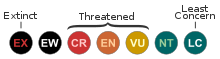
IUCN Red List
Growth: S = slow M = medium F = fast. Soil: L = light (sandy) M = medium H = heavy (clay). pH: A = acid N = neutral B = basic (alkaline). Shade: F = full shade S = semi-shade N = no shade. Moisture: D = dry M = Moist We = wet Wa = water.
Support Plants For A Future
Plants For A Future relies on regular donations to keep our free database and search facilities going, to pay for ongoing research, improvements and enhancements, and to develop and publish new books.
Read more
Choose Currency
Donate in £ GBP
Donate in $ USD
Donate in € EUR
Securely pay via PayPal or Credit/Debit Card without an account.
Expert comment
Author
Mill.
Botanical References
17200
Links / References
For a list of references used on this page please go here
Readers comment