 |
|
http://commons.wikimedia.org/wiki/File:Lilium_philadelphicum.jpg |
 |
|
Translate this page:
Summary
Physical Characteristics

 Lilium_philadelphicum is a BULB growing to 1 m (3ft 3in) by 0.3 m (1ft).
See above for USDA hardiness. It is hardy to UK zone 4. It is in flower from June to July, and the seeds ripen from August to September. The species is hermaphrodite (has both male and female organs) and is pollinated by Bees.
Suitable for: light (sandy), medium (loamy) and heavy (clay) soils and prefers well-drained soil. Suitable pH: mildly acid, neutral and basic (mildly alkaline) soils. It can grow in semi-shade (light woodland) or no shade. It prefers moist soil.
UK Hardiness Map
US Hardiness Map
Synonyms
Plant Habitats
Edible Uses
Bulb - cooked[257]. Used as a potato substitute[46, 61, 105, 161]. Starchy and slightly sweet[85]. Rather small, it is up to 25mm in diameter[235].
References More on Edible Uses
Medicinal Uses
Plants For A Future can not take any responsibility for any adverse effects from the use of plants. Always seek advice from a professional before using a plant medicinally.
A tea made from the bulbs is used in the treatment of stomach complaints, coughs, fevers etc[222, 257]. The crushed bulb is applied externally as a poultice to swellings, bruises, wounds, sores etc[222, 257]. A poultice of the flowers is applied to spider bites[222].
References More on Medicinal Uses
Other Uses
References More on Other Uses
Cultivation details
Requires a well-drained humus-rich soil and a cool moist root run[1, 42, 143]. Likes a warm position with moisture in summer[47]. Stoloniferous[200]. Plants are rather difficult to establish[143]. Early to mid autumn is the best time to plant out the bulbs in cool temperate areas, in warmer areas they can be planted out as late as late autumn[200]. A very ornamental plant[1], it requires protection from rain in winter[143]. The plant should be protected against rabbits and slugs in early spring. If the shoot tip is eaten out the bulb will not grow in that year and will lose vigour[200]. The plant is heat tolerant in zones 8 through 5. (Plant Hardiness Zones show how well plants withstand cold winter temperatures.
Plant Heat Zones show when plants would start suffering from the heat.
The Plant Heat Zone map is based on the number of "heat days" experienced in a given area where the temperature climbs to over 86 degrees F (30°C).
At this temperature, many plants begin to suffer physiological damage. Heat Zones range from 1 (no heat days) to 12 (210 or more heat days).
For example Heat Zone. 11-1 indicates that the plant is heat tolerant in zones 11 through 1.) For polyculture design as well as the above-ground architecture (form - tree, shrub etc. and size shown above) information on the habit and root pattern is also useful and given here if available. The plant growth habit is a clumper with limited spread [1-2]. The root pattern is a bulb. The root pattern is stoloniferous rooting from creeping stems above the ground [1-2].
References Carbon Farming Information and Carbon Sequestration Information
Temperature Converter
Type a value in the Celsius field to convert the value to Fahrenheit:
Fahrenheit:
Plant Propagation
Seed - immediate epigeal germination[130]. Sow thinly in pots from late winter to early spring in a cold frame. Should germinate in 2 - 4 weeks[163]. One report suggests that the seed might have delayed hypogeal germination[163]. In this case it would be best to sow the seed as soon as it is ripe in a cold frame because stored seed would require a warm/cold/warm cycle of stratification before the seed would germinate[163]. Great care should be taken in pricking out the young seedlings, many people prefer to leave them in the seed pot until they die down at the end of their second years growth. This necessitates sowing the seed thinly and using a reasonably fertile sowing medium. The plants will also require regular feeding when in growth. Divide the young bulbs when they are dormant, putting 2 - 3 in each pot, and grow them on for at least another year before planting them out into their permanent positions when the plants are dormant[K]. Division with care in the autumn once the leaves have died down. Replant immediately[200]. Bulb scales can be removed from the bulbs in early autumn. If they are kept in a warm dark place in a bag of moist peat, they will produce bulblets. These bulblets can be potted up and grown on in the greenhouse until they are large enough to plant out[200].
Other Names
If available other names are mentioned here
Native Range
NORTHERN AMERICA: Canada, Québec, Ontario, Saskatchewan, Alberta, Manitoba, British Columbia, United States, Connecticut, Indiana, Maine, Massachusetts, Michigan, New Hampshire, New Jersey, New York, Ohio, Pennsylvania, Rhode Island, Vermont, West Virginia, Illinois, Iowa, Minnesota, Missouri, Nebraska, North Dakota, South Dakota, Wisconsin, Colorado, Montana, Wyoming, Delaware, Georgia, Kentucky, Maryland, North Carolina, South Carolina, Tennessee, Virginia, District of Columbia, New Mexico, Texas,
Weed Potential
Right plant wrong place. We are currently updating this section.
Please note that a plant may be invasive in one area but may not
in your area so it's worth checking.
Conservation Status
IUCN Red List of Threatened Plants Status :
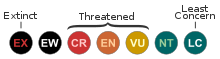
IUCN Red List
Growth: S = slow M = medium F = fast. Soil: L = light (sandy) M = medium H = heavy (clay). pH: A = acid N = neutral B = basic (alkaline). Shade: F = full shade S = semi-shade N = no shade. Moisture: D = dry M = Moist We = wet Wa = water.
Support Plants For A Future
Plants For A Future relies on regular donations to keep our free database and search facilities going, to pay for ongoing research, improvements and enhancements, and to develop and publish new books.
Read more
Choose Currency
Donate in £ GBP
Donate in $ USD
Donate in € EUR
Securely pay via PayPal or Credit/Debit Card without an account.
Expert comment
Author
L.
Botanical References
60200235
Links / References
For a list of references used on this page please go here
Readers comment
© 2010, Plants For A Future. Plants For A Future is a charitable company limited by guarantee, registered in England and Wales. Charity No. 1057719, Company No. 3204567.