 |
|
http://commons.wikimedia.org/wiki/User:Dalgial |
 |
| http://commons.wikimedia.org/wiki/User:Dalgial |
Translate this page:
Summary
Physical Characteristics

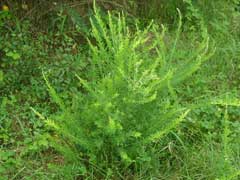
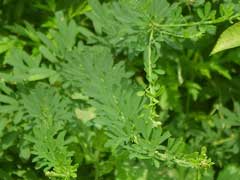
 Lespedeza_cuneata is a deciduous Shrub growing to 1 m (3ft 3in).
It is frost tender. It is in flower from August to September, and the seeds ripen from October to November. The species is hermaphrodite (has both male and female organs) and is pollinated by Insects.
It can fix Nitrogen.
Suitable for: light (sandy) and medium (loamy) soils and prefers well-drained soil. Suitable pH: mildly acid, neutral and basic (mildly alkaline) soils. It cannot grow in the shade. It prefers moist soil.
UK Hardiness Map
US Hardiness Map
Synonyms
L. cuneata. (DumCours.)G.Don.
Plant Habitats
Edible Uses
Young leaves - cooked after soaking[105, 177, 179].
References More on Edible Uses
Medicinal Uses
Plants For A Future can not take any responsibility for any adverse effects from the use of plants. Always seek advice from a professional before using a plant medicinally.
The whole plant is anthelmintic, depurative and tonic[147]. A decoction is used in the treatment of testicular tuberculosis, hernia, enuresis, dental caries, toothache, infantile marasmus/ascariasis, snake and dog bites, skin ulcers, dysentery and enteritis[147]
References More on Medicinal Uses
Other Uses
The plant has an extensive root system and fixes atmospheric nitrogen through bacteria that live on its roots. It is used in soil conservation schemes for renewing worn-out soils[171].
Special Uses
References More on Other Uses
Cultivation details
Easily grown in a light loam in full sun[1]. The top growth is not very cold tolerant, although the rootstock is considerably hardier. Plants are usually cut back to the ground in all but very mild winters, though they generally resprout well from the base in the following spring and flower in late summer[182]. In addition to the normally pollinated sexual flowers, this species also produces clusters of cleistogamous flowers in the leaf axils[266]. This species has a symbiotic relationship with certain soil bacteria, these bacteria form nodules on the roots and fix atmospheric nitrogen. Some of this nitrogen is utilized by the growing plant but some can also be used by other plants growing nearby[200].
References Carbon Farming Information and Carbon Sequestration Information
Temperature Converter
Type a value in the Celsius field to convert the value to Fahrenheit:
Fahrenheit:
The PFAF Bookshop
Plants For A Future have a number of books available in paperback and digital form. Book titles include Edible Plants, Edible Perennials, Edible Trees,Edible Shrubs, Woodland Gardening, and Temperate Food Forest Plants. Our new book is Food Forest Plants For Hotter Conditions (Tropical and Sub-Tropical).
Shop Now
Plant Propagation
Pre-soak the seed for 24 hours in warm water and then sow it in spring in a greenhouse. When they are large enough to handle, prick the seedlings out into individual pots and grow them on in the greenhouse for at least their first winter. Plant them out into their permanent positions in late spring or early summer, after the last expected frosts. Cuttings of half-ripe wood, 7 - 10cm with a heel, July/August in individual pots in a frame. It can be difficult to get the cuttings through their first winter, it is best to plunge the pots in a bed of ashes in a sheltered border outdoors[78].
Other Names
If available other names are mentioned here
Native Range
TEMPERATE ASIA: China, Hong Kong, Korea, Japan, Taiwan TROPICAL ASIA: Bhutan, India, Nepal, Pakistan (north), Papua New Guinea, Myanmar, Indonesia (Jawa), Philippines AUSTRALASIA: Australia (New South Wales, Queensland)
Weed Potential
Right plant wrong place. We are currently updating this section.
Please note that a plant may be invasive in one area but may not
in your area so it's worth checking.
Conservation Status
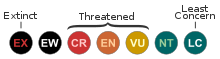
IUCN Red List of Threatened Plants Status :
IUCN Red List
Growth: S = slow M = medium F = fast. Soil: L = light (sandy) M = medium H = heavy (clay). pH: A = acid N = neutral B = basic (alkaline). Shade: F = full shade S = semi-shade N = no shade. Moisture: D = dry M = Moist We = wet Wa = water.
Now available:
Food Forest Plants for Mediterranean Conditions
350+ Perennial Plants For Mediterranean and Drier Food Forests and Permaculture Gardens.
[Paperback and eBook]
This is the third in Plants For A Future's series of plant guides for food forests tailored to
specific climate zones. Following volumes on temperate and tropical ecosystems, this book focuses
on species suited to Mediterranean conditions—regions with hot, dry summers and cool, wet winters,
often facing the added challenge of climate change.
Read More
Expert comment
Author
(Dum.Cours.)G.Don.
Botanical References
1158266
Links / References
For a list of references used on this page please go here
Readers comment
© 2010, Plants For A Future. Plants For A Future is a charitable company limited by guarantee, registered in England and Wales. Charity No. 1057719, Company No. 3204567.