Translate this page:
Summary
Shield pepperweed is one of the most distinctive and useful pepperweeds found in the American Southwest. Native to western Asia, Europe, and northern Africa, it has become widely naturalised across North America and is now a common weed of deserts, sagebrush flats, roadsides, grasslands, and disturbed ground. Unlike many members of the genus, it is easily recognised by its rounded upper leaves that appear to encircle the stem. The leaves, seeds, and young seedpods are edible, making it one of the most valuable wild food species in the Lepidium genus.
Physical Characteristics

 Lepidium_perfoliatum is a ANNUAL/BIENNIAL growing to 0.6 m (2ft) by 0.4 m (1ft 4in) at a fast rate.
See above for USDA hardiness. It is hardy to UK zone 5. It is in flower from May to June. The species is hermaphrodite (has both male and female organs) and is pollinated by Bees, insects.
It is noted for attracting wildlife.
Suitable for: light (sandy), medium (loamy) and heavy (clay) soils and can grow in nutritionally poor soil. Suitable pH: mildly acid, neutral and basic (mildly alkaline) soils and can grow in very alkaline soils.
It cannot grow in the shade. It prefers dry or moist soil and can tolerate drought.
UK Hardiness Map
US Hardiness Map
Synonyms
Nasturtium perfoliatum (L.) Besser
Plant Habitats
Edible Uses
Shield pepperweed is one of the finest edible members of the Lepidium genus. Its abundance, reliable seed production, straightforward processing, and multiple edible parts make it a valuable wild food throughout much of the American Southwest. While the fresh leaves are intensely spicy, both the leaves and seeds become much milder after cooking, and the seeds produce a surprisingly pleasant porridge. For foragers interested in native and naturalized desert food plants, shield pepperweed is well worth learning to recognize [2-3]. The leaves, seedpods, and seeds are edible [2-3]. You can eat young leaves raw or cooked, while mature seeds can be used as a seasoning, cooked into porridge, or ground before boiling. The seedpods are also edible when young and tender. Edibility Rating: 4 out of 5 – A dependable and abundant wild food with several edible parts. The spicy flavor limits the quantity that most people will eat, but it is one of the better pepperweeds for both seasoning and cooked dishes [2-3]. Taste and Preparation: Fresh leaves have a strong, spicy flavor reminiscent of horseradish, mustard, or watercress. They are excellent when used sparingly in mixed salads but can easily overwhelm milder greens. Cooking softens the pungency, although a noticeable peppery character usually remains. The seeds are firm, chewable, and naturally mucilaginous. When toasted, they crackle, becoming more delicate in texture but remaining distinctly spicy. Boiling is a more successful preparation method. After about 15–20 minutes, the seeds soften considerably, the spicy compounds are largely neutralized, and the released mucilage produces a mild, grain-like porridge. Grinding the seeds before boiling improves digestibility and creates a smoother consistency. Harvesting and processing are relatively straightforward. Mature seedpods release their seeds readily, and the light chaff is easily removed by winnowing [2-3]. Seasonality (Phenology): Shield pepperweed flowers from March to June, with seeds maturing from April through August. Young leaves are available throughout the active growing season before becoming tougher with age [2-3]. Nutritional Value: The seeds provide carbohydrates, oils, protein, fiber, and minerals typical of mustard-family plants. Their ability to absorb water and form a nourishing porridge increases their value as a survival food. Traditional Uses: Although specific ethnobotanical records are limited, Indigenous peoples throughout western North America widely used pepperweed seeds. Shield pepperweed's abundant seed production and ease of processing would have made it a useful seasonal food resource in many arid environments. Safety: No significant toxicity is reported. Like other members of the mustard family, the leaves and seeds contain glucosinolates that produce their characteristic spicy flavor. They are generally considered safe when eaten as part of a varied diet. Young leaves - raw or cooked[266]. A hot cress-like flavour.
References More on Edible Uses
Medicinal Uses
Plants For A Future can not take any responsibility for any adverse effects from the use of plants. Always seek advice from a professional before using a plant medicinally.
The plant is used as an antiscorbutic[240, 266].
References More on Medicinal Uses
The Bookshop: Edible Plant Books
Our Latest books on Perennial Plants For Food Forests and Permaculture Gardens in paperback or digital formats.
Edible Tropical Plants
Food Forest Plants for Hotter Conditions: 250+ Plants For Tropical Food Forests & Permaculture Gardens.
More
Edible Temperate Plants
Plants for Your Food Forest: 500 Plants for Temperate Food Forests & Permaculture Gardens.
More
More Books
PFAF have eight books available in paperback and digital formats. Browse the shop for more information.
Shop Now
Other Uses
Wildlife Value: The flowers provide nectar and pollen for insects, and small birds and mammals eat the seeds. Dense stands also provide temporary cover for insects and other small wildlife.
Special Uses
References More on Other Uses
Cultivation details
Shield pepperweed grows readily in full sun and well-drained soils. It tolerates drought, alkaline soils, disturbed ground, and poor fertility, making it well adapted to many American Southwest landscapes. Habitat: Common in deserts, sagebrush flats, juniper woodlands, grasslands, meadows, alkaline flats, roadsides, cultivated land, and disturbed sites throughout the Southwest and many other temperate regions. USDA Hardiness Zones: USDA Zones 4–9. Growth Rate: Fast. This annual establishes quickly after seasonal rainfall and completes its life cycle within a single growing season. Mature Size: Typically 15–60 cm (6–24 in.) tall with an upright, branching habit. Cultivation: Shield pepperweed is easily grown from seed in sunny locations with well-drained soil. It tolerates dry conditions well and requires little maintenance once established. Pollinators: The numerous small white flowers attract bees, hoverflies, flies, and many other small pollinating insects. Identification: Shield pepperweed is immediately recognizable by its distinctive rounded upper leaves that clasp the stem, giving the impression that the stem passes directly through the leaf. The plant bears numerous small white four-petalled flowers followed by flattened, rounded seedpods containing two seeds. This unique leaf arrangement makes it one of the easiest Lepidium species to identify. Similar Species: No other common southwestern pepperweed has the conspicuously clasping upper leaves of shield pepperweed. This feature readily separates it from field pepperweed (Lepidium campestre), miner's pepperweed (Lepidium densiflorum), shaggyfruit pepperweed (Lepidium lasiocarpum), and other members of the genus. Succeeds in most soils. The plant is occasionally cultivated as a vegetable in China[266].
References Carbon Farming Information and Carbon Sequestration Information
Temperature Converter
Type a value in the Celsius field to convert the value to Fahrenheit:
Fahrenheit:
The PFAF Bookshop
Plants For A Future have a number of books available in paperback and digital form. Book titles include Edible Plants, Edible Perennials, Edible Trees,Edible Shrubs, Woodland Gardening, and Temperate Food Forest Plants. Our new book is Food Forest Plants For Hotter Conditions (Tropical and Sub-Tropical).
Shop Now
Plant Propagation
Seed - sow spring in situ. Germination should take place within 3 weeks.
Other Names
If available other names are mentioned here
Shield pepperweed, Clasping pepperweed. Nasturtium perfoliatum (L.) Besser
Native Range
TEMPERATE ASIA: Afghanistan, Cyprus, Iran, Iraq, Lebanon, Syria, Turkey, Russian Federation-Ciscaucasia (Ciscaucasia), Armenia, Azerbaijan, Georgia, Russian Federation (Dagestan), Russian Federation (Buryatia (south), Altay, Krasnoyarsk (south)), Kazakhstan, Kyrgyzstan, Tajikistan, Turkmenistan, Uzbekistan, China (Gansu Sheng, Jiangsu Sheng, Liaoning Sheng, Shanxi Sheng, Xinjiang Uygur Zizhiqu) TROPICAL ASIA: India (Uttar Pradesh), Pakistan EUROPE: Austria (east), Hungary, Russian Federation-European part (European part (south)), Ukraine (incl. Krym), Albania, Bulgaria, Bosnia and Herzegovina, Greece, Croatia, North Macedonia, Romania, Serbia
Weed Potential
Right plant wrong place. We are currently updating this section.
Please note that a plant may be invasive in one area but may not in your area so it's worth checking.
Moderate to High. Shield pepperweed readily self-seeds and commonly colonises disturbed ground. Although generally less invasive than broadleaf pepperweed (Lepidium latifolium), it can form dense local populations where conditions are favourable.
Conservation Status
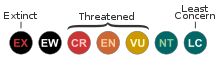
IUCN Red List of Threatened Plants Status : Not listed.
Growth: S = slow M = medium F = fast. Soil: L = light (sandy) M = medium H = heavy (clay). pH: A = acid N = neutral B = basic (alkaline). Shade: F = full shade S = semi-shade N = no shade. Moisture: D = dry M = Moist We = wet Wa = water.
Now available:
Food Forest Plants for Mediterranean Conditions
350+ Perennial Plants For Mediterranean and Drier Food Forests and Permaculture Gardens.
[Paperback and eBook]
This is the third in Plants For A Future's series of plant guides for food forests tailored to
specific climate zones. Following volumes on temperate and tropical ecosystems, this book focuses
on species suited to Mediterranean conditions—regions with hot, dry summers and cool, wet winters,
often facing the added challenge of climate change.
Read More
Expert comment
Author
L.
Botanical References
17266
Links / References
For a list of references used on this page please go here
Readers comment
| Add a comment |
|
If you have important information about this plant that may help other users please add a comment or link below. Only comments or links that are felt to be directly relevant to a plant will be included. If you think a comment/link or information contained on this page is inaccurate or misleading we would welcome your feedback at [email protected]. If you have questions about a plant please use the Forum on this website as we do not have the resources to answer questions ourselves.
* Please note: the comments by website users are not necessarily those held by PFAF and may give misleading or inaccurate information.
|
Subject : Lepidium_perfoliatum
|
|
|
|