Translate this page:
Summary
Clasping henbit is a small annual herb that has become naturalised across much of North America after being introduced from Europe and Asia. Although often dismissed as a common weed, it is a surprisingly good edible plant, producing mild-tasting leaves and attractive purple flowers over a long growing season. It commonly forms dense colonies in fields, gardens, riparian areas, and disturbed ground, making it easy to locate, although collecting enough leaves for a meal requires some patience because of its small size. Its extended flowering season, pleasant flavour, and ease of identification make it one of the better edible members of the mint family.
Physical Characteristics

 Lamium_amplexicaule is a ANNUAL growing to 0.4 m (1ft 4in) by 0.3 m (1ft).
See above for USDA hardiness. It is hardy to UK zone 5. It is in flower from April to August. The species is hermaphrodite (has both male and female organs) and is pollinated by Bees. The plant is self-fertile.
Suitable for: light (sandy) and medium (loamy) soils, prefers well-drained soil and can grow in heavy clay soil. Suitable pH: mildly acid and neutral soils. It cannot grow in the shade. It prefers dry or moist soil.
UK Hardiness Map
US Hardiness Map
Synonyms
Neckeria amplexicaulis (L.) Forsyth f. Galeobdolon amplexicaule (L.) Moench. Lamiella amplexicaulis (L.) Fourr. Lamiopsis amplexicaulis (L.) Opiz. Pollichia amplexicaulis (L.) Willd.
Plant Habitats
Edible Uses
The leaves and flowers are edible both raw and cooked. Fresh leaves have a pleasant lettuce-like flavor with a faint minty note but lack the strong cooling sensation found in peppermint or spearmint. They are free from the bitterness, resinous flavors, or soapiness that affect many other wild greens. The flowers are particularly pleasant, with a softer texture than the leaves and a mild, slightly sweet flavor. Both leaves and flowers can be added directly to salads or cooked as potherbs. Cooking improves the plant considerably. Boiling softens the fine velvety hairs covering the leaves and removes the slight minty character, producing a mild, flavourful green vegetable. The cooking water also develops into an excellent light soup stock. As with other members of the mint family, clasping henbit is best enjoyed as part of a varied diet rather than eaten in very large quantities [2-3]. Edibility Rating: 4 out of 5 – A readily available and pleasant wild leafy vegetable with a mild flavor, although its small size means gathering useful quantities can be time-consuming. Taste and Preparation: Fresh leaves are tender and mild with a flavor resembling cultivated lettuce combined with a faint herbal note. Unlike many wild greens, they contain very little bitterness and no unpleasant resinous or acrid flavors. The soft hairs covering the foliage are usually tolerable when eaten fresh but become almost imperceptible after cooking. Boiled leaves lose their slight mint flavor and become an excellent cooked green for soups, stews, or mixed vegetable dishes. The flowers are among the best parts of the plant, adding color, texture, and a mild flavor to salads [2-3]. Seasonality (Phenology): Young leaves are available through much of the growing season. In warm climates, clasping henbit may flower almost continuously throughout the year, while in cooler regions growth slows or stops during winter. In the Southwest, it most commonly flowers from February to May [2-3]. Nutritional Value: Although detailed nutritional analyses are limited, clasping henbit provides leafy greens rich in chlorophyll, dietary fiber, vitamins, minerals, and antioxidant compounds typical of edible members of the mint family. Traditional Uses: Clasping henbit has long been gathered as a spring green in parts of Europe and western Asia. While it has relatively little documented ethnobotanical use among Native Americans, it has become a familiar edible weed throughout North America. A closely related species, purple henbit (Lamium purpureum), is also edible and can be prepared in much the same way [2-3]. Young leaves - raw or cooked[54, 62, 105]. Added to salads or used as a potherb[183].
References More on Edible Uses
Medicinal Uses
Plants For A Future can not take any responsibility for any adverse effects from the use of plants. Always seek advice from a professional before using a plant medicinally.
The plant is antirheumatic, diaphoretic, excitant, febrifuge, laxative and stimulant[218, 240].
References More on Medicinal Uses
The Bookshop: Edible Plant Books
Our Latest books on Perennial Plants For Food Forests and Permaculture Gardens in paperback or digital formats.
Edible Tropical Plants
Food Forest Plants for Hotter Conditions: 250+ Plants For Tropical Food Forests & Permaculture Gardens.
More
Edible Temperate Plants
Plants for Your Food Forest: 500 Plants for Temperate Food Forests & Permaculture Gardens.
More
More Books
PFAF have eight books available in paperback and digital formats. Browse the shop for more information.
Shop Now
Other Uses
Wildlife Value: The flowers provide valuable early nectar for pollinators. Small birds may eat the seeds, while the foliage offers limited browse for some herbivores. Pollinators:
The nectar-rich purple flowers attract a variety of native bees, honeybees, bumblebees, and other early-season pollinating insects, making it an important food source when few other plants are flowering.
Special Uses
References More on Other Uses
Cultivation details
Clasping henbit grows best in full sun to partial shade on moderately fertile, reasonably moist soils. It readily colonizes cultivated ground, gardens, roadsides, orchards, and riparian habitats but tolerates a wide range of soil conditions. Habitat: Common in fields, gardens, cultivated land, roadsides, canyons, stream margins, lawns, and disturbed sites. It is widespread across North America but generally less abundant in the driest desert regions. USDA Hardiness Zones: Zones 4–10 (annual). Growth Rate: Fast. Plants germinate readily, grow quickly, flower within a few months, and often produce multiple generations each year in mild climates. Mature Size: Typically 5–40 cm (2–16 in.) tall with a spread of 15–30 cm (6–12 in.), often forming loose colonies. Cultivation: Clasping henbit is extremely easy to grow from seed and usually requires little or no care once established. It readily self-seeds and is often considered a volunteer garden plant. Pollinators: The nectar-rich purple flowers attract a variety of native bees, honeybees, bumblebees, and other early-season pollinating insects, making it an important food source when few other plants are flowering. Identification: Clasping henbit is recognized by its square stems, opposite rounded leaves, and distinctive upper leaves that clasp the stem without stalks. The reddish-purple, two-lipped flowers occur in whorls around the stem and bloom very early in the season. The combination of clasping leaves and hooded purple flowers makes this one of the easiest wild mints to identify. Similar Species: Purple henbit (Lamium purpureum) is closely related and also edible but differs in having upper leaves with short stalks rather than clasping the stem. Deadnettl. Tolerates most soils and conditions. Prefers a light dry soil[17, 54]. Plants seem to be immune to the predations of rabbits[233].
References Carbon Farming Information and Carbon Sequestration Information
Temperature Converter
Type a value in the Celsius field to convert the value to Fahrenheit:
Fahrenheit:
The PFAF Bookshop
Plants For A Future have a number of books available in paperback and digital form. Book titles include Edible Plants, Edible Perennials, Edible Trees,Edible Shrubs, Woodland Gardening, and Temperate Food Forest Plants. Our new book is Food Forest Plants For Hotter Conditions (Tropical and Sub-Tropical).
Shop Now
Plant Propagation
Seed - this species usually self sows freely and should not require human intervention. When required, it can be sown in situ as soon as it is ripe or in spring. The seed can germinate at any time of the year in the wild if conditions are suitable[17].
Other Names
If available other names are mentioned here
Henbit, Henbit deadnettle, Clasping henbit, clasping deadnettle
Native Range
TEMPERATE ASIA: Cyprus, Iran, Iraq, Israel, Jordan, Lebanon, Syria, Turkey, Armenia, Azerbaijan, Georgia, Russian Federation-Western Siberia (Western Siberia), Kazakhstan, Kyrgyzstan, Tajikistan, Turkmenistan, Uzbekistan, China, Korea, Japan TROPICAL ASIA: India (north), Pakistan EUROPE: Denmark, Finland, United Kingdom, Ireland, Norway, Sweden, Czechoslovakia, Austria, Belgium, Switzerland, Germany, Hungary, Netherlands, Poland, Belarus, Estonia, Lithuania, Latvia, Ukraine (incl. Krym), Former Yugoslavia, Albania, Bulgaria, Greece (incl. Crete), Italy (incl. Sardinia, Sicily), Romania, Spain (incl. Baleares), France (incl. Corsica), Portugal AFRICA: Spain (Canarias), Portugal (Madeira Islands), Algeria (north), Egypt (north), Libya (north), Morocco, Tunisia
Weed Potential
Right plant wrong place. We are currently updating this section.
Please note that a plant may be invasive in one area but may not in your area so it's worth checking.
Moderate to high. Clasping henbit readily self-seeds and commonly behaves as a winter annual weed in gardens, cultivated fields, lawns, and orchards. Although generally easy to control, dense populations can develop where soil is regularly disturbed.
Conservation Status
IUCN Red List of Threatened Plants Status : Not Listed.
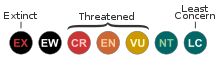
Growth: S = slow M = medium F = fast. Soil: L = light (sandy) M = medium H = heavy (clay). pH: A = acid N = neutral B = basic (alkaline). Shade: F = full shade S = semi-shade N = no shade. Moisture: D = dry M = Moist We = wet Wa = water.
Now available:
Food Forest Plants for Mediterranean Conditions
350+ Perennial Plants For Mediterranean and Drier Food Forests and Permaculture Gardens.
[Paperback and eBook]
This is the third in Plants For A Future's series of plant guides for food forests tailored to
specific climate zones. Following volumes on temperate and tropical ecosystems, this book focuses
on species suited to Mediterranean conditions—regions with hot, dry summers and cool, wet winters,
often facing the added challenge of climate change.
Read More
Expert comment
Author
L.
Botanical References
17
Links / References
For a list of references used on this page please go here
Readers comment
© 2010, Plants For A Future. Plants For A Future is a charitable company limited by guarantee, registered in England and Wales. Charity No. 1057719, Company No. 3204567.