Translate this page:
Summary
Canadian lettuce is a tall native wild lettuce of meadows, open woodland, stream margins, thickets, and disturbed ground. It is much more characteristic of eastern and central North America than of the arid Southwest, although scattered populations occur in the western mountains, including New Mexico. The young leaves are edible raw or cooked. As with most wild lettuces, the best eating stage occurs before the flowering stem elongates. At this stage the leaves remain tender and relatively mild, although a noticeable bitterness usually develops as the plant matures. Canadian lettuce produces milky latex when cut, a characteristic feature of the genus. Unlike the latex of blue or prickly lettuce, there is little tradition of collecting Canadian lettuce latex as chewing gum. Its main value is therefore as an occasional leafy green rather than as a root, seed or latex food.
Physical Characteristics

 Lactuca_canadensis is a BIENNIAL growing to 2.2 m (7ft) by 0.8 m (2ft 7in) at a fast rate.
See above for USDA hardiness. It is hardy to UK zone 4. It is in flower from July to September, and the seeds ripen from August to October. The species is hermaphrodite (has both male and female organs) and is pollinated by Insects.
It is noted for attracting wildlife.
Suitable for: light (sandy) and medium (loamy) soils and prefers well-drained soil. Suitable pH: mildly acid, neutral and basic (mildly alkaline) soils. It can grow in semi-shade (light woodland) or no shade. It prefers moist soil.
UK Hardiness Map
US Hardiness Map
Synonyms
Plant Habitats
Edible Uses
Young leaves are edible raw or cooked [2-3]. Tender basal leaves gathered before bolting are usually the mildest. Older leaves become tougher and more bitter. Cooking reduces bitterness and produces a useful potherb. Flowering stems and mature leaves are less worthwhile because fibers and bitter latex increase as the plant develops. The seeds are not regarded as an important traditional food [2-3]. Edibility Rating: 3/5. Canadian lettuce receives an overall edibility rating of 3 out of 5. Young foliage can be a good wild vegetable, especially in moist habitats where the plants grow vigorously. The rating is limited by increasing bitterness with age and by its scarcity across much of the Southwest [2-3]. Taste, Processing & Culinary Use: Young leaves have a mild lettuce-like flavor with a slightly bitter finish. Fresh rosette leaves can be chopped into salads when particularly tender, although tasting a small sample first is worthwhile because bitterness varies. Once the flowering stalk begins elongating, boiling becomes the better preparation. Brief boiling produces a soft green vegetable. For older leaves, discarding the first cooking water reduces bitterness further. Leaves may also be mixed with milder greens rather than eaten alone. The milky sap has a distinctly bitter flavor and should not be deliberately consumed in concentrated quantities. Seasonality (Phenology): Plants establish during spring or sometimes overwinter as basal rosettes. The best leaves are available from spring into early summer. Flowering usually occurs from June through September or October, depending on latitude and elevation. Yellow flower heads are followed by flattened beaked fruits topped with white pappus hairs. Once seed production begins, the foliage rapidly becomes less desirable as food. Safety & Cautions: Canadian lettuce is generally regarded as edible, but large servings of very bitter mature foliage are unnecessary and may cause digestive discomfort in sensitive people. Milky latex should not be treated as a food merely because the leaves are edible. People with allergies to the sunflower family may react to wild lettuces. Plants beside roads, sprayed fields or contaminated drainage should not be gathered. Correct identification is important because other milky-sapped Asteraceae may resemble wild lettuce. Harvest & Processing: Gather basal leaves before the flowering stalk elongates. Choose fresh, undamaged foliage and leave enough leaves for the plant to continue growing. Wash thoroughly. Young leaves may be eaten raw or lightly cooked. Older leaves are best boiled separately, with the cooking water discarded if bitterness is pronounced [2-3]. Traditional Indigenous Uses: Wild lettuces were used as greens by a number of Indigenous peoples, although Canadian lettuce is less prominent in ethnobotanical literature than several western species. Its broad distribution and abundance in moist eastern habitats would have made it readily available as a seasonal green. Use was probably opportunistic rather than a staple. Nutritional Value: Species-specific nutritional data are limited. Like other leafy members of the sunflower family, young foliage is expected to provide water, fiber, carotenoids, folate, vitamin K and modest amounts of minerals. It is a leafy vegetable rather than a calorie-rich food [2-3]. Young leaves and stems - raw or cooked[46, 55, 61, 85, 105, 177]. Cooked and eaten as greens[257].
References More on Edible Uses
Medicinal Uses
Plants For A Future can not take any responsibility for any adverse effects from the use of plants. Always seek advice from a professional before using a plant medicinally.
The whole plant is rich in a milky sap that flows freely from any wounds. This hardens and dries when in contact with the air[4]. The sap contains 'lactucarium', which is used in medicine for its anodyne, antispasmodic, digestive, diuretic, hypnotic, narcotic and sedative properties[9, 21, 46, 165, 192, 207, 213, 222, 238]. Lactucarium has the effects of a feeble opium, but without its tendency to cause digestive upsets[4], nor is it addictive[7]. It is taken internally in the treatment of insomnia, anxiety, neuroses, hyperactivity in children, dry coughs, whooping cough, rheumatic pain etc[238]. Concentrations of lactucarium are low in young plants and most concentrated when the plant comes into flower[238]. It is collected commercially by cutting the heads of the plants and scraping the juice into china vessels several times a day until the plant is exhausted[4]. An infusion of the fresh or dried flowering plant can also be used[9]. The plant should be used with caution, and never without the supervision of a skilled practitioner. Even normal doses can cause drowsiness whilst excess causes restlessness[238] and overdoses can cause death through cardiac paralysis[7, 9]. Some physicians believe that any effects of this medicine are caused by the mind of the patient rather than by the medicine[213]. The sap has also been applied externally in the treatment of warts[222].
References More on Medicinal Uses
The Bookshop: Edible Plant Books
Our Latest books on Perennial Plants For Food Forests and Permaculture Gardens in paperback or digital formats.
Edible Tropical Plants
Food Forest Plants for Hotter Conditions: 250+ Plants For Tropical Food Forests & Permaculture Gardens.
More
Edible Temperate Plants
Plants for Your Food Forest: 500 Plants for Temperate Food Forests & Permaculture Gardens.
More
More Books
PFAF have eight books available in paperback and digital formats. Browse the shop for more information.
Shop Now
Other Uses
Wildlife & Ecology: The foliage is eaten by various herbivorous insects and mammals. Seeds may be consumed by small birds. Tall flowering plants provide temporary structure in meadow and woodland-edge communities.
Special Uses
References More on Other Uses
Cultivation details
Canadian lettuce prefers full sun to light shade and moderately moist soils. It grows well in loams, woodland edges, meadow soils, and disturbed ground. The species tolerates more moisture than many southwestern wild lettuces and performs poorly in extremely hot, dry desert sites. Habitat & Distribution: The species is native throughout much of temperate North America, from Yukon south through the United States. Known records include native occurrences across most of the continental U.S., including Arizona, New Mexico, Colorado, Utah, and Nevada, although it is much more characteristic of eastern and central regions. Typical habitats include meadows, woodland margins, thickets, roadsides and streamside openings. Cultivation: Canadian lettuce is easy to grow from seed in moderately fertile soil. Autumn or early spring sowing is suitable. Plants require little care beyond moisture during establishment. Rich soil may produce larger, milder leaves but can also encourage tall, weak flowering stems. Pollinators: The yellow flower heads attract small bees, flies, and other insects. Unlike wind-pollinated grasses, wild lettuces provide nectar and pollen to insect visitors. Identification: Canadian lettuce is an annual or biennial with milky sap, typically 50–220 cm tall. Leaves are alternate and may be entire or deeply lobed, but their margins are not strongly prickly. Flower heads occur in branching panicles and contain only yellow ray florets; disc florets are absent. The fruits are strongly flattened cypselae with short beaks and white hair-like pappi. Wild lettuces can be separated from sowthistles partly by these clearly beaked fruits. Canadian lettuce, Lactuca canadensis L., belongs to the sunflower family (Asteraceae) and the genus Lactuca. Common names include Canadian lettuce, Canada lettuce and wild lettuce. It is a native North American species whose range extends from Yukon through much of Canada and the United States, with scattered occurrences reaching into the Southwest. Kew currently accepts Lactuca canadensis as a distinct species and records it as native across a very broad temperate North American range. It is an annual or biennial, occasionally behaving as a short-lived perennial under favorable conditions. Because it does not rely on a permanent crown, USDA Hardiness Zones are less important than for long-lived plants, but it can be grown approximately in USDA Zones 3–9. Flowering plants commonly reach 50–220 cm tall, with an approximate spread of 30–75 cm, depending on soil moisture and competition. Prefers a light sandy loam[1]. Hybridizes in the wild with L. ludoviciana and the two species can sometimes be difficult to separate[274].
References Carbon Farming Information and Carbon Sequestration Information
Temperature Converter
Type a value in the Celsius field to convert the value to Fahrenheit:
Fahrenheit:
The PFAF Bookshop
Plants For A Future have a number of books available in paperback and digital form. Book titles include Edible Plants, Edible Perennials, Edible Trees,Edible Shrubs, Woodland Gardening, and Temperate Food Forest Plants. Our new book is Food Forest Plants For Hotter Conditions (Tropical and Sub-Tropical).
Shop Now
Plant Propagation
Seed - sow spring in situ and only just cover the seed. Germination is usually fairly quick.
Other Names
If available other names are mentioned here
Canadian lettuce, Canada lettuce and wild lettuce.
Native Range
NORTHERN AMERICA: Canada (Yukon, Québec, Nova Scotia, Ontario, Prince Edward Island, New Brunswick, Manitoba (east), British Columbia), United States (Connecticut, Indiana, Maine, Massachusetts, Michigan, New Hampshire, New Jersey, New York, Ohio, Pennsylvania, Rhode Island, Vermont, West Virginia, Illinois, Iowa, Kansas, Minnesota, Missouri, Nebraska, North Dakota, Oklahoma, South Dakota, Wisconsin, Colorado, Idaho, Montana, Oregon, Washington, Wyoming, Alabama, Arkansas, Delaware, Florida, Georgia, Kentucky, Louisiana, Maryland, Mississippi, North Carolina, South Carolina, Tennessee, Virginia, District of Columbia, New Mexico, Texas (east), Arizona, California, Nevada, Utah)
Weed Potential
Right plant wrong place. We are currently updating this section.
Please note that a plant may be invasive in one area but may not in your area so it's worth checking.
Canadian lettuce has low weed potential. It self-seeds readily but is native across most of its range and does not usually dominate intact vegetation. For PFAF purposes, a weed potential rating of 1–2/5 is appropriate.
Conservation Status
IUCN Red List of Threatened Plants Status : Not listed.
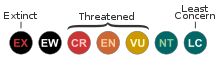
Growth: S = slow M = medium F = fast. Soil: L = light (sandy) M = medium H = heavy (clay). pH: A = acid N = neutral B = basic (alkaline). Shade: F = full shade S = semi-shade N = no shade. Moisture: D = dry M = Moist We = wet Wa = water.
Now available:
Food Forest Plants for Mediterranean Conditions
350+ Perennial Plants For Mediterranean and Drier Food Forests and Permaculture Gardens.
[Paperback and eBook]
This is the third in Plants For A Future's series of plant guides for food forests tailored to
specific climate zones. Following volumes on temperate and tropical ecosystems, this book focuses
on species suited to Mediterranean conditions—regions with hot, dry summers and cool, wet winters,
often facing the added challenge of climate change.
Read More
Expert comment
Author
L.
Botanical References
143235
Links / References
For a list of references used on this page please go here
Readers comment
| Add a comment |
|
If you have important information about this plant that may help other users please add a comment or link below. Only comments or links that are felt to be directly relevant to a plant will be included. If you think a comment/link or information contained on this page is inaccurate or misleading we would welcome your feedback at [email protected]. If you have questions about a plant please use the Forum on this website as we do not have the resources to answer questions ourselves.
* Please note: the comments by website users are not necessarily those held by PFAF and may give misleading or inaccurate information.
|
Subject : Lactuca_canadensis
|
|
|
|