Translate this page:
Summary
Taxonomic Note: This genus was formerly classified in the family Taxodiaceae. Modern classifications include it within the Cupressaceae.
One-seeded juniper is widely regarded as one of the best edible junipers in North America. Although its fleshy seed cones contain the resinous compounds characteristic of the genus, they are generally sweeter and less acrid than those of many other species. Native Americans throughout the Southwest made extensive use of the fruits, eating them fresh, drying them, grinding them into meal, and preparing beverages.
One-seed Juniper (J. monosperma) is native to the arid and semi-arid regions of the southwestern United States and northern Mexico. This species is highly drought-tolerant and thrives in dry, rocky soils. It is used in reforestation and soil stabilization projects. The fruit has a relatively mild sweet flavor but an acrid overtone. Dry-roasted fruits make an excellent tea: finely chop the fresh fruits, dry-roast the pieces until slightly charred, and steep them in hot water.
Juniperus species,
Junipers are evergreen coniferous trees or shrubs ranging from tall 40m (130ft) trees to low-spreading prostrate shrubs. The needle-like leaves are aromatic, and the fruit is edible in some species. Many ornamental species are available, and some are used for ground cover, hedging, erosion control and in a shelterbelt. Some forms tolerate maritime exposure. Eat fruit in small quantities. Many Juniperus species (junipers) are known for their hardiness, drought tolerance, and adaptability to dry, poor soils.
Physical Characteristics

 Juniperus_monosperma is an evergreen Tree growing to 8 m (26ft) by 7 m (23ft) at a medium rate.
See above for USDA hardiness. It is hardy to UK zone 5. It is in leaf all year, in flower in April, and the seeds ripen in October. The species is dioecious (individual flowers are either male or female, but only one sex is to be found on any one plant so both male and female plants must be grown if seed is required). and is pollinated by Wind. The plant is not self-fertile.
It is noted for attracting wildlife.
Suitable for: light (sandy), medium (loamy) and heavy (clay) soils and prefers well-drained soil. Suitable pH: mildly acid, neutral and basic (mildly alkaline) soils and can grow in very alkaline soils.
It cannot grow in the shade. It prefers dry or moist soil and can tolerate drought.
UK Hardiness Map
US Hardiness Map
Synonyms
Juniperus californica var. monosperma (Engelm.) Lemmon. Juniperus mexicana var. monosperma (Engelm.) Cory. Juniperus occidentalis var. monosperma Engelm. Sabina monosperma (Engelm.) Rydb.
Plant Habitats
Edible Uses
Only the mature fleshy seed cones are edible. Leaves, bark, wood, and roots should not be eaten [2-3]. The ripe cones were traditionally eaten fresh, dried for winter use, or ground into meal and mixed with other foods. Their relatively high sugar content made them particularly valuable during seasons when fresh fruit was unavailable. The single seed is generally discarded before culinary use. Compared with other southwestern junipers, the flesh has a milder flavor and is often considerably sweeter. The fruits also make one of the finest juniper teas when properly prepared. Despite their superior flavor, they should still be consumed only in moderation because of their resin content [2-3]. Edibility Rating: 3/5. One-seeded juniper receives an edibility rating of 3 out of 5. Among the US southwestern junipers, it is one of the best species for food. Its sweetness, extensive Indigenous use, and versatility justify a higher rating than most members of the genus. Nevertheless, resinous compounds and the recommendation to avoid regular heavy consumption prevent a higher score [2-3]. Taste, Processing & Culinary Use: Ripe fruits have a pleasantly sweet flavor followed by a mild resinous finish. Our field observations found the sweetness abundant while the resin remained noticeable but much less objectionable than in many related species [2-3]. The flesh is soft, fibrous and somewhat mealy, surrounding a single hard seed. One of the finest preparations involves making juniper tea. Fresh fruits are finely chopped, the seed removed if desired, lightly dry-roasted until just beginning to char, then steeped in hot water. The resulting infusion develops a rich sweetness accompanied by subtle evergreen and cypress-like notes. Initially green in color, the tea gradually turns warm brown while retaining an attractive woodland aroma. This traditional preparation appears to moderate the harshest resinous notes while preserving the pleasant sweetness. The fruits may also be dried, ground into meal, and mixed with cereal or seed flours. Although fresh fruits can be eaten, small quantities are preferable. Cooking does not completely eliminate the resins, but roasting followed by steeping produces excellent results [2-3]. Seasonality (Phenology): One-seeded juniper is evergreen year-round. Flowering generally occurs during spring. The fleshy seed cones mature in autumn, developing their characteristic blue color with a pale waxy bloom. Unlike common juniper, fruits usually mature within a single growing season. The ripe cones often remain attached throughout winter, extending the harvest season when few other wild fruits are available. This dependable winter food supply contributed greatly to the species' importance among Indigenous peoples. Safety & Cautions: Although one-seeded juniper is among the mildest species, it should still be eaten only in moderation. The fruits contain volatile oils and resinous compounds characteristic of junipers. Excessive consumption may irritate the kidneys. Individuals with kidney disease should avoid consuming juniper fruits. Medicinal or concentrated use during pregnancy is not recommended because juniper oils possess biological activity. Only fully ripe fruits should be harvested. Immature green cones contain considerably more resin and are unsuitable for eating. Leaves, bark and wood are not edible. Harvest & Processing: Harvest fully mature blue fruits during autumn or early winter. Taste a few fruits before gathering large quantities, as sweetness varies somewhat between individual trees. Remove leaves and small twigs before processing. You may remove the single seed before grinding or making tea. For tea, finely chop the fleshy cones, lightly roast until aromatic, then steep in freshly boiled water. For meal, dry the fruits thoroughly before grinding and combining them with other flours. Properly dried fruits store well for many months in a cool, dry place. Traditional Indigenous Uses: One-seeded juniper was one of the most important food-producing junipers of the American Southwest. Numerous Indigenous peoples, including Navajo, Apache, Pueblo, and other groups, gathered the ripe fruits for food. They ate the cones fresh, dried, ground into meal, mixed with maize and other foods, and prepared as beverages. Because the fruits remain on the trees well into winter, they represented an important seasonal source of carbohydrates when other fruits were unavailable. Beyond food, various parts of the tree were widely used for fuel, construction, ceremonial purposes, and traditional medicine. Nutritional Value: The fleshy cones contain appreciable quantities of natural sugars together with dietary fiber and aromatic essential oils. Most of the food value comes from carbohydrates contained in the fleshy cone scales. The single seed contributes little nutritional value in traditional preparations. Although not a major source of protein or fat, the fruits provided valuable winter calories and flavor [2-3]. Fruit - raw or cooked. Soft, juicy and pulpy[81, 85, 105], but with a thin flesh[82]. It can be dried and ground into a powder and then be baked[82, 227], or can be used as a seasoning in stews etc[161, 257]. The fruits were only used when other foods were in short supply[257]. The cones are about 5 - 8mm in diameter and ripen in their first year[200]. Inner bark - raw or cooked[257]. It was chewed in times of food shortage for the little nourishment it supplied[257]. The gum is chewed as a delicacy[161, 257]. No further details are given.
References More on Edible Uses
Medicinal Uses
Plants For A Future can not take any responsibility for any adverse effects from the use of plants. Always seek advice from a professional before using a plant medicinally.
One-seed juniper was commonly employed medicinally by a number of native North American Indian tribes, who used it to treat a variety of complaints[257]. It is little, if at all, used in modern herbalism. The leaves are febrifuge, laxative and pectoral[216]. An infusion is used in the treatment of stomach complaints, constipation, coughs and colds[216]. An infusion was also used by pregnant women prior to childbirth in order to relax the muscles[257]. A poultice of the heated twigs can be bound over a bruise or sprain in order to reduce the swelling[257]. An infusion of the staminate cones has been used as a stomach tonic and in the treatment of dysentery[257]. The chewed bark has been applied externally to help heal spider bites[257]. It is also highly prized as a dressing on burns[257]. The fruits are strongly diuretic[257]. A gum from the plant has been used as a temporary filling in a decayed tooth[257].
References More on Medicinal Uses
The Bookshop: Edible Plant Books
Our Latest books on Perennial Plants For Food Forests and Permaculture Gardens in paperback or digital formats.
Edible Tropical Plants
Food Forest Plants for Hotter Conditions: 250+ Plants For Tropical Food Forests & Permaculture Gardens.
More
Edible Temperate Plants
Plants for Your Food Forest: 500 Plants for Temperate Food Forests & Permaculture Gardens.
More
More Books
PFAF have eight books available in paperback and digital formats. Browse the shop for more information.
Shop Now
Other Uses
Agroforestry uses: Junipers can be used as windbreaks or hedges and are often employed in erosion control due to their extensive root systems. They also provide habitat and shelter for wildlife. Thin strips of the fibrous bark are used for making sleeping mats etc[82, 227]. It has also been used as a lining in shoes to absorb moisture and to keep the feet warmer[257]. When rubbed fine, the bark can be used to make children's clothing[257]. The bark is employed as a tinder and is also made into a slow match or can be shredded, bound into bundles and used as a torch to give light in the house[216, 257]. The crushed bark was twisted into a rope, tied at intervals with yucca (Yucca species), and wrapped into a coil. The free end was set on fire and kept smouldering by blowing on it at intervals. Fire could be carried in this fashion for several hours[257]. The dried seeds have been used as beads or as the 'rattle' in rattles[216, 257]. A green dye is obtained from the bark and berries[229, 257]. A yellow dye is obtained from the whole plant[257]. Ashes from the whole plant have been used as a mordant to fix the colour of dyes[257]. Wood - moderately hard, somewhat heavy, slightly fragrant. When seasoned properly it is very durable and is used mainly for fencing and fuel[82, 227, 229]. As a fuel it burns steadily and evenly[257]. Pollinators: One-seeded juniper is wind-pollinated. Male trees release abundant pollen during spring, while female trees produce the fleshy seed cones. The species provides little nectar for insects. Its reproduction depends primarily upon airborne pollen rather than animal pollinators. Wildlife & Ecology: Many birds and mammals eat the fruits, including robins, cedar waxwings, jays, coyotes, foxes, rabbits, and numerous rodents. These animals also disperse the seeds. Dense evergreen branches provide valuable shelter and nesting sites year-round. The tree plays a major ecological role in stabilizing soils, providing winter food for wildlife and supporting woodland biodiversity across the Southwest. 1. Nectary - Flowers rich in nectar and pollen:
No – Juniper species produce small, inconspicuous flowers that do not produce significant nectar. However, they do release pollen, which can be a food source for some insects, though not in large quantities.
2. Wildlife - Food (Fruit, Seeds, Leaf litter, Shelter, Nesting, Roosting):
Yes – Juniper berries (technically cones) are a food source for many birds and mammals. The dense foliage provides good shelter, and some birds may nest or roost in the branches. Juniper is also used for cover by small wildlife.
3. Invertebrate Shelter (Overwintering sites, Leaf litter, Groundcover):
Yes – Juniper’s rough bark and dense foliage can provide overwintering sites for various invertebrates. The leaf litter from junipers can also serve as habitat for insects and other small creatures.
4. Pest Confuser (Smell):
Yes – The strong aroma of juniper, especially from its berries and leaves, can help deter certain pests. The volatile oils in juniper have natural insect-repellent properties.
Special Uses
References More on Other Uses
Cultivation details
Succeeds in dry soils. Succeeds in most soils, including chalk, if they are well drained[1, 11, 200], preferring a neutral or slightly alkaline soil[11]. Trees are fairly fast growing for a Juniper, and are also long-lived in their native habitats[227]. They grow better in dry areas with hot summers, western Britain is generally to cool and wet for this species to thrive[200]. Plants are resistant to honey fungus[88]. This species is closely related to J. occidentalis[11]. The seed matures in 1 year[200]. Some fruit is produced most years, but heavy crops only occur every 2 - 3 years[229]. Dioecious. Male and female plants must be grown if seed is required. In garden design, as well as the above-ground architecture of a plant, root structure considerations help in choosing plants that work together for their optimal soil requirements including nutrients and water. The root pattern is flat with shallow roots spreading near the soil surface [2-1]. Juniper berries (the fleshy cones) are typically harvested in late summer to early autumn depending on the species. Junipers produce male cones in spring, while the female cones develop into berries over the summer. Growth rates vary by species, but many Junipers are considered slow to moderate growers, typically reaching maturity in 5 to 15 years, depending on environmental conditions and species.
References Carbon Farming Information and Carbon Sequestration Information
Temperature Converter
Type a value in the Celsius field to convert the value to Fahrenheit:
Fahrenheit:
The PFAF Bookshop
Plants For A Future have a number of books available in paperback and digital form. Book titles include Edible Plants, Edible Perennials, Edible Trees,Edible Shrubs, Woodland Gardening, and Temperate Food Forest Plants. Our new book is Food Forest Plants For Hotter Conditions (Tropical and Sub-Tropical).
Shop Now
Plant Propagation
The seed requires a period of cold stratification. The seed has a hard seedcoat and can be very slow to germinate, requiring a cold period followed by a warm period and then another cold spell, each of 2 - 3 months duration[78, 81]. Soaking the seed for 3 - 6 seconds in boiling water may speed up the germination process[11]. The seed is best sown as soon as it is ripe in a cold frame. Some might germinate in the following spring, though most will take another year. Another possibility is to harvest the seed 'green' (when the embryo has fully formed but before the seedcoat has hardened). The seedlings can be potted up into individual pots when they are large enough to handle. Grow on in pots until large enough, then plant out in early summer. When stored dry, the seed can remain viable for several years[1]. Cuttings of mature wood, 5 - 10cm with a heel, September/October in a cold frame. Plant out in the following autumn[1, 78]. Layering in September/October. Takes 12 months[78].
Other Names
If available other names are mentioned here
One-seeded juniper, one-seed juniper and New Mexico juniper.
Native Range
NORTHERN AMERICA: United States (Oklahoma, Colorado, New Mexico, Texas, Arizona)
Weed Potential
Right plant wrong place. We are currently updating this section.
Please note that a plant may be invasive in one area but may not in your area so it's worth checking.
One-seeded juniper has low weed potential in cultivation. It spreads naturally by seed dispersed by birds and mammals but establishes slowly. Volunteer seedlings are easily removed while young. Within its native range it may gradually expand into grasslands where fire has been excluded, but this reflects natural ecological succession rather than aggressive invasive behaviour. For PFAF purposes its weed potential is best rated 2/5 (low).
Conservation Status
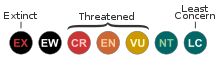
IUCN Red List of Threatened Plants Status : Juniperus monosperma is listed as Least Concern.
Growth: S = slow M = medium F = fast. Soil: L = light (sandy) M = medium H = heavy (clay). pH: A = acid N = neutral B = basic (alkaline). Shade: F = full shade S = semi-shade N = no shade. Moisture: D = dry M = Moist We = wet Wa = water.
Now available:
Food Forest Plants for Mediterranean Conditions
350+ Perennial Plants For Mediterranean and Drier Food Forests and Permaculture Gardens.
[Paperback and eBook]
This is the third in Plants For A Future's series of plant guides for food forests tailored to
specific climate zones. Following volumes on temperate and tropical ecosystems, this book focuses
on species suited to Mediterranean conditions—regions with hot, dry summers and cool, wet winters,
often facing the added challenge of climate change.
Read More
Expert comment
Author
(Engelm)Sarg.
Botanical References
1182200
Links / References
For a list of references used on this page please go here
Readers comment
| Add a comment |
|
If you have important information about this plant that may help other users please add a comment or link below. Only comments or links that are felt to be directly relevant to a plant will be included. If you think a comment/link or information contained on this page is inaccurate or misleading we would welcome your feedback at [email protected]. If you have questions about a plant please use the Forum on this website as we do not have the resources to answer questions ourselves.
* Please note: the comments by website users are not necessarily those held by PFAF and may give misleading or inaccurate information.
|
Subject : Juniperus_monosperma
|
|
|
|