 |
|
http://commons.wikimedia.org/wiki/User:KENPEI |
 |
| http://commons.wikimedia.org/wiki/User:KENPEI |
Translate this page:
Summary
Bloom Color: Pink, Purple, Red.
Main Bloom Time: Early summer, Mid summer. Form: Spreading or horizontal, Upright or erect, Variable spread.
Physical Characteristics

 Iris_ensata is a PERENNIAL growing to 0.6 m (2ft) by 1 m (3ft 3in) at a medium rate.
See above for USDA hardiness. It is hardy to UK zone 5 and is not frost tender. It is in flower from May to July. The species is hermaphrodite (has both male and female organs) and is pollinated by Insects. The plant is self-fertile.
Suitable for: light (sandy) and medium (loamy) soils. Suitable pH: mildly acid and neutral soils. It cannot grow in the shade. It prefers moist or wet soil.
UK Hardiness Map
US Hardiness Map
Synonyms
I. kaempferi. I. lactea.
Plant Habitats
Edible Uses
Root - the source of an edible starch[2, 105, 177]. Some caution is advised, see the notes above on toxicity.
References More on Edible Uses
Medicinal Uses
Plants For A Future can not take any responsibility for any adverse effects from the use of plants. Always seek advice from a professional before using a plant medicinally.
The root is alterative, anthelmintic, antidote, appetizer, depurative, diuretic, hepatic and vermifuge[61, 178, 218]. It is used with other herbs in the treatment of venereal affections, liver complaints and dropsy[240].
References More on Medicinal Uses
Other Uses
A fibre is obtained from the leaves, a substitute for hemp[42]. It is used for rope and coarse cloth[74]. Also used in thatching and basket making[123]. The root is long and fibrous, it is used for making brooms, brushes etc[178].
Special Uses
References More on Other Uses
Cultivation details
Landscape Uses:Border, Container, Massing, Specimen, Woodland garden. Prefers a light well-drained soil and a sunny position[42]. Prefers partial shade[188]. Likes plenty of moisture and a rich loamy slightly acid soil[79, 200]. Requires a lime-free soil[233]. Some cultivars, in particular the 'Higo' strain, tolerate a pH up to 7.4[200]. Plants can be grown in containers in pond margins but are then best kept in drier conditions over winter[200]. This species is hardy to about -20°c[187]. Cultivated for its root in Japan[2]. (for the starch). There are many named varieties, selected for their ornamental value[187, 200]. Members of this genus are rarely if ever troubled by browsing deer or rabbits[233]. Special Features:
Attractive foliage, North American native, All or parts of this plant are poisonous, Wetlands plant, Suitable for cut flowers.
References Carbon Farming Information and Carbon Sequestration Information
Temperature Converter
Type a value in the Celsius field to convert the value to Fahrenheit:
Fahrenheit:
Plant Propagation
Seed - best sown as soon as it is ripe in a cold frame. Stored seed should be sown as early in the year as possible in a cold frame. Prick out the seedlings into individual pots when they are large enough to handle and grow them on in the greenhouse or cold frame for their first year. Plant out into their permanent positions in late spring or early summer. Division in March or October. Very easy, larger clumps can be replanted direct into their permanent positions, though it is best to pot up smaller clumps and grow them on in a cold frame until they are rooting well. Plant them out in the spring.
Other Names
If available other names are mentioned here
Native Range
TEMPERATE ASIA: Russian Federation (Buryatia, Gorno-Altay, Tyva, Respublika, Chita, Aga Buryat, Irkutsk, Novosibirsk, Omsk), Kazakhstan, Russian Federation (Primorye, Amur, Sakhalin), China (Heilongjiang Sheng (north), Jilin Sheng, Liaoning Sheng, Shandong Sheng, Zhejiang Sheng), Korea, Japan (Hokkaidô, Honshu, Kyushu)
Weed Potential
Right plant wrong place. We are currently updating this section.
Please note that a plant may be invasive in one area but may not
in your area so it's worth checking.
Conservation Status
IUCN Red List of Threatened Plants Status :
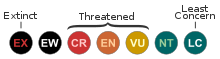
IUCN Red List
Growth: S = slow M = medium F = fast. Soil: L = light (sandy) M = medium H = heavy (clay). pH: A = acid N = neutral B = basic (alkaline). Shade: F = full shade S = semi-shade N = no shade. Moisture: D = dry M = Moist We = wet Wa = water.
Support Plants For A Future
Plants For A Future relies on regular donations to keep our free database and search facilities going, to pay for ongoing research, improvements and enhancements, and to develop and publish new books.
Read more
Choose Currency
Donate in £ GBP
Donate in $ USD
Donate in € EUR
Securely pay via PayPal or Credit/Debit Card without an account.
Expert comment
Author
Thunb.
Botanical References
74200
Links / References
For a list of references used on this page please go here
Readers comment
| Add a comment |
|
If you have important information about this plant that may help other users please add a comment or link below. Only comments or links that are felt to be directly relevant to a plant will be included. If you think a comment/link or information contained on this page is inaccurate or misleading we would welcome your feedback at [email protected]. If you have questions about a plant please use the Forum on this website as we do not have the resources to answer questions ourselves.
* Please note: the comments by website users are not necessarily those held by PFAF and may give misleading or inaccurate information.
|
|