Translate this page:
Summary
American hop is a native North American relative of the European hop cultivated for brewing. It is a rapidly growing perennial bine of riverbanks, floodplains, woodland margins, thickets, fence lines, and other sunny or partly shaded habitats with dependable soil moisture. Each spring, numerous shoots arise from a persistent underground crown and rhizome system. The rough, backward-pointing hairs on the stems help the plant cling to shrubs, small trees and other support. By midsummer, a mature plant may form a dense curtain of palmately lobed leaves several meters above the ground. Hops are dioecious, meaning male and female flowers normally occur on separate plants. Female plants produce the familiar papery, cone-like structures known as hop cones or strobiles. The overlapping bracts contain yellow resin glands rich in bitter and aromatic compounds collectively associated with lupulin. The most dependable edible part is the very young spring shoot. Shoots approximately 6–10 centimeters long can be gathered before they become stringy and cooked as a seasonal vegetable. They are cultivated and sold as a delicacy in parts of Europe, where they may be known as hop shoots or, in French, “jets de houblon.” The rhizomes are occasionally reported as edible, but documentation is limited, and they are fibrous, bitter and biologically important to the plant’s survival. They should not be presented as a dependable food. Hop cones are primarily flavorings rather than foods. They have been used to flavor bread, fermented maize drinks and other preparations, but this does not mean that their seeds or papery bracts were used as flour. The cones are intensely bitter and resinous and are normally employed in small quantities. American hops’ greatest potential beyond wildlife and ornamental use may lie in plant breeding. Native North American hops have been used as genetic resources for disease resistance, climatic adaptation and distinctive brewing aromas.
Physical Characteristics

 Humulus is a PERENNIAL CLIMBER growing to 7 m (23ft) by 3 m (9ft) at a fast rate.
See above for USDA hardiness. It is hardy to UK zone 4. The flowers are pollinated by Wind.
It is noted for attracting wildlife.
Suitable for: light (sandy), medium (loamy) and heavy (clay) soils and prefers well-drained soil. Suitable pH: mildly acid, neutral and basic (mildly alkaline) soils. It can grow in semi-shade (light woodland) or no shade. It prefers moist soil.
UK Hardiness Map
US Hardiness Map
Synonyms
Humulus lupulus var. lupuloides E.Small is a synonym of Humulus americanus. Humulus lupulus subsp. americanus (Nutt.) Á.Löve & D.Löve.
Plant Habitats
Edible Uses
The young shoots are the clearest and most useful edible part of American hop. Shoots are best gathered shortly after emerging from the ground, when they are approximately 6–10 centimeters long and before their tissues become tough. At this stage they can be eaten raw in small quantities, although cooking produces a more tender and dependable vegetable. The flavor is aromatic, green and mildly bitter. It has been compared with asparagus, young nettles or leafy brassicas, but hop shoots possess their own resinous character. The texture may be slightly dry or gritty if the shoots are gathered too late. Older shoots rapidly become fibrous and are unsuitable as vegetables. Once the stems begin active climbing and the leaves expand, the window for eating them has largely passed. The rhizomes have been listed as edible in some references, but reliable descriptions of their preparation are rare. They are likely to be tough, bitter and resinous. Removing them also damages or kills part of the perennial crown. Their use should therefore be regarded as uncertain and generally inadvisable. Female hop cones are useful as flavoring agents. They may be boiled in water, incorporated into fermentation starters or added in very small amounts to bread, drinks and other foods. Their intense bitterness limits the quantity that can be used. The seeds inside mature cones have sometimes been interpreted as an edible grain, but the available ethnobotanical evidence does not establish them as a significant source of flour. Mature cones contain relatively few small achenes, and both the seeds and surrounding bracts are coated with bitter aromatic resins. Edible Uses & Rating: American hop merits an overall edibility rating of 3/5, based principally on the excellent young shoots. The shoots can be abundant around established crowns, are available early in the season and require relatively little preparation. Their mild bitterness and distinctive flavor make them more suitable as a specialty vegetable than as a staple. The rating is reduced because the harvesting period is brief and older growth becomes tough almost immediately. The hop cones are useful primarily in small quantities as flavorings and preservatives rather than as substantial food. The rhizomes and seeds should not materially increase the rating. Evidence for rhizome consumption is weak, while the seed account may reflect confusion between eating the seed itself and using whole hop cones to flavor bread or fermentation mixtures. A sensible PFAF description is therefore that American hop is a useful spring vegetable and important flavoring plant, but not a significant source of roots, flour or bulk calories. Taste, Processing & Kitchen Notes: Very young hop shoots have a fresh green flavor with noticeable but usually agreeable bitterness. They can resemble asparagus tips, young brassica shoots or slightly resinous green beans. The most tender upper portions may be eaten raw in small amounts, but blanching, steaming or brief boiling gives a softer texture and reduces excessive bitterness. To prepare the shoots, rinse them carefully and remove any gritty or damaged lower portions. Simmer or steam until tender, then serve with butter, olive oil, lemon, salt or a mild sauce. Their distinctive flavor can be overwhelmed by strong spices. Hop shoots may also be added to omelets, risottos, soups, pasta dishes or mixed spring vegetables. They should be added late in cooking to preserve their tender texture. Shoots longer than approximately 10–15 centimeters should be tested for fibers before being gathered in quantity. If they resist snapping cleanly or have begun to twine, they are usually too old. Hop cones are overwhelmingly bitter when chewed. Their yellow resin glands produce aromatic, spicy, herbal and sometimes citrus-like impressions, but these pleasant qualities are accompanied by intense bitterness. In culinary use, cones should be treated like a strong herb or spice. A small quantity can flavor a large batch of liquid or dough. Excessive hops can make food almost impossible to eat. The supplied notes correctly clarify that historic hop bread was not necessarily made from hop-seed flour. Hops were more commonly used to prepare a bitter decoction that helped culture yeast, added flavor and limited spoilage. If mature cones are being investigated for seed, they must first be dried until the bracts become papery. Rubbing and winnowing may separate the heavier achenes from the lighter bracts. Raw seeds and attached resin taste strongly acrid. Toasting can improve the flavor, but low heat is essential because the resinous material scorches easily. Boiling is more effective at reducing bitterness. The field method described in the supplied information—light toasting, followed by boiling and discarding the cooking water—may leave a pleasantly starchy seed with residual resinous flavor. Nevertheless, the seeds should be considered experimental rather than established food. A small satisfactory taste does not confirm safety in meal-sized quantities. Seasonality (Phenology). American hop is dormant through winter. New shoots emerge in spring after soil temperatures rise. In warmer parts of its range, this may occur in March or April, while northern populations may not begin active growth until May. The edible-shoot season is short. Shoots are best gathered when approximately 6–10 centimeters long and before rapid elongation begins. Once established, the bines can grow very quickly, sometimes extending many centimeters in a day under warm, moist conditions. By early summer they may reach the tops of shrubs, trees, fences or trellises. Male and female flowers generally develop in midsummer. Male flowers occur in loose branching clusters, while female flowers appear in shorter compact clusters that enlarge into cones after pollination. Hop cones mature from late summer into autumn. Cones intended for flavoring are usually harvested before they become fully dry, when they remain greenish, springy, and strongly aromatic. Seeds require pollinated female plants and are collected later, when the cones have turned brown, papery and dry. In cultivation, many commercial hop fields are kept free of male plants because brewers often prefer seedless cones. The above-ground bines die after frost. The perennial crown and rhizomes remain alive beneath the soil and produce new shoots the following spring. Safety & Cautions (Food Use): Hop shoots and cones contain biologically active bitter and aromatic compounds. Culinary quantities are generally regarded as acceptable, but concentrated or excessive use can cause unwanted effects. Hops have sedative properties and may increase drowsiness when combined with alcohol, sedative medicines or other calming herbs. People who are pregnant, breastfeeding, taking sedative medication or being treated for hormone-sensitive conditions should seek appropriate professional guidance before consuming concentrated hop preparations. Handling fresh hop plants can cause dermatitis in susceptible individuals. The rough stems and leaves may irritate the skin mechanically, while hop pollen, resins and plant hairs can trigger allergic reactions. Long sleeves and gloves are useful when harvesting shoots or cones from dense growth. Dogs can develop a dangerous and potentially fatal reaction after ingesting spent or fresh hops. Hop material should never be left where dogs can eat it, including brewing waste, compost piles, or kitchen scraps. The strongly bitter flavor of cones provides a natural warning against eating them in bulk. Bitter taste should not be disguised with sugar or other ingredients to encourage meal-sized consumption. The rhizomes should not be eaten simply because a few references list them as edible. Species-specific preparation and safety information are inadequate. Hop seeds should also be treated cautiously. Their use as an ingredient in bread has not been clearly distinguished from the use of whole cones as flavoring or fermentation aids. Always distinguish hop from unrelated climbing plants before gathering young shoots. Identification is easiest when the mature leaves and female cones have previously been observed at the site. Harvest & Processing Workflow: Identify an established hop colony during the previous summer or autumn, when its lobed leaves and cone-like female strobiles are unmistakable. Return in spring and look for new shoots emerging directly from the known rhizome crown. Choose shoots approximately 6–10 centimeters long. They should be tender, upright and not yet actively twining. Harvest only a minority of the shoots from each crown. The remaining growth is needed to replenish the rhizomes and produce flowers. Cut the selected shoots just above soil level with clean scissors or a knife. Avoid pulling, which may tear the underground crown. Rinse the shoots in clean water and inspect them for insects, grit and damaged tissue. Cook promptly, as the tender shoots deteriorate and toughen after harvest. Refrigeration may preserve them briefly, but they are best used fresh. Female cones intended for tea, brewing or flavoring should be collected when aromatic, green to yellow-green and slightly papery. They should spring back when gently compressed. Dry cones in a single layer with good air circulation and away from direct sunlight. Store only after they are fully dry. Seeds are obtained from fully mature brown cones produced on pollinated female plants. Rub the dry cones over a tray, screen away coarse material, and winnow cautiously. Because seed use is poorly documented, prepare only a small experimental quantity and do not treat it as a meal food. Cultivar / Selection Notes: American hop is principally encountered as a wild native plant rather than as named horticultural or brewing cultivars. Native American hop populations are genetically diverse and vary in cone chemistry, aroma, flowering time, disease resistance, and leaf shape and adaptation to local climates. The taxon has contributed useful genetic material to hop-breeding programmes. Native North American germplasm may offer resistance to particular diseases and tolerance of continental winters, humid summers or other regional conditions. Plants sold under named commercial hop cultivars are usually selections of European-derived Humulus lupulus var. lupulus or hybrids involving several lineages. They should not automatically be labelled American hop simply because they are grown in North America. For young-shoot production, desirable traits would include numerous thick spring shoots, mild bitterness, delayed fibre development and limited lateral spread. For brewing, female plants with abundant aromatic cones and favourable resin composition would be preferred. Male plants are necessary for seed production but are usually excluded from commercial cone yards. Locally sourced plants are appropriate for native restoration. Introducing commercial hop cultivars near wild populations may risk genetic mixing and should be considered carefully. Look-Alikes & Confusion Risks: Mature hops are highly distinctive, but their young spring shoots can be confused with other climbing or scrambling plants. Hop leaves are opposite, rough-haired and palmately three- to seven-lobed. Their margins are sharply toothed. The stems are rough and twine around supports. They do not produce tendrils. Wild grape species have alternate leaves and climb using branched tendrils. Their young shoots may appear near the same riverbank habitats but differ in leaf arrangement and climbing mechanism. Moonseeds, Menispermum species, have alternate leaves and produce dark berry-like fruits rather than papery cones. Their fruits should not be eaten. Virginia creeper has palmately compound leaves consisting of separate leaflets and climbs with adhesive tendrils. Poison ivy can climb but normally has three separate leaflets rather than a single lobed blade. Stinging nettles share opposite serrated leaves and belong to the same broad order, but they are upright plants with stinging hairs rather than twining bines. Japanese hop, Humulus scandens, is an annual introduced species with deeply divided leaves and more aggressive weedy behaviour in parts of North America. Its female inflorescences differ from the large compact cones of common and American hop. American hop can be difficult to distinguish from escaped European hop where their ranges overlap. Variety-level identification may require examination of leaves, stems, cone structures and geographical origin. Traditional / Indigenous Use Summary: North American Indigenous peoples used native hops primarily as flavourings, medicines and fermentation aids rather than as sources of flour. Records from Apache communities are especially relevant to the western variety, but they clarify a broader misunderstanding about hop food use. Hop cones were boiled and used to flavour foods and fermented drinks. They were combined with mesquite flour, screwbean flour, wheat flour and wild potatoes and were added to tulbai, a fermented maize beverage. The expression translated as “to make bread with it” does not necessarily mean the seeds were ground into bread flour. Whole cones or hop decoctions could be incorporated to flavour dough, support yeast culture and reduce spoilage. European and North American bread-making traditions also used “hop yeast,” prepared by culturing microorganisms in a bitter hop infusion. The antimicrobial properties of hop resins helped restrain some unwanted organisms while the yeast multiplied. Native American hop may have been used medicinally for pain, sleep, digestive complaints and other conditions, although practices varied among communities. The spring-shoot vegetable tradition is much better documented in Europe than in Indigenous North America. This difference may reflect cultural preference, incomplete records or the greater prominence of hops as a specialty crop in European hop-growing regions.
References More on Edible Uses
Medicinal Uses
Plants For A Future can not take any responsibility for any adverse effects from the use of plants. Always seek advice from a professional before using a plant medicinally.
Humulus americanus (often treated as a regional or taxonomic variant of the common hop, Humulus lupulus) shares the same chemical properties and traditional medical uses. Hops have a long and proven history of herbal use, where they are employed mainly for their soothing, sedative, tonic, and calming effect on the body and the mind. Their strongly bitter flavor largely accounts for their ability to strengthen and stimulate the digestion, increasing gastric and other secretions[254]. The female fruiting body is anodyne, antiseptic, antispasmodic, diuretic, febrifuge, hypnotic, nervine, sedative, stomachic and tonic[4, 9, 21, 46, 165, 192, 218]. Hops are widely used as a folk remedy to treat a wide range of complaints, including boils, bruises, calculus, cancer, cramps, cough, cystitis, debility, delirium, diarrhea, dyspepsia, fever, fits, hysteria, inflammation, insomnia, jaundice, nerves, neuralgia, rheumatism, and worms[269]. The hairs on the fruits contain lupulin, a sedative and hypnotic drug[213, 218]. When given to nursing mothers, lupulin increases the flow of milk - recent research has shown that it contains a related hormone that could account for this effect[7]. The decoction from the flower is said to remedy swellings and hardness of the uterus[269]. Hop flowers are much used as an infusion or can also be used to stuff pillows where the weight of the head will release the volatile oils[213]. The fruit is also applied externally as a poultice to ulcers, boils, painful swellings, etc[4, 218]; it is said to remedy painful tumors [269]. The female flowering heads are harvested in the autumn and can be used fresh or dried[238]. Alcoholic extracts of hops in various dosage forms have been used clinically in treating numerous forms of leprosy, pulmonary tuberculosis, and acute bacterial dysentery, with varying degrees of success in China. The female fruiting body contains humulone and lupulone; these are highly bacteriostatic against gram-positive and acid-fast bacteria[240]. A cataplasm of the leaf is said to remedy cold tumors [269]. The German Commission E Monographs, a therapeutic guide to herbal medicine, approve Humulus lupulus for nervousness and insomnia (see [302] for critics of Commission E).
References More on Medicinal Uses
The Bookshop: Edible Plant Books
Our Latest books on Perennial Plants For Food Forests and Permaculture Gardens in paperback or digital formats.
Edible Tropical Plants
Food Forest Plants for Hotter Conditions: 250+ Plants For Tropical Food Forests & Permaculture Gardens.
More
Edible Temperate Plants
Plants for Your Food Forest: 500 Plants for Temperate Food Forests & Permaculture Gardens.
More
More Books
PFAF have eight books available in paperback and digital formats. Browse the shop for more information.
Shop Now
Other Uses
Humulus americanus shares many of the same uses as Humulus lupulus. A fine brown dye is obtained from the leaves and flower heads[4, 100, 269]. An essential oil from the female fruiting heads is used in perfumery[213, 238]. Average yields are 0.4 - 0.5%[240]. Extracts of the plant are used in Europe in skin creams and lotions for their alleged skin-softening properties[269]. A fiber is obtained from the stems[46]. Similar to hemp (Cannabis sativa)[100] but not as strong[115], it is used to make a coarse kind of cloth[4]. It is sometimes used for filler material in corrugated paper or board products, but is unsuited for corrugated paper because of low pulp yield and high chemical requirements, or for production of high-grade pulp for specialty paper[269]. The fiber is very durable, but it is difficult to separate; the stems need to be soaked beforehand for a whole winter[4]. A paper can also be made from the fiber; the stems are harvested in the autumn, the leaves removed, and the stems steamed until the fibers can be removed. The fiber is cooked for 2 hours with lye, and then hand pounded with mallets or ball milled for 2½ hours. The paper is brown in color [189]. Ecology & Wildlife: American hop contributes dense seasonal cover to riparian thickets and woodland edges. Its bines climb existing vegetation rather than supporting themselves, allowing rapid occupation of sunny canopy gaps without producing woody trunks. The leaves support herbivorous insects, which in turn provide food for birds and predatory arthropods. Dense foliage offers shelter and nesting cover for small birds and other animals, although excessive growth can reduce light reaching smaller plants beneath it. Seeds may be eaten by birds and rodents. The papery cones and dried stems may also be used in nesting material. The rhizome system helps bind moist alluvial soil, although the plant should not be relied upon as the sole means of erosion control. American hop’s genetic diversity is ecologically and agriculturally important. Native populations contain adaptations to regional climates, diseases and growing conditions that may assist future hop breeding. For PFAF users, American hop is best understood as a multifunctional native climber: a valuable spring vegetable, powerful flavoring plant, source of breeding material and vigorous component of moist North American landscapes.
Special Uses
References More on Other Uses
Cultivation details
American hop is a vigorous native perennial climber with useful young shoots, valuable aromatic cones, and a complicated food history. The young shoots are the most dependable food. Gathered at 6–10 centimeters long, they can be cooked as an excellent spring vegetable with mild bitterness and a flavor sometimes compared with asparagus. The cones are important flavorings rather than bulk foods. Their value lies in bitterness, aroma and preservative activity, particularly in fermented beverages and yeast cultures. The seeds may become palatable after toasting and boiling, but their edibility as a substantial food remains unconfirmed. Historical references to hops in bread generally describe flavoring or fermentation rather than hop-seed flour. The rhizomes are occasionally reported as edible but are insufficiently documented, tough, and important to the plant’s survival. Consumption is not recommended. An edibility rating of 3/5 appropriately recognizes the excellent shoots while accounting for the limited food value and strong chemistry of the other parts. Beyond food use, American hop supplies wildlife cover, genetic resources for crop breeding and a rapid seasonal screen for gardens and restoration sites. Growing Conditions: American hop grows best in fertile, moisture-retentive but well-drained soil. It prefers full sun for abundant flowering and cone production, although it tolerates partial shade, particularly in woodland margins and river corridors. The perennial crown benefits from deep loam rich in organic matter. Sandy soils require reliable moisture, while heavy clay should be improved sufficiently to prevent prolonged waterlogging. Soil should remain moist during spring and early summer when the bines are elongating rapidly. Drought at this stage reduces growth and cone development. Established rhizomes tolerate winter cold extremely well. The above-ground stems die naturally after frost and do not require winter protection within the plant’s normal range. Strong vertical support is essential in cultivation. Trellises, wires, pergolas, fences, or sturdy poles can carry the rapidly climbing stems. The plant is unsuitable for weak shrubs or young trees that may be overwhelmed by its weight. Habitat & Range: American hop is native to eastern and central North America. It occurs along riverbanks, floodplains, moist thickets, woodland edges, fence rows, and disturbed sites where its roots can access dependable moisture and its stems can reach sunlight. Its exact distribution depends partly on the taxonomic interpretation used. Under treatments recognizing Humulus americanus, it represents a native North American species distinct from the primarily Eurasian Humulus lupulus. Plants of the World Online currently follows this approach. The plant frequently climbs over willows, dogwoods, shrubs and low trees in riparian vegetation. It is most vigorous in open or partly open habitat. Deep forest shade limits flowering even where vegetative stems persist. Flooding may move rhizome fragments or seeds and create disturbed banks suitable for establishment. Size & Landscape Performance: The perennial crown remains at ground level, but annual bines commonly climb 3–7 meters and may extend farther through neighboring vegetation. The plant can create a seasonal spread several meters wide when multiple shoots climb in different directions. Growth is very rapid once spring temperatures rise. A well-established crown can cover a fence, trellis or pergola during a single season. The foliage provides dense summer screening. Leaves are coarse-textured, dark to medium green and visually similar to grape or maple foliage. Male plants produce loose panicles of small green flowers. Female plants develop more ornamental pale green hop cones. The bines die completely after frost, leaving the support open through winter. This is useful where summer shade and winter sunlight are desired. Dry stems can become tangled and untidy and are usually cut to the ground after dormancy. Cultivation (Horticulture): Plant dormant rhizome sections or container-grown crowns in spring after the soil becomes workable. Position plants near strong supports and allow sufficient space between crowns. Vigorous plants can compete strongly with neighboring perennials. Water consistently during establishment. Deep watering is preferable to frequent shallow irrigation because it encourages a more extensive root system. Apply compost or moderate organic fertilizer in spring. Excess nitrogen encourages luxuriant leaves at the expense of cones and may increase disease. When multiple shoots emerge, growers commonly retain several of the strongest and remove weaker ones. This improves air circulation and directs energy into productive bines. Guide the selected bines around strings or wires in their natural twining direction. The shoots harvested as vegetables can be taken during this thinning process, allowing food use without sacrificing all seasonal growth. Cut the dead stems close to ground level in late autumn or winter. Remove diseased material rather than composting it. Rhizome barriers or regular division may be needed in small gardens because established plants can spread beyond their allotted space. Pests & Problems: Hops can be affected by downy mildew, powdery mildew, Verticillium wilt, root rots and viral diseases. Downy mildew may cause distorted shoots, dark lesions and damaged cones. Powdery mildew produces white fungal growth on leaves and cones. Good air circulation, sunlight, sanitation and avoidance of overhead watering reduce disease pressure. Aphids and spider mites are common pests. Aphids feed on shoots and cones, while spider mites become especially troublesome in hot dry conditions. Japanese beetles, caterpillars and other leaf-feeding insects may damage foliage. Dense hop growth can smother smaller shrubs and climb into trees, making management difficult. The rough stems may scratch skin, while broken dry bines can remain surprisingly strong and tangled. Hops are toxic to dogs and brewing residues should be secured carefully. Identification & Habit: American hop is a perennial herbaceous bine arising from rhizomes. The annual stems are green, flexible, angular or rigid and covered with coarse downward-pointing hairs that help the plant climb. Leaves are opposite and long-stalked. The blades are usually palmately three- to seven-lobed, although upper leaves may be less divided. Margins are sharply serrated, and surfaces are rough-haired and dotted with aromatic glands. Male and female flowers normally occur on separate plants. Male flowers form loose axillary panicles. Each small flower has five greenish sepals and five stamens but no petals. Female flowers occur in compact paired arrangements associated with expanding bracts. The styles extend as two hair-like stigmas. After pollination, the bracts enlarge to form papery, overlapping cones or strobiles. Yellow resin glands occur near the bases of the bracts and around the developing achenes. Crushing a mature cone releases the distinctive hop aroma. The fruits are small dry achenes, much smaller than the surrounding bracts. Pollinators: American hop is primarily wind-pollinated. The small green flowers lack showy petals and do not offer nectar rewards comparable with insect-pollinated plants. Male plants release abundant pollen into the air. Female stigmas intercept airborne pollen, allowing seed development. Some insects may visit or shelter among the flowers and foliage, but they are not required for effective pollination. The leaves provide food or shelter for a range of insects, including specialist moth and butterfly larvae in parts of the plant’s range. Dense growth also provides cover for spiders, predatory insects and insect-eating birds. Because hop pollen can contribute to seasonal allergies, male plants may be undesirable immediately beside frequently used outdoor living spaces. American hop, Humulus lupulus var. lupuloides E. Small, belongs to the hemp family (Cannabaceae) and the hop genus, Humulus. Common names include American hop, eastern hop, native hop, wild hop and eastern North American hop. The older name Humulus americanus Nutt. has also been widely used. Current authorities do not all follow the same classification. Plants of the World Online treats Humulus lupulus var. lupuloides as a synonym of the distinct species Humulus americanus. Other North American botanical sources continue to include American hop within the broad and highly variable species Humulus lupulus. For consistency with the supplied PFAF material, this profile uses Humulus lupulus var. lupuloides, while acknowledging that Humulus americanus may now be the preferred name in some taxonomic systems. American hop is a vigorous herbaceous perennial climber generally suited to approximately USDA Hardiness Zones 3–8. Its underground rhizomes survive winter while the above-ground bines die back each year. New shoots commonly climb 3–7 meters in a single growing season and may occasionally travel farther when suitable support is available. An established crown can spread approximately 1–3 meters through short to moderately spreading rhizomes, although unrestrained plants may gradually occupy a much broader area. The climbing stems of hops are botanically described as bines rather than true vines. They ascend by wrapping the entire flexible stem around neighbouring vegetation or artificial supports, usually in a clockwise direction when viewed from above.
References Carbon Farming Information and Carbon Sequestration Information
Temperature Converter
Type a value in the Celsius field to convert the value to Fahrenheit:
Fahrenheit:
The PFAF Bookshop
Plants For A Future have a number of books available in paperback and digital form. Book titles include Edible Plants, Edible Perennials, Edible Trees,Edible Shrubs, Woodland Gardening, and Temperate Food Forest Plants. Our new book is Food Forest Plants For Hotter Conditions (Tropical and Sub-Tropical).
Shop Now
Plant Propagation
American hop can be propagated by seed, rhizome division, crown division and stem cuttings. Vegetative propagation is most common because it preserves the sex and characteristics of the parent plant. Dig rhizome sections during dormancy or early spring. Each section should contain healthy roots and at least one or two viable buds. Plant the rhizome horizontally a few centimetres below the soil surface and keep it evenly moist until shoots emerge. Established crowns can also be divided while dormant. Softwood cuttings may root under humid conditions, although rhizome propagation is generally easier. Seed propagation produces genetic variation and both male and female plants. Seed may benefit from cold, moist stratification before sowing. Seedlings can take several years to reveal their sex and cone characteristics. For brewing or cone production, vegetatively propagated known female plants are preferred. Seed propagation is valuable for breeding, restoration and genetic diversity.
Other Names
If available other names are mentioned here
Humulus lupulus var. lupuloides E.Small is a synonym of Humulus americanus. American hop, eastern hop, native hop, wild hop, and eastern North American hop.
Native Range
US. USA. Alberta, Connecticut, Delaware, Illinois, Indiana, Iowa, Kansas, Kentucky, Maine, Manitoba, Maryland, Massachusetts, Michigan, Minnesota, Montana, Nebraska, New Brunswick, New Hampshire, New Jersey, New York, Newfoundland, North Dakota, Nova Scotia, Ohio, Ontario, Pennsylvania, Prince Edward I., Québec, Rhode I., Saskatchewan, South Dakota, Vermont, Virginia, West Virginia, Wisconsin [2-5].
Weed Potential
Right plant wrong place. We are currently updating this section.
Please note that a plant may be invasive in one area but may not
in your area so it's worth checking.
American hop has moderate weed potential in moist, fertile sites. It spreads through rhizomes and produces vigorous annual bines capable of covering shrubs, fences and small trees. The plant is not normally an aggressive landscape invader across intact dry uplands, but it can become dominant along disturbed riverbanks, fence lines and neglected garden margins. Seed production requires nearby male and female plants. Vegetative spread can occur even where only one sex is present. Rhizome fragments moved in soil may establish new colonies. Unwanted plants are difficult to eliminate once large crowns develop. Repeated removal of shoots gradually weakens the rhizomes but may take several seasons. Root barriers and annual inspection help contain cultivated plants. Within its native range, naturally occurring populations should not be treated as invasive merely because the bines grow vigorously.
Conservation Status
IUCN Red List of Threatened Plants Status : Not listed.
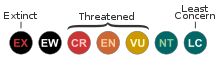
IUCN Red List
Growth: S = slow M = medium F = fast. Soil: L = light (sandy) M = medium H = heavy (clay). pH: A = acid N = neutral B = basic (alkaline). Shade: F = full shade S = semi-shade N = no shade. Moisture: D = dry M = Moist We = wet Wa = water.
Now available:
Food Forest Plants for Mediterranean Conditions
350+ Perennial Plants For Mediterranean and Drier Food Forests and Permaculture Gardens.
[Paperback and eBook]
This is the third in Plants For A Future's series of plant guides for food forests tailored to
specific climate zones. Following volumes on temperate and tropical ecosystems, this book focuses
on species suited to Mediterranean conditions—regions with hot, dry summers and cool, wet winters,
often facing the added challenge of climate change.
Read More
Expert comment
Author
Nutt.
Botanical References
Links / References
For a list of references used on this page please go here
Readers comment
| Add a comment |
|
If you have important information about this plant that may help other users please add a comment or link below. Only comments or links that are felt to be directly relevant to a plant will be included. If you think a comment/link or information contained on this page is inaccurate or misleading we would welcome your feedback at [email protected]. If you have questions about a plant please use the Forum on this website as we do not have the resources to answer questions ourselves.
* Please note: the comments by website users are not necessarily those held by PFAF and may give misleading or inaccurate information.
|
|