 |
|
http://www.edibleplants.org |
 |
| Ama la Vida Flickr |
Translate this page:
Summary
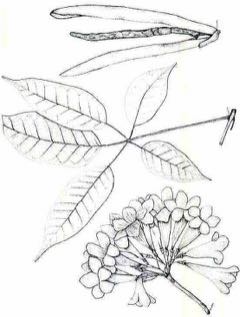
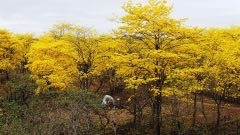
Handroanthus guayacan is a deciduous tree with a narrow or crowded crown that can be found in northern South America. It grows about 60 m in height with trunk diameter of up to 60 cm. It has low but prominent buttresses. It is a source of high quality timber and it is also planted as an ornamental due to its attractive yellow inflorescence. Not only is the wood hard, durable, and dense, it is also resistant to insect attack. It finishes smoothly and is considered excellent for construction uses. It is used for tool handles, boats, etc. Plant propagation is through seeds, cuttings of half ripe wood, and air layering.
Physical Characteristics

 Handroanthus guayacan is a deciduous Tree growing to 40 m (131ft) by 25 m (82ft) at a medium rate.
See above for USDA hardiness. It is hardy to UK zone 10.
Suitable for: light (sandy), medium (loamy) and heavy (clay) soils and prefers well-drained soil. Suitable pH: mildly acid, neutral and basic (mildly alkaline) soils and can grow in saline soils.
It cannot grow in the shade. It prefers moist soil. The plant can tolerate maritime exposure.
UK Hardiness Map
US Hardiness Map
Synonyms
Tabebuia guayacan (Seem.) Hemsl. Tecoma guayacan Seem.
Plant Habitats
Edible Uses
References More on Edible Uses
Medicinal Uses
Plants For A Future can not take any responsibility for any adverse effects from the use of plants. Always seek advice from a professional before using a plant medicinally.
None known
References More on Medicinal Uses
The Bookshop: Edible Plant Books
Our Latest books on Perennial Plants For Food Forests and Permaculture Gardens in paperback or digital formats.
Edible Tropical Plants
Food Forest Plants for Hotter Conditions: 250+ Plants For Tropical Food Forests & Permaculture Gardens.
More
Edible Temperate Plants
Plants for Your Food Forest: 500 Plants for Temperate Food Forests & Permaculture Gardens.
More
More Books
PFAF have eight books available in paperback and digital formats. Browse the shop for more information.
Shop Now
Other Uses
Wood
Other Uses: The heartwood is olive-brown to reddish-brown, often with lighter or darker fine striping, sometimes tinged with red; rather sharply demarcated from the creamy-white or yellowish sapwood which is 50 - 75mm wide[341 ]. The appearance is frequently oily; yellow-green deposits of lapachol are abundant; the lustre is low to medium; the grain typically interlocked producing a fine, stripe figure on quarter-sawn surfaces; the texture is fine to medium, moderately uniform[341 ]. The wood is hard, dense, durable, resistant to insect attack, resilient and highly resistant to shock[46 , 341 ]. It is reported to be rather difficult to work and inclined to splinter, but it finishes very smoothly, turns well and polishes nicely. It is difficult to glue and pre-boring is necessary before nailing[341 ]. The wood is highly esteemed where available, and is considered excellent for construction purposes, especially where durability is important[331 ]. It is also used for boats, tool handles etc[46 ]. The Cathedral of Panama Vieja contained beams of this wood, and these were reported to be perfectly sound after having been exposed to the weather since the destruction of the city some 250 years previously[331 ].
Special Uses
References More on Other Uses
Cultivation details
A plant of mainly moist areas in the lowland tropics, though it can also be found at elevations up to 1,200 metres[331 ]. Plants are tolerant of salt-laden winds[200 ]. This species is closely related to Handroanthus chrysanthus[331 ].
References Carbon Farming Information and Carbon Sequestration Information
Temperature Converter
Type a value in the Celsius field to convert the value to Fahrenheit:
Fahrenheit:
The PFAF Bookshop
Plants For A Future have a number of books available in paperback and digital form. Book titles include Edible Plants, Edible Perennials, Edible Trees,Edible Shrubs, Woodland Gardening, and Temperate Food Forest Plants. Our new book is Food Forest Plants For Hotter Conditions (Tropical and Sub-Tropical).
Shop Now
Plant Propagation
Seed - best sown as soon as it is ripe[200 ]. Cuttings of half-ripe wood[200 ]. Air layering[200 ].
Other Names
If available other names are mentioned here
Guayacán
Native Range
NORTHERN AMERICA: Mexico (Campeche, Chiapas, Oaxaca, Quintana Roo, Tabasco, Veracruz de Ignacio de la Llave) SOUTHERN AMERICA: Belize, Costa Rica, Guatemala, Honduras, Nicaragua, Panama, Venezuela (west), Colombia (east), Peru (northeast)
Weed Potential
Right plant wrong place. We are currently updating this section.
Please note that a plant may be invasive in one area but may not in your area so it's worth checking.
Conservation Status
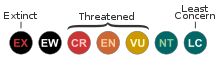
IUCN Red List of Threatened Plants Status : This taxon has not yet been assessed
Growth: S = slow M = medium F = fast. Soil: L = light (sandy) M = medium H = heavy (clay). pH: A = acid N = neutral B = basic (alkaline). Shade: F = full shade S = semi-shade N = no shade. Moisture: D = dry M = Moist We = wet Wa = water.
Now available:
Food Forest Plants for Mediterranean Conditions
350+ Perennial Plants For Mediterranean and Drier Food Forests and Permaculture Gardens.
[Paperback and eBook]
This is the third in Plants For A Future's series of plant guides for food forests tailored to
specific climate zones. Following volumes on temperate and tropical ecosystems, this book focuses
on species suited to Mediterranean conditions—regions with hot, dry summers and cool, wet winters,
often facing the added challenge of climate change.
Read More
Expert comment
Author
(Seem.) S.Grose
Botanical References
1
Links / References
For a list of references used on this page please go here
A special thanks to Ken Fern for some of the information used on this page.
Readers comment
| Add a comment |
|
If you have important information about this plant that may help other users please add a comment or link below. Only comments or links that are felt to be directly relevant to a plant will be included. If you think a comment/link or information contained on this page is inaccurate or misleading we would welcome your feedback at [email protected]. If you have questions about a plant please use the Forum on this website as we do not have the resources to answer questions ourselves.
* Please note: the comments by website users are not necessarily those held by PFAF and may give misleading or inaccurate information.
|
Subject : Handroanthus guayacan
|
|
|
|