Translate this page:
Summary
Taxonomic Note: This genus was formerly classified in the family Asclepiadaceae. Modern classifications include it within the Apocynaceae.
Physical Characteristics

 Funtumia elastica is an evergreen Tree growing to 25 m (82ft) by 18 m (59ft) at a fast rate.
See above for USDA hardiness. It is hardy to UK zone 10.
Suitable for: light (sandy), medium (loamy) and heavy (clay) soils and prefers well-drained soil. Suitable pH: mildly acid, neutral and basic (mildly alkaline) soils. It cannot grow in the shade. It prefers moist soil.
UK Hardiness Map
US Hardiness Map
Synonyms
Kibatalia elastica (Preuss) Merr. Kixia elastica Preuss
Plant Habitats
Edible Uses
References More on Edible Uses
Medicinal Uses
Plants For A Future can not take any responsibility for any adverse effects from the use of plants. Always seek advice from a professional before using a plant medicinally.
The bark is very astringent, laxative and vermifuge. It is included in prescriptions for troubles associated with blennorrhoea and for painful menstruation. It is pounded up and taken in spirit to cure haemorrhoids[332 ]. The latex is applied to cracked sores of the feet, to cutaneous fungal infections and to sores[332 ]. A number of alkaloids is present in the leaves[332 ]. They are used for treating chest-affections and particularly for whooping-cough[332 ]. The young leaves are taken by mouth or in enemas for the treatment of diarrhoea, or are mixed with kaolin and administered by enema[332 ]. The young leaves, mixed with those of Phyllanthus muellerianus, are taken to improve male fertility[332 ]. An unidentified alkaloid is present in the seed [16]. There has been some commercial interest in the seeds as a substitute for Strophanthus seed as a source of strophanthin (which is used like digitalin to treat heart conditions)[332 ].
References More on Medicinal Uses
Other Uses
The bark contains a white latex which coagulates readily[332 ]. Very high quality, but low yielding compared to Hevea brasiliensis[332 ]. The seed-pod contains a fine white floss which is used for stuffing pillows and cushions[332 ]. In some regions of Africa it is preferred over the floss obtained from Bombax and Ceiba[332 ]. Spinning trials have indicated a suitability for commercial exploitation[332 ]. The seeds contain about 26% oil with a bitterness in the cake, making it unfit for edible purposes[332 ]. The wood is white and soft, and undifferentiated between sap and heart[332 ]. It is not durable[332 ]. It is used for carving spoons, bowls and other household utensils, and as a timber for beams and rafters in buildings[332 ]. At one time it was commonly used in Ghana for making Asante stools, and still occasionally is[332 ]. It has been found very suitable in match-manufacture for the inner and outer boxes and for match-splints, and is recommended for these purposes[332 ]. It burns well and is said to be superior to Gmelina arborea[332 ].
Special Uses
Carbon Farming
References More on Other Uses
Cultivation details
Regional Crop Management: Standard Industrial Crop: Fiber Industrial Crop: Hydrocarbon
A tree of the moist tropics. The plant is amenable to cultivation in forest plantations[332 ]. Though the quality of the rubber is comparably good with that of Hevea rubber, this species can in no way compete in yield and therefore economically except in time of dire necessity[332 ].
Carbon Farming
-
Regional Crop
These crops have been domesticated and cultivated regionally but have not been adopted elsewhere and are typically not traded globally, Examples in this broad category include perennial cottons and many nuts and staple fruits.
-
Management: Standard
Plants grow to their standard height. Harvest fruit, seeds, or other products. Non-Destructive management systems.
-
Industrial Crop: Fiber
Clothing, rugs, sheets, blankets etc. Currently, almost none of our fiber are produced from perennial crops but could be!
-
Industrial Crop: Hydrocarbon
Materials, chemicals and energy include bioplastics, rubber, biomass products gasoline, jet fuel, diesel, butane, propane, biogas. Plants are usually resprouting plants and saps.
References Carbon Farming Information and Carbon Sequestration Information
Temperature Converter
Type a value in the Celsius field to convert the value to Fahrenheit:
Fahrenheit:
Plant Propagation
Seed
Other Names
If available other names are mentioned here
Damba, Debo, Ire rubber, Ire, Mutondo, Ndamba, Ngonga, Pohon karet sutra, Sekelay, Yamoa
Native Range
AFRICA: Sudan, Tanzania, Uganda, Central African Republic, Cameroon, Democratic Republic of the Congo, Congo, Gabon, Equatorial Guinea, Benin, Côte D‘Ivoire, Ghana, Guinea, Liberia, Nigeria, Senegal, Togo
Weed Potential
Right plant wrong place. We are currently updating this section.
Please note that a plant may be invasive in one area but may not
in your area so it's worth checking.
None Known
Conservation Status
IUCN Red List of Threatened Plants Status : This taxon has not yet been assessed
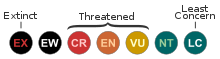
IUCN Red List
Growth: S = slow M = medium F = fast. Soil: L = light (sandy) M = medium H = heavy (clay). pH: A = acid N = neutral B = basic (alkaline). Shade: F = full shade S = semi-shade N = no shade. Moisture: D = dry M = Moist We = wet Wa = water.
Support Plants For A Future
Plants For A Future relies on regular donations to keep our free database and search facilities going, to pay for ongoing research, improvements and enhancements, and to develop and publish new books.
Read more
Choose Currency
Donate in £ GBP
Donate in $ USD
Donate in € EUR
Securely pay via PayPal or Credit/Debit Card without an account.
Expert comment
Author
(Preuss) Stapf
Botanical References
Links / References
For a list of references used on this page please go here
A special thanks to Ken Fern for some of the information used on this page.
Readers comment
| Add a comment |
|
If you have important information about this plant that may help other users please add a comment or link below. Only comments or links that are felt to be directly relevant to a plant will be included. If you think a comment/link or information contained on this page is inaccurate or misleading we would welcome your feedback at [email protected]. If you have questions about a plant please use the Forum on this website as we do not have the resources to answer questions ourselves.
* Please note: the comments by website users are not necessarily those held by PFAF and may give misleading or inaccurate information.
|
Subject : Funtumia elastica
|
|
|
|