 |
|
http://commons.wikimedia.org/wiki/User:Stan_Shebs |
 |
| http://commons.wikimedia.org/wiki/User:Stan_Shebs |
Translate this page:
Summary
Physical Characteristics

 Euphorbia_serpyllifolia is a ANNUAL growing to 0.3 m (1ft). The species is monoecious (individual flowers are either male or female, but both sexes can be found on the same plant) and is pollinated by Insects.
Suitable for: light (sandy) and medium (loamy) soils and prefers well-drained soil. Suitable pH: mildly acid, neutral and basic (mildly alkaline) soils. It cannot grow in the shade. It prefers dry or moist soil.
UK Hardiness Map
US Hardiness Map
Synonyms
Chamaesyce serpyllifolia. (Pers.)Small.
Plant Habitats
Edible Uses
Root - cooked. They are chewed (by women!) and then mixed with corn meal to sweeten it[161]. One report says that the women would keep the root in their mouths for two days, only taking it out when taking refreshments or sleeping. At the end of that time as much cornmeal as possible was placed in the mouth and held there, without chewing, until the build-up of saliva forced ejection of the mass[257]. (Saliva contains certain enzymes that convert starches to sugars and so it will sweeten corn meal on its own[K].) The chewed root acts like a yeast preparation and has been used in making cakes[257]. The root can be dried for later use[257]. The root has been fermented to make an intoxicating drink[257]. The leaves are used for chewing[161, 177]. They have a pleasant taste[257]. All these uses should be viewed with some caution, see the notes above on toxicity.
References More on Edible Uses
Medicinal Uses
Plants For A Future can not take any responsibility for any adverse effects from the use of plants. Always seek advice from a professional before using a plant medicinally.
Thymeleaf sandmat was employed medicinally by a number of native North American Indian tribes who used it to treat a variety of complaints[257]. It is not normally used in modern herbalism and any use of this plant should be done with great care because of its potentially toxic nature[K]. A decoction of the plant has been used to encourage milk flow in nursing mothers and to treat diarrhoea, stomach aches[257]. Externally, the decoction has been used as a wash on running sores and poison ivy rash[257]. A poultice of the plant has been applied to rattlesnake bites - this must be done immediately after being bitten if it is to be effective[257]. A poultice made from the chewed plant has been applied to cuts to stop the bleeding[257]. The heated poultice has been used to treat toothache[257]. The dried leaves have been rubbed into scratches on the abdomen to treat dysentery and bloating in children[257]. The sap has been used to treat warts[257]. The sap needs to be applied at least once a day and will take some time to be effective.
References More on Medicinal Uses
Other Uses
References More on Other Uses
Cultivation details
We have very little information on this species and do not know if it will be hardy in Britain. Other members of the genus prefer a light well-drained moderately rich loam in an open position[200]. Succeeds in dry soils[1]. Hybridizes with other members of this genus[200]. The ripe seed is released explosively from the seed capsules[200]. Members of this genus are rarely if ever troubled by browsing deer or rabbits[233]. This genus has been singled out as a potential source of latex (for making rubber) for the temperate zone, although no individual species has been singled out[141].
References Carbon Farming Information and Carbon Sequestration Information
Temperature Converter
Type a value in the Celsius field to convert the value to Fahrenheit:
Fahrenheit:
Plant Propagation
Seed - sow spring in situ. Germination usually takes place within 2 - 3 weeks at 20°c.
Other Names
If available other names are mentioned here
Native Range
NORTHERN AMERICA: Canada (Saskatchewan, Alberta, Manitoba, British Columbia (south)), United States (Iowa, Minnesota, Missouri (northwest), Nebraska, North Dakota, South Dakota, Colorado, Idaho, Montana, Oregon, Washington, Wyoming, New Mexico, Texas, Arizona, California, Nevada, Utah), Mexico (Baja California (Norte)) SOUTHERN AMERICA: Brazil (south), Argentina, Paraguay
Weed Potential
Right plant wrong place. We are currently updating this section.
Please note that a plant may be invasive in one area but may not
in your area so it's worth checking.
Conservation Status
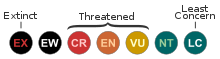
IUCN Red List of Threatened Plants Status :
IUCN Red List
Growth: S = slow M = medium F = fast. Soil: L = light (sandy) M = medium H = heavy (clay). pH: A = acid N = neutral B = basic (alkaline). Shade: F = full shade S = semi-shade N = no shade. Moisture: D = dry M = Moist We = wet Wa = water.
Support Plants For A Future
Plants For A Future relies on regular donations to keep our free database and search facilities going, to pay for ongoing research, improvements and enhancements, and to develop and publish new books.
Read more
Choose Currency
Donate in £ GBP
Donate in $ USD
Donate in € EUR
Securely pay via PayPal or Credit/Debit Card without an account.
Expert comment
Author
Pers.
Botanical References
43235
Links / References
For a list of references used on this page please go here
Readers comment
| Add a comment |
|
If you have important information about this plant that may help other users please add a comment or link below. Only comments or links that are felt to be directly relevant to a plant will be included. If you think a comment/link or information contained on this page is inaccurate or misleading we would welcome your feedback at [email protected]. If you have questions about a plant please use the Forum on this website as we do not have the resources to answer questions ourselves.
* Please note: the comments by website users are not necessarily those held by PFAF and may give misleading or inaccurate information.
|
Subject : Euphorbia_serpyllifolia
|
|
|
|