Translate this page:
Summary
Roundleaf monkeyflower is a moisture-loving perennial wildflower native to North and Central America. It grows along streams, springs, seeps, wet meadows, and other places where water remains available throughout much of the growing season. The plant is particularly characteristic of cool, clear mountain streams, where it may form extensive colonies along sandy banks and shallow watercourses. Roundleaf monkeyflower produces rounded, bright-green leaves with toothed margins and attractive yellow flowers marked with reddish spots. Its stems spread across damp ground and can develop roots where the nodes touch moist soil, allowing colonies to expand. The leaves are reported to be edible raw or cooked, with a mild flavor comparable to lettuce. They can be used in salads or prepared as a cooked green vegetable. The flowers are also considered potentially edible in the supplied field assessments, although direct evidence for their consumption is less clearly established than for the leaves. Roundleaf monkeyflower is closely related to seepspring monkeyflower (Erythranthe guttata, formerly Mimulus guttatus), another moisture-loving species with edible foliage. Both plants are particularly appealing as wild greens because their leaves are soft, fleshy, and relatively free of tough fibers. However, their dependence on streams and wet habitats means that sustainable harvesting and water quality are important considerations.
Physical Characteristics

 Erythranthe glabrata is a PERENNIAL growing to 0.6 m (2ft) by 0.6 m (2ft in) at a medium rate.
See above for USDA hardiness. It is hardy to UK zone 6. It is in flower from March to August. The flowers are pollinated by Insects.
It is noted for attracting wildlife.
Suitable for: light (sandy), medium (loamy) and heavy (clay) soils. Suitable pH: mildly acid, neutral and basic (mildly alkaline) soils. It can grow in semi-shade (light woodland) or no shade. It prefers moist or wet soil and can grow in water.
UK Hardiness Map
US Hardiness Map
Synonyms
Mimulus glabratus Kunth. Mimulus glabratus subsp. typicus Pennell
Plant Habitats
Edible Uses
Roundleaf monkeyflower is an attractive perennial wildflower with useful edible foliage. Its leaves are mild, tender, and suitable for eating fresh or cooked, according to the supplied field assessments. The plant can form substantial colonies in favorable streamside habitats, making leaf gathering relatively straightforward where it is abundant. Its long growing season, soft foliage, and ability to spread vegetatively increase its usefulness. However, the species is restricted to consistently moist environments, and plants growing beside waterways may be exposed to contamination. The edible status of the flowers also requires further verification. Its ecological value as a native streamside plant should be considered alongside its potential as a wild vegetable [2-3]. The leaves are edible and can be eaten fresh or cooked [2-3]. Roundleaf monkeyflower is described as having edible qualities similar to those of seepspring monkeyflower. The leaves are mild and tender, making them suitable for fresh salads or cooked dishes. Seepspring monkeyflower leaves are said to taste somewhat like lettuce, with slight bitterness and a distinctive flavor associated with the monkeyflower family [2-3]. Because roundleaf monkeyflower was assessed as similar, these characteristics are reasonable comparisons, although they should not be treated as separately measured flavor descriptions. Harvest the leaves in spring and summer, particularly while plants are actively growing. Flowers: Flowers are probably edible, but this is less firmly documented than the leaves. Therefore, treat their consumption as unverified for this species [2-3]. The stems, roots, and seeds are not established as edible [2-3]. Edibility Rating: 3 out of 5 – Good edible leafy vegetable. Roundleaf monkeyflower produces tender, mild leaves that can be eaten fresh or cooked. The plant can form extensive colonies in suitable habitats, and its leaves remain available over a relatively long growing season. Its principal limitations are its dependence on consistently wet environments, the need to avoid contaminated water, and the limited species-specific nutritional and safety information. The rating reflects the favorable field assessment of the foliage rather than verified nutritional superiority. Taste and Preparation: Roundleaf monkeyflower leaves are described as suitable for use in the same way as those of seepspring monkeyflower. The closely related species has a mild, lettuce-like flavor with a slight bitter accent. Its leaves are soft, fleshy, and easy to chew, with no noticeable stringy fibers. Raw Leaves: Fresh leaves can be used in salads. Their mild flavor makes them suitable for combining with other leafy vegetables. Young, healthy leaves are particularly attractive, although the supplied observations indicate that the edible qualities of related seepspring monkeyflower foliage remain good throughout the growing season. Wash leaves carefully because the plants often grow beside streams or in shallow water. Cooked Leaves: You can lightly steam, simmer, or boil the leaves. Cooked seepspring monkeyflower leaves become very soft, somewhat like canned spinach. Roundleaf monkeyflower is expected to behave similarly. Soups: Simmering seepspring monkeyflower leaves produces a brownish-green broth that can be used in soups. Roundleaf monkeyflower may be prepared similarly. However, the color and flavor of the cooking liquid may vary with the age and quantity of leaves used. Flowers: The flowers may have culinary potential, but their edibility is not firmly verified. Do not recommend them as salad ingredients without further evidence. Seasonality: Roundleaf monkeyflower generally flowers from March to August. Its leaves are available during much of the same period, particularly where streams or springs provide continuous moisture. At lower elevations, plants may begin growing earlier in spring. In cooler mountain environments, growth and flowering may be delayed until temperatures rise. Where moisture remains available, foliage may persist well into summer. The most useful harvesting period is generally spring through summer, while the leaves remain healthy and actively growing [2-3]. Traditional Uses: Roundleaf monkeyflower is reported as an edible leafy plant. However, the reference does not identify a particular Indigenous community or historical recipe specifically associated with Erythranthe glabrata. Its edible use is therefore best described as a modern field observation rather than a verified traditional staple food. The related seepspring monkeyflower has also been described as an edible wild green. Nevertheless, the culinary uses of one monkeyflower species should not automatically be transferred to other members of the genus. Safety: Roundleaf monkeyflower leaves are reported to be edible raw or cooked. However, several precautions are important. Waterborne Contamination: The plant frequently grows along streams, springs, and drainage channels. Leaves may be exposed to microorganisms, animal waste, agricultural runoff, or other contaminants. Clear-looking water is not necessarily safe. Avoid collecting plants from waterways affected by livestock, sewage, industrial activity, or agricultural chemicals. Washing leaves thoroughly with clean drinking water is important, although washing alone does not reliably remove all pathogens or chemical contaminants. Species Identification: Several monkeyflowers have similar yellow flowers and moist-habitat preferences. Correct identification is essential because the edible qualities of one species cannot automatically be assumed for another. Flowers: Field notes suggest that the flowers are probably edible, but direct verification is limited.
References More on Edible Uses
Medicinal Uses
Plants For A Future can not take any responsibility for any adverse effects from the use of plants. Always seek advice from a professional before using a plant medicinally.
Erythranthe glabrata has several documented uses in traditional and ethnobotanical medicine, primarily within South American regions like Colombia, where the plant is native. In traditional practices, the aerial parts (stems and leaves) are utilized to address various systemic ailments: Internal Organ Support: It is traditionally used to alleviate chronic liver and lung conditions. Digestive Health: Infusions or preparations of the plant are consumed to treat indigestion and soothe the stomach. Fever Reduction: Herbal drinks made from Erythranthe glabrata are traditionally administered as an antipyretic to help lower fevers. While it has a documented history of use as a traditional medicine, sources like Kew Plants of the World Online note a lack of robust clinical or pharmacological research validating its therapeutic safety and efficacy.
References More on Medicinal Uses
Other Uses
Roundleaf monkeyflower may be suitable for bog gardens, pond margins, streamside plantings, and consistently moist areas of naturalistic gardens. It is particularly useful where a low-growing, spreading perennial with attractive yellow flowers is desired. Roundleaf monkeyflower provides flowers for pollinating insects in wetland and streamside habitats. Its yellow, tubular flowers may attract bees and other insects capable of accessing their reproductive structures. The flowers have markings that may help guide visiting insects toward the floral opening. The plant's spreading stems and leaves also contribute to the vegetation structure of wet streambanks, providing shelter for small invertebrates. Colonies can help maintain ground cover in moist habitats, although their contribution to erosion control has not been quantified in the supplied reference. Detailed species-specific wildlife relationships require further research.
Special Uses
References More on Other Uses
Cultivation details
Roundleaf monkeyflower grows best in consistently moist or wet soil, with partial shade to full sun. It is particularly well adapted to the edges of streams, springs, seeps, and shallow watercourses. The plant tolerates saturated soils and may grow where water flows slowly across the ground. Sandy or gravelly streambanks are suitable where moisture is reliable. It can also grow in moist loamy soils containing organic matter. Adequate sunlight encourages vigorous growth and flowering, but plants may benefit from some shade in hot climates. The species is poorly suited to dry soils and prolonged drought. Habitat: Roundleaf monkeyflower occurs naturally in streams, springs, wet meadows, seepage areas, and other consistently moist habitats. We found a broad North American distribution extending from Michigan to Texas and westward to Arizona and Nevada. However, modern taxonomic treatments recognize several subspecies and related taxa, and the precise distribution of Erythranthe glabrata depends on the botanical treatment followed. In the southwestern United States, the plant is particularly associated with canyon streams and wet mountain habitats. Our field notes describe colonies growing in sandy soils alongside clear streams. The species can spread along watercourses by rooting at stem nodes, sometimes producing substantial patches of vegetation. USDA Hardiness Zones: USDA Zones 5–9 (approximate). Roundleaf monkeyflower is a perennial adapted to moist environments across a broad range of elevations and climates. It can tolerate seasonal cold, especially where moist soil protects its roots and creeping stems. However, its survival depends strongly on reliable water availability during the growing season. The suggested hardiness range is an ecological estimate, not a verified species-specific horticultural classification. Populations from different parts of its range may vary in their tolerance of winter cold. Growth Rate: Moderate to fast under favorable conditions. Roundleaf monkeyflower can spread by producing roots at the nodes of its creeping stems. This allows established plants to expand into neighboring areas of moist soil without relying entirely on seed production. Where water, light, and nutrients are available, plants may form extensive colonies. Growth is likely to slow considerably when soils become dry. Our field notes do not provide measured annual growth rates, so the classification is based on its perennial, spreading growth habit rather than quantitative cultivation trials. Mature Size: Height: approximately 10–60 cm (4–24 inches). The plant may remain relatively low and spreading in exposed streamside habitats, while flowering stems can rise above the surrounding foliage. Spread: Variable. Individual stems creep across damp ground and root at their nodes, allowing plants to form spreading patches. A reliable maximum width for individual mature plants is not established. The plant's eventual spread depends on moisture availability, competition, and the extent of suitable habitat. Cultivation: Roundleaf monkeyflower may be suitable for bog gardens, pond margins, streamside plantings, and consistently moist areas of naturalistic gardens. It is particularly useful where you want a low-growing, spreading perennial with attractive yellow flowers. The plant prefers moist to saturated soil and can tolerate shallow flowing water. It may grow in full sun where moisture is abundant, but partial shade can be beneficial in warmer climates. For cultivation, a moisture-retentive soil containing organic matter is suitable. Regular watering is essential where natural seepage or flowing water is unavailable. Because the plant spreads by rooting at its nodes, it may gradually colonise adjacent moist ground. Consider its spreading habit when planting alongside smaller or less vigorous wetland species. For edible cultivation, clean irrigation water is particularly important. Do not harvest plants growing in contaminated ponds, drainage channels, or polluted streams for food. Species Identification: Several monkeyflowers have similar yellow flowers and moist-habitat preferences. Correct identification is essential because the edible qualities of one species cannot automatically be assumed for another. Flowers: The supplied field notes suggest that the flowers are probably edible, but direct verification is limited. For the PFAF database, we list the leaves as edible and describe the flowers as having unverified edibility. Nutritional and Toxicological Information: Detailed nutritional analyses and toxicological studies specific to Erythranthe glabrata were not supplied. The pleasant flavor and soft texture of the leaves do not establish that unlimited quantities are safe. Sustainable Harvesting: Roundleaf monkeyflower is often associated with sensitive streamside habitats. Harvesting should be limited to abundant populations where collection is lawful. Avoid pulling out rooted stems or unnecessarily disturbing streambanks. Identification: Roundleaf monkeyflower is a perennial herb with creeping or ascending stems that can root at their nodes. The plant is generally 10–60 cm tall and often forms patches in consistently moist habitats. Stems: The stems are herbaceous, green, and relatively soft. They may grow upright or spread across damp soil. Roots can develop at nodes where stems contact suitable moist ground. This vegetative growth allows colonies to expand along streambanks and seepage areas. Leaves: The leaves are simple and arranged oppositely along the stems. They are generally rounded to broadly oval, sometimes nearly circular. The margins are toothed. Leaf blades are relatively soft and may appear slightly fleshy when growing under favorable conditions. The rounded leaf shape is a key characteristic that distinguishes this species from several other monkeyflowers. Flowers: The flowers are yellow with reddish or reddish-brown spots, particularly near the throat. They arise individually from the leaf axils on stalks that are generally longer than the calyces. The corolla is tubular and bilaterally symmetrical, with five lobes arranged into two lips. Unlike seepspring monkeyflower, the opening is not strongly closed by the palate, the raised portion of the lower lip. The calyx has five teeth, with the upper tooth considerably larger than the others. The flower contains four stamens and a single pistil with a two-lobed stigma. Fruits: The fruits are capsules containing numerous small seeds. An important identification characteristic is that the fruiting calyx does not fold inward in the same way as that of seepspring monkeyflower. This difference can help distinguish the two species when mature fruits are available. Roots: The plant has a perennial root system supplemented by adventitious roots developing from stem nodes. These roots allow the plant to persist and spread through moist habitats. The roots are not established as edible. Similar Species: Although roundleaf monkeyflower (Erythranthe glabrata) and seepspring monkeyflower (Erythranthe guttata) look very similar, several characteristics help distinguish them. Roundleaf monkeyflower has nearly round leaves, while seepspring monkeyflower has egg-shaped (ovate) leaves, sometimes with small lobes at their bases. The yellow flowers of roundleaf monkeyflower have an opening that is not strongly closed by the palate (the raised portion of the lower lip), whereas seepspring monkeyflower has a more prominent palate that often closes the flower opening. Another useful distinguishing feature is the fruiting calyx, which does not fold inward in roundleaf monkeyflower but folds inward in seepspring monkeyflower. Both species grow in wet habitats, including streams and springs, although roundleaf monkeyflower is often associated with moist streambanks, while seepspring monkeyflower commonly occurs around seeps and other wet ground. Both typically grow 10–60 cm tall. The leaves of both species are reported to be edible, but while the leaves and flowers of seepspring monkeyflower are described as edible in the supplied field notes, the edibility of roundleaf monkeyflower flowers remains less certain. Bigelow's Monkeyflower (Diplacus bigelovii): Bigelow's monkeyflower, formerly Mimulus bigelovii, is a small annual wildflower found in the deserts of the southwestern United States. It differs considerably from roundleaf monkeyflower in habitat, size, and flower color. Bigelow's monkeyflower generally grows in dry washes following seasonal rainfall and produces conspicuous pinkish-purple flowers. Our field observer tasted the corollas and described them as bland and delicate. However, they did not verify edibility, and consumption is not recommended. Other Erythranthe Species: Numerous other Erythranthe species occur in western North America. Many grow in moist environments and produce yellow, pink, or reddish flowers. They may be distinguished by leaf shape, calyx structure, flower size, floral markings, and fruit characteristics. Accurate identification may require examining both flowers and mature fruits. Important Taxonomic Note: Roundleaf monkeyflower was originally described as Mimulus glabratus Kunth. Modern botanical treatments commonly recognize it as Erythranthe glabrata (Kunth) G.L.Nesom. This change resulted from research into monkeyflower evolutionary relationships. The traditional genus Mimulus included many species that are now placed in several separate genera, including Erythranthe and Diplacus. The family placement also changed historically. Monkeyflowers were formerly included in Scrophulariaceae but are now generally classified in Phrymaceae.
References Carbon Farming Information and Carbon Sequestration Information
Temperature Converter
Type a value in the Celsius field to convert the value to Fahrenheit:
Fahrenheit:
Plant Propagation
Roundleaf monkeyflower can be propagated by seed and potentially by stem cuttings or division.
Other Names
If available other names are mentioned here
Roundleaf monkeyflower, round-leaved monkeyflower, glabrous monkeyflower.
Native Range
Argentina Northeast, Argentina Northwest, Argentina South, Bolivia, Chile Central, Chile North, Chile South, Colombia, Ecuador, Guatemala, Juan Fernández Is., Mexico Central, Mexico Gulf, Mexico Northeast, Mexico Northwest, Mexico Southeast, Mexico Southwest, Nicaragua, Peru, Venezuela
Weed Potential
Right plant wrong place. We are currently updating this section.
Please note that a plant may be invasive in one area but may not
in your area so it's worth checking.
Low to moderate. Roundleaf monkeyflower is native across much of its natural range and is not generally regarded as an invasive environmental weed. However, it can spread vegetatively by rooting at stem nodes. Under favorable conditions, this allows plants to form extensive colonies along streams and other wet habitats. In cultivation, the species may spread beyond its original planting area where moisture remains continuously available.
Conservation Status
IUCN Red List of Threatened Plants Status : Not listed.
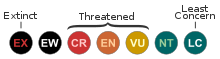
IUCN Red List
Growth: S = slow M = medium F = fast. Soil: L = light (sandy) M = medium H = heavy (clay). pH: A = acid N = neutral B = basic (alkaline). Shade: F = full shade S = semi-shade N = no shade. Moisture: D = dry M = Moist We = wet Wa = water.
Support Plants For A Future
Plants For A Future relies on regular donations to keep our free database and search facilities going, to pay for ongoing research, improvements and enhancements, and to develop and publish new books.
Read more
Choose Currency
Donate in £ GBP
Donate in $ USD
Donate in € EUR
Securely pay via PayPal or Credit/Debit Card without an account.
Expert comment
Author
(Kunth) G.L.Nesom
Botanical References
Links / References
For a list of references used on this page please go here
Readers comment
| Add a comment |
|
If you have important information about this plant that may help other users please add a comment or link below. Only comments or links that are felt to be directly relevant to a plant will be included. If you think a comment/link or information contained on this page is inaccurate or misleading we would welcome your feedback at [email protected]. If you have questions about a plant please use the Forum on this website as we do not have the resources to answer questions ourselves.
* Please note: the comments by website users are not necessarily those held by PFAF and may give misleading or inaccurate information.
|
Subject : Erythranthe glabrata
|
|
|
|