Translate this page:
Summary
Bearded cupgrass is a desert-adapted grain grass with a known history of use as a seed food. It is not a large, domesticated cereal, but it belongs to the same practical wild-food category as love grasses, barnyard grasses, and other small-seeded dryland grasses. Its value lies in its ability to produce edible grains in hot climates, especially after seasonal summer rainfall. The main limitation is handling: the well-developed awns and enclosing hulls can make gathering and processing more difficult than with easier wild grains. Bearded cupgrass, now best referred to as Eriochloa aristata, belongs to the grass family (Poaceae) and the genus Eriochloa. Common names include awned cupgrass and bearded cupgrass. It is a warm-season annual grass of arid to semi-arid regions, generally suited to USDA Zones 8–11 as a summer annual. Mature plants usually grow up to about 90 cm tall, though some descriptions give a range of about 40–100 cm, with a loose spread of roughly 20–60 cm depending on moisture and competition. It is native in the lower 48 states and occurs in the Southwest, including Arizona and California.
Physical Characteristics

 Eriochloa aristata is a ANNUAL growing to 1 m (3ft 3in) by 0.6 m (2ft) at a fast rate.
See above for USDA hardiness. It is hardy to UK zone 9. The flowers are pollinated by Wind.
It is noted for attracting wildlife.
Suitable for: light (sandy), medium (loamy) and heavy (clay) soils, prefers well-drained soil and can grow in nutritionally poor soil. Suitable pH: mildly acid, neutral and basic (mildly alkaline) soils. It cannot grow in the shade. It prefers dry or moist soil.
UK Hardiness Map
US Hardiness Map
Synonyms
Eriochloa punctata var. aristata (Vasey) M.E.Jones
Plant Habitats
Edible Uses
The edible part is the grain. The grains were used as food by the Cocopah people of the Colorado River delta, confirming that this is not merely theoretically edible but historically useful [2-3]. Edible Uses & Rating: Bearded cupgrass is a good, processing-dependent wild grain. Its food value is real, but the awns and hulls reduce convenience. Where the plant forms dense stands, it can be a worthwhile seed crop. Where scattered, the labor of gathering and cleaning may outweigh the return [2-3]. Taste, Processing & Kitchen Notes: Related cupgrasses have mild, sweet, millet-like grains, and bearded cupgrass is likely best treated similarly. The main culinary problem is not flavor but texture. Cupgrass hulls can be tough, raspy, and irritating if left unmanaged. Toasting improves aroma and flavor and may make the hulls less noticeable, while boiling can bring out sweetness but may leave the hulls chewy. A practical method is to pound the grains, boil them, and strain the liquid through cloth, turning the grain into a sweet, cloudy beverage while removing irritating debris [2-3]. Seasonality (Phenology): Bearded cupgrass blooms during the warm season, generally from July to October, depending on summer rainfall. Grains can usually be expected from August into December in suitable climates. Safety & Cautions (Food Use): The grains are edible, but the awns and hulls can irritate the mouth or throat if poorly processed. Harvest only from clean sites away from roadsides, agricultural chemicals, contaminated washes, or polluted irrigation water. As with all wild grains, dry thoroughly before storage to prevent mold [2-3]. Harvest & Processing Workflow: Harvest mature seed heads when the grains are fully developed and beginning to dry. Wear gloves if the awns are irritating. Dry the heads further, thresh carefully, and winnow as much chaff as possible. Toasting improves flavor. For the safest texture, pound the grain before boiling and strain through cloth to remove hull fragments and awns. Cultivar/Selection Notes: There are no known food cultivars. For practical harvesting, select dense, clean stands with heavy seed set and relatively uniform maturity. Plants with less troublesome awns or easier threshing would be the most desirable wild selections. Look-Alikes & Confusion Risks: Bearded cupgrass may be mistaken for other Eriochloa species and other small wild grasses. This is usually not a major toxicity concern because grasses are broadly edible, but it matters for food quality, awn irritation, and harvest efficiency. Species-level identification is most useful when documenting traditional uses or selecting the best grain plants [2-3]. Traditional/Indigenous Use Summary: Bearded cupgrass was used as a grain food by the Cocopah people of the Colorado River delta. This places it among the important small wild grass grains of the arid Southwest and northern Mexico.
References More on Edible Uses
Medicinal Uses
Plants For A Future can not take any responsibility for any adverse effects from the use of plants. Always seek advice from a professional before using a plant medicinally.
Eriochloa aristata itself does not have documented or commonly recognized medical uses. However, related species in the Eriochloa genus (such as Eriochloa villosa) are actively being researched for their therapeutic potential, particularly for their ability to alleviate Benign Prostatic Hyperplasia (BPH) and their antioxidant.
References More on Medicinal Uses
The Bookshop: Edible Plant Books
Our Latest books on Perennial Plants For Food Forests and Permaculture Gardens in paperback or digital formats.
Edible Tropical Plants
Food Forest Plants for Hotter Conditions: 250+ Plants For Tropical Food Forests & Permaculture Gardens.
More
Edible Temperate Plants
Plants for Your Food Forest: 500 Plants for Temperate Food Forests & Permaculture Gardens.
More
More Books
PFAF have eight books available in paperback and digital formats. Browse the shop for more information.
Shop Now
Other Uses
A modest annual grass rather than an ornamental showpiece. In naturalistic dryland plantings it may contribute seasonal texture and seed production, but it is more valuable as a wild grain and habitat grass than as a formal landscape plant. It is not commonly cultivated horticulturally. Ecology & Wildlife: The seeds can feed birds and small mammals, while the plants contribute seasonal cover in desert grasslands, washes, and disturbed open habitats. In good rainfall years, it may become part of a broader flush of warm-season seed-producing grasses.
Special Uses
References More on Other Uses
Cultivation details
Bearded cupgrass is a valuable but underappreciated desert grain. It is not as easy as the best love grasses, but it has real food value, a documented traditional role, and strong adaptation to hot drylands. Its main weakness is processing difficulty caused by awns and hulls. Growing Conditions: This species prefers warm conditions, full sun, and seasonally moist but well-drained soils. It is adapted to desert climates where summer rain or temporary moisture supports annual grass growth. Habitat & Range: Bearded cupgrass occurs in the southwestern United States, including southern Arizona and southern California, and extends southward into Mexico. Native plant databases also list it in Arizona, California, and Mexico, with some records outside the Southwest. Size & Landscape Performance: It is a modest annual grass rather than an ornamental showpiece. In naturalistic dryland plantings, it may contribute seasonal texture and seed production, but it is more valuable as a wild grain and habitat grass than as a formal landscape plant. Cultivation (Horticulture): It could be grown from seed in warm dryland gardens, especially where summer moisture is available. It should not require irrigation once established beyond the moisture needed for germination and seed fill. It is not commonly cultivated horticulturally. Pests & Problems: The main practical problem is the awned seed head, which can complicate harvest and handling. Poor rainfall may reduce yield. In wetter or disturbed places, it may behave like a weedy annual grass. Identification & Habit: Bearded cupgrass is an annual, tufted or loosely cespitose grass. Stems may be erect or decumbent and sometimes root at lower nodes. The seed-bearing structures have conspicuous awns, giving the plant its “bearded” appearance. Pollinators: Like most grasses, bearded cupgrass is wind-pollinated and does not depend on insects for pollination. Bearded cupgrass, now best referred to as Eriochloa aristata, belongs to the grass family (Poaceae) and the genus Eriochloa. Common names include awned cupgrass and bearded cupgrass. It is a warm-season annual grass of arid to semi-arid regions, generally suited to USDA Zones 8–11 as a summer annual. Mature plants usually grow up to about 90 cm tall, though some descriptions give a range of about 40–100 cm, with a loose spread of roughly 20–60 cm depending on moisture and competition. It is native in the lower 48 states and occurs in the Southwest, including Arizona and California.
References Carbon Farming Information and Carbon Sequestration Information
Temperature Converter
Type a value in the Celsius field to convert the value to Fahrenheit:
Fahrenheit:
The PFAF Bookshop
Plants For A Future have a number of books available in paperback and digital form. Book titles include Edible Plants, Edible Perennials, Edible Trees,Edible Shrubs, Woodland Gardening, and Temperate Food Forest Plants. Our new book is Food Forest Plants For Hotter Conditions (Tropical and Sub-Tropical).
Shop Now
Plant Propagation
Propagation is by seed. Germination is most likely after warm-season moisture.
Other Names
If available other names are mentioned here
Bearded Cup Grass, Bearded Cupgrass, Pointed Cupgrass
Native Range
US. USA. Arizona, California, Mexico Central, Mexico Gulf, Mexico Northeast, Mexico Northwest, Mexico Southeast, Mexico Southwest, Mississippi.
Weed Potential
Right plant wrong place. We are currently updating this section.
Please note that a plant may be invasive in one area but may not
in your area so it's worth checking.
Moderate. It is an annual grass adapted to disturbed or open warm sites and may reseed where conditions suit it, though it is not generally as notorious as some major agricultural grass weeds
Conservation Status
IUCN Red List of Threatened Plants Status : Not listed.
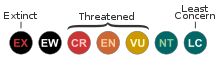
IUCN Red List
Growth: S = slow M = medium F = fast. Soil: L = light (sandy) M = medium H = heavy (clay). pH: A = acid N = neutral B = basic (alkaline). Shade: F = full shade S = semi-shade N = no shade. Moisture: D = dry M = Moist We = wet Wa = water.
Now available:
Food Forest Plants for Mediterranean Conditions
350+ Perennial Plants For Mediterranean and Drier Food Forests and Permaculture Gardens.
[Paperback and eBook]
This is the third in Plants For A Future's series of plant guides for food forests tailored to
specific climate zones. Following volumes on temperate and tropical ecosystems, this book focuses
on species suited to Mediterranean conditions—regions with hot, dry summers and cool, wet winters,
often facing the added challenge of climate change.
Read More
Expert comment
Author
Vasey
Botanical References
Links / References
For a list of references used on this page please go here
Readers comment
| Add a comment |
|
If you have important information about this plant that may help other users please add a comment or link below. Only comments or links that are felt to be directly relevant to a plant will be included. If you think a comment/link or information contained on this page is inaccurate or misleading we would welcome your feedback at [email protected]. If you have questions about a plant please use the Forum on this website as we do not have the resources to answer questions ourselves.
* Please note: the comments by website users are not necessarily those held by PFAF and may give misleading or inaccurate information.
|
Subject : Eriochloa aristata
|
|
|
|