Translate this page:
Summary
Conyza canadensis (L.) Cronquist is a synonym of Erigeron canadensis. Common horseweed is a globally distributed, fast-growing annual plant that thrives in disturbed soils, roadsides, fields, and degraded landscapes. Although technically edible, it is widely regarded as a low-quality wild food due to its harsh resinous chemistry, bristly texture, and overpowering flavor profile. Historically, its use as a food plant among Indigenous peoples was extremely limited, suggesting that its nutritional or culinary value never justified its abundance. The plant produces large quantities of biomass and is easy to harvest, but ease of access does not translate into food value. While young sprouts, leaves, and tender tops can be eaten, they require cooking to be tolerable and are best used only as minor components in mixed dishes. Common horseweed is best understood as a survival-level plant, not a desirable food species.
Physical Characteristics

 Erigeron Canadensis is a ANNUAL growing to 1 m (3ft 3in) by 0.5 m (1ft 8in).
See above for USDA hardiness. It is hardy to UK zone 4. It is in flower from June to October, and the seeds ripen from July to October. The species is monoecious (individual flowers are either male or female, but both sexes can be found on the same plant) and is pollinated by Bees, flies.
It is noted for attracting wildlife.
Suitable for: light (sandy) and medium (loamy) soils and prefers well-drained soil. Suitable pH: neutral and basic (mildly alkaline) soils. It can grow in semi-shade (light woodland) or no shade. It prefers dry or moist soil and can tolerate drought.
UK Hardiness Map
US Hardiness Map
Synonyms
Erigeron canadensis.
Plant Habitats
Edible Uses
Edible Uses & Rating: The sprouts, young leaves, and tender tops are edible. However, food quality is poor. Raw consumption is strongly discouraged due to harsh resins, unpleasant aroma, and irritating texture. Cooking improves palatability but does not eliminate resinous overtones [2-3]. As a wild food, common horseweed ranks as low value and should be considered an emergency or fallback plant rather than a practical foraging resource [2-3]. Taste, Processing & Kitchen Notes: Fresh leaves have a strong resinous, acrid flavor often described as a mixture of citrus oils, tarragon, and industrial resin. The aftertaste is persistent and unpleasant. The plant also produces throat irritation and a burning sensation in sensitive individuals. Boiling softens the texture and reduces the sharpness, but resinous flavors persist. Best results are obtained by boiling in one or more changes of water and mixing with mild greens in soups or stews. When used alone, the flavor is overpowering and unbalanced. The leaves retain their coarse texture even after cooking, and the fine surface hairs remain noticeable [2-3]. Seasonality (Phenology): Common horseweed can germinate year-round in warm climates but typically grows in spring, flowers in summer, and seeds in late summer to autumn. In mild climates, flowering may occur in multiple seasons. Safety & Cautions (Food Use): No acute toxicity reported. However, strong resins and plant secondary compounds may cause gastrointestinal irritation. Not suitable for frequent or regular consumption. Harvest & Processing Workflow: Harvest young plants before flowering. Strip leaves downward along stems. Boil in water, discard liquid, and reboil if necessary. Use only as a minor component in mixed dishes. Cultivar / Selection Notes: None. Look-Alikes & Confusion Risks: May be confused with other Conyza and Erigeron species. Identification confirmed by tall single-stem habit, dense leaf arrangement, resinous aroma, and fine panicles of tiny flower heads [2-3]. Traditional / Indigenous Use Summary: Rarely used as food. Documented primarily among the Miwok people of California, who consumed pulverized leaves and tops. Its minimal presence in ethnobotanical records reflects its low food value and poor palatability. Young leaves and seedlings - cooked[105, 177]. Boiled, cooked in rice or dried for later use[183]. A nutritional analysis of the leaves is available[218]. The source of an essential oil that is used commercially for flavouring sweets, condiments and soft drinks[183]. The fresh leaves contain 0.2 - 0.66% essential oil[218].
References More on Edible Uses
Medicinal Uses
Plants For A Future can not take any responsibility for any adverse effects from the use of plants. Always seek advice from a professional before using a plant medicinally.
In traditional North American herbal medicine, Canada fleabane was boiled to make steam for sweat lodges, taken as a snuff to stimulate sneezing during the course of a cold and burned to create a smoke that warded off insects[254]. Nowadays it is valued most for its astringency, being used in the treatment of gastro-intestinal problems such as diarrhoea and dysentery[254]. It is said to be a very effective treatment for bleeding haemorrhoids[254]. The whole plant is antirheumatic, astringent, balsamic, diuretic, emmenagogue, styptic, tonic and vermifuge[4, 7, 9, 21, 222]. It can be harvested at any time that it is in flower and is best used when fresh[4, 207, 238]. The dried herb should not be stored for more than a year[238]. The seeds can also be used[4]. An infusion of the plant has been used to treat diarrhoea and internal haemorrhages[213] or applied externally to treat gonorrhoea[213] and bleeding piles[7]. The leaves are experimentally hypoglycaemic[218]. The essential oil found in the leaves is used in the treatment of diarrhoea, dysentery and internal haemorrhages[4, 207, 218]. It is a uterine stimulant[213] and is also said to be valuable in the treatment of inflamed tonsils plus ulceration and inflammation of the throat[4]. A tea of the boiled roots is used to treat menstrual irregularities[213]. A homeopathic remedy is made from the plant[9]. It is used in the treatment of haemorrhoids and painful menstruation[9].
References More on Medicinal Uses
The Bookshop: Edible Plant Books
Our Latest books on Perennial Plants For Food Forests and Permaculture Gardens in paperback or digital formats.
Edible Tropical Plants
Food Forest Plants for Hotter Conditions: 250+ Plants For Tropical Food Forests & Permaculture Gardens.
More
Edible Temperate Plants
Plants for Your Food Forest: 500 Plants for Temperate Food Forests & Permaculture Gardens.
More
More Books
PFAF have eight books available in paperback and digital formats. Browse the shop for more information.
Shop Now
Other Uses
The plant contains small quantities of essential oil[7]. Since the plant is readily obtainable, extraction of the oil is feasible - it has a special quality that would make it suitable in the making of perfumes with unusual nuances[7, 240]. Provides limited ecological food value but supports insect populations and contributes to early successional soil stabilization.
Special Uses
References More on Other Uses
Cultivation details
Common horseweed is an example of biological abundance without nutritional value. Despite its global distribution and massive biomass production, it offers little benefit as a food plant. Its harsh chemistry, unpleasant flavor, and limited ethnobotanical use clearly position it as a marginal survival food, not a functional foraging species. Growing Conditions: Thrives in poor soils, compacted ground, disturbed land, gravel, roadsides, fields, construction sites, and agricultural margins. Extremely tolerant of drought, compaction, and nutrient-poor substrates. Habitat & Range: Found nearly worldwide. Native to North America but now cosmopolitan. Occurs in deserts, grasslands, agricultural land, urban environments, and degraded ecosystems. Size & Landscape Performance: Grows 20–140 cm tall. Rapid growth cycle. High seed production. Colonizes disturbed ground quickly and aggressively. Cultivation (Horticulture): Not cultivated intentionally. Considered an agricultural weed. Pests & Problems: Highly resilient. Resistant to many herbicides. Rarely suffers from serious disease pressure. Pollination: Pollinated by small insects attracted to mass flowering heads. Identification & Habit: Common horseweed grows as a single upright central stem with dense leaf coverage and limited branching until flowering. It forms a tall, narrow, columnar structure topped with large panicles of tiny composite flower heads. Leaves are narrow, linear to oblanceolate, rough-haired, and resinous to the touch. The plant has a coarse texture, stiff posture, and bristly surface that gives it a harsh physical presence in the landscape. When mature, the plant forms large, fluffy seed heads that disperse easily in wind, contributing to its global distribution. FAMILY: Sunflower family (Asteraceae) – Conyza genus. COMMON NAMES: Canadian horseweed, common horseweed, fleabane. USDA HARDINESS ZONES: 3–10. TYPICAL SIZE: 20–140 cm tall. LIFE FORM: Annual herb. Prefers a well-drained light or medium neutral to alkaline soil in a sunny position, though it tolerates most conditions[238]. Originally from N. America, Canada fleabane has become naturalized in many areas of the world and is considered to be a nuisance weed in many areas[268]. The plant is very adaptable to differing conditions and can vary dramatically in height, from only a few centimetres in poor soils to as much as 3 metres tall in rich soils[213]. The plant is used commercially as a food flavouring[183]. A good bee plant[200] but unfortunately it also harbours various insect pests such as the tarnished plant bug[1].
References Carbon Farming Information and Carbon Sequestration Information
Temperature Converter
Type a value in the Celsius field to convert the value to Fahrenheit:
Fahrenheit:
The PFAF Bookshop
Plants For A Future have a number of books available in paperback and digital form. Book titles include Edible Plants, Edible Perennials, Edible Trees,Edible Shrubs, Woodland Gardening, and Temperate Food Forest Plants. Our new book is Food Forest Plants For Hotter Conditions (Tropical and Sub-Tropical).
Shop Now
Plant Propagation
By seed only. Produces massive quantities of wind-dispersed seeds.
Other Names
If available other names are mentioned here
Conyza canadensis (L.) Cronquist is a synonym of Erigeron canadensis. Canadian fleabane.
horseweed.
Spanish: erigeron del Canada; escoba dura; hierba de caballo; hierba impia; olivarda.
French: erigéron du Canada; vergerette du Canada.
Portuguese: avoadinha.
Canada: mare's tail.
Colombia: cvenadillo.
Cuba: conyza; zancarana.
France: erigeron de Canada; vergerette de Canada.
Germany: Kanadischer berufkraut; Kanadisher katzenschweif.
India: jarayupriya.
Iraq: thail el-faras.
Italy: impi; saeppola.
Japan: himemukashiyomogi.
Madagascar: sarijamala.
Mauritius: herbe gandi.
Mexico: pegajosa.
Netherlands: fijnstraal, Canadeese.
Norway: canadese fijnstraal; hestehamp.
Poland: przymiotno kasnadyjskie.
Puerto Rico: pascueta; rozuz.
South Africa: armoedskruid; kanadese skraalhans.
Spain: altabaca; canem bord; erigeron de Canada; zamarraga.
Sweden: kanadabinka.
Turkey: sifa out.
USA: butterweed; Canada horseweed; fireweed; hogweed.
Yugoslavia (Serbia and Montenegro): repusnjaca.
Native Range
NORTHERN AMERICA: Canada (Québec, Nova Scotia, Ontario, Prince Edward Island, Saskatchewan, Alberta, Manitoba, British Columbia), United States (Connecticut, Indiana, Maine, Massachusetts, Michigan, New Hampshire, New Jersey, New York, Ohio, Pennsylvania, Rhode Island, Vermont, West Virginia, Iowa, Kansas, Minnesota, Missouri, Nebraska, North Dakota, South Dakota, Illinois, Oklahoma, Wisconsin, Colorado, Idaho, Montana, Oregon, Washington, Wyoming, Alabama, Arkansas, Florida (north), Georgia, Kentucky, Louisiana, Maryland, Mississippi, North Carolina, South Carolina, Tennessee, Virginia, New Mexico, Texas, Arizona, California, Nevada, Utah), Mexico (Chihuahua, Durango, Sinaloa, Sonora, Tamaulipas, Zacatecas, Aguascalientes, Campeche, Chiapas, Jalisco, México, Michoacán de Ocampo, Nayarit, Oaxaca, Puebla, Querétaro, Veracruz de Ignacio de la Llave) SOUTHERN AMERICA: Belize, Costa Rica, Guatemala, Honduras, Nicaragua, Panama (not common), El Salvador
Weed Potential
Right plant wrong place. We are currently updating this section.
Please note that a plant may be invasive in one area but may not in your area so it's worth checking.
High. Considered an invasive agricultural weed in many regions due to its seed production and herbicide resistance. A common weed in temperate to tropical regions.
Conservation Status
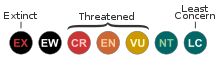
IUCN Red List of Threatened Plants Status : This taxon has not yet been assessed.
Growth: S = slow M = medium F = fast. Soil: L = light (sandy) M = medium H = heavy (clay). pH: A = acid N = neutral B = basic (alkaline). Shade: F = full shade S = semi-shade N = no shade. Moisture: D = dry M = Moist We = wet Wa = water.
Now available:
Food Forest Plants for Mediterranean Conditions
350+ Perennial Plants For Mediterranean and Drier Food Forests and Permaculture Gardens.
[Paperback and eBook]
This is the third in Plants For A Future's series of plant guides for food forests tailored to
specific climate zones. Following volumes on temperate and tropical ecosystems, this book focuses
on species suited to Mediterranean conditions—regions with hot, dry summers and cool, wet winters,
often facing the added challenge of climate change.
Read More
Expert comment
Author
(L.)Cronquist.
Botanical References
200
Links / References
For a list of references used on this page please go here
Readers comment
| Add a comment |
|
If you have important information about this plant that may help other users please add a comment or link below. Only comments or links that are felt to be directly relevant to a plant will be included. If you think a comment/link or information contained on this page is inaccurate or misleading we would welcome your feedback at [email protected]. If you have questions about a plant please use the Forum on this website as we do not have the resources to answer questions ourselves.
* Please note: the comments by website users are not necessarily those held by PFAF and may give misleading or inaccurate information.
To leave a comment please Register or login here All comments need to be approved so will not appear immediately.
|
Subject : Erigeron Canadensis
|
|
|
|