Translate this page:
Summary
Rough barnyard grass is the native North American counterpart to the more globally notorious weedy barnyard grasses. It shares with them the key food trait of edible grain and, in practical terms, belongs to the same class of useful small cereal grasses. In western North America it has direct cultural importance because its grains were gathered by Paiute people and others in the Great Basin region. That alone makes it especially important among the barnyard grasses: it is not just theoretically edible, but historically proven as a native seed food. Where it grows well, it can provide a worthwhile small grain crop from wild stands.
Physical Characteristics

 Echinochloa muricata is a ANNUAL growing to 1 m (3ft 3in) by 0.5 m (1ft 8in) at a fast rate.
See above for USDA hardiness. It is hardy to UK zone 4. The flowers are pollinated by Wind.
It is noted for attracting wildlife.
Suitable for: light (sandy), medium (loamy) and heavy (clay) soils and can grow in nutritionally poor soil. Suitable pH: mildly acid, neutral and basic (mildly alkaline) soils. It cannot grow in the shade. It prefers moist or wet soil.
UK Hardiness Map
US Hardiness Map
Synonyms
E. crus-galli var. michauxii House. E. crus-galli var. muricata (P.Beauv.) Farw. E. crus-galli subsp. muricata (P.Beauv.) Shinners. Oplismenus muricatus Kunth. Panicum muricatum Michx. Setaria muricata P.Beauv.
Plant Habitats
Edible Uses
The grains are edible and are the primary food use. Like the related species, the shoots are also edible when very young, but the seed is the major food resource [2-3]. Edible Uses & Rating: Rough barnyard grass ranks as a good wild grain and, in North American ethnobotanical terms, one of the more important Echinochloa species to know. Its usefulness depends on abundance and clean harvest conditions, but where seed heads are plentiful, it can provide a meaningful cereal-like food [2-3]. Taste, Processing & Kitchen Notes: The grains are best thought of as a small wild cereal. Once cleaned, they can be toasted, boiled into porridge, or ground into flour. Toasting improves the flavor and gives a nuttier, warmer cereal character. Whole-seed porridge is practical when enough grain is available, while grinding improves both cooking speed and texture. Very young shoots can be cooked as greens or tender grass shoots, though they are secondary to the grain. In a modern kitchen, rough barnyard grass would most naturally be used as a porridge grain or meal additive. Seasonality (Phenology): Rough barnyard grass typically blooms from July to September, with grains maturing from August to November. In cooler parts of its range, the schedule may be somewhat compressed; in warmer areas, it can stretch longer [2-3]. Safety & Cautions (Food Use): As with the other barnyard grasses, site cleanliness matters more than plant chemistry. Avoid collecting from contaminated ditches, polluted wetlands, roadsides, or treated agricultural sites. Grain should be thoroughly dried and cleaned to prevent mold and grit issues. Species-level identification is useful, but confusion with other edible Echinochloa species is usually not a major food-safety problem. Harvest & Processing Workflow: Harvest mature seed heads when the grains are fully formed and beginning to dry. Cut the heads, dry further if necessary, then thresh and winnow. Store grain dry and process as needed by toasting, boiling, or grinding. If harvesting shoots, take them very young and cook promptly before fibers develop [2-3]. Cultivar/Selection Notes: There are no common cultivated food forms in general North American use, though the broader Echinochloa group has a long cultivation history elsewhere. For wild use, the best stands are dense, mature, and growing in open, clean habitat where seed can be gathered efficiently. Look-Alikes & Confusion Risks: Rough barnyard grass can resemble common barnyard grass and jungle rice. Exact determination often matters less to a forager than abundance, maturity, and habitat quality, since all three have edible grain. Still, learning the native rough barnyard grass is useful because of its regional historical importance and its potential to occur in more natural settings than the more strongly weedy species [2-3]. Traditional/Indigenous Use Summary: Rough barnyard grass has direct traditional importance in North America. Its grains were used as food by Paiute people in Nevada and surrounding regions, confirming it as a legitimate native wild grain rather than merely a possible edible [2-3].
References More on Edible Uses
Medicinal Uses
Plants For A Future can not take any responsibility for any adverse effects from the use of plants. Always seek advice from a professional before using a plant medicinally.
There is no specific documentation regarding the medicinal uses of Echinochloa muricata (rough barnyard grass). The search results mainly identify Echinochloa muricata as a native grass used as an ornamental, for fiber in making paper and rope, and as a weed. However, the results provide extensive information on the medicinal uses of a closely related species, Echinochloa crus-galli (common barnyard grass), which is often used interchangeably in general discussions of "barnyard grass."
References More on Medicinal Uses
The Bookshop: Edible Plant Books
Our Latest books on Perennial Plants For Food Forests and Permaculture Gardens in paperback or digital formats.
Edible Tropical Plants
Food Forest Plants for Hotter Conditions: 250+ Plants For Tropical Food Forests & Permaculture Gardens.
More
Edible Temperate Plants
Plants for Your Food Forest: 500 Plants for Temperate Food Forests & Permaculture Gardens.
More
More Books
PFAF have eight books available in paperback and digital formats. Browse the shop for more information.
Shop Now
Other Uses
Echinochloa muricata (commonly known as rough barnyard grass or American barnyard grass) serves several ecological and utilitarian purposes, particularly in wetland and riparian environments. Ecological and Environmental Uses: Soil Stabilization: It is valuable for stabilizing soil in flood-prone areas, such as riverbanks, wet ditches, and floodplains. Wildlife Habitat: It provides necessary food and shelter for waterfowl and other aquatic wildlife. Wetland Restoration: It grows well in moist to wet soils, making it useful for restoring disturbed wetland sites. Utilitarian Uses: Forage: The plant can serve as fodder for livestock when young, though it may become too coarse and fibrous for grazing at maturity. Material Construction: Historically, it has been used for thatching and making mats. Weed Management: It is sometimes used as a cover crop, as it can grow in high-traffic or disturbed areas where other vegetation cannot, and it helps manage soil nutrition. Other Potential Uses: Bioactive Compound Source: While primarily cited for related species (E. colona), members of this genus are being studied for use in nanotechnology as agents for reducing and stabilizing silver nanoparticles. Medicinal (Limited): Related barnyard grasses have been used in traditional medicine for treating stomach problems, though E. muricata specifically is mostly associated with environmental and foraging uses. Note: While some species in the Echinochloa genus are used for medicinal purposes, E. muricata is mainly recognized as an important, native, eco-system reinforcing plant. Ecology & Wildlife: Its seeds provide food for birds and small mammals, and its annual stands can contribute cover in wet or disturbed habitats. As a native species, it also plays a role in North American grassland and wetland-edge seed ecology.
Special Uses
References More on Other Uses
Cultivation details
Rough barnyard grass is one of the better native annual grass grains of western North America. Its value lies in its proven ethnobotanical use, broad distribution, and the practical edibility of its seed. It is not glamorous, but it is a real food plant. Growing Conditions: This species prefers open sunny conditions and enough warm-season moisture to complete its annual life cycle. It can grow in damp disturbed places, wet margins, and seasonally moist ground, but like the rest of the genus it is adaptable when summer warmth is adequate. Habitat & Range: Rough barnyard grass occurs throughout the United States and is native to North America. It is especially relevant in temperate and subtropical regions where wet or seasonally moist habitats support annual grass growth. Size & Landscape Performance: It is a coarse annual grass with little ornamental appeal in formal landscapes, though in naturalistic wet meadows or restoration settings it may simply read as a native annual grass component. Cultivation (Horticulture): It is rarely cultivated intentionally except perhaps in native seed-bank or ethnobotanical contexts. It could be grown from seed with warmth and summer moisture if someone wished to experiment with native grass grains. Pests & Problems: Its main issues are those of other annual wet-ground grasses: uneven ripening, competition with crops, and harvest complications in muddy or disturbed settings. It can also behave weedy where conditions favor it. Identification & Habit: Rough barnyard grass is an annual Echinochloa with coarse leaves, upright stems, and seed-bearing panicles typical of the genus. It is generally robust and grass-like rather than delicate, and in the field it reads as one of the barnyard grasses rather than a fine meadow grass. Pollinators: Like other grasses, it is wind-pollinated. Rough barnyard grass, now best referred to as Echinochloa muricata, belongs to the grass family (Poaceae) and the genus Echinochloa. Common names include rough barnyard grass. It is a native North American warm-season annual and typically behaves as a summer annual across roughly USDA Zones 3–10 where the growing season is sufficient. Plants commonly reach about 30–150 cm tall and spread 20–60 cm across, though local conditions can make them smaller or more robust.
References Carbon Farming Information and Carbon Sequestration Information
Temperature Converter
Type a value in the Celsius field to convert the value to Fahrenheit:
Fahrenheit:
The PFAF Bookshop
Plants For A Future have a number of books available in paperback and digital form. Book titles include Edible Plants, Edible Perennials, Edible Trees,Edible Shrubs, Woodland Gardening, and Temperate Food Forest Plants. Our new book is Food Forest Plants For Hotter Conditions (Tropical and Sub-Tropical).
Shop Now
Plant Propagation
Propagation is by seed, and successful establishment depends on warm-season moisture and open ground.
Other Names
If available other names are mentioned here
Rough barnyard grass.
Native Range
US. USA. Alabama, Arizona, Arkansas, California, Colorado, Connecticut, Delaware, District of Columbia, Florida, Georgia, Idaho, Illinois, Indiana, Iowa, Kansas, Kentucky, Louisiana, Maine, Manitoba, Maryland, Massachusetts, Michigan, Minnesota, Mississippi, Missouri, Montana, Nebraska, Nevada, New Brunswick, New Hampshire, New Mexico, New York, North Carolina, North Dakota, Nova Scotia, Ohio, Oklahoma, Ontario, Oregon, Pennsylvania, Québec, Rhode I., Saskatchewan, South Carolina, South Dakota, Tennessee, Texas, Utah, Vermont, Virginia, Washington, West Virginia, Wisconsin, Wyoming.
Weed Potential
Right plant wrong place. We are currently updating this section.
Please note that a plant may be invasive in one area but may not
in your area so it's worth checking.
Moderate. It is less infamous than common barnyard grass but can still behave as a competitive annual in suitable habitats.
Conservation Status
IUCN Red List of Threatened Plants Status : Not listed.
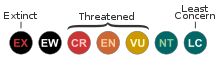
IUCN Red List
Growth: S = slow M = medium F = fast. Soil: L = light (sandy) M = medium H = heavy (clay). pH: A = acid N = neutral B = basic (alkaline). Shade: F = full shade S = semi-shade N = no shade. Moisture: D = dry M = Moist We = wet Wa = water.
Now available:
Food Forest Plants for Mediterranean Conditions
350+ Perennial Plants For Mediterranean and Drier Food Forests and Permaculture Gardens.
[Paperback and eBook]
This is the third in Plants For A Future's series of plant guides for food forests tailored to
specific climate zones. Following volumes on temperate and tropical ecosystems, this book focuses
on species suited to Mediterranean conditions—regions with hot, dry summers and cool, wet winters,
often facing the added challenge of climate change.
Read More
Expert comment
Author
(P.Beauv.) Fernald
Botanical References
Links / References
For a list of references used on this page please go here
Readers comment
| Add a comment |
|
If you have important information about this plant that may help other users please add a comment or link below. Only comments or links that are felt to be directly relevant to a plant will be included. If you think a comment/link or information contained on this page is inaccurate or misleading we would welcome your feedback at [email protected]. If you have questions about a plant please use the Forum on this website as we do not have the resources to answer questions ourselves.
* Please note: the comments by website users are not necessarily those held by PFAF and may give misleading or inaccurate information.
|
Subject : Echinochloa muricata
|
|
|
|