Translate this page:
Summary
Gray tansymustard is a high-elevation, finely divided mustard that offers both edible leaves and seeds, though both require thoughtful handling to become truly pleasant food. It is one of the more cold-adapted species in the group and can be gathered over much of the growing season in mountain habitats. Like other tansymustards, it is a plant of abundance and resilience rather than delicacy. The leaves can be useful as a cooked green, and the seeds offer a more durable and practical food resource when mature. Its real strength lies in its broad availability in western uplands, especially where more tender greens may be scarce.
Physical Characteristics

 Descurainia incana is a ANNUAL/BIENNIAL growing to 1 m (3ft 3in) by 0.4 m (1ft 4in) at a fast rate.
See above for USDA hardiness. It is hardy to UK zone 4. It is in flower from June to August, and the seeds ripen from August to September. The species is hermaphrodite (has both male and female organs) and is pollinated by Bees, insects. The plant is self-fertile.
Suitable for: light (sandy), medium (loamy) and heavy (clay) soils and can grow in nutritionally poor soil. Suitable pH: mildly acid, neutral and basic (mildly alkaline) soils. It can grow in semi-shade (light woodland) or no shade. It prefers dry or moist soil.
UK Hardiness Map
US Hardiness Map
Synonyms
D. richardsonii. (Sw.)Schulz. Sophia incisa.
Plant Habitats
Cultivated Beds;
Edible Uses
Edible Parts: Leaves Seed
Edible Uses:
The edible parts are the leaves and seeds. The leaves are best considered a cooked green because of their spicy character and fine hairs, while the seeds are a more concentrated food that can be eaten fresh in small quantities or cooked and toasted. Of the two, the seeds are generally the better long-term resource, though the leaves can still be useful when young and properly prepared [2-3]. Edible Uses & Rating. Gray tansymustard ranks as a good secondary wild food. It is not a luxury plant, but it is highly useful because it is widespread, durable, and often abundant. The leaves rate as fair to good when cooked properly, and the seeds rate as good because they can be collected and stored more easily than the foliage. In harsh mountain landscapes, that reliability matters [2-3]. Taste, Processing & Kitchen Notes. The leaves are spicy, bitter, and mustardy when fresh, and their hairy surfaces can be unpleasant unless softened by cooking. Boiling is strongly recommended, and an extra change of water may be needed if the flavor remains too strong. Once cooked, the leaves lose much of their harshness and become far more serviceable as a potherb. The seeds, by comparison, are more useful. Like other tansymustard seeds, they can be toasted to reduce spicy intensity and develop a more appealing, lightly charred, delicately crunchy character. They are tiny, so their best use is usually as a gathered small grain, seasoning-like addition, or trail food rather than a major porridge grain unless collected in quantity [2-3]. Seasonality (Phenology). Gray tansy mustards bloom from about May to September, giving it a long mountain-season presence. Leaves can be gathered over much of the growing season, though the youngest foliage is generally best. Seeds mature later and can often be collected over an extended period because the pods do not all ripen simultaneously. Safety & Cautions (Food Use). Tansymustards can accumulate harmful levels of selenium, vanadium, and uranium from the soil, which is the main caution with the group. In practical terms, this means site selection matters. Avoid gathering from mining districts, heavily disturbed soils of uncertain chemistry, industrial edges, road verges, or saline/seleniferous zones where accumulation risk may be higher. The spicy chemistry is also a caution in itself: large quantities of raw leaves can be harsh on the stomach, and cooking is the more conservative approach. Harvest & Processing Workflow. Harvest young leaves before they become coarse or weathered, rinse well, and boil them, changing the water if the first batch remains too pungent or hairy. Seeds should be gathered when the pods are mature but before they have fully shattered. Dry the seed heads if needed, thresh them, winnow away chaff, and then either toast lightly for direct use or store dry for later grinding or cooking. Cultivar/Selection Notes. There are no known food cultivars. In practical use, the best “selection” is ecological: gather from cleaner mountain habitats, choose younger leaves, and favor dense seed-set populations where the pods are easy to harvest. Look-Alikes & Confusion Risks. Gray tansymustard can resemble other finely divided mustards, especially other Descurainia species. The safest field approach is to identify it as a tansymustard by the combination of pinnate leaves, branched hairs, small yellow flowers, and narrow linear-fusiform pods without beaks. Species-level identification may require careful attention to pod size, habitat, and growth form. Fortunately, the likely confusions within the genus share similar food use patterns, though they may differ in palatability. Traditional/Indigenous Use Summary. We place tansymustards among the most important wild foods of arid and western landscapes, with both leaves and seeds used by Native Americans and even some species potentially cultivated. Gray tansymustard fits comfortably within that broader traditional food pattern, especially in mountain settings where it can be harvested through much of the season [2-3]. Young leaves - cooked. A bitter taste[85]. Seed - raw or cooked[46, 105]. The seed can be used as a mustard substitute in soups, stews etc. It can be roasted, ground into a powder then mixed with water to make a fine batter and drunk[257]. The seed is also ground into a meal and mixed with cereal flours when making bread, or as a thickening for soups etc[61, 85].
References More on Edible Uses
Medicinal Uses
Plants For A Future can not take any responsibility for any adverse effects from the use of plants. Always seek advice from a professional before using a plant medicinally.
Poultice
Descurainia incana (Mountain Tansy Mustard) has traditional medicinal uses, primarily acting as a rubefacient to boost circulation. It is used as a lotion for frostbitten skin, a remedy for sore throats, and a poultice for treating bad cuts. It is often used in the wild as a local medicine. Topical Application: The plant is crushed and applied to the skin to treat injuries and, due to its mustard-like properties, can be used to treat frozen (frostbitten) body parts. Sore Throat Remedy: It has been used as a lotion to soothe sore throats. Wound Care: The plant is used to treat bad cuts. General Medicinal Use: It is harvested from the wild for local medicinal purposes. Note: It is often confused with or used similarly to related species like Descurainia sophia (Flixweed), which has a broader range of uses including coughs, asthma, and as a febrifuge. The plant has been used as a lotion for parts of the body that have become frozen in the cold and also as a lotion for sore throats[257]. No more information is given, but it is likely that the crushed seed was used for this since, being similar to mustard, it will probably have a rubefacient effect upon the skin, drawing more blood to that area of the body and thereby heating it[K]. The plant is mashed and applied to bad cuts[257].
References More on Medicinal Uses
The Bookshop: Edible Plant Books
Our Latest books on Perennial Plants For Food Forests and Permaculture Gardens in paperback or digital formats.
Edible Tropical Plants
Food Forest Plants for Hotter Conditions: 250+ Plants For Tropical Food Forests & Permaculture Gardens.
More
Edible Temperate Plants
Plants for Your Food Forest: 500 Plants for Temperate Food Forests & Permaculture Gardens.
More
More Books
PFAF have eight books available in paperback and digital formats. Browse the shop for more information.
Shop Now
Other Uses
It is rarely cultivated intentionally as a garden plant, but it could be grown in native or mountain wildflower settings from seed. In a naturalistic or restoration setting it can fill seasonal space well, though it is more functional than ornamental. Gray tansymustard contributes forage and nectar to spring and summer insect communities, and its seeds can feed birds and small animals. It is one of the many disturbance-tolerant western mustards that help keep harsh environments productive.
Special Uses
References More on Other Uses
Cultivation details
Gray tansymustard is an adaptable, generous mountain mustard whose strengths are abundance, long season, and practical usefulness. It is not gentle or mild by nature, but with cooking and proper site selection it can make a very real contribution to the diet. Growing Conditions. This species prefers open mountain meadows, upland slopes, and other cool-season western habitats. It handles full sun well and tolerates poor to moderate soils, especially where there is some spring moisture and cooler summer conditions. Habitat & Range. Gray tansymustard is widespread through the western mountains and northward to Alaska. It is characteristic of mountain meadows and other cool upland environments, where it can often be found from spring into autumn. Size & Landscape Performance. It is a somewhat coarse but useful biennial with a light, divided texture. In a naturalistic or restoration setting it can fill seasonal space well, though it is more functional than ornamental. Cultivation (Horticulture). It is rarely cultivated intentionally as a garden plant, but it could be grown in native or mountain wildflower settings from seed. It would likely perform best in full sun, lean soils, and areas with cool-season moisture. Pests & Problems. The greatest practical problem is chemical accumulation from problematic soils rather than insect or disease pressure. In cultivation, it may become lanky in rich soils or dense shade. Mature plants can also become coarse and less appealing as food. Identification & Habit. Gray tansymustard is a biennial with finely divided basal and lower leaves, upper leaves that are once-pinnate or lobed, branched nonglandular hairs, small yellow flowers in racemes, and short linear-fusiform seedpods. The foliage often has a gray-green cast because of its fine hairiness. Pollinators. The flowers are visited by small generalist pollinators, especially flies, small bees, and other insects attracted to open mustard flowers. Like many Brassicaceae, it likely relies on a broad pollinator guild rather than specialists. Gray tansymustard (Descurainia incana) belongs to the mustard family (Brassicaceae) and the genus Descurainia. Common names include gray tansymustard and mountain tansymustard. It is a cold-tolerant biennial of western mountains and open uplands, and it is best treated as hardy in approximately USDA Zones 3–8, depending on snow cover, drainage, and summer heat. Mature plants typically reach about 20–110 cm in height, with a spread of roughly 20–45 cm, though robust plants in favorable mountain meadows can become fuller and more branched than plants in drier or poorer soils.
References Carbon Farming Information and Carbon Sequestration Information
Temperature Converter
Type a value in the Celsius field to convert the value to Fahrenheit:
Fahrenheit:
The PFAF Bookshop
Plants For A Future have a number of books available in paperback and digital form. Book titles include Edible Plants, Edible Perennials, Edible Trees,Edible Shrubs, Woodland Gardening, and Temperate Food Forest Plants. Our new book is Food Forest Plants For Hotter Conditions (Tropical and Sub-Tropical).
Shop Now
Plant Propagation
Propagation is by seed. As a biennial, it typically establishes as a vegetative plant in the first season and flowers in the second, though timing may vary with climate and disturbance.
Other Names
If available other names are mentioned here
Gray tansymustard.
Native Range
NORTHERN AMERICA: Canada (Northwest Territories, Yukon, Québec, Ontario, Newfoundland and Labrador, Saskatchewan, Alberta, Manitoba, British Columbia), United States (Alaska, Maine, Kansas, Minnesota, North Dakota, South Dakota, Colorado, Idaho, Montana, Washington, New Mexico, Arizona, California, Utah), Mexico (Baja California (Norte), Chihuahua)
Weed Potential
Right plant wrong place. We are currently updating this section.
Please note that a plant may be invasive in one area but may not in your area so it's worth checking.
Low to moderate. In its native range it behaves as a normal component of mountain and western vegetation rather than an aggressively invasive weed, though it may colonize disturbed ground readily.
Conservation Status
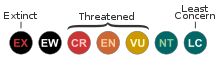
IUCN Red List of Threatened Plants Status : Not listed.
Growth: S = slow M = medium F = fast. Soil: L = light (sandy) M = medium H = heavy (clay). pH: A = acid N = neutral B = basic (alkaline). Shade: F = full shade S = semi-shade N = no shade. Moisture: D = dry M = Moist We = wet Wa = water.
Now available:
Food Forest Plants for Mediterranean Conditions
350+ Perennial Plants For Mediterranean and Drier Food Forests and Permaculture Gardens.
[Paperback and eBook]
This is the third in Plants For A Future's series of plant guides for food forests tailored to
specific climate zones. Following volumes on temperate and tropical ecosystems, this book focuses
on species suited to Mediterranean conditions—regions with hot, dry summers and cool, wet winters,
often facing the added challenge of climate change.
Read More
Expert comment
Author
(Bernh. ex Fisch.&C.A.Mey)Dorn.
Botanical References
60274
Links / References
For a list of references used on this page please go here
Readers comment
| Add a comment |
|
If you have important information about this plant that may help other users please add a comment or link below. Only comments or links that are felt to be directly relevant to a plant will be included. If you think a comment/link or information contained on this page is inaccurate or misleading we would welcome your feedback at [email protected]. If you have questions about a plant please use the Forum on this website as we do not have the resources to answer questions ourselves.
* Please note: the comments by website users are not necessarily those held by PFAF and may give misleading or inaccurate information.
|
Subject : Descurainia incana
|
|
|
|